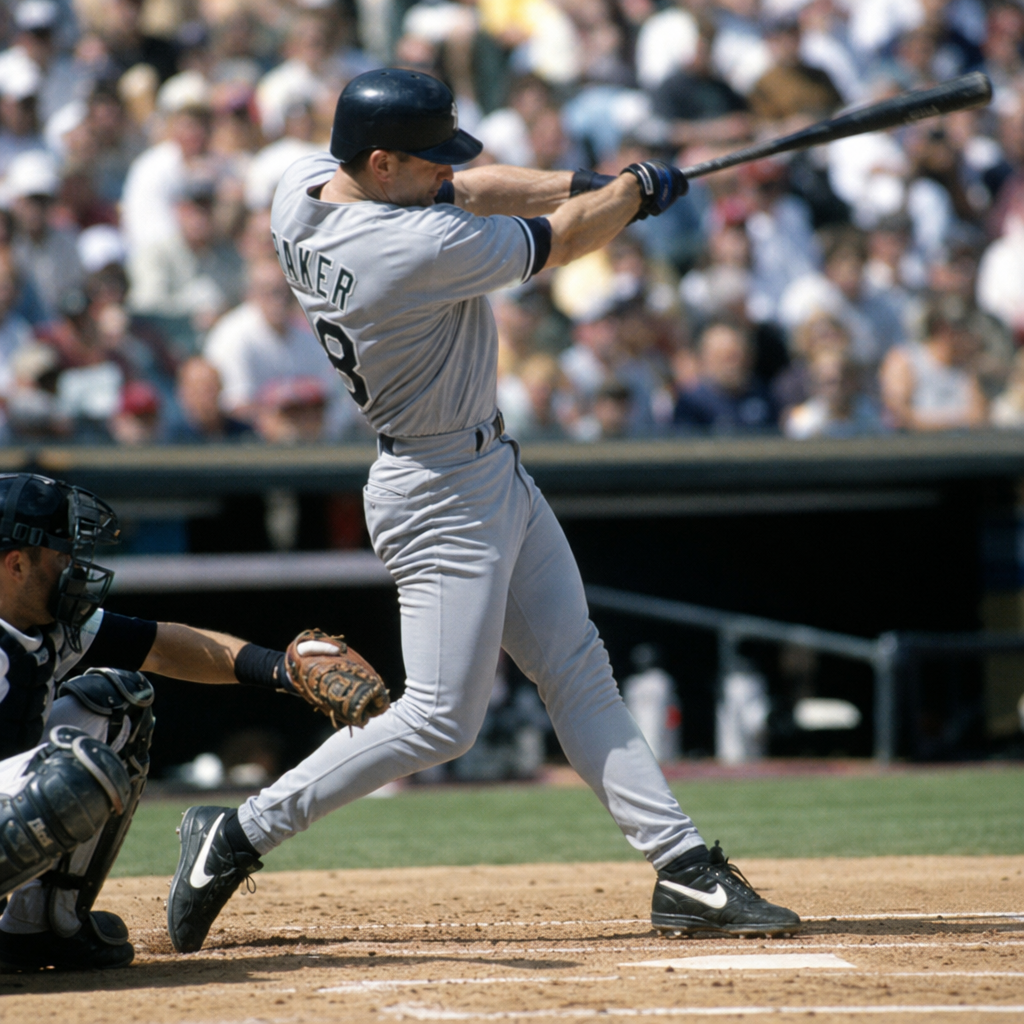
The summer of 1998 revived Major League Baseball in a way few seasons ever have. Fans who had drifted away after the 1994 strike came back nightly to watch Mark McGwire and Sammy Sosa chase Roger Maris’s single-season home run record, and every batting practice felt like a national event. Yet the phrase “The Home Run Chase of ’98” now carries a second meaning. It represents not only an electrifying sports story, but also a central case study in how scandal, commercial pressure, weak oversight, and selective memory can reshape a game. The question embedded in the title—was it a tainted triumph?—still matters because the chase sits at the intersection of performance, entertainment, ethics, and institutional responsibility.
In baseball terms, the 1998 home run chase refers to the race between St. Louis Cardinals slugger Mark McGwire and Chicago Cubs star Sammy Sosa to break Maris’s 61 home runs, set in 1961. McGwire finished with 70 and Sosa with 66, numbers that were once treated as evidence of a new athletic frontier. “Tainted,” in this context, means the achievement is shadowed by later revelations about performance-enhancing drugs, permissive club culture, inconsistent league enforcement, and media narratives that celebrated results while often ignoring warning signs. As a hub within the broader scandals and controversies landscape, this subject also links outward to related issues: steroid-era records, Hall of Fame debates, labor tensions, media complicity, and the long arc of trust between leagues and fans.
I have covered and analyzed this era for years, and the most important lesson is that the 1998 chase cannot be understood as a simple morality tale. It was exhilarating and compromised at the same time. That dual reality is why it remains one of the most debated episodes in American sports history. To understand whether it was a tainted triumph, you have to examine what happened on the field, what baseball knew off the field, how the public responded in the moment, and why the legacy remains unsettled more than two decades later.
Why the 1998 home run chase captured America
The immediate appeal of the 1998 home run chase was simple: it offered a clear, countable, nightly drama. Home runs are baseball’s most legible event. You do not need to understand pitch sequencing, defensive positioning, or park-adjusted metrics to grasp the spectacle of a baseball leaving the yard. McGwire and Sosa turned that spectacle into serialized television. Each game updated the total. Each at-bat felt historic. Broadcasters cut into regular programming. Ballparks filled with fans carrying handmade number signs.
The timing mattered just as much as the players. Baseball was still repairing damage from the 1994–95 labor stoppage, which canceled the World Series and sharply reduced public goodwill. Attendance and television interest needed a spark. The chase supplied one. McGwire, with his immense raw power and mechanical efficiency, looked built in a lab for the role. Sosa, with his charisma, smile, and dramatic second-half surge, became the perfect counterpart. Their race transformed a long season into a shared national countdown.
Maris’s record also carried symbolic weight. In baseball, records are treated less like statistics and more like cultural property. Breaking 61 was not only an athletic feat; it was a revision of history. That raised the stakes for everyone involved: players, clubs, networks, sponsors, and the league office. By September, the chase had become baseball’s redemption story. That framing was commercially powerful, but it also discouraged harder questions about how such extraordinary power numbers had become increasingly common across the sport.
The numbers, the context, and the warning signs
A proper evaluation of the 1998 home run chase starts with the facts. McGwire hit 70 home runs in 155 games with a .752 slugging percentage and 1.222 OPS. Sosa hit 66 home runs, drove in 158 runs, and won the National League MVP. Both eclipsed Maris. Both delivered stretches of power that seemed almost beyond precedent. Yet the broader run-scoring environment of the late 1990s already hinted that baseball had changed. League-wide offense was elevated, and power totals were rising across rosters, not just among inner-circle sluggers.
Not every increase in offense pointed to drug use. Expansion diluted pitching depth. Ballparks differed. Strength training improved. Hitters benefited from video, scouting, and year-round conditioning. Baseballs were also a recurring subject of suspicion, even when hard proof was elusive. Still, when I review the period with the benefit of hindsight, the larger pattern is impossible to ignore: players were getting bigger, stronger, and recovering faster, and league controls were weak. The environment rewarded output first and asked questions later.
One often-cited warning sign arrived in plain sight. During the 1998 season, a reporter saw a bottle of androstenedione in McGwire’s locker. At the time, the substance was banned by the NFL and the Olympics but not by Major League Baseball. That distinction matters because it shows how baseball operated in a regulatory gap. Something could be controversial, performance-related, and publicly visible without triggering a league sanction. The story did not stop the celebration, but it now reads as one of the clearest examples of a system looking away from a problem that had already become difficult to miss.
Steroids, supplements, and baseball’s enforcement failure
The strongest argument that the 1998 chase was tainted rests on the structure around the players, not only on the players themselves. Major League Baseball did not begin survey testing for steroids until 2003, with penalties arriving in 2004 after collective bargaining. That means the most famous home run race in modern history unfolded before a meaningful testing regime existed. In practical terms, baseball had rules about “illegal drugs,” but no robust, sport-specific anti-doping system with standardized testing, chain-of-custody procedures, transparent penalties, and credible deterrence.
Later developments reinforced the suspicion surrounding the era. The 2007 Mitchell Report, commissioned by Commissioner Bud Selig and led by former Senator George Mitchell, documented widespread use of performance-enhancing substances among players across teams. McGwire eventually admitted in 2010 that he had used steroids during his career, including in 1998. Sosa has long denied using performance-enhancing drugs, though his reputation was damaged by reporting around a 2003 survey test and by the broader context of the era. The exact evidentiary picture differs by player, but the institutional picture is clear: baseball failed to act early enough, and the chase unfolded inside that failure.
| Issue | 1998 Reality | Why It Matters |
|---|---|---|
| Testing program | No comprehensive MLB steroid testing | Created low deterrence and weak accountability |
| Known substances | Supplements like andro visible; steroid rumors widespread | Warning signs existed in public view |
| League incentives | Home run surge boosted attendance and attention | Commercial success reduced urgency to intervene |
| Later evidence | Mitchell Report and McGwire admission | Confirmed that the era’s concerns were substantive |
This enforcement gap is what separates simple nostalgia from serious historical analysis. Fans were not merely fooled by individual deception. They were sold a product by a league that benefited from ambiguity. That does not erase the players’ skill. Hitting major league pitching remains extraordinarily difficult under any conditions. But it does mean the chase cannot be evaluated as if the competitive environment were clean, stable, and equally governed for everyone.
Media, fandom, and the economics of belief
Another reason the 1998 home run chase remains controversial is that responsibility was widely shared. Media organizations helped turn the race into a morality play about baseball’s return, and many reporters emphasized awe over scrutiny. That was not universal—some journalists asked difficult questions—but the dominant tone was celebratory. Networks had every reason to amplify the drama. Newspapers sold special sections. Sponsors attached themselves to the spectacle. The baseball economy was recovering, and the chase was the recovery’s most marketable symbol.
Fans also participated in what can fairly be called the economics of belief. Most people wanted the story to be true in the cleanest possible sense. They wanted to believe they were witnessing natural greatness, old-fashioned competition, and the healing power of sports. That desire was understandable. It was also exploitable. When institutions and audiences both profit emotionally from a narrative, skepticism becomes socially inconvenient.
This pattern appears in many sports controversies. Cycling’s Lance Armstrong era, state-sponsored Olympic doping scandals, and sign-stealing controversies in baseball all show how success can normalize selective blindness. Once a result becomes useful—to leagues, broadcasters, sponsors, and fans—ethical alarms are often muted until evidence becomes overwhelming. The home run chase fits that pattern precisely. It was not merely a contest between sluggers; it was a case study in how spectacle can outrun governance.
Legacy, Hall of Fame debates, and the broader scandal hub
The legacy of the 1998 chase extends far beyond one season. It reshaped Hall of Fame voting, public trust in records, and how baseball discusses its own past. McGwire and Sosa both fell short of election by the Baseball Writers’ Association of America, in large part because voters treated the steroid era as a referendum on legitimacy. Barry Bonds and Roger Clemens faced similar resistance despite historically overwhelming résumés. These debates were never only about rules; they were about fairness, precedent, and whether moral judgment belongs inside historical recognition.
As a hub in the miscellaneous wing of scandals and controversies, this topic connects naturally to several adjacent articles. The first is the steroid era itself: testing policy, clubhouse culture, BALCO, and the Mitchell Report. The second is record-book controversy: how fans and institutions treat achievements that are technically official but ethically contested. The third is commissioner leadership and labor politics, because weak enforcement often reflects negotiated limits, legal concerns, and revenue priorities rather than simple ignorance. The fourth is media accountability, especially how access journalism can soften scrutiny during profitable moments.
So was the home run chase of ’98 a tainted triumph? Yes, and the order of those words matters. It was a triumph because the performances were real, the pressure was real, and the emotional hold on the public was undeniable. It was tainted because the competitive conditions were compromised and baseball’s leadership allowed that compromise to flourish while benefiting from it. Holding both truths at once is the most honest reading of the event. If you are exploring scandals and controversies across sports, start here, then follow the connected subjects: steroids, records, Hall voting, league governance, and media responsibility. Together they explain not just what happened in 1998, but why trust in sports is so hard to rebuild once spectacle and credibility part ways.
Frequently Asked Questions
Why was the Home Run Chase of 1998 such a big deal in baseball history?
The Home Run Chase of 1998 mattered because it arrived at exactly the moment Major League Baseball needed a cultural reset. Just a few years earlier, the 1994 players’ strike had badly damaged the sport’s public image, canceling the World Series and leaving many fans frustrated, cynical, or simply detached. Into that atmosphere came Mark McGwire of the St. Louis Cardinals and Sammy Sosa of the Chicago Cubs, two charismatic sluggers who turned a long regular season into a nightly national spectacle. Their pursuit of Roger Maris’s long-standing single-season record of 61 home runs gave baseball a simple, dramatic storyline that casual viewers could follow and dedicated fans could obsess over.
What made the chase especially powerful was its pace and visibility. Every at-bat felt consequential, every towering fly ball seemed historic, and media coverage followed both players constantly. Local games became national events. SportsCenter highlights led broadcasts. Newspapers tracked totals daily. Fans in different cities, and even many who were not regular baseball watchers, became emotionally invested in whether one or both men would break the record. In a very real sense, the chase restored baseball’s relevance in the broader American sports conversation.
It also helped that McGwire and Sosa offered contrasting but complementary narratives. McGwire was viewed as the raw-power technician, a hitter built for history, while Sosa evolved into the joyful, seemingly unstoppable force who transformed the race into a two-man drama. Their mutual respect added to the appeal. Instead of a bitter rivalry, the public largely saw a shared pursuit of greatness. That made the chase feel celebratory rather than divisive at the time. In historical terms, the 1998 season became a landmark not just because of the home run totals, but because it demonstrated how a single storyline could revive a wounded league, reshape media attention, and redefine what baseball looked like at the close of the 20th century.
Why is the 1998 home run race often described as a “tainted triumph”?
The phrase “tainted triumph” reflects the uncomfortable dual reality of the 1998 home run race. On one hand, it was thrilling, commercially transformative, and genuinely memorable for millions of fans. On the other hand, later revelations about performance-enhancing drugs cast serious doubt over how that history should be interpreted. Mark McGwire later admitted steroid use, and Sammy Sosa’s name became entangled in the broader steroid era through reports, investigations, and long-running suspicion, even as aspects of his case remained publicly contested. As more information emerged about widespread PED use across baseball during that period, the emotional purity of the chase became harder to sustain.
The word “tainted” does not simply mean that individual players were accused or implicated. It also points to a larger institutional failure. Baseball benefited enormously from the power surge of the late 1990s. Home runs drove ratings, headlines, ticket sales, and renewed fan passion. Yet oversight was weak, testing standards were limited or nonexistent for much of the era, and the league often appeared slow to confront what was becoming increasingly difficult to ignore. That means the problem was never just about two famous sluggers; it was about a system that either failed to ask hard questions or lacked the will to pursue them aggressively while the sport was making money and rebuilding its popularity.
That is why the 1998 chase remains so morally and historically complicated. People can still remember the excitement honestly while also recognizing that the conditions surrounding that excitement were compromised. The achievement was real in the sense that it happened, captivated the nation, and changed the sport’s trajectory. But it is “tainted” because later evidence suggested fans were not watching a level competitive landscape. The triumph revived baseball, yet it also became one of the clearest symbols of an era in which entertainment, pressure, and inadequate governance collided.
How did Mark McGwire and Sammy Sosa change baseball during and after the 1998 season?
During the 1998 season, McGwire and Sosa transformed baseball into appointment viewing. They did more than chase a number; they changed the emotional temperature of the sport. Fans tuned in not only to see whether a home run would happen, but to witness history unfolding in real time. Their performances energized stadiums, boosted television interest, and made regular-season baseball feel like an ongoing national event. This was especially significant because the league was still trying to recover from the alienation caused by labor conflict earlier in the decade. In that sense, both players became unofficial ambassadors for baseball’s comeback.
They also changed how the game was marketed. Individual star narratives became even more central to baseball’s presentation. The home run race showed the league and its broadcast partners the enormous value of a clean, easy-to-follow story built around recognizable personalities and milestone tracking. Long before modern social media hype cycles, McGwire and Sosa proved that baseball could dominate attention if it had the right dramatic hook. Their chase became a template for how the sport would package stars, records, and historical pursuits for mass consumption.
After the season, however, their impact became more complicated. McGwire and Sosa came to symbolize not only baseball’s revival, but also its vulnerability to image management and selective blindness. As the steroid era came under greater scrutiny, the same players once celebrated as saviors of the sport were increasingly viewed as central figures in a compromised chapter of baseball history. Their legacy shifted from simple admiration to debate: Were they heroes of a damaged game, products of a permissive era, cautionary examples, or all three at once?
That complicated afterlife is part of why they remain so important. They changed baseball by restoring attention and commercial energy, but they also forced the sport to confront difficult questions about fairness, records, accountability, and memory. In other words, McGwire and Sosa did not just define one summer. They helped shape the way fans, historians, journalists, and Hall of Fame voters continue to argue about what baseball values and how it should judge greatness.
What role did steroids and weak oversight play in the legacy of the 1998 chase?
Steroids and weak oversight are central to understanding why the legacy of the 1998 chase remains so contentious. The issue was not merely that performance-enhancing drugs existed; it was that baseball’s structures for detecting, deterring, and transparently addressing PED use were far behind the scale of the problem. During the late 1990s, the sport lacked the kind of rigorous testing regime and enforcement framework that later became standard. Rumors circulated, physical transformations drew attention, and questions were asked, but the league’s response often seemed hesitant, fragmented, or politically inconvenient.
This matters because oversight is part of competitive integrity. When a league does not establish or enforce clear anti-doping standards, it creates conditions in which players may feel pressure to keep up by any means necessary. That pressure is intensified in a high-reward environment where home runs fuel fame, contracts, endorsements, and media worship. In that sense, the steroid era was not just the result of personal choices by individual players. It was also a byproduct of a baseball economy that rewarded extraordinary power output while failing to build effective guardrails around how that output was achieved.
The 1998 chase became one of the most visible expressions of that failure. Baseball celebrated the spectacle, and many in the sport had little incentive to challenge a story that was bringing fans back in enormous numbers. Only later did the full reputational cost become clear. Once PED use became a defining scandal of the era, the home run race had to be reinterpreted through the lens of what the league knew, what it should have known, and why it acted so slowly. That shifted public discussion away from pure athletic achievement and toward institutional responsibility.
So when people talk about weak oversight, they are talking about more than missed tests or absent rules. They are talking about a culture in which commercial success, labor politics, and public relations often seemed to outrun accountability. The result is a legacy that cannot be separated from governance. The greatness of the performances is debated because the system that was supposed to protect fair competition did not do its job well enough when it mattered most.
How should fans and historians remember the Home Run Chase of ’98 today?
The most credible way to remember the Home Run Chase of ’98 is to resist overly simple conclusions. It should not be treated as either a flawless golden memory or a completely meaningless fraud. Both extremes flatten what actually happened. The chase was thrilling, culturally significant, and deeply effective in restoring baseball’s popularity after a period of real damage. Fans who remember the excitement are not wrong to recall it fondly. At the same time, later evidence about the steroid era means that any serious historical account must acknowledge that the chase unfolded in a compromised environment.
For historians, the event works best as a case study in contradiction. It shows how sports can create authentic emotion even when the systems behind the spectacle are flawed. It also demonstrates how leagues, media, sponsors, and audiences can become invested in preserving a compelling narrative, sometimes at the expense of scrutiny. The 1998 race is therefore not just a baseball story. It is a broader story about celebrity, economics, institutional failure, and the uneasy relationship between entertainment and ethics in modern sports.
For fans