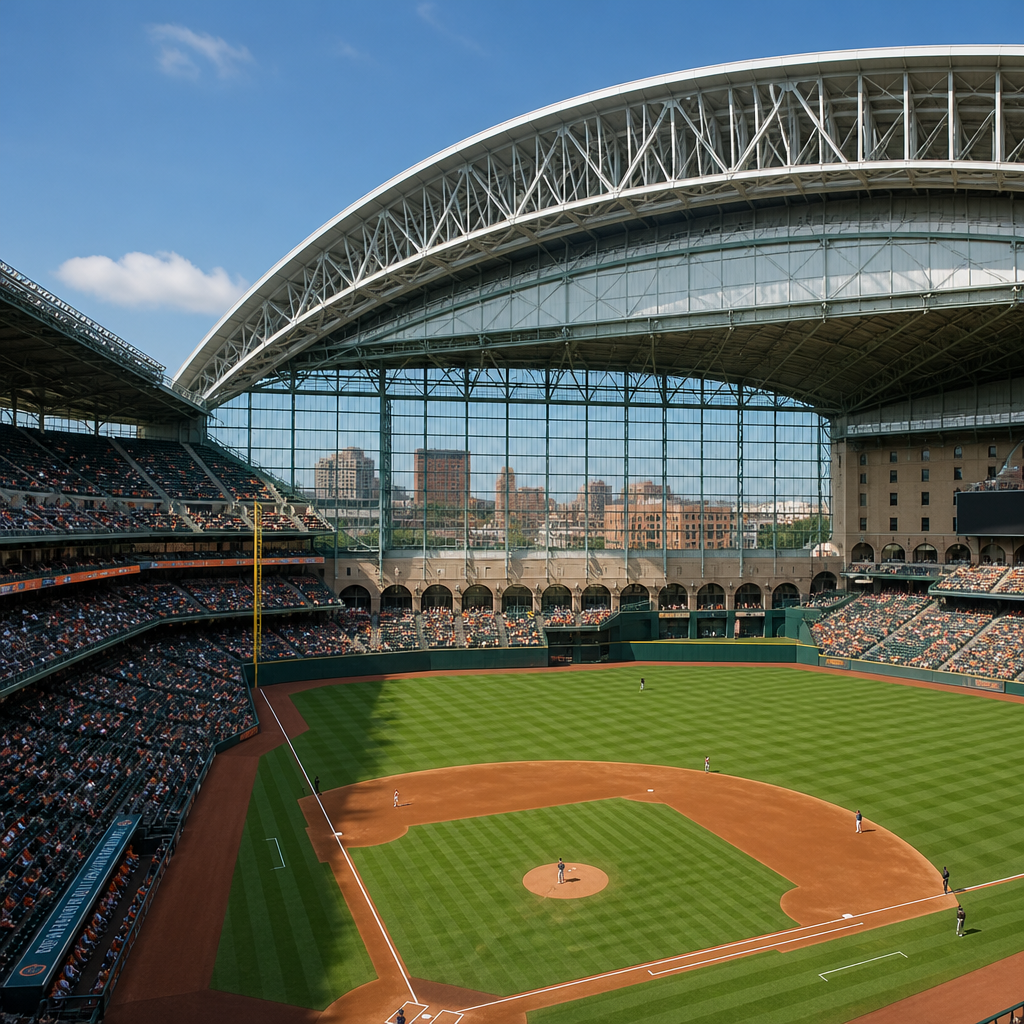
Retractable roofs changed Major League Baseball by turning weather from a constant risk into a manageable design variable, and their history reveals how teams, cities, architects, and engineers reshaped the modern ballpark. In baseball, a retractable roof is a movable structural covering that can open for outdoor play and close to protect fans, players, and the field from rain, heat, humidity, or cold. That distinction matters because a retractable-roof ballpark is not the same as a fixed dome: a dome creates a permanently indoor environment, while a retractable system preserves the option of open-air baseball when conditions allow. I have toured and studied these buildings as operating venues rather than abstract design ideas, and the pattern is clear. Every major roofed park reflects three pressures at once: climate, revenue, and civic ambition. Teams want more dates without rainouts, municipalities want year-round event capability, and fans still want the sightlines, grass, and atmosphere associated with traditional baseball. As a hub within ballpark design and features, this history also explains related topics such as field drainage, turf selection, structural spans, fan comfort, acoustics, and maintenance planning. Understanding retractable roofs is essential because these systems did not merely cover stadiums; they changed scheduling, construction budgets, franchise relocation decisions, and the identity of several MLB markets.
From domes to moving roofs: the concept takes shape
Before retractable roofs became practical, baseball’s weather problem was addressed with enclosed multipurpose stadiums. The Astrodome, opened in Houston in 1965, proved that a roof could eliminate rainouts and air-condition spectators in a punishing climate, but it also exposed the tradeoffs. Indoor light affected natural grass so severely that the Astros eventually adopted artificial turf, and many fans felt early domes detached baseball from its outdoor roots. That tension drove the next phase of design thinking. Owners and architects began asking a more precise question: could a stadium deliver climate control when needed without sacrificing open sky the rest of the time?
By the 1970s and 1980s, advances in long-span steel, mechanized bogie systems, computer-controlled movement, and segmented roof panels made the answer increasingly plausible. Yet cost remained the barrier. A retractable roof adds enormous structural complexity because the building must support both the fixed bowl and the moving loads of the roof itself. Tracks, drive motors, locking mechanisms, drainage channels, wind sensors, and weather sealing all have to work reliably on event days. In practice, this meant retractable roofs emerged only when local conditions made the investment easy to justify. Cities with frequent rain, extreme heat, or heavy summer humidity had the strongest case. So did markets trying to secure public funding by promising conventions, concerts, and non-baseball events in a weather-protected venue.
The early history of retractable roofs in Major League Baseball is therefore not just an engineering story. It is also a story about financing models, urban development strategies, and fan expectations shifting away from the bare-bones multipurpose stadium. Once teams realized a roof could protect gate revenue while still marketing a “real” ballpark experience, the retractable concept moved from novelty to strategic asset.
Olympic Stadium and the difficult first step
The first major MLB experiment with a retractable roof was Montreal’s Olympic Stadium, home of the Expos. Although the stadium opened in 1976, the retractable roof concept was plagued by delays, redesigns, and technical shortcomings. The original vision by architect Roger Taillibert was bold: a dramatic inclined tower supporting a retractable Kevlar roof. In practice, the system arrived late, operated inconsistently, and became more famous for cost overruns and engineering controversy than for seamless baseball operations.
Olympic Stadium matters historically because it demonstrated two lessons that later projects took seriously. First, a retractable roof cannot be treated as an architectural flourish added to a politically charged megaproject. It must be engineered from day one as a core operating system. Second, maintenance is part of design. If a roof is difficult to open, vulnerable to weather damage, or frequently unavailable, it fails the practical test that teams and fans care about most. Montreal never got a reliable showcase of open-air flexibility, and the Expos did not benefit from the consistent revenue and scheduling advantages later clubs would enjoy.
Even so, Olympic Stadium belongs in any serious account of ballpark design and features because it was a transitional project. It exposed the gap between visionary form and operational reliability. Later MLB owners were far more cautious, demanding proven mechanical systems, better materials, and clearer lifecycle planning. In that sense, Montreal’s troubled roof was an expensive prototype for the league.
Toronto proves the model can work
When SkyDome opened in 1989, it changed the conversation. Now known as Rogers Centre, Toronto’s stadium became the first fully functional retractable-roof venue in Major League Baseball. Its roof used multiple steel panels moving on rails, creating a genuine indoor-outdoor ballpark capable of adapting to weather within a relatively short operating window. More important than the spectacle was the reliability. Fans could arrive expecting the game to be played regardless of rain, yet still enjoy open conditions on good days.
I still view SkyDome as the inflection point because it solved the public perception problem. Retractable roofs were no longer futuristic promises; they were working infrastructure. The Blue Jays benefited immediately from a marquee identity, strong attendance, and event flexibility. The building also influenced stadium economics across North America. With hotel views, premium seating concepts, and a roof that expanded the event calendar, SkyDome showed owners how design features could become revenue engines.
There were compromises. Like many late twentieth-century stadiums, SkyDome was large and multipurpose in feel compared with later retro-inspired parks. But the roof itself proved undeniably valuable. Baseball could preserve an outdoor option without remaining hostage to rain and cold spring dates. Other cities noticed, particularly those trying to balance fan comfort with large public stadium investments.
The 1990s and 2000s boom in climate-driven ballpark design
After Toronto, retractable roofs spread primarily in markets where weather made them economically rational. Seattle’s T-Mobile Park, opened as Safeco Field in 1999, answered a straightforward regional need: frequent rain rather than oppressive heat. Its roof does not fully enclose the building in the way some later parks do, but it covers the seating bowl and field effectively enough to protect games while preserving an outdoor character. That solution was highly site-specific and remains one of the smartest examples of climate-responsive stadium design.
Houston followed with Minute Maid Park in 2000, replacing the Astrodome’s permanently indoor environment with a retractable system that restored natural light and open-air possibilities. In Houston, the case for a roof is overwhelming. Summer heat and humidity can make afternoon baseball punishing, and thunderstorms threaten scheduling. A retractable roof let the Astros market comfort without abandoning baseball’s outdoor aesthetic. Milwaukee’s American Family Field, opened as Miller Park in 2001, addressed a different problem: cold and unpredictable weather in April, May, and September. Phoenix’s Chase Field, opened in 1998, responded to desert heat so intense that open-roof summer baseball would be unrealistic for much of the schedule.
The common thread was not style but operating logic. Retractable roofs became a way to customize environmental control by market. They also reshaped franchise politics. In Seattle, stadium debates tied directly to long-term team stability. In Houston and Milwaukee, the promise of dependable attendance and expanded event use strengthened the public case for new construction. A roof was never just a fan amenity. It was a financing argument, a scheduling safeguard, and a statement that a city intended to keep major league baseball viable for decades.
How retractable roofs changed ballpark design and features
Retractable roofs influenced nearly every other stadium system, which is why they sit at the center of any broad discussion of ballpark design and features. The most obvious effect is structural. A roof opening wide enough for a baseball field requires immense spans, careful load transfer, and precise tolerances. But the secondary effects are just as important. Airflow changes how grass grows. Shade patterns affect infield moisture. Closed-roof acoustics alter crowd noise and public-address clarity. HVAC capacity, humidity control, condensation management, and drainage design all become more demanding.
From an operations standpoint, grounds crews must plan for multiple environments in one building. Natural grass selection depends on sunlight exposure, supplemental grow lighting, root-zone composition, and moisture retention. Bermudagrass may thrive in one market, while hybrid systems or overseeding schedules work better in another. Roofed venues also require disciplined decision-making before first pitch. Teams track forecast changes, dew point, wind, radar timing, and temperature swings to decide whether to open or close. That call affects not only comfort but also ball carry, glare, and field speed.
| Ballpark | Opened | Primary climate challenge | Roof design impact |
|---|---|---|---|
| Rogers Centre | 1989 | Cold, rain | Proved reliable indoor-outdoor operation at MLB scale |
| Chase Field | 1998 | Extreme heat | Made summer baseball viable in a desert market |
| T-Mobile Park | 1999 | Frequent rain | Protected games while preserving open-air character |
| Minute Maid Park | 2000 | Heat, humidity, storms | Balanced comfort with traditional ballpark atmosphere |
| American Family Field | 2001 | Cold, variable weather | Reduced early- and late-season weather risk |
| loanDepot park | 2012 | Heat, rain, humidity | Supported baseball and year-round event programming |
| Globe Life Field | 2020 | Extreme heat | Reframed fan comfort as a core design priority |
Fan experience changed as well. Retractable roofs support wider concourses, enclosed clubs, and premium areas that remain comfortable in poor weather. They also help teams protect television schedules and reduce the uncertainty that discourages advance ticket purchases. For all the romance of weather-affected baseball, clubs know that certainty sells. That is one reason modern retractable-roof ballparks often outperform older open-air facilities in non-baseball utilization.
Modern examples, tradeoffs, and what the history means now
Later venues refined the model rather than reinventing it. Miami’s loanDepot park opened in 2012 with a retractable roof tailored to a hot, humid, rainy climate where consistent open-air baseball would be difficult. Texas pushed the conversation further with Globe Life Field in 2020. The Rangers left Globe Life Park, a beloved but brutally hot open-air stadium, because North Texas summer conditions had become a direct business issue. That move captured a leaguewide truth: climate comfort is not secondary anymore. It influences attendance patterns, premium sales, family appeal, and even player recovery.
Still, retractable roofs are not automatic upgrades. They are expensive to build and maintain, and they can alter the sensory texture of baseball. Some fans dislike closed-roof games because lighting, acoustics, and air movement feel less organic than in a traditional outdoor park. Mechanical systems also age. Motors, seals, control software, and rail assemblies require continuous inspection and periodic renewal. The roof must be integrated with the building’s life-safety systems, weather monitoring protocols, and event staffing plans. If ownership underfunds maintenance, the fan experience deteriorates quickly.
Even with those tradeoffs, the history of retractable roofs in Major League Baseball points in one direction. These structures solved real problems that fixed domes and open-air parks could not solve alone. They preserved baseball’s connection to sky and weather while reducing the financial chaos caused by climate. For readers exploring iconic ballparks, this is the key takeaway: retractable roofs are not isolated gadgets. They are organizing features that affect architecture, turf, scheduling, economics, and civic identity all at once.
As you continue through the broader ballpark design and features topic, use retractable-roof history as a lens for understanding the rest of the stadium. Ask why a park was built where it was, what climate challenge it answered, how its field and seating were shaped by that decision, and what tradeoffs remain visible today. That approach turns a roof from a novelty into a powerful explanation for how modern baseball venues work.
Frequently Asked Questions
What is a retractable roof in Major League Baseball, and how is it different from a fixed dome?
In Major League Baseball, a retractable roof is a movable structural system designed to let a ballpark function as both an open-air stadium and an enclosed venue. When conditions are favorable, the roof can open to deliver the traditional outdoor baseball experience with natural light, open sky, and the atmosphere many fans associate with the sport’s history. When weather becomes a problem, the roof can close to protect the game from rain, extreme heat, heavy humidity, wind, or cold. That flexibility is exactly what makes retractable-roof ballparks so significant in the history of baseball architecture.
A fixed dome, by contrast, does not open. It permanently encloses the stadium, which solves weather concerns but changes the character of the baseball experience. Earlier domed facilities were often praised for reliability, but they were also criticized for feeling artificial compared with classic outdoor parks. Retractable-roof stadiums emerged as a response to that tension. Teams and cities wanted the dependability of indoor play without fully giving up the appeal of outdoor baseball. In that sense, the retractable roof became a compromise between tradition and modernization.
This distinction matters because the history of retractable roofs is not simply the history of covering a field. It is the story of how baseball sought to preserve the romance of an outdoor game while adapting to modern business realities, fan expectations, and regional climate challenges. Retractable roofs allowed owners and municipalities to think differently about scheduling, attendance, player comfort, and year-round venue use. That is why they represent a major step beyond the fixed domes that came before them.
Why did Major League Baseball teams and cities begin building retractable-roof stadiums?
The push toward retractable-roof ballparks came from a combination of practical necessity and economic ambition. Weather has always influenced baseball, from rain delays and postponements to oppressive summer heat and early-season cold. For teams, those disruptions can affect attendance, concession revenue, broadcasting schedules, and field conditions. For cities that help finance stadiums, weather-related interruptions can reduce the return on a major public investment. Retractable roofs offered a way to limit those risks without abandoning the identity of baseball as an outdoor sport.
Climate was one of the biggest drivers. In some markets, frequent rain made scheduling unpredictable. In others, especially hot-weather cities, daytime and even evening conditions could be uncomfortable or unsafe for fans and players. A retractable roof made it possible to stage games in more controlled conditions while still opening the building when the weather was pleasant. That flexibility was particularly attractive in regions hoping to host baseball successfully over a long season that stretches from spring into fall.
There was also a broader shift in stadium philosophy. By the late twentieth century, teams and designers were moving away from generic multipurpose facilities and toward ballparks tailored to baseball. Retractable roofs fit this trend because they let architects create venues with more baseball-specific character while still addressing weather and revenue concerns. Cities and owners also recognized that a roofed facility could host additional events, from concerts to conventions, increasing the building’s usefulness beyond 81 home games. In short, retractable roofs gained popularity because they solved baseball problems, business problems, and civic-development goals at the same time.
Which ballparks were most important in the history of retractable roofs in Major League Baseball?
Several stadiums stand out as major milestones in the development of retractable roofs in Major League Baseball. One of the most important was Toronto’s SkyDome, now Rogers Centre, which opened in 1989. It was the first Major League Baseball stadium with a fully functional retractable roof, and it immediately changed expectations for what a modern ballpark could be. SkyDome was ambitious in scale and engineering, and it demonstrated that a movable roof could operate in a major professional baseball setting rather than as a futuristic concept on paper.
After that breakthrough, other teams in challenging climates embraced the model. Chase Field in Phoenix, which opened in 1998, was especially significant because it showed how essential a roof could be in extreme heat. Rather than simply protecting against rain, the retractable roof there made baseball viable and comfortable in a desert environment during the hottest months of the season. Minute Maid Park in Houston, opening in 2000, became another influential example, addressing both heat and humidity while maintaining a distinctly baseball-focused design. T-Mobile Park in Seattle, which also opened in 1999, offered a different climate case, emphasizing protection from frequent rain while preserving an open-air feel whenever possible.
These venues mattered not only because they had roofs, but because each reflected a different reason for wanting one. Some responded to rain, others to heat, and all helped prove that roof technology could be adapted to local conditions and aesthetic goals. As more retractable-roof stadiums opened, the concept moved from novelty to accepted part of the ballpark design toolkit. Collectively, these parks chart the evolution of a major architectural shift in baseball.
How did retractable roof technology change the design and operation of modern baseball stadiums?
Retractable roofs transformed both the engineering of stadiums and the day-to-day way teams operate them. From a design standpoint, adding a movable roof means architects and engineers must solve problems involving structural spans, track systems, drainage, wind loads, climate control, acoustics, lighting, and the transition between open and closed conditions. A ballpark with a retractable roof is not simply an outdoor stadium with a lid attached; it is a highly coordinated machine that must function safely, reliably, and efficiently while preserving sightlines and the feel of baseball.
Operationally, the roof changes decision-making before and during every game. Teams monitor weather forecasts closely and determine whether conditions call for an open or closed configuration. That decision affects fan comfort, field maintenance, airflow, and even the in-game atmosphere. Closed roofs can create different sound dynamics, making crowds feel louder and more intense. Open roofs reconnect the game to the natural environment. Grounds crews also benefit because better weather protection can help preserve the playing surface and reduce damage from rain or excessive exposure.
Retractable roofs also reshaped the business model of the modern ballpark. Fewer rainouts mean fewer logistical headaches for rescheduling and fewer disruptions to ticket holders, broadcasters, and local businesses. Teams can market a more predictable fan experience, which is particularly valuable for families, tourists, and premium-seat buyers. In many cases, the stadium also becomes a more versatile civic asset because enclosed conditions make non-baseball events easier to host. The result is that retractable roofs did not just alter stadium appearance; they redefined what owners, cities, and fans expect from a Major League venue.
What is the long-term historical significance of retractable roofs in Major League Baseball?
The long-term significance of retractable roofs lies in how they changed baseball’s relationship with environment, architecture, and commerce. For most of the sport’s history, weather was an unavoidable force that shaped schedules, attendance, and even competitive rhythm. Retractable roofs did not eliminate weather entirely, but they turned it from a constant threat into a manageable design variable. That shift had enormous consequences. It gave teams more control over game conditions, improved revenue stability, and made baseball more practical in markets that might otherwise struggle with climate challenges.
Historically, retractable roofs also symbolize a larger transformation in stadium thinking. Baseball moved from simple grandstands to monumental civic venues, then to multipurpose concrete facilities, and eventually to highly specialized ballparks that combine nostalgia with advanced engineering. The retractable-roof stadium fits squarely into that modern phase. It reflects the idea that a ballpark can honor baseball tradition while still using sophisticated technology to improve comfort, reliability, and profitability.
Perhaps most importantly, retractable roofs show how many different interests shape the evolution of baseball: teams seeking revenue, cities pursuing development, fans wanting comfort, players needing workable conditions, and architects pushing technical boundaries. Their history is about more than mechanics. It is about how the sport adapted to changing expectations without fully severing its connection to outdoor play. That is why retractable roofs remain one of the clearest examples of baseball modernizing itself while trying to preserve the essence of the game.