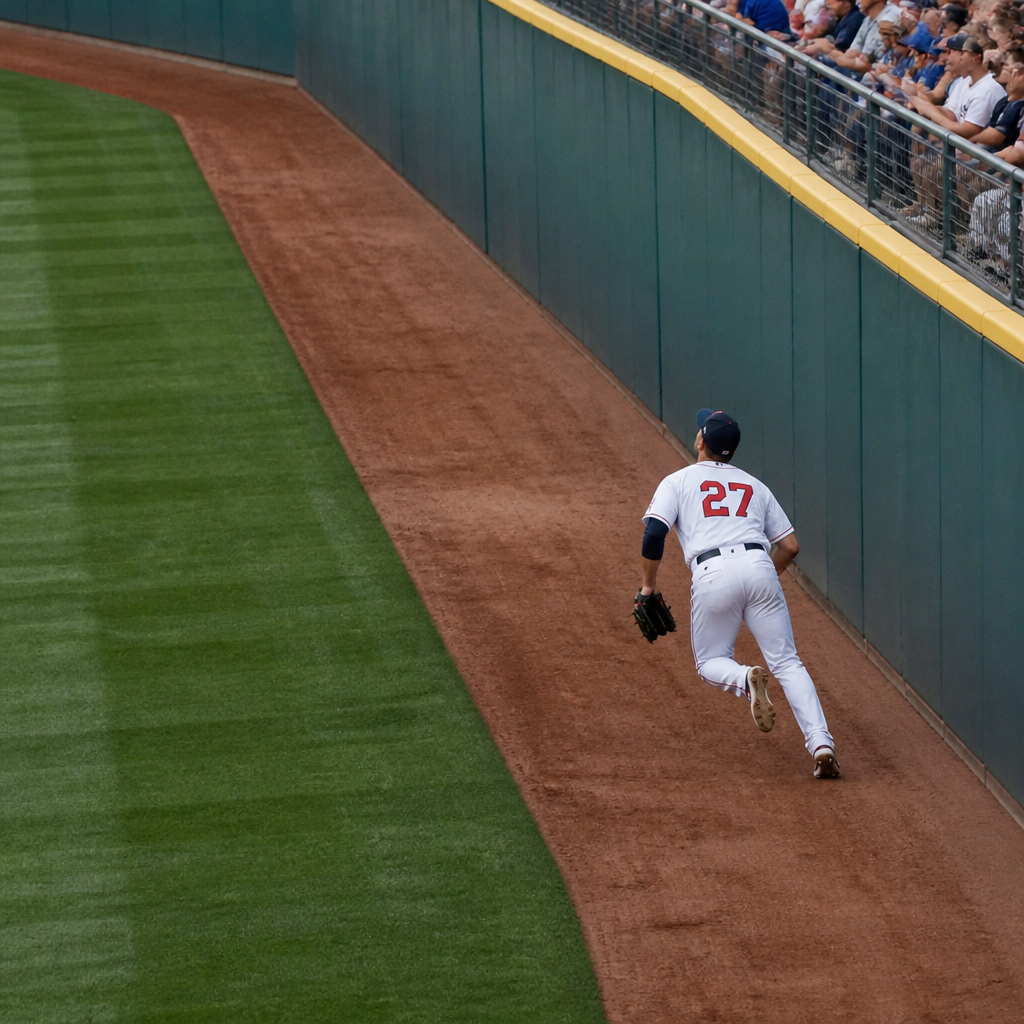
Warning tracks changed baseball by turning the last few feet of the outfield into a tactile safety zone, giving fielders a split-second cue before the wall and reshaping how ballpark design protects players without changing the basic geometry of the game. In baseball, a warning track is the strip of different surface material, usually crushed stone, cinder, or dirt, that runs in front of the outfield fence and often along side walls. Its purpose is simple: when an outfielder feels the change underfoot, he knows the wall is close and can adjust his stride, prepare for contact, or pull up before a dangerous collision. That plain design idea became one of the most practical safety features ever added to professional parks.
Within the larger subject of ballpark design and features, the warning track belongs in the same conversation as outfield wall padding, foul territory dimensions, batter’s eyes, dugout rail heights, drainage systems, and playing-surface transitions. I have spent years studying old park diagrams, renovation plans, and stadium standards, and the warning track is one of the clearest examples of how a small physical detail can influence play, construction, maintenance, and player behavior all at once. It matters because baseball asks defenders to chase fly balls at full speed while looking upward, often with limited awareness of where the fence actually is. A design element that reduces guesswork by even one step can prevent injuries to shoulders, wrists, knees, ribs, and heads.
The topic also matters historically. Early ballparks were full of quirks but light on formal safety thinking. Many prewar and midcentury parks had hard walls, irregular fences, drainage lips, concrete edges, and surface changes that were inconsistent or nonexistent. As stadium engineering became more standardized, clubs and leagues began treating the field not just as a scenic stage but as a workplace requiring predictable cues. That shift is central to any hub page about ballpark design and features, because it connects aesthetics to function. Fans may notice Green Monster measurements, ivy, fountains, or quirky corners first, but players live with warning tracks, wall padding, crown, grade, turf composition, and sightlines every inning.
This article explains when baseball added warning tracks in practical terms, why they spread, how they are built, what dimensions and materials matter, where they succeed, and where they fall short. It also places warning tracks in the broader design language of iconic ballparks. If you are exploring how stadium details affect defense, maintenance, architecture, and safety, this is the starting point for the entire ballpark design and features subtopic.
How warning tracks entered baseball and why they became standard
Baseball did not adopt warning tracks through a single dramatic rule change that instantly transformed every outfield. Instead, they emerged gradually as grounds crews, architects, and team operators recognized a recurring problem: outfielders chasing deep drives could not safely judge distance to the fence while tracking the ball overhead. Some early parks had bare dirt or cinder around the perimeter for practical maintenance reasons, especially near walls and scoreboard structures, but those strips were not always designed as intentional warning devices. Over time, the practical effect became obvious. A distinct change in texture underfoot gave fielders notice that the barrier was near.
By the mid-twentieth century, as enclosed multipurpose stadiums and more uniform professional facilities appeared, warning tracks became more deliberately planned. The modern expectation took shape alongside other safety measures such as padded walls and standardized field specifications. While Major League Baseball’s rulebook historically focused more on field dimensions and local ground rules than prescriptive construction details, the warning track became entrenched through professional norms, engineering standards, and league guidance. Once players, coaches, and stadium designers saw the value, it became very difficult to imagine a serious park without one.
The best way to understand this timeline is to see warning tracks as part of baseball’s broader modernization. Early parks often privileged fitting a field onto irregular urban land. Later parks balanced spectacle with repeatable player conditions. In that second era, hidden risks became less acceptable. A fielder crashing into an unpadded brick wall after sprinting across uninterrupted grass was no longer just “part of the game.” It was a preventable design failure. That mindset helped move warning tracks from occasional feature to near-universal standard in professional baseball and common practice in college, municipal, and high school parks.
How a warning track works during live play
A warning track works because it communicates through the body faster than the eyes can confirm distance. Outfielders tracking a fly ball usually keep their vision upward and slightly over the shoulder. In that posture, visual awareness of the wall is reduced. The surface transition, from grass or turf to a firmer, looser, or louder strip, acts like a nonverbal signal. Players feel the crunch, reduced traction, or different give under cleats and instinctively know they are close to the fence.
That cue matters most on plays where timing is tight. Consider a center fielder running full speed toward dead center on a deep drive. If he reaches the warning track two strides before the wall, he can shorten his steps, angle his body, plant for a leap, or prepare for glancing contact with the padding instead of taking the wall squarely. On a ball hit into the right-center gap, the track also helps fielders orient when the fence curves or juts. In parks with unusual dimensions, the strip can be as important as the wall itself.
Players do not all use the warning track the same way. Some count steps from first contact with the track. Others rely on the sound and trust instinct. Veteran outfielders often learn each park’s pace: how many strides from the track edge to the padding in left at Fenway, how the angle changes in triples alley at Oracle Park, or how artificial surfaces alter traction in older dome configurations. The warning track is not magic. It does not remove risk. But it gives defenders a reliable physical reference in a situation where they otherwise might have none.
Materials, dimensions, and construction choices in ballpark design
Although fans often think of warning tracks as a simple dirt strip, their design involves several technical choices. Material affects traction, drainage, maintenance, and the quality of the cue given to players. Traditional tracks used cinder or crushed brick. Many modern parks use decomposed granite, calcined clay blends, or engineered aggregates selected to contrast with the grass, shed water effectively, and stay stable under weather and foot traffic. On synthetic fields, the track may be a different turf color with a separate infill profile, but the best designs still create a clear tactile change rather than relying on appearance alone.
Width is equally important. A track that is too narrow provides too little reaction time; one that is overly wide can alter play unnecessarily and reduce useful outfield grass. In practice, many professional parks have warning tracks around fifteen feet wide, a dimension long associated with established guidance and common construction practice. The ideal width also depends on wall height, field speed, and whether the fence line is straight, angled, or curved. A high wall such as Fenway Park’s Green Monster creates a different interaction than a lower padded fence in a symmetrical outfield.
Construction must account for sub-base stability, edge restraint, grading, and transitions. If the track sits too high or too low relative to the grass, it can create a lip that causes rolled ankles or bad hops. If drainage is poor, the strip can harden, puddle, or wash out. Groundskeepers work to maintain consistency because the warning track must be dependable every day, not just visible on Opening Day. In my experience reviewing park plans, the most successful tracks are not the flashiest ones; they are the ones players stop noticing because they perform the same way in April, July, and October.
| Design element | Common professional approach | Why it matters |
|---|---|---|
| Width | About 15 feet | Gives outfielders reaction time before the wall |
| Material | Crushed stone, calcined clay, decomposed granite, or cinder-style mix | Creates a tactile contrast from grass and supports drainage |
| Elevation | Flush transition with surrounding field | Prevents lips, bad hops, and ankle hazards |
| Wall interface | Track meets padded fence or base of wall cleanly | Reduces collision severity and maintenance issues |
| Color contrast | Visibly different from turf | Helps players, umpires, and fans read boundary zones |
Warning tracks at iconic ballparks and what they reveal about stadium character
Iconic ballparks show that warning tracks are functional features, but they also express each park’s personality. Fenway Park is the classic example. The warning track in front of the Green Monster is inseparable from the wall itself. Left fielders there do not merely run to a fence; they navigate one of the game’s most famous defensive environments, using the track, the wall angle, and years of learned carom behavior. Wrigley Field offers a different character. Ivy softens the visual impression of the outfield, yet the warning track remains a critical spatial cue because outfielders still need a dependable sense of the wall beneath the charm.
Dodger Stadium, with its cleaner geometry and hillside setting, demonstrates the modernist version of the same principle: clear sightlines, broad warning tracks, and a field built to feel legible at speed. Oracle Park adds complexity with asymmetrical outfield spaces and the deep right-center alley historically known as triples alley, where route efficiency and wall awareness matter on every extra-base chase. Old multipurpose parks such as Veterans Stadium or Three Rivers Stadium, by contrast, often paired synthetic surfaces with warning tracks that felt harder and faster, changing how fielders approached the wall and how balls bounded once they reached the perimeter.
These examples matter for a hub article on ballpark design and features because they show how one element interacts with many others. A warning track does not exist in isolation. Its usefulness depends on fence height, padding, outfield contour, lighting, visibility, turf speed, and local geometry. That is why evaluating any famous park requires more than listing dimensions. You need to ask how the park communicates with players. Warning tracks are one of the clearest answers.
Limits, tradeoffs, and the future of safer outfield design
Warning tracks improve safety, but they are not foolproof. Outfielders can still miscount steps, lose balance on loose material, or hit the wall after focusing fully on the ball. Young players sometimes assume the track itself guarantees safety and continue at full speed too long. In poor weather, the contrast between surfaces can become less distinct. On some synthetic fields, visual contrast exists without enough tactile difference, reducing the feature’s effectiveness. That is why good design pairs the track with wall padding, consistent maintenance, and player familiarity during batting practice.
There are also strategic and aesthetic tradeoffs. Wider tracks slightly reduce grass area and can influence how hard-hit balls carom near the fence. Different materials change maintenance budgets and water use. Historic parks undergoing renovation often must balance authenticity with modern safety expectations. Preserving a ballpark’s character does not mean freezing it in an unsafe past; it means integrating modern protective features carefully enough that the park still feels like itself. The best renovation projects do this well, keeping distinctive wall lines and dimensions while improving track consistency and fence padding.
Looking ahead, the future of warning tracks will likely involve better surface engineering rather than radical reinvention. Expect more testing of aggregate blends, moisture management systems, and synthetic designs that preserve tactile feedback. Player-tracking data may also help teams evaluate where collisions most often occur and whether track width or wall padding should vary by zone. Even with better analytics, the core idea will remain unchanged: defenders need an unmistakable physical warning before they meet the wall.
Warning tracks deserve their place in any serious discussion of iconic ballparks because they capture the essence of smart stadium design: subtle, practical, and deeply connected to how the game is actually played. They emerged from a clear need, became standard through experience and repeated proof, and now sit alongside wall padding, sightlines, drainage, and surface management as foundational features of a professional field. For fans, they may look like a modest strip of dirt. For players, they are a trusted signal delivered at the exact moment when trust matters most.
As a hub for ballpark design and features, this topic points outward to every related subject. To understand warning tracks fully, you also need to study fence construction, turf systems, maintenance practices, historic renovations, and defensive positioning inside unusual outfield shapes. That is the larger lesson of baseball architecture. The most memorable parks are not only beautiful or distinctive; they are readable, playable, and safe. Their details help athletes perform under pressure without stripping away the drama that makes baseball compelling.
If you are building knowledge around iconic ballparks, start with features like the warning track because they reveal how design decisions influence every inning. Look closely at the next game you watch: notice the track width, the wall height, the padding, and how outfielders move when they reach the perimeter. The strip before the wall is more than decoration. It is one of baseball’s most important design answers to one of the sport’s oldest dangers, and it remains essential to how great ballparks work.
Frequently Asked Questions
What is a warning track in baseball, and why was it added in front of the outfield wall?
A warning track is the strip of material that runs directly in front of the outfield fence and often continues along side walls in foul territory. It is usually made from a surface that feels noticeably different from the grass or turf around it, such as dirt, cinder, or crushed stone. Its purpose is not decorative. It exists to give fielders a physical signal underfoot that they are approaching the wall, especially when they are sprinting at full speed while tracking a fly ball overhead or over their shoulder.
Before warning tracks became standard features, outfielders had fewer reliable cues that they were running out of room. A player chasing a deep drive is often focused almost entirely on the ball, not on the fence. That creates obvious danger. The warning track provides a split-second sensory alert: once a fielder feels the change in footing, he knows the wall is close and can adjust his steps, brace for impact, prepare to jump, or decide to play the ball differently. In that sense, the warning track became one of baseball’s simplest and smartest safety innovations. It did not alter the dimensions of the field or the fundamental challenge of catching deep fly balls. Instead, it added a protective transition zone that helps players judge space at the exact moment they need it most.
How does a warning track actually help outfielders during play?
The value of a warning track comes from how baseball is played in real time. Outfielders frequently chase balls while looking upward, backward, or sideways, which means they cannot constantly watch where their feet are going. On a deep fly ball, the defender is reading the ball’s arc, wind, spin, and projected landing point while also trying to maintain speed. In that situation, visual awareness of the wall can disappear for a crucial second or two. The warning track solves that problem by turning distance into something a player can feel, not just see.
As soon as the player steps from grass or turf onto the track, the change in texture and traction serves as a warning that the fence is near. Experienced outfielders learn to count or instinctively judge how many strides they have left once they hit the track. That can help them slow down, angle their body, glance toward the wall, prepare for a leap, or avoid a dangerous collision altogether. It is not foolproof, and players still crash into fences, but it reduces the odds that the wall arrives as a complete surprise. Just as important, it lets defenders remain aggressive. They can pursue difficult catches with more confidence because the field itself is giving them a built-in cue before the most hazardous part of the play.
When did warning tracks become part of baseball, and were they always standard?
Warning tracks were not always a universal, standardized feature of baseball parks. Early ballparks varied widely in construction, dimensions, and surface conditions, and many did not include a clearly defined tactile strip in front of the fence. As the game evolved and player safety became a more deliberate part of stadium design, warning tracks gained wider acceptance. Their spread reflected a practical reality: outfield walls, bleachers, and irregular park layouts created repeated risks for fielders chasing long drives.
Over time, professional baseball embraced the warning track as a common-sense design element rather than an optional extra. Different parks used different materials and dimensions, but the underlying idea remained the same: create a noticeable transition area before the wall. As stadium architecture became more sophisticated, warning tracks became a routine part of outfield design, both for safety and for consistency in play. Modern fans now think of the warning track as a normal component of a baseball field, but that familiarity is the result of decades of adaptation. Its adoption is a good example of how baseball has historically changed the environment around the game to protect players while preserving the sport’s essential geometry, strategy, and style of play.
Do warning tracks affect the way the game is played, or are they only about safety?
Safety is the primary reason warning tracks exist, but they do influence gameplay in subtle and meaningful ways. They do not change the basic dimensions of the field, turn outs into hits, or alter the official challenge of catching a fly ball. However, they do shape how outfielders approach deep balls near the fence. A defender who knows he will get a tactile cue before the wall may play more assertively, take a cleaner route, or commit more fully to a catch attempt. Without that cue, many players would have to be more cautious near the fence, which could lead to fewer spectacular catches and more balls dropping safely.
Warning tracks also influence how fielders manage caroms off the wall and how they position themselves in unusual parks with angled or asymmetrical outfield fences. On the offensive side, they contribute to the drama of balls hit “to the warning track,” a phrase that has become part of baseball language because the strip marks the threshold between a routine deep fly and a potential home run. So while the warning track is fundamentally a safety feature, it also affects the rhythm and confidence of outfield defense. Its impact is a classic baseball compromise: it protects players without materially changing the core contest between hitter, fielder, and ballpark.
Are warning tracks the same in every ballpark, and what materials are typically used?
Warning tracks are not identical in every ballpark, even though the concept is consistent across the sport. The width can vary, and so can the material used to create the track. Traditionally, warning tracks were often made of cinder or crushed stone, which provided a firm, gritty texture that contrasted clearly with natural grass. Many parks have also used dirt-based surfaces. In more modern stadiums, especially those with artificial turf, designers still aim to create a track with a distinctly different feel underfoot so the warning function remains effective.
The key requirement is contrast. A warning track has to feel and often look different enough from the playing surface that a fielder immediately recognizes the transition. Grounds crews and stadium designers consider traction, drainage, maintenance, and visibility when selecting materials. Some tracks are firmer and faster, while others are looser or more granular. Those differences can slightly affect footing and ball bounce, but the essential job remains the same: give players a dependable sensory alert near the wall. Even though dimensions and materials may differ from one park to another, the warning track represents a shared principle in baseball design. It is a deliberate strip of space that acknowledges one of the sport’s oldest defensive hazards and addresses it in a way that is simple, practical, and enduring.