
Baseball has long been hailed as America’s favorite pastime, a sport that unites people across the nation. The excitement of the World Series, also known as the “Fall Classic,” captivates fans every year as the best teams in Major League Baseball (MLB) compete for ultimate glory. Yet, this serene sport found itself amidst turmoil during the two World Wars. From players enlisting in the armed forces to debates about whether the game should even continue amidst global conflict, these were challenging times for the sport.
The importance of baseball in maintaining national morale cannot be understated. The sport provided a much-needed distraction and a sense of normalcy for the American public during war times. However, the leagues themselves weren’t immune to the seismic changes happening across the world. Many prominent players traded their baseball uniforms for military ones, leading to significant changes in team rosters and the quality of play.
In this article, we will delve into the impact of both World Wars on the World Series and MLB playoffs, examining how the sport adapted and thrived during these turbulent times. We will explore player enlistments, government decisions, and how the sport continued to serve its fans amidst crises. Join us on this historical journey that intertwines baseball and wartime resilience.
Baseball and World War I (1914-1918)
World War I posed significant challenges for Major League Baseball. The war began in 1914, but the United States didn’t enter until 1917. This late entry provided baseball some stability in the initial years. However, once the US joined the war effort, the impact was immediate and profound.
Several prominent players enlisted or were drafted into the military. The most notable among them was Christy Mathewson, a Hall of Fame pitcher who would later suffer from the effects of chemical warfare. Stars like Ty Cobb and George Sisler also donned military uniforms. The depletion of talent forced teams to rely on semi-pro players and older veterans, leading to a noticeable drop in the quality of gameplay.
Despite these challenges, the MLB continued its seasons. The government gave an explicit go-ahead to continue the sport, understanding its value in keeping national morale high. The 1918 season was shortened, however, with a government edict in July mandating that men of draft age must engage in “useful” work or enlist. As a result, the World Series took place in early September rather than its usual October slot. The 1918 World Series between the Boston Red Sox and the Chicago Cubs is infamous not just for its wartime setting, but also for being the last Series the Red Sox would win until 2004.
Overall, World War I forced baseball to adapt rapidly. The sport remained a beloved national activity, showing early signs of its resilience and importance in American culture.
Between the Wars (1919-1939)
The period between the two World Wars was one of growth and popularity for Major League Baseball. The 1920s, often called the “Golden Age of Baseball,” saw the rise of legendary figures like Babe Ruth, Lou Gehrig, and Joe DiMaggio. Ballparks were packed, and the World Series became an unmissable event for many Americans.
During these years, baseball served as a means of recovery and distraction from the grim events of World War I. The sport saw innovations, including the introduction of live radio broadcasts, which brought the excitement of the games into the homes of millions. African-American leagues also flourished during this time, laying the groundwork for the future integration of MLB.
Notably, this period was also marked by the Great Depression. Despite economic hardships, the sport managed to survive, although attendance figures did dip. Many teams got creative; for instance, the New York Yankees introduced “Ladies Day” promotions to bring more fans into the stands.
By the end of the 1930s, MLB had established itself as a robust institution. However, the looming threat of another global conflict began to stir uncertainty. Owners, players, and fans alike wondered how the sport that had become such an ingrained part of American life would cope if another war broke out.
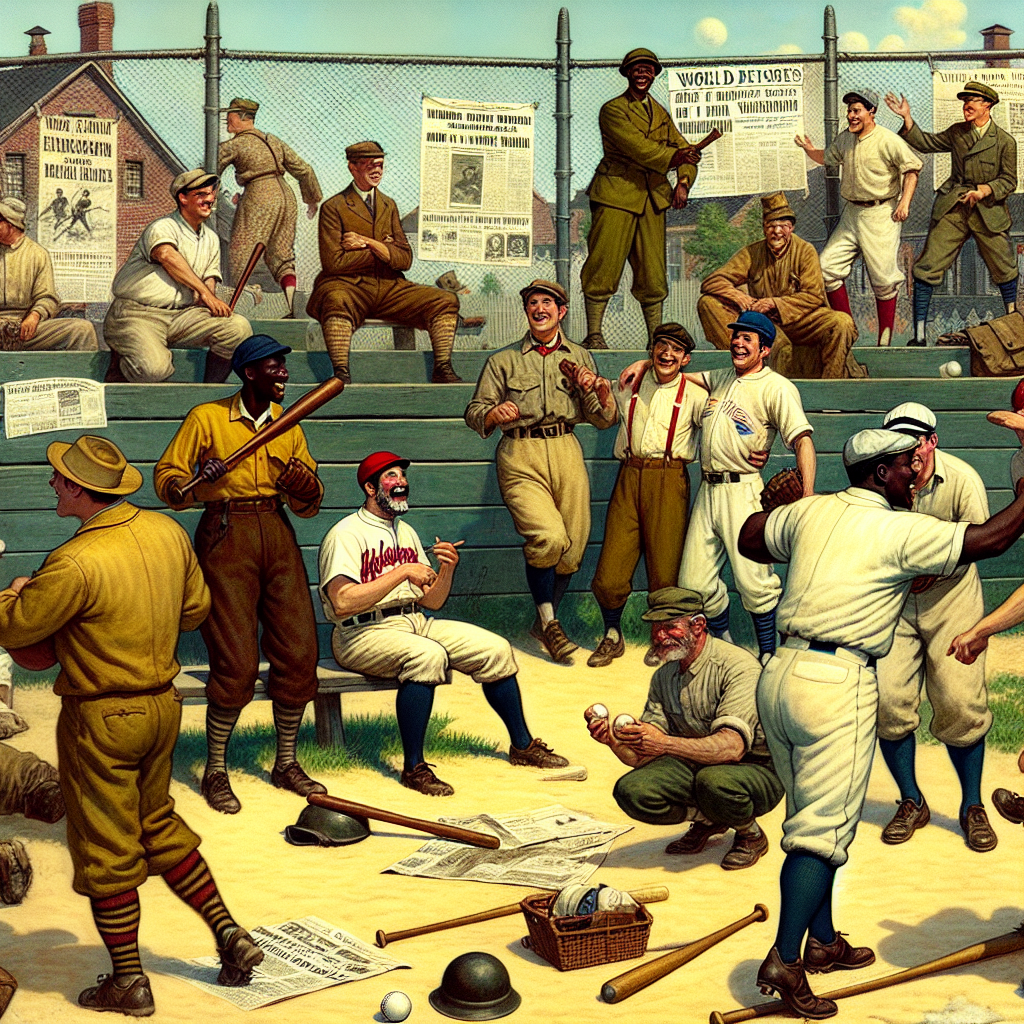
Baseball and World War II (1939-1945)
When World War II began in 1939, the United States initially remained neutral. However, after the attack on Pearl Harbor in 1941, the country was thrust into the conflict. Like in World War I, this posed immediate challenges to Major League Baseball.
Franklin D. Roosevelt, then President of the United States, gave his famous “Green Light Letter” to MLB Commissioner Kenesaw Mountain Landis, encouraging the continuation of baseball during the war. Roosevelt believed that baseball was crucial for national morale and could provide much-needed relief to a war-weary country.
However, the player pool was significantly impacted. Stars like Joe DiMaggio, Ted Williams, and Bob Feller enlisted, leaving teams scrambling to fill rosters. Older players came out of retirement, and younger, less experienced players got their shot at the big leagues.
The All-American Girls Professional Baseball League (AAGPBL) was also established in 1943, providing opportunities for women to play professionally and keep the sport vibrant. The league gained substantial traction and highlighted the role of women in sustaining the sport during dire times.
Wartime restrictions affected the game in various ways. Night games increased to accommodate war workers’ schedules, and travel restrictions led to geographically convenient scheduling and, at times, regional World Series matchups. The 1945 World Series between the Detroit Tigers and the Chicago Cubs was a unique example of how the league adapted to wartime conditions.
Despite these challenges, baseball maintained its allure. The grit and adaptability seen during World War II only strengthened the sport’s place in American hearts.
The Post-War Era (1946-1950s)
After the end of World War II, baseball experienced a resurgence as soldiers returned home, and what was known as the “Golden Era” of baseball began. The post-war period saw packed stadiums and the return of star players who were eager to pick up where they left off.
The integration of baseball in 1947 with Jackie Robinson breaking the color barrier marked a significant turning point, ushering in a new era. This period also included the rise of more iconic figures such as Mickey Mantle and Willie Mays. Teams like the New York Yankees dominated the league, adding to the legendary status of the sport.
The league also expanded during this time, with the introduction of new teams and increased media coverage, particularly television, which brought the game to an even wider audience. World Series games during this period became monumental events, watched by millions and cementing baseball’s place in post-war American culture.
The post-war era also saw the establishment of more organized minor leagues, which helped maintain a steady flow of talent into Major League Baseball. This era set the stage for the sport’s future growth and globalization.
With peace newly regained, baseball took significant strides in evolving and expanding its reach, while also honoring the sacrifices made during the wartime years. The sport not only survived but thrived, becoming more inclusive and technologically forward-moving in the process.
Lessons from Wartime Baseball
The history of baseball during the World Wars provides several lessons in resilience, adaptability, and the unifying power of sport. During times of crisis, baseball adapted by instituting changes that would have a lasting impact, such as expanded night games and increased media coverage.
The enlistment of players showed the deep military commitments of these athletes, and the adjustments made within teams reflected broader societal changes. The introduction of the All-American Girls Professional Baseball League was a revolutionary step towards inclusivity and showcased women’s capabilities on the professional sports stage.
Baseball’s endurance during the wars solidified its role in American culture. The sport went beyond entertainment; it became a source of hope and unity. Stadiums may have faced attendance issues, but the spirit of the game remained unscathed.
The experiences of wartime baseball reveal how sports can serve as a crucial societal glue, providing comfort and a sense of normalcy even amid global turmoil. These lessons hold relevance even today, showcasing the importance of persistence and innovation when faced with adversity.
Conclusion
As we reflect on the history of the World Series and MLB playoffs during the World Wars, it becomes evident that baseball is much more than just a game. It has played a vital role in maintaining the national spirit during challenging times, offering an escape, a sense of normalcy, and moments of joy.
From player enlistments to governmental encouragement, the sport adapted and continued, showing resilience and the unifying power of baseball. The war years defined and solidified baseball as an enduring element of American culture.
Baseball’s resilience during the World Wars paved the way for future growth and innovation in the league. The subsequent post-war era of prosperity and advancements in media and inclusion were rooted in the sport’s wartime experiences.
In honoring the legacy of wartime baseball, we appreciate the sport’s crucial role in American society. The World Series, forever known as the “Fall Classic,” is a testament to baseball’s enduring appeal and its ability to rise above adversity, remaining a beloved pastime through both peace and conflict.
Frequently Asked Questions
1. How did World War I affect Major League Baseball and the World Series?
The outbreak of World War I threw a wrench into America’s beloved pastime, presenting the country with unique challenges. As the United States joined the war in 1917, there was immediate public debate on whether baseball, and specifically the World Series, should continue during such a tumultuous time. Many argued that maintaining a sense of normalcy was crucial for morale, while others insisted it was inappropriate to indulge in sports when soldiers were fighting overseas.
Moreover, the war effort required many players to serve their country, leading to a significant impact on team rosters. Over 200 players, including stars like Ty Cobb and Christy Mathewson, enlisted, which naturally depleted the talent pool for the teams. This meant that clubs had to rely on older players, those unfit for service, or even semi-professional players to fill in the gaps.
The Commissioner of Baseball at the time took into account both the national sentiment and the logistical constraints, ultimately deciding to shorten the 1918 season. The World Series itself became a symbol of resilience, featuring the Chicago Cubs and the Boston Red Sox who won the title. The decision to proceed with baseball and the World Series provided an essential distraction and source of joy for American citizens during a period of uncertainty.
2. What were the challenges faced by Major League Baseball during World War II?
World War II posed even greater challenges for baseball than its predecessor. As young men were drafted into military service, once again baseball saw a significant depletion of its talent pool. An estimated 500 major leaguers served in the armed forces, including legendary players like Joe DiMaggio, Ted Williams, and Bob Feller. Despite these absences, baseball continued, offering a symbol of continuity and entertainment to a war-weary nation.
Unlike World War I, the question of whether to cancel the season was paralleled by the opinion of President Franklin D. Roosevelt. In what became known as the “Green Light Letter,” Roosevelt encouraged baseball to proceed, stating that it boosted public morale. His endorsement was pivotal, emphasizing the sport’s importance to the American public both as a wartime respite and a measure of cultural continuity.
Nevertheless, the game was not entirely untouched by the war’s realities. Night games were limited to conserve energy, travel restrictions affected scheduling, and spring training was relocated due to fuel rationing. Rosters were filled with older players or those classified as unfit for service. Women’s baseball leagues, like the All-American Girls Professional Baseball League, also gained prominence as alternative entertainment, ensuring baseball remained in the public eye through the war years.
3. How did military service impact individual baseball players during the World Wars?
Military service during both World Wars undeniably impacted individual baseball players deeply, affecting their careers and personal lives. Players like Christy Mathewson, who served in World War I, returned home with severe health issues after a gas attack, cutting short an illustrious career. Meanwhile, players enlisted during World War II—such as Ted Williams and Joe DiMaggio—sacrificed crucial prime years of their careers for service.
For many, military service imbued a sense of patriotism and national duty that transcended their sporting lives. The stories of these players are reflective of broader societal values at the time, with many returning home with garnered respect akin to that received from their athletic achievements. Baseball clubs and fans alike held immense pride in their players’ contributions to the war effort, serving both on the fields of competition and in the theater of war.
However, the physical and mental toll of service left tangible impacts. Transitioning back into professional sports posed challenges, with players often requiring time to regain form or deal with injuries. Yet, American baseball players’ service during these periods remains a testament to their character and dedication, elevating them beyond mere athletes to national heroes in the eyes of many.
4. Were there any notable changes in the World Series format during wartime?
The advent of war brought about a few notable changes to the World Series format, driven by necessity and adaptation to wartime constraints. During World War I, the season was abruptly shortened, with the U.S. government enforcing a “work or fight” order that obligated athletes to contribute to the war effort, thereby hastening both the regular season and the World Series.
During World War II, President Franklin D. Roosevelt’s support permitted the continuation of the sport, but new logistical hurdles arose. These included adaptations to the schedule to accommodate for travel limitations due to fuel rationing. While the format of the series itself—best of seven games—remained intact, wartime adjustments underscored the league’s flexibility in preserving the tradition of the Fall Classic.
Furthermore, despite these wartime shifts, the World Series managed to maintain its competitive spirit, providing a sense of enduring tradition in a time of flux and uncertainty. Its ability to adapt while retaining key features of play meant that it continued to captivate audiences and bring joy across the nation, albeit under altered conditions.
5. How did the continuation of baseball during the World Wars influence American culture and society?
The decision to continue baseball during the World Wars had profound cultural and societal implications in America. It reinforced the sport’s role not only as leisure but as a cultural glue, providing continuity and a semblance of normalcy amidst the disarray brought on by war. Baseball became a morale booster, an escape from the grim realities of wartime, and a cherished form of entertainment when many other diversions were curtailed or canceled.
This influence was further accentuated by government endorsement. President Roosevelt’s “Green Light Letter” reinforced baseball’s symbolic importance, advocating that the sport continue as a critical morale-booster for citizens and soldiers alike. This moment crystallized baseball’s status as an essential cultural institution, intertwining public morale with the sport’s survival.
Furthermore, the wartime period catalyzed changes in baseball’s demographics, with women’s leagues rising to prominence and proving that America’s pastime could evolve and thrive beyond traditional gender roles. This laid foundations for further diversification in professional sports in the decades that followed.
Ultimately, baseball during the World Wars affirmed its iconic status in the U.S., not just through the love of the game, but through its role as an emblem of resilience, community spirit, and national pride, key cultural tenets that deeply resonated in the American societal fabric during these turbulent times.