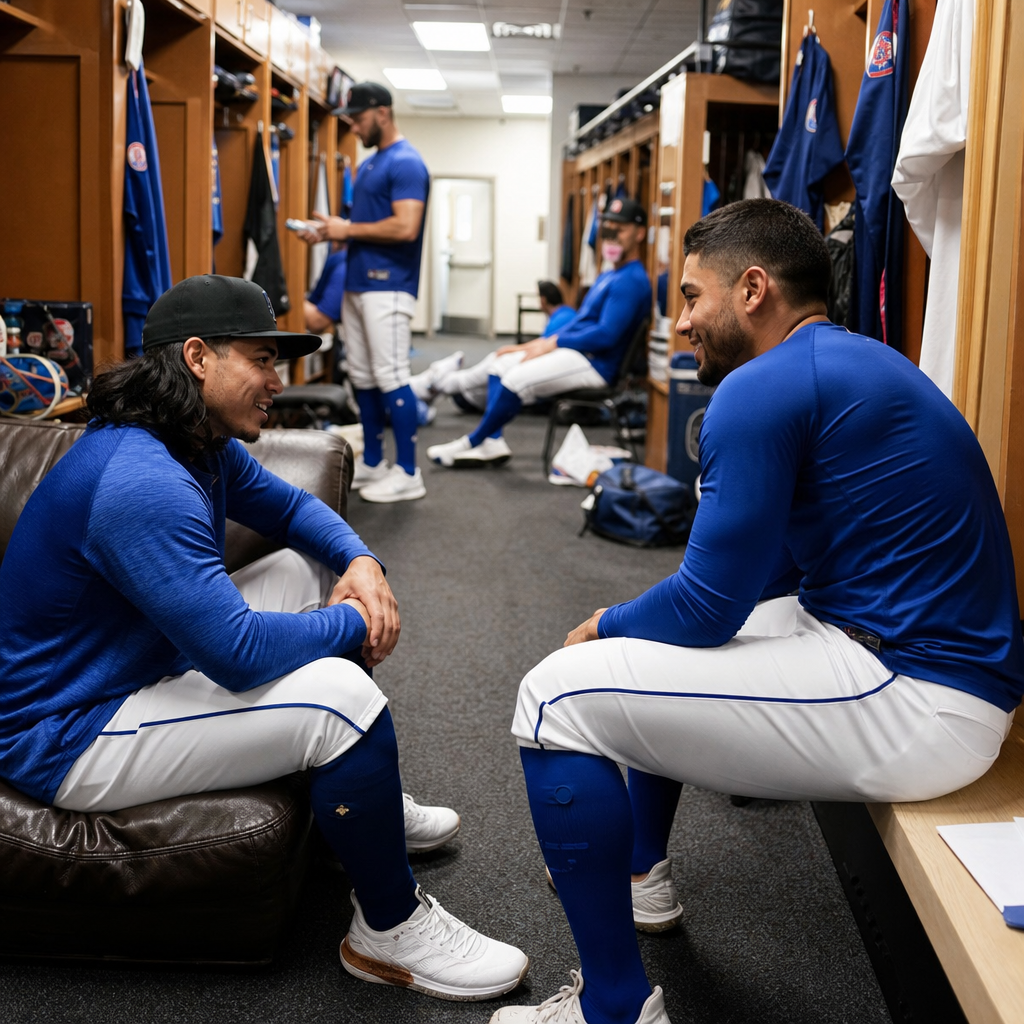
Minor league clubhouses are the hidden infrastructure of professional baseball, the rooms where prospects become teammates, routines become habits, and organizational culture becomes real. Fans see the box score, the radar-gun reading, and the highlight clip, but the fabric of a team is stitched together far from the field in spaces that are practical, crowded, and deeply influential. In the minor leagues, a clubhouse is not just a locker room. It is a workplace, recovery center, meeting area, travel hub, equipment depot, dining room, and social anchor for players and staff navigating a long season with limited resources.
When people talk about clubhouse chemistry, they often mean whether players get along. In practice, the term is broader and more useful. Clubhouse culture includes daily standards, communication between coaches and players, accountability, respect across language barriers, and the systems that support performance. I have spent enough time around player development environments to know that the best clubhouses are rarely the loudest or most glamorous. They are organized, predictable, and player-centered. A strong clubhouse helps a 19-year-old international signee adapt to life in the United States, gives a rehabbing pitcher structure after a tough outing, and allows a manager to correct problems before they become habits.
This matters because the minor leagues are baseball’s development engine. Every major league roster is shaped by years of work in these settings, from rookie ball through Triple-A. Salaries, travel conditions, and facilities have improved in recent years, especially after the 2021 reorganization and the implementation of higher facility standards, but the clubhouse remains a place of tradeoffs. Space is finite. Schedules are demanding. Players are learning to handle failure in public. Understanding how a minor league clubhouse works offers a clearer view of how organizations build depth, protect prospects, and create conditions where performance can actually improve.
What a Minor League Clubhouse Actually Does
A minor league clubhouse supports almost every part of a player’s workday. Before batting practice, attendants and staff lay out uniforms, organize cleats, stock towels, and prepare game equipment. Strength coaches coordinate lift groups. Athletic trainers run treatment schedules. Pitchers review plans with pitching coaches. Hitters check scouting reports, cage assignments, and defensive positioning cards. By first pitch, the clubhouse has already functioned as a logistics center for several departments.
Unlike the polished image many fans associate with the majors, most minor league clubhouses are compact and intensely practical. Lockers may be tight, storage can be limited, and staffing levels vary by affiliate. That makes systems important. Clubs that label equipment clearly, maintain consistent treatment windows, and communicate daily schedules reduce friction and save mental energy. Players notice the difference. So do coordinators visiting from the front office, because an efficient clubhouse usually reflects an efficient player development process.
The clubhouse is also where organizational identity becomes visible. One team may emphasize nutrition compliance, individualized arm-care plans, and detailed postgame reports. Another may put extra focus on multilingual communication, peer leadership, and meeting preparation. These choices shape the day. A player can tell quickly whether standards are lived or merely posted on a wall.
Daily Routine, Shared Space, and Professional Habits
Routine is one of the strongest developmental tools in baseball. In the minor leagues, where players face bus travel, weather delays, promotions, demotions, and uneven performance, routine creates stability. A typical day begins hours before the game. Position players may arrive for treatment, mobility work, and cage sessions; pitchers often follow throwing progressions and recovery plans tied to workload data. Coaches move players through defensive work, game planning, and meetings in a narrow time window.
Shared space teaches habits that matter later in the majors. Players learn how to keep lockers organized, prepare gear for travel, follow laundry protocols, and be early for meetings. Those tasks sound small, but they are signals of professionalism. In my experience, players who manage the ordinary parts of the day well are better equipped to handle the extraordinary parts: role changes, slumps, rehab, and roster uncertainty.
Clubhouse standards also protect everyone’s time. If hitters know exactly when advance information is posted, if pitchers understand where bullpen charts are stored, and if postgame recovery follows a set sequence, fewer details slip through the cracks. The result is not military rigidity. The best environments leave room for personality while removing avoidable chaos.
| Clubhouse Function | Why It Matters | Real-World Minor League Effect |
|---|---|---|
| Equipment organization | Reduces delays and lost gear | Players transition faster from batting practice to first pitch |
| Treatment scheduling | Protects recovery time | Pitchers stay on throwing plans after outings and side sessions |
| Nutrition setup | Supports energy and recovery | Players eat consistently during long homestands and bus trips |
| Meeting structure | Improves clarity and accountability | Defensive plans and scouting notes reach players before game action |
| Travel preparation | Limits stress on the road | Clubbies and staff keep uniforms, bags, and arrival times coordinated |
The People Who Hold the Room Together
Managers and coaches set tone, but clubhouse attendants, athletic trainers, strength coaches, and coordinators often hold the daily operation together. In baseball, the “clubbie” is more than a support role. Clubhouse attendants manage uniform distribution, laundry flow, mudded baseballs in some settings, supply tracking, and the countless practical details players rely on. A good attendant knows who needs extra pants for sliding drills, which catcher burns through gear fastest, and how to get a room reset quickly after a late-night arrival.
Trainers and strength staff are equally central. Modern player development depends on communication between the clubhouse, training room, weight room, and field. If a player reports hamstring tightness, that note affects pregame movement prep, defensive workload, sprint exposure, and sometimes lineup construction. Organizations now use platforms such as Kitman Labs and other athlete-management systems to centralize health and workload information, but software only helps if staff communicate clearly in person.
Veteran players matter too. In Double-A and Triple-A especially, experienced minor leaguers often teach younger teammates how to live the season. They explain how to pack for a six-game road trip, how to reset after an 0-for-12 stretch, and how to stay ready when playing time is uneven. This informal leadership is one reason clubs value reliable organizational players beyond their statistics.
Language, Trust, and Team Chemistry
Minor league clubhouses are multicultural environments. A single roster may include players from the United States, the Dominican Republic, Venezuela, Cuba, Mexico, Panama, Colombia, Curacao, Canada, Japan, and other baseball-producing countries. That diversity strengthens a team, but it also requires intentional communication. The best organizations do not treat translation as an afterthought. They hire bilingual staff, provide interpreters, and teach coaches how to communicate clearly without reducing players to stereotypes.
Trust grows through small, repeated interactions. A coach who explains a defensive adjustment in plain language, then checks for understanding, builds confidence. A veteran who invites a young international player to sit with him on the bus shortens the social distance of a new league. Even music choices, card games, and postgame meals can affect inclusion. Clubhouses are social ecosystems. If one group dominates the room and another stays isolated, chemistry suffers no matter how talented the roster is.
That is why good clubhouse culture is observable. Players greet one another. Staff members share information instead of guarding it. Corrective conversations happen directly, not through rumor. The room has standards, but it also has warmth. Prospects develop faster when they feel secure enough to ask questions, admit confusion, and absorb feedback without embarrassment.
Travel, Meals, Money, and the Real Conditions of Development
Any honest look at minor league clubhouses has to include economics. For years, low pay and uneven facilities made daily life harder than it needed to be. Conditions have improved through salary increases, housing support policies, and stricter facility requirements under the Professional Development License era, but life in the minors still demands adaptation. Long bus rides remain central to league travel. Sleep is inconsistent. Weather changes plans. Clubhouse quality can vary substantially by affiliate and market.
Meals are one of the clearest examples of progress and remaining gaps. Better organizations now provide more structured pregame spreads, postgame food, hydration options, and individualized nutrition support. That matters because a 140-game season punishes inconsistent fueling. Players trying to add strength, maintain weight through summer heat, or recover from heavy workloads cannot do it on fast food alone. Yet not every affiliate has the same kitchen capacity, staffing, or budget flexibility, so implementation differs.
Housing and transportation also spill into clubhouse life. A tired player who had a difficult commute or poor sleep arrives behind the day before work even starts. Staff can create supportive routines, but they cannot completely erase external stress. That is why organizations increasingly view development as an ecosystem problem. A player’s swing decisions may be tracked with high-speed cameras and bat sensors, but recovery, food access, and stability still shape outcomes.
Technology, Data, and the Modern Development Environment
The modern minor league clubhouse is connected to a much larger information system. Video terminals, tablets, internal scouting reports, wearable data, and communication platforms now influence pregame prep and postgame review. Tools such as TrackMan, Hawk-Eye, Rapsodo, Blast Motion, and force plates have changed how clubs evaluate pitch shape, bat speed, swing efficiency, and physical readiness. That information often reaches players through clubhouse conversations before it appears anywhere else.
The challenge is turning data into action. Dumping numbers on a player rarely helps. Effective staffs translate technical information into specific, usable cues. A pitching coach may explain that a slider’s horizontal movement dropped because the pitcher got around the ball too early. A hitting coach may use bat-sensor feedback to confirm that a player’s attack angle changed as he tried to lift more pitches. The clubhouse becomes the place where technology meets language, trust, and routine.
There is also a limit to how much data should enter the room at once. Young players can become overloaded, especially after poor games. Good organizations sequence information. They decide what belongs in a pregame meeting, what belongs in a side session, and what should wait for a coordinator visit. Data is most useful when it clarifies priorities rather than multiplying them.
Why Clubhouse Culture Shapes Promotions and Careers
Performance drives promotions, but clubhouse behavior influences opportunity more than fans realize. Organizations track reliability, coachability, emotional control, and consistency alongside on-field metrics. A player who prepares well, supports teammates, follows recovery plans, and responds constructively to feedback is easier to move aggressively through a system. That does not mean clubs prefer quiet personalities. It means they value players who help the environment function.
This is especially visible during adversity. When a top prospect struggles in Double-A, the clubhouse can steady him or magnify the problem. If teammates normalize adjustment and coaches keep communication clear, the player has a chance to recover. If frustration spreads and routines break down, poor performance can harden into poor decision-making. I have seen players rescue a season because a veteran caught their mindset slipping early and redirected them before panic set in.
For fans, this is why the minor league clubhouse deserves attention as a hub topic within minor leagues and college baseball coverage. It connects equipment, nutrition, travel, language, leadership, analytics, mental skills, and player development into one working environment. The clubhouse is where organizational philosophy stops being abstract and starts affecting real people every day.
The fabric of a team is woven in ordinary moments: a trainer adjusting a recovery plan, a clubhouse attendant preparing for a travel day, a veteran translating a coach’s point, a prospect learning how to belong in a professional room. Minor league clubhouses are not side stories to baseball development. They are central to it. They shape habits, preserve trust, and give structure to a season built on repetition, uncertainty, and growth.
The clearest takeaway is simple. If you want to understand why some organizations produce steady waves of major league contributors, look beyond stat lines and prospect lists. Study how their clubhouses function. The strongest environments combine standards with empathy, technology with clarity, and individual development with shared responsibility. Those combinations help players perform, but they also help people endure the grind of a long season.
As you explore the broader minor leagues and college baseball landscape, use this hub as a starting point for the miscellaneous details that often explain the biggest outcomes. Follow the links into staffing, travel life, nutrition, player routines, and development systems, and you will see baseball more completely. The game on the field is only part of the story; the clubhouse is where the team is actually made.
Frequently Asked Questions
What role does a minor league clubhouse play beyond simply storing gear?
A minor league clubhouse functions as far more than a place for uniforms, bats, and gloves. It is the operational center of a team’s daily life, where players prepare physically, process information, recover after games, and develop the routines that often define their professional trajectory. In that one shared space, a player may tape his wrists, review scouting notes, eat a postgame meal, sit through a coaches’ meeting, talk through a bad outing, or quietly observe how an older teammate carries himself. That range of activity is exactly why the clubhouse matters so much. It is where baseball shifts from being an individual dream to a collective profession.
In the minor leagues especially, the clubhouse also serves as the first real immersion into an organization’s standards. Young prospects learn what punctuality looks like, how to maintain equipment, how to listen in meetings, and how to build a repeatable routine over a long season. Those habits are not minor details. They are part of the developmental process just as much as swing mechanics or pitch design. Because resources and space are often limited, the clubhouse can be crowded and utilitarian, but that only makes its influence more visible. Players are in close contact every day, and the atmosphere can either reinforce discipline and trust or expose immaturity and disconnection. In that sense, the clubhouse is the hidden infrastructure of team culture.
Why are minor league clubhouses considered so important to player development?
Player development is often discussed in terms of velocity gains, plate discipline, strength training, and analytics, but those outcomes are supported by the environment in which players live and work every day. The minor league clubhouse is central to that environment. It is where coaching points are reinforced outside formal drills, where players ask questions they might not raise on the field, and where they learn how to organize themselves through the grind of a long season. Development is not only about talent; it is about consistency, emotional control, and the ability to absorb instruction. The clubhouse shapes all of that.
For many players, especially younger prospects, this may be their first sustained experience inside a professional baseball setting. They are learning how to coexist with teammates from different backgrounds, how to handle failure without spiraling, and how to maintain professional habits through travel, fatigue, and roster uncertainty. A well-run clubhouse supports those transitions by providing structure. Coaches and staff can set expectations, veterans can model behavior, and routines can become stable even when on-field results fluctuate. That stability matters because minor league baseball is full of challenges: promotions, demotions, injuries, slumps, role changes, and intense competition for limited opportunities. In a strong clubhouse, players are better equipped to handle those pressures, and that often translates into better long-term development both on and off the field.
How does clubhouse culture influence team chemistry in the minor leagues?
Clubhouse culture is one of the clearest drivers of team chemistry because it affects how players communicate, how they respond to adversity, and how they understand their place within the group. In the minor leagues, rosters are fluid and players are often at different stages of development, so chemistry does not happen automatically. It has to be built in shared daily moments: pregame conversations, postgame accountability, small acts of support, and the unspoken standards that emerge over time. When a clubhouse has a healthy culture, players feel responsible not only for their own progress but also for contributing to the group’s professionalism and resilience.
This matters because minor league teams are not static communities. Players are promoted, reassigned, activated from injury, or released, and the social fabric is constantly being re-stitched. A strong clubhouse helps absorb that churn. New players can quickly understand expectations, veterans can help younger teammates settle in, and setbacks can be processed without the room splintering. Good chemistry does not mean constant harmony or forced friendship. It means trust, accountability, and the ability to work through tension productively. In practical terms, that can show up in how teammates support a struggling pitcher, how position players prepare for long stretches of games, or how the room reacts after a difficult loss. Those dynamics rarely make the stat sheet, but they often determine whether a team stays connected over the course of a demanding season.
What does a typical day inside a minor league clubhouse look like?
A typical day inside a minor league clubhouse is structured, busy, and full of overlapping responsibilities. Players usually arrive hours before first pitch, and the room begins filling with a mix of routine and preparation. Some players head immediately into treatment or recovery work, while others start strength exercises, mobility drills, or early mental preparation. Equipment is organized, uniforms are laid out, and conversations begin around that day’s priorities. Coaches may hold meetings to go over scouting reports, defensive alignments, pitching plans, or lineup details. Athletic trainers, strength staff, and clubhouse personnel all play a role in keeping the day moving efficiently.
As game time approaches, the clubhouse becomes a transition space between preparation and performance. Players change, tape, stretch, review notes, and move in and out for batting practice or defensive work. After the game, the room shifts again. It becomes a place for cooldown routines, postgame meals, treatment, media interactions in some settings, and often a first round of reflection on what happened on the field. For some players, the day is still not over after the final out; they may review video, discuss adjustments with coaches, or begin recovery work for the next game. In the minor leagues, where schedules are demanding and amenities can vary widely, the clubhouse has to serve all of these purposes at once. That constant multifunctional use is part of what makes it so central to the baseball life.
Why do fans and observers rarely see how influential the minor league clubhouse really is?
Fans naturally experience baseball through what is visible: the game itself, the score, the prospect rankings, the velocity readings, and the standout highlights that circulate after each night’s action. The clubhouse exists mostly outside that frame, which is why its importance can be easy to underestimate. Yet many of the things people praise in a player or a team—professionalism, preparedness, mental toughness, cohesion, adaptability—are shaped in that offstage environment. The clubhouse is where players establish routines, process coaching, recover from bad performances, and learn what it means to function within a professional organization. Its influence is real, but it is usually indirect and therefore less obvious.
Another reason the clubhouse is overlooked is that it is often practical rather than glamorous. Minor league facilities can be tight on space and resources, and the room itself may feel more like a hard-working backstage area than a polished symbol of the sport. But that practicality is exactly the point. The minor leagues are where careers are built through repetition, discipline, and adjustment, and the clubhouse is where those traits are tested every day. It is the place where talent is organized into routine and where individual ambition is gradually shaped into team identity. For anyone trying to understand how prospects become professionals, the clubhouse is not a side detail. It is one of the most revealing places in the entire development system.