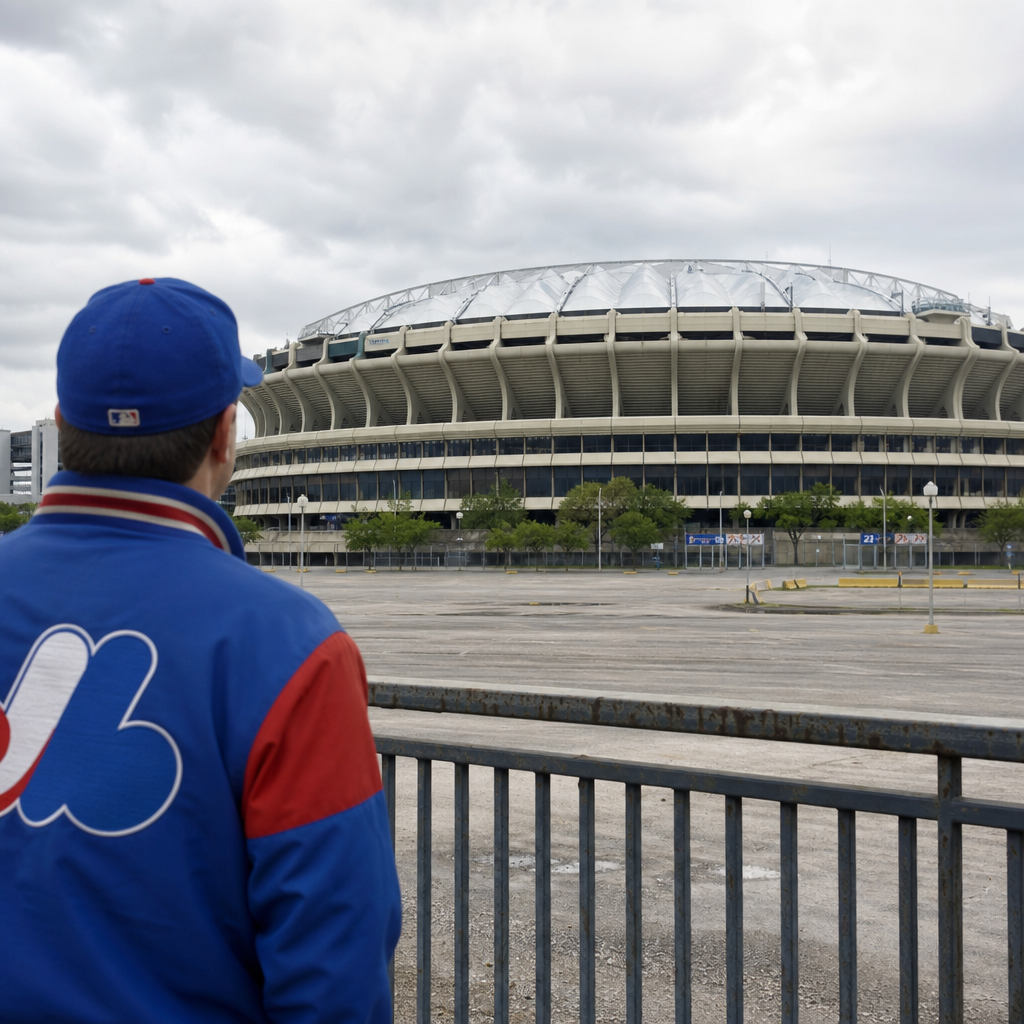
The Montreal Expos’ relocation remains one of baseball’s deepest civic wounds, a story where economics, politics, labor conflict, and ownership failure converged to strip a city of a team that once embodied possibility. In practical terms, the relocation refers to the transfer of the Expos franchise from Montreal to Washington, D.C., for the 2005 Major League Baseball season, where the club became the Washington Nationals. Yet reducing the event to a move on a map misses the larger truth. This was not a single decision made in one winter meeting. It was the cumulative result of years of instability: a crumbling stadium plan, weak local broadcasting revenue, currency pressure, ownership fragmentation, and league intervention that solved some problems while worsening others.
For fans in Montreal, the heartbreak was sharpened by memory. This was not a marginal club with no history. The Expos were founded in 1969 as Canada’s first Major League Baseball team, drew generations into the sport, and built legitimate contenders, especially the 1994 roster that many inside baseball still regard as a World Series threat before the strike ended the season. I have worked through relocation case studies in professional sports for years, and the Expos stand apart because almost every warning sign was visible long before the final move. Attendance decline, sponsorship fatigue, uncertain public financing, and distrust between the team, business leaders, and government all eroded the foundation slowly, then suddenly.
This article serves as a hub for the wider “Miscellaneous” branch under scandals and controversies because the Expos’ story touches nearly every issue that shapes disputed franchise decisions. It involves ownership ethics, league governance, media rights, public subsidy debates, labor history, civic identity, and the long afterlife of contested narratives. If a reader asks why the Expos left, who was responsible, whether the team could have been saved, or what Montreal lost beyond baseball, each answer begins with one principle: relocation happens when institutions fail in sequence. The Expos’ relocation was not inevitable, but by the early 2000s it had become highly probable, and understanding why requires looking beyond nostalgia to the mechanics that broke the bond between club and city.
How Montreal Built a Baseball Identity Before the Collapse
The Expos entered the National League in 1969 and quickly became a cultural bridge in a bilingual city that often experienced politics through questions of identity, language, and autonomy. Baseball offered a different civic grammar. The team’s tricolor “M” cap became one of the sport’s most recognizable marks, and stars such as Rusty Staub, Andre Dawson, Gary Carter, Tim Raines, and later Pedro Martinez gave Montreal credibility as a place where elite talent developed and thrived. Olympic Stadium, despite its many structural and financial flaws, could still feel majestic when the club mattered. During the late 1970s and early 1980s, the Expos were not peripheral. They were competitive, relevant, and woven into the city’s emotional life.
The peak of that early era came in 1981, when the Expos reached the National League Championship Series and lost to the Los Angeles Dodgers in the game remembered bitterly as “Blue Monday.” The defeat hurt because it felt like a missed championship path, but it also proved that Montreal could support meaningful October baseball. Through the 1980s and early 1990s, the franchise remained capable of producing stars and contending clubs even when revenues lagged behind larger American markets. That pattern matters because it rebuts the simplistic argument that Montreal never cared about baseball. The city cared deeply when it believed ownership was committed and the roster had a future.
The best evidence is 1994. Before the strike, the Expos held the best record in baseball at 74–40. Felipe Alou managed a roster featuring Moises Alou, Marquis Grissom, Larry Walker, Ken Hill, and a deep pitching staff. Many executives at the time considered Montreal one of the few teams with the athleticism and pitching balance to win the World Series. When the season ended without a champion, the Expos suffered more than most. The labor stoppage halted momentum, weakened fan trust, and accelerated financial stress that ownership was already struggling to absorb. In Montreal, 1994 became not just a lost season but the pivot from hope to unraveling.
Why the Expos Relocation Happened
The shortest accurate answer is that the Expos lacked a viable long-term business model in Montreal by the time Major League Baseball approved the move. The team faced multiple disadvantages at once. Revenue from local television and radio was modest compared with larger U.S. markets. Corporate support was inconsistent. The Canadian dollar spent long stretches weak against the U.S. dollar, a serious issue because player salaries were largely paid in American currency. Olympic Stadium was poorly suited to modern baseball economics, offering limited premium seating, an unappealing game-day environment, and little leverage for the high-margin revenue streams that transformed other clubs in the 1990s.
Ownership instability made every one of those challenges harder. Claude Brochu’s group struggled to keep payroll competitive after 1994, leading to the departures of star players and the perception that Montreal had become a developmental stop rather than a destination. In 1999, Jeffrey Loria bought the Expos, but his tenure quickly fed mistrust. Plans for a downtown ballpark, often discussed as the club’s best chance at renewal, never secured the political and business backing required. By 2002, MLB itself had taken control of the franchise after the other owners purchased the Expos. League ownership was presented as a stabilizing measure, but in practice it created an extraordinary conflict: the sport was running a team while weighing cities and economics that could justify moving it.
Attendance often gets cited as the main reason for the move, but that is only partly true. Low attendance was a symptom as much as a cause. Fans who watched stars leave, payroll shrink, and stadium plans fail had less reason to invest. In 2004, the Expos drew barely over 748,000 fans, among the lowest totals in the majors. Some home games were shifted to San Juan, Puerto Rico, in an attempt to boost revenue and test a split-market model. Instead, the arrangement made the franchise feel even less rooted. Once a team starts playing “home” games elsewhere, the bond with its original city weakens visibly. By September 2004, relocation to Washington was approved unanimously by MLB owners.
The Stadium Problem, Public Money, and Political Paralysis
Stadium politics sat at the center of the controversy. Olympic Stadium was iconic in silhouette but deeply flawed in function. Its retractable roof saga became a symbol of overpromised public infrastructure, and from a baseball operations perspective the building lacked the intimacy, sightlines, and revenue architecture that newer parks delivered. Beginning in the 1990s, club leaders pushed for a downtown stadium, commonly associated with the Labatt Park proposal near Bonaventure. The rationale was sound. Across MLB, teams in baseball-specific parks with suites, club seats, sponsorship inventory, and surrounding development opportunities were dramatically improving their financial position.
What worked in places like Cleveland, Denver, Baltimore, and later San Diego did not materialize in Montreal because the political coalition never solidified. Quebec taxpayers were wary of another stadium-adjacent public commitment after the cost overruns tied to Olympic installations. Business leaders were interested, but not always willing to close the funding gap. Governments hesitated to be seen subsidizing private ownership without firm evidence of local commitment from the franchise itself. I have seen this pattern repeatedly: once public officials suspect an owner may sell, relocate, or seek repeated concessions, willingness to finance declines sharply. In Montreal, mutual distrust became the real veto point.
| Factor | How it hurt Montreal | Why it mattered |
|---|---|---|
| Olympic Stadium limitations | Few premium revenue options and weak fan experience | Reduced income compared with newer MLB parks |
| Failed downtown stadium plan | No modern facility to reset business prospects | Blocked sponsorship and attendance recovery |
| Weak Canadian dollar | Higher effective player payroll costs | Made retention of stars more difficult |
| Ownership turnover | Undermined long-term planning and public trust | Discouraged investors, fans, and politicians |
| League control of team | Created uncertainty and relocation pressure | Turned survival into a temporary holding action |
Could a new stadium have saved the Expos? Possibly, but not automatically. A modern park might have stabilized revenue, revived corporate partnerships, and signaled permanence. However, a stadium alone does not repair credibility. Successful ballpark deals usually align three things: ownership capital, political consensus, and a market narrative that fans believe. Montreal never had all three at the same time. By the early 2000s, even a viable plan faced the added obstacle that Washington, D.C., represented a large U.S. media market with obvious strategic appeal for MLB. Once that alternative matured, Montreal needed certainty quickly and could not provide it.
League Decisions, Controversies, and the Road to Washington
Major League Baseball’s direct ownership of the Expos from 2002 to 2004 remains one of the strangest governance episodes in modern North American sports. The league argued that taking over the club was necessary after contraction plans collapsed and local solutions failed. Yet when a league manages a franchise, questions about competitive fairness and fiduciary duty follow immediately. The Expos operated under budget constraints shaped by the same owners who were also peers and competitors. Even routine matters, including player acquisition flexibility and long-term marketing strategy, existed under a cloud because the team’s future location was unresolved.
The contraction saga intensified the distrust. In 2001, MLB owners voted to eliminate two teams, and the Expos and Minnesota Twins were the leading candidates. The Twins survived through legal and political resistance tied to their Metrodome lease, while Montreal stayed vulnerable. Although contraction ultimately failed, the episode broadcast a clear message: the league saw the Expos as expendable. Fans and sponsors noticed. When MLB later promoted the Puerto Rico experiment and delayed a final location decision, many in Montreal interpreted the process not as rescue but as managed decline. That interpretation was understandable, because emergency stewardship rarely looked like a committed effort to build a future in Quebec.
Washington, D.C., emerged as the preferred destination for reasons that were rational from a league perspective. The city had not hosted MLB since the Senators left in 1971. It offered a larger media footprint, stronger corporate potential, and political leaders eager to restore baseball. The eventual agreement for what became Nationals Park gave the relocated franchise a clearer revenue path than anything Montreal had secured. Still, the logic of Washington did not erase the ethical tension. A league can make a financially sound decision and still leave behind a justified sense of grievance. That is exactly what happened. Montreal’s complaint was never only about market size; it was about whether the sport exhausted every serious avenue before taking the club away.
What Montreal Lost and Why the Expos Still Matter
The obvious loss was a Major League Baseball team, but the deeper loss was continuity. Generations that had learned the game through the Expos were cut off from a living institution and left with memory, merchandise, and grievance instead of a schedule and a ballpark. Sports franchises create recurring rituals: opening day commutes, radio habits, neighborhood bars, family scorekeeping, and shared civic language. When a team relocates, those habits disappear faster than outsiders expect. Montreal remained a sports city, and the Canadiens still defined much of its public identity, but baseball’s absence created a real cultural vacancy.
There were also economic and developmental consequences. While claims about franchise-driven local growth are often overstated, teams do anchor seasonal employment, media production, hospitality traffic, and youth engagement. More importantly, they keep a city in the national conversation for six months each year. The Expos had also served as an entry point for multicultural baseball fandom in a way that fit Montreal’s diversity. Even after relocation, nostalgia remained commercially powerful. Expos caps became fashion staples, throwback games drew emotion, and when the Toronto Blue Jays played exhibition games in Montreal beginning in 2014, attendance repeatedly demonstrated that dormant demand still existed.
The legacy also matters because it informs present debates about expansion and return. Groups such as Stephen Bronfman’s consortium have explored bringing MLB back to Montreal, at one point via a controversial shared-custody concept with the Tampa Bay Rays. That proposal failed, but it revealed two enduring truths. First, Montreal is still seen within baseball as a plausible major league market if stadium financing and governance are credible. Second, the scars of the original relocation remain active. Any future plan must convince fans that the city will not again become a bargaining chip. That is the final lesson of the Expos’ relocation: once trust is broken in professional sports, rebuilding it takes far longer than building a roster.
The Montreal Expos’ relocation was a heartbreak built over decades, not a sudden betrayal completed in 2004. A weak revenue base, an unsuitable stadium, a failed downtown ballpark plan, ownership turmoil, labor aftershocks from 1994, and MLB’s controversial stewardship all pushed the franchise toward Washington. No single villain explains everything, but no serious account can ignore how repeated institutional failures left fans with fewer and fewer reasons to believe the club would stay. Montreal lost more than games. It lost a piece of civic routine, a bilingual baseball tradition, and a connection to one of the sport’s most distinctive identities.
For readers exploring scandals and controversies in sports, the Expos are an essential case study because this story links finance, governance, politics, media, and memory in one painful arc. It shows how relocation debates are rarely just about attendance figures or market rankings. They are about trust, timing, and whether the people controlling a franchise act like stewards or traders. The strongest takeaway is straightforward: when a league and ownership allow uncertainty to drag on, fan disengagement becomes evidence against the very city that was asked to keep the faith. That cycle is destructive, and Montreal lived through its full force.
If you want to understand modern franchise controversy clearly, start with the Expos and then follow the connected issues: stadium leverage, public subsidies, league intervention, media economics, and expansion politics. The details matter, and in Montreal they explain why the heartbreak still resonates. The logo endures because the loss was real.
Frequently Asked Questions
What exactly happened when the Montreal Expos relocated, and when did the move become official?
The Montreal Expos’ relocation refers to the franchise’s transfer from Montreal to Washington, D.C., ahead of the 2005 Major League Baseball season. Once the move was completed, the Expos were rebranded as the Washington Nationals. On paper, that sounds like a straightforward franchise relocation. In reality, it marked the end of a long, painful unraveling that had been building for years. The Expos were not a team that suddenly failed overnight. They had once been one of the most exciting clubs in baseball, particularly in the early 1980s and again in 1994, when they appeared poised to become a powerhouse before the players’ strike wiped out the remainder of the season.
The relocation became official after years of declining attendance, financial instability, stadium problems, ownership turmoil, and increasingly strained relationships between the club, the city, and Major League Baseball. MLB itself took control of the franchise in 2002 after the collapse of a proposed ownership reshuffling that would have involved contraction and broader structural changes. From that point forward, the Expos were effectively operating in limbo. They even played part of their “home” schedule in Puerto Rico, a move widely seen as a sign that the club’s long-term future in Montreal was hanging by a thread. By 2004, baseball’s leadership had determined that Washington, D.C., offered a more viable market, and the move was approved. For Montreal fans, though, the official date mattered less than the drawn-out experience of watching their team slowly detached from the city before finally disappearing altogether.
Why did the Expos leave Montreal if the city once supported the team so passionately?
The easiest answer is money, but that is only part of the story. The Expos left because multiple failures converged at once: weak and unstable ownership, an inadequate stadium situation, currency disadvantages, labor unrest, poor political alignment, and a loss of trust between fans and the organization. Montreal absolutely had baseball passion. The franchise’s early decades proved that. The problem was not that the city inherently rejected the Expos. The problem was that the conditions necessary to sustain a Major League team gradually eroded, and no one with enough power managed to reverse the decline.
Olympic Stadium became one of the most visible symbols of the team’s troubles. It was large, often criticized, and rarely ideal for generating a vibrant baseball atmosphere. Efforts to replace it with a more baseball-specific downtown park never came together. Without a modern stadium and the revenue opportunities that came with one, the Expos were at a serious disadvantage compared with clubs benefiting from newer ballparks, stronger premium seating sales, and more lucrative local business arrangements.
Ownership issues were just as damaging. The franchise went through long periods without the sort of stable, committed leadership needed to invest in talent, marketing, and local credibility. Fans repeatedly watched promising players leave because the club could not or would not keep them. That made emotional investment harder and attendance weaker, which then fueled the argument that Montreal was no longer a viable baseball city. Add in exchange-rate pressures between Canadian and U.S. dollars, the aftershocks of the 1994 strike, and a broader sense that baseball’s power brokers were not fully committed to keeping the club in Montreal, and the city found itself trapped in a spiral. The support was real, but passion alone was not enough to overcome structural dysfunction.
How important was the 1994 season and the players’ strike in the Expos’ downfall?
The 1994 season is central to understanding why the Expos’ relocation remains so emotionally raw. That team was not merely good; it was widely viewed as a legitimate World Series contender. Montreal had one of the best records in baseball, a roster filled with elite young talent, and a rare sense of momentum that seemed capable of reconnecting the city to the franchise in a lasting way. Then the strike hit, the postseason was canceled, and one of the greatest opportunities in club history simply vanished. For many fans, that was the moment the future changed.
The strike did more than interrupt a special season. It shattered momentum at the exact moment the Expos needed it most. A deep playoff run might have transformed attendance, revenue, sponsorship, and political urgency around the team. It might also have strengthened the argument for a new stadium and reinforced the franchise’s place in Montreal’s civic identity. Instead, the club came out of the strike facing the same financial limitations as before, but now with a devastated fan base and no championship chase to sustain hope.
After 1994, the Expos began losing key players, and the sense of possibility gave way to resignation. In baseball terms, the club never fully recovered from having its best modern chance erased. In civic terms, the strike became a wound layered on top of existing frustrations. It convinced many supporters that even when everything finally seemed to align, the reward could still be taken away. That emotional break mattered. It weakened long-term trust and made later appeals for patience or renewed investment much harder to sell. So while the strike was not the sole cause of relocation, it was undeniably one of the most important turning points in the franchise’s collapse.
Who was most responsible for the Expos’ move: ownership, Major League Baseball, or local politics?
The most honest answer is that responsibility was shared, but not equally and not harmlessly. Ownership bears a major share of the blame because the Expos lacked the kind of coherent, committed leadership required to stabilize the franchise. A baseball team facing economic and stadium challenges needs owners willing to invest money, political capital, and public trust. Montreal rarely had that. Instead, the club often appeared directionless, underfunded, and unable to convince the public that it had a serious long-term plan. Repeated talent sell-offs only deepened the perception that the organization was not building toward something sustainable.
Major League Baseball also played a powerful role. Once MLB took control of the team in 2002, it was no longer just a passive observer. It was effectively running the franchise while also shaping the strategic conversation about where that franchise belonged. That dual position created lasting skepticism, especially among Montreal supporters who believed the league had little genuine interest in preserving baseball in the city. The decision to split home games with Puerto Rico reinforced the impression that the Expos were being treated as a temporary asset rather than a club rooted in a community. Whether one sees that as pragmatic management or managed decline depends on perspective, but it unquestionably damaged the team’s local standing.
Local and provincial politics were part of the equation as well, especially regarding the stadium issue and the inability to create a workable public-private solution. Governments were understandably cautious about subsidizing sports infrastructure, particularly amid broader fiscal pressures and public debate over priorities. But from the Expos’ standpoint, the failure to secure a modern venue left the club behind its competitors. In the end, no single actor can be isolated as the sole villain. Still, if responsibility is being ranked, unstable ownership and MLB’s stewardship loom especially large, while political gridlock and stadium paralysis helped make the final outcome more likely.
Why does the Expos’ relocation still matter so much in Montreal today?
It still matters because the Expos were more than a business property or an entertainment option. For many people in Montreal, they were part of the city’s identity, its summer rhythm, and its place in North American sports culture. The team represented possibility, memory, and civic belonging. Generations grew up with the Expos as a point of connection across neighborhoods, languages, and communities. Their disappearance was not experienced simply as the loss of a club; it was experienced as a cultural rupture and, for many, as a humiliation inflicted by forces that seemed indifferent to the city’s loyalty.
The heartbreak also endures because fans were not given a clean ending. There was no final triumphant season, no satisfying rebuilding story, and no sense that the city had truly exhausted every path to keep the team. Instead, there was a long fade marked by uncertainty, asset-stripping, administrative control from the league, and the sense that Montreal was being judged while also being failed. That makes the memory linger differently than a straightforward relocation driven by clear market logic. It feels unfinished.
At the same time, the Expos continue to live on in nostalgia, branding, and the ongoing conversation about whether Major League Baseball could someday return to Montreal. Former logos and uniforms still carry remarkable emotional power. Old highlights still stir what-if debates, especially around 1994. Every serious discussion of expansion or relocation elsewhere tends to revive the question of Montreal’s baseball future. That persistence is the clearest proof that the city’s bond with the Expos was real. The team may have become the Washington Nationals, but in Montreal, the loss remains a civic memory that still resonates far beyond the standings.