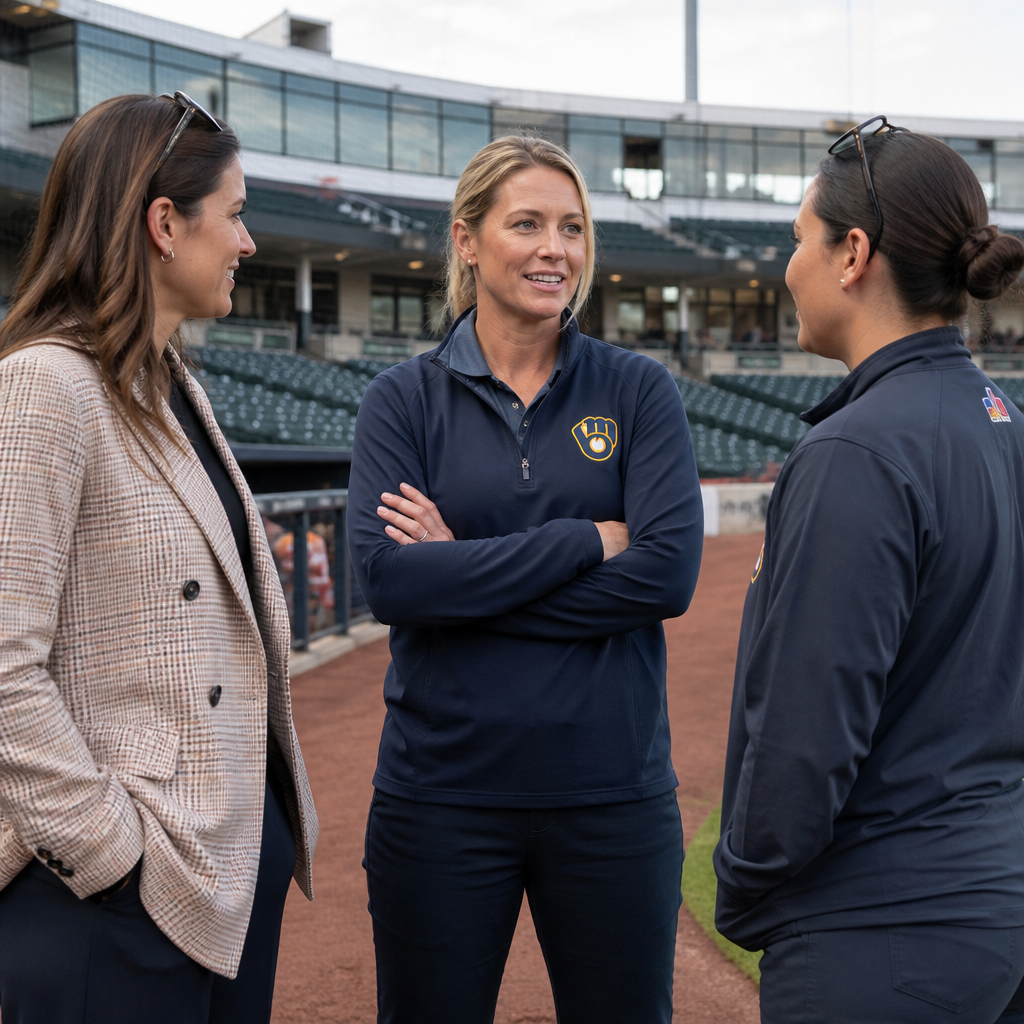
Women are reshaping minor league baseball in ways that are visible on the field, in front offices, inside clubhouses, and across the business operations that keep affiliates connected to their major league parents and local communities. In this broad area of women in baseball, “minor league baseball” refers to the professional development system below Major League Baseball, including Triple-A, Double-A, High-A, Single-A, rookie circuits, and complex leagues. “Shaping the future” means more than earning firsts. It includes influencing player development, scouting, analytics, athletic training, broadcasting, ticketing, groundskeeping, umpiring, ownership, community relations, and the fan experience. I have worked with baseball organizations on content, operations, and research projects, and the practical change is unmistakable: women are no longer occasional exceptions in the minors; they are increasingly part of how clubs recruit talent, build culture, generate revenue, and modernize decision-making.
This subject matters because the minor leagues are baseball’s laboratory. New ideas usually reach affiliates before they spread widely at the major league level. Clubs test development plans, biomechanics programs, nutrition protocols, bat-tracking systems, scheduling practices, and community initiatives in the minors because the environment is built for learning and adjustment. When women enter these roles, they affect not only their own organizations but the future major league product, since players, coaches, and executives carry those habits upward. The minors also matter because they are accessible. Fans can watch innovation happen close to home, and local hiring pipelines often create first opportunities for women who later move into larger leadership positions.
As a hub for the miscellaneous side of women in minor league baseball, this article maps the full landscape. It defines where women are working, explains why these positions matter, highlights the barriers that still exist, and points to the systems changing fastest. It also answers common questions directly: Are women coaching in the minors? Yes. Are they leading business departments? Absolutely. Are they affecting player health, communication, and data use? Every day. The future of minor league baseball will be shaped by whoever improves player outcomes and strengthens the bond between clubs and communities. Women are already doing both.
Women on the Field and in Player Development
The most visible progress has come in player development roles. Women now work in coaching, strength and conditioning, athletic training, nutrition, mental skills, video operations, and performance science throughout affiliated baseball. These jobs matter because the minor leagues are where players build mechanics, routines, and trust in instruction. A coach in Low-A may influence a pitching prospect’s delivery years before he reaches a major league mound. An athletic trainer in Double-A may catch an overuse pattern early enough to preserve a season. A nutrition coordinator can help a Latin American teenage prospect adapt to full-season ball with practical support that improves recovery and confidence.
Examples across baseball have made this change concrete. Rachel Balkovec became the first woman to manage a minor league team when the New York Yankees appointed her to lead the Tampa Tarpons in 2022, after years of work in strength, conditioning, and hitting development. Alyssa Nakken’s coaching path in professional baseball, though more visible in the majors, reinforced a larger pipeline effect by showing that women can hold authoritative instructional roles in club environments traditionally closed to them. In the minors, the daily work is less ceremonial and more operational: running early work, organizing drills, translating data into simple cues, managing player relationships, and helping staff maintain consistency over a long season.
That consistency is important because player development fails when information becomes fragmented. In organizations I have observed, women in these departments often earn credibility quickly by improving communication between analysts, coaches, and medical staff. A biomechanics report only matters if the coach understands it and the player can apply it. The best development staffs reduce noise. They convert force-plate readings, motion-capture outputs, or TrackMan trends into two or three priorities that fit the player’s stage of development. That practical translation is one reason women are shaping the future rather than merely entering existing systems.
Front Offices, Strategy, and Baseball Operations
Women are also changing the structure of baseball operations in the minors. Front office roles include general management at the affiliate level, roster administration, player services, scouting coordination, research, analytics, technology integration, travel operations, and communication between affiliates and major league departments. These positions matter because the minor leagues are complex businesses layered on top of development systems. Someone has to align budgets, league rules, housing logistics, player meals, facility standards, visa paperwork, and internal reporting. Small improvements in these functions have measurable effects on player readiness and organizational stability.
Baseball operations is often misunderstood as purely talent evaluation. In reality, affiliate success depends on process discipline. Women in coordinator and director roles frequently improve that discipline by standardizing reporting lines and tightening decision loops. When scouting reports, medical notes, and development plans are stored in separate silos, organizations lose time and players lose clarity. Clubs that integrate those functions perform better operationally. This is especially true after Major League Baseball’s 2021 restructuring of the minors, which reduced affiliated teams and increased pressure on each club to meet facility, staffing, and player welfare expectations.
Kim Ng’s career is usually discussed through a major league lens, but her path remains instructive for the minors because it demonstrated long ago that women can master collective bargaining issues, roster rules, contract mechanics, and talent systems at the highest level. That example matters downstream. Younger women entering minor league baseball now see a realistic path through baseball operations, not just adjacent support roles. The result is better talent retention. Clubs benefit when intelligent staff members can envision a future rather than treating their affiliate role as temporary survival work.
Business Operations, Marketing, and Community Impact
Minor league baseball is not sustained by player development alone. It survives because affiliates are community entertainment businesses with local sponsors, family ticket plans, themed promotions, merchandise, and civic relationships. Women have long been central to these functions, but their influence has expanded from execution to strategy. They lead departments in ticket sales, partnerships, creative services, social media, event operations, hospitality, and community relations. These are not secondary jobs. They determine whether a club fills seats on a Tuesday, retains sponsors during a losing season, and positions itself as a year-round civic asset rather than a seasonal novelty.
What changes when women shape these departments? Usually, the fan experience becomes more intentional and more inclusive. Better restroom planning, family-friendly concourse design, youth programming, sensory-friendly events, and clearer game-day communication all broaden attendance. The clubs that treat women as decision-makers rather than a target demographic generally produce stronger local brands. They understand that a modern baseball audience includes girls’ teams, working parents, multigenerational families, and fans who may love the event atmosphere before they learn advanced baseball details.
| Area | How women are influencing it | Why it matters in the minors |
|---|---|---|
| Player development | Coaching, training, nutrition, mental skills, analytics translation | Improves prospect growth and communication |
| Baseball operations | Roster process, compliance, reporting, player services | Keeps affiliates efficient and aligned with parent clubs |
| Business operations | Ticketing, sponsorship, promotions, events, branding | Drives revenue and long-term local relevance |
| Media and broadcasting | Play-by-play, reporting, content strategy, digital storytelling | Expands visibility and shapes public understanding |
| Game presentation | Fan experience design, accessibility, family programming | Makes ballparks more welcoming and repeatable |
Real-world examples appear every season. Female broadcasters call games and produce analysis that helps newer fans understand the sport without dumbing it down. Community relations leaders build school reading programs and youth clinics that make the club part of local life. Sponsorship directors create partnerships around health care, education, or women’s sports nights that are both commercially sound and socially relevant. These choices matter because minor league brands depend on belonging. Women often strengthen that belonging by seeing the ballpark as a public space, not just a sales venue.
Media, Visibility, and the Pipeline Effect
Visibility changes hiring. When fans, interns, and young athletes repeatedly see women in dugouts, press boxes, training rooms, and executive suites, those roles become imaginable. That is why broadcasting and content creation are so important. A woman calling a Double-A game is doing more than describing pitches. She is building technical authority in public, teaching audiences to trust her baseball language, and altering assumptions about who gets to interpret the sport. The same is true for team photographers, social media directors, in-house hosts, and digital producers who shape what stories the organization tells about itself.
This pipeline effect is practical, not symbolic. Minor league clubs are training grounds for careers. Someone who starts in game-day promotions may become a vice president. A broadcaster may move to a regional network. A performance intern may become a coordinator for a major league organization. When women gain these early-stage experiences, the entire baseball labor market changes over time. The minors are where résumés are built. That makes affiliate opportunities disproportionately important compared with their salaries or public attention.
Organizations can accelerate the pipeline by formalizing mentorship, using structured internships, and avoiding vague “culture fit” hiring language that often reproduces old networks. Clear job descriptions, transparent pay ranges, anti-harassment protocols, and professional development budgets all matter. So do practical basics such as safe travel arrangements, appropriate clubhouse access policies, and leadership training for supervisors. Inclusion fails when it is announced but not operationalized. The clubs making real progress are the ones treating workplace design as seriously as marketing strategy.
Barriers That Still Shape the Landscape
Progress is real, but minor league baseball still presents structural barriers for women. The first is compensation. Many minor league and affiliate jobs, especially entry-level roles, pay modestly relative to long hours, seasonal instability, and relocation demands. That burden affects everyone, but it can narrow opportunities for candidates without financial flexibility or nearby support systems. The second barrier is tokenism. Some organizations celebrate a high-profile hire without building the support network needed for long-term success. A first can become isolated if there is no mentorship, no path to promotion, and no accountability for hostile behavior.
There are also credibility tests that male peers may not face as often. Women are sometimes expected to prove technical expertise repeatedly in meetings, clubhouses, or media settings where men are presumed knowledgeable by default. I have seen this dynamic soften significantly when organizations set standards around communication and decision-making, but it has not disappeared. Travel, housing, and facility design remain uneven across the minors too. Private space, security, and basic workplace amenities are not trivial concerns; they affect retention directly.
Another challenge is historical lag in the talent pipeline. Because women were excluded from many baseball pathways for decades, there are still fewer midcareer candidates in some technical specialties. That gap should not be confused with a lack of ability. It simply means organizations need to recruit more intentionally and invest in training. The fastest-improving clubs look beyond traditional baseball circles. They hire from kinesiology, data science, sports medicine, communications, event management, and education programs, then teach baseball-specific context. That is a smarter model than waiting for perfect candidates to appear through old channels.
What the Future Looks Like for Women in Minor League Baseball
The future will be defined less by headline-making firsts and more by normalized presence across departments. Expect continued growth in coaching, performance science, analytics, and business leadership because those areas reward precision, communication, and adaptability. Expect more women to move between softball, baseball, college athletics, private training facilities, and professional clubs, creating a wider exchange of ideas. Expect affiliate teams to use women leaders not as public relations symbols but as core operators whose work affects wins, health outcomes, attendance, and organizational culture.
Technology will accelerate this shift. Minor league baseball increasingly relies on high-speed video, bat sensors, wearable data, biomechanical assessments, CRM platforms, digital ticketing, and audience analytics. These systems reward staff who can combine technical literacy with clear explanation. That blend is often where women have made especially visible gains. The next generation of leaders will not be divided neatly between “baseball people” and “business people.” They will need fluency across development, communication, and technology. The minors are already moving in that direction.
For readers exploring women in baseball, the main takeaway is simple: minor league baseball offers one of the clearest views of where the sport is going. If you want to understand future managers, trainers, executives, broadcasters, and community leaders, watch the affiliates. Follow who is designing systems, not just who is making headlines. Women are shaping the future of minor league baseball because they are improving the daily work that makes organizations function. Keep reading across this women in baseball hub, support clubs that invest seriously in opportunity, and pay attention to the women turning baseball’s proving ground into its next frontier.
Frequently Asked Questions
How are women shaping the future of minor league baseball today?
Women are shaping the future of minor league baseball in highly visible and deeply structural ways. On the field, they are contributing as coaches, strength and conditioning specialists, athletic trainers, analysts, and player development staff. In front offices, they are influencing hiring, scouting, community relations, ticketing, sponsorships, communications, and long-term business strategy. Inside clubhouses and performance departments, women are helping build more modern development environments that emphasize data, communication, recovery, mental skills, and individualized player plans. Across team operations, they are also strengthening the connection between minor league affiliates, their major league parent clubs, and the local communities that support them.
What makes this especially important in minor league baseball is the role the system plays as a pipeline. Triple-A, Double-A, High-A, Single-A, rookie leagues, and complex leagues are where future major leaguers, coaches, and executives learn how professional baseball works. When women are part of that ecosystem, they are not simply filling jobs; they are influencing how the next generation of baseball leadership is trained. Their impact can be seen in how teams communicate, how organizations evaluate talent, how player care is delivered, and how fan engagement is designed. In that sense, “shaping the future” means helping redefine what expertise, leadership, and baseball decision-making look like throughout the development system.
Why is minor league baseball such an important space for progress for women in baseball?
Minor league baseball is especially significant because it is where much of the sport’s experimentation, training, and institutional culture-building takes place. Unlike the major leagues, where roles are often more rigidly defined and highly public, the minors are built around development. That creates opportunities for organizations to introduce new ideas, test new staffing models, and expand pathways into baseball careers. For women pursuing roles in coaching, analytics, operations, medical support, or business leadership, the minor league system can serve as both an entry point and a proving ground.
It is also important because of scale. The minor league structure includes multiple levels, many affiliates, and a wide range of responsibilities beyond the game itself. Every club needs people who can manage player support, fan experience, travel logistics, partnerships, media relations, promotions, and community outreach. That breadth allows women to contribute across baseball and business functions at the same time. As a result, progress in the minors does not just affect one team or one office; it helps normalize women’s presence throughout the professional baseball pipeline. Over time, that kind of normalization can influence hiring patterns, mentorship opportunities, and leadership expectations across the entire sport.
What kinds of roles do women hold in minor league baseball?
Women hold a growing range of roles across nearly every part of minor league baseball. In baseball operations, they may work in player development, scouting support, analytics, research, video coordination, and roster administration. In player health and performance, women serve as athletic trainers, physical therapists, dietitians, mental skills staff, and strength and conditioning coaches. Some women are also increasingly visible in coaching and instructional capacities, helping players with skills development, communication, preparation, and game planning.
Beyond on-field and player-facing positions, women are central to the business side of minor league clubs. They work in executive leadership, finance, human resources, sales, sponsorship, social media, content creation, marketing, event management, ticket operations, and community relations. These positions are especially influential in the minor leagues because affiliates depend heavily on local support and creative fan engagement. A successful minor league team is not only developing players for a major league parent club; it is also operating as a local entertainment brand and community institution. Women in these roles help shape how teams present themselves, how they build trust with fans, and how they remain financially and culturally relevant in their markets.
What challenges do women still face in minor league baseball?
Despite real progress, women in minor league baseball can still face longstanding barriers. Some of those challenges are cultural, including outdated assumptions about who “belongs” in baseball spaces or who is viewed as credible in technical, leadership, or clubhouse-related roles. Others are structural, such as limited mentorship, inconsistent advancement pathways, underrepresentation in senior decision-making positions, and the demanding travel-heavy lifestyle that comes with professional baseball. Minor league environments can be particularly intense because resources may be tighter, staffing may be leaner, and job expectations can span long hours and multiple responsibilities.
Another challenge is visibility. Women may be making essential contributions without receiving the same recognition or career momentum as peers in more traditional baseball pipelines. That is why representation alone is not enough. Sustainable progress depends on organizations creating inclusive workplace cultures, establishing clear promotion pathways, investing in professional development, and holding leadership accountable for equitable hiring and support. When teams and parent clubs treat inclusion as part of organizational excellence rather than as a public relations goal, women are better positioned not just to enter minor league baseball, but to lead within it and help shape its future at every level.
How does greater female representation in minor league baseball benefit players, teams, and fans?
Greater female representation benefits the entire minor league ecosystem because it expands the range of perspectives involved in developing players and running organizations. For players, that can mean better communication, more individualized support, stronger performance systems, and a broader set of role models and mentors. Baseball development today depends on far more than traditional instruction. It involves biomechanics, psychology, nutrition, analytics, leadership, and relationship-building. Women working across those areas help teams create more complete and modern development environments, which can improve both player growth and organizational culture.
For teams, stronger representation often leads to better decision-making and more adaptive leadership. Diverse staffs can challenge stale assumptions, identify overlooked opportunities, and connect more effectively with a broad audience. On the business side, women help clubs better understand community needs, sponsor expectations, family entertainment trends, and digital engagement strategies. For fans, especially young girls and women who want to see themselves reflected in the sport, representation sends a powerful message that baseball is not limited by old stereotypes. In minor league baseball, where community identity matters so much, that broader sense of belonging can strengthen attendance, loyalty, and long-term support for the game.