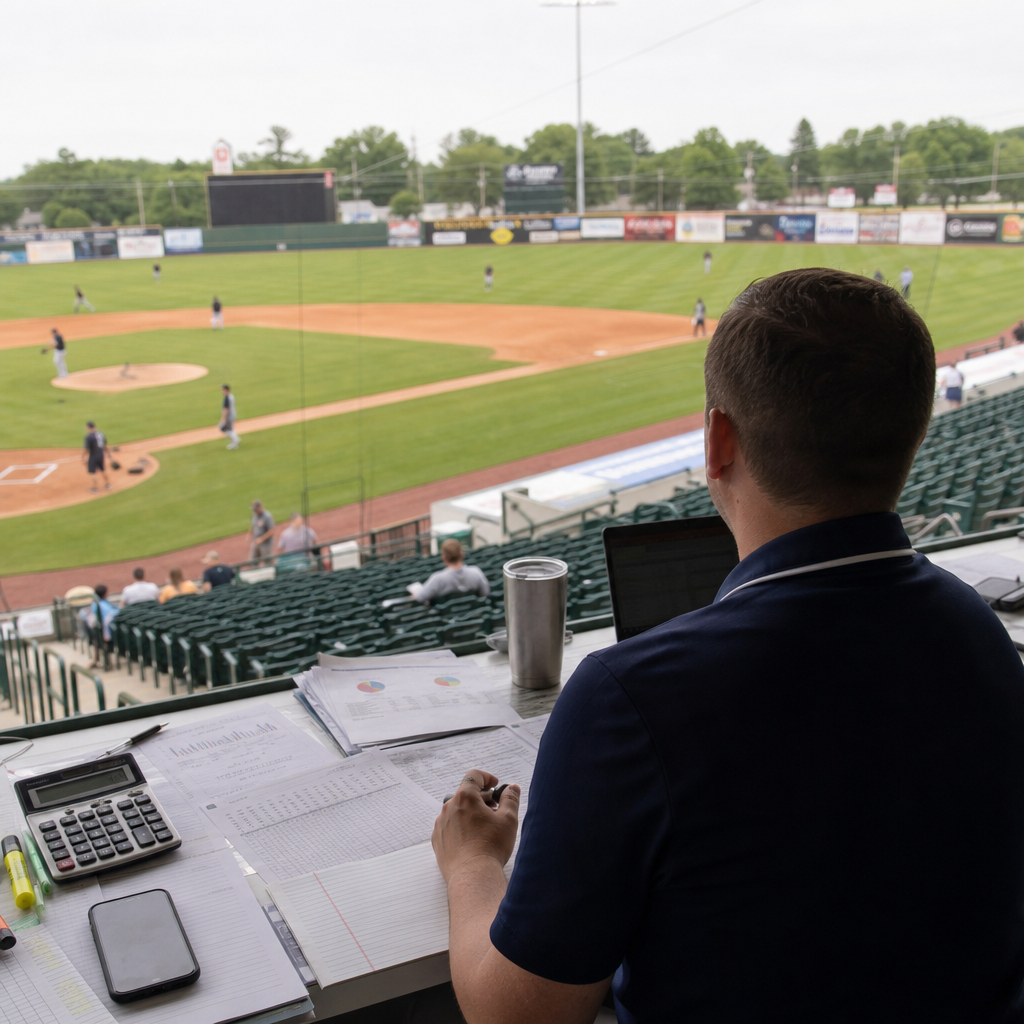
Running a minor league team is equal parts sports management, local media, real estate operations, and small-business discipline. Fans see the game on the field, but the business side of running a minor league team determines whether a club can survive lean seasons, keep ticket prices approachable, and remain a civic asset for decades. In practical terms, a minor league team is usually a local entertainment company built around a baseball calendar, a stadium lease, a player development relationship, and a year-round sales engine. It sells affordable live experiences, sponsorship inventory, food and beverage, merchandise, hospitality, community access, and, increasingly, digital attention.
The term minor league team can describe several structures. Some clubs operate in leagues affiliated with Major League Baseball under Professional Development Licenses, while others play independently without a direct parent-club pipeline. College summer teams add another variation, mixing amateur eligibility rules with wood-bat branding and community-first scheduling. Across those models, the financial logic is similar: owners and operators must turn a limited number of dates into multiple revenue streams while controlling labor, facility, travel, and promotional costs. A winning season helps, but it rarely fixes weak operations. I have worked with clubs where attendance rose only modestly, yet revenue improved sharply because sales packages, sponsorship categories, and per-cap spending were managed with precision.
This matters because minor league clubs occupy a fragile but important middle ground in the sports economy. They are more complex than a neighborhood recreation program and far less financially insulated than a major league franchise. Most teams serve regional audiences, rely on repeat attendance, and compete not only with other sports but with concerts, streaming platforms, family budgets, and weather. When operators make disciplined decisions on pricing, staffing, lease terms, and community partnerships, they create resilient businesses that support jobs, downtown traffic, and affordable baseball. When they do not, even a beloved brand can struggle.
For readers exploring the broader Minor Leagues and College Baseball landscape, this hub covers the core business mechanics behind team operations and points toward the related subjects that usually drive deeper research: ownership models, affiliation agreements, stadium economics, ticketing strategy, sponsorship sales, game-day operations, marketing, legal compliance, and long-term franchise value. Understanding these moving parts makes the rest of the subtopic easier to evaluate, because nearly every headline issue in minor league baseball eventually comes back to revenue diversity, cost control, and local market fit.
Ownership, affiliation, and league structure
The first business question is who owns the club and under what competitive structure it operates. In affiliated baseball, a local ownership group typically controls the business entity, while the MLB organization supplies players and baseball operations direction. That arrangement changes the risk profile. The local team is not usually paying player salaries at the same level a fully independent club would, but it still carries substantial operating responsibilities tied to the stadium, ticketing, promotions, staff payroll, insurance, and fan experience. Under the current development system, facility standards and geographic alignment also matter more than many casual fans realize, because compliance can affect market stability and affiliation continuity.
Independent teams face a different equation. They control more of their baseball product but absorb more uncertainty around roster building, travel, and competitive quality. That can create upside if the club develops a strong local identity untethered from a distant parent team, yet it also requires sharper storytelling and stronger direct sales. College summer teams usually lean even harder on internships, host-family systems, local sponsorships, and community goodwill. Their costs may be lower in some areas, but their revenue ceiling can be lower too unless the club excels at events and partnerships.
From an investor perspective, league structure affects forecasting. Affiliated clubs often benefit from stronger brand recognition and more stable customer expectations. Independent clubs may have more flexible scheduling and promotional freedom. College summer organizations can activate civic and alumni networks effectively. None of these models is automatically superior. The right one depends on market size, stadium quality, regional baseball culture, travel geography, and access to experienced operators.
Revenue streams that actually sustain the club
Most minor league teams do not live on ticket sales alone. The healthiest clubs build a layered revenue model in which admissions, sponsorships, premium hospitality, concessions, merchandise, parking, non-baseball events, and group outings each carry part of the load. In many front offices I have seen, group sales and sponsorships are the two categories that separate stable teams from vulnerable ones. A crowd of 4,500 looks good, but a crowd of 4,500 anchored by youth teams, company outings, birthday packages, and picnic-area buyers is far more profitable than a similar walk-up crowd.
Sponsorship inventory has also become more sophisticated. Teams no longer sell only outfield wall signs and scoreboard logos. They package naming rights for gates, berms, party decks, kids zones, digital features, in-game contests, jersey patches where permitted, and branded content across email and social media. Smart operators tie sponsorships to measurable activation, such as coupon redemption, lead capture, or hospitality usage, instead of offering generic logo exposure. Local banks, hospitals, auto dealers, law firms, and regional grocery chains often value community presence more than raw impressions, which is why teams that can document school programs, charitable appearances, and family attendance patterns often outperform larger but less organized competitors.
| Revenue source | Typical strength | Key operational requirement |
|---|---|---|
| Tickets and groups | Predictable when renewals are strong | CRM discipline, outbound sales, dynamic pricing |
| Sponsorships | High margin and renewable | Inventory packaging, activation reporting, local relationships |
| Concessions and alcohol | Strong on high-attendance dates | Fast service, menu engineering, labor control |
| Premium hospitality | High per-cap revenue | Seasonal planning, catering standards, B2B sales |
| Merchandise | Brand amplifier with moderate margin | Inventory management, alternate identities, e-commerce |
| Non-game events | Useful off-season stabilizer | Facility availability, booking staff, municipal cooperation |
Non-game events deserve special attention. Stadiums can host concerts, festivals, high school games, holiday light shows, movie nights, corporate meetings, and youth camps. These dates help cover fixed costs during periods when baseball is absent. Clubs with flexible lease terms and modern utility infrastructure can monetize their venue far beyond the regular season. In smaller markets, that versatility can make the difference between a seasonal operation and a durable year-round business.
Ticketing, pricing, and fan development
Ticketing strategy in minor league baseball is less about maximizing single-game price and more about balancing volume, renewals, and per-cap spending. Because affordability is part of the product, teams must avoid pricing themselves like a major league substitute. The better approach is segmentation. Season tickets, mini-plans, flex books, group packages, family bundles, and premium areas should serve different buyer motivations. A family of four values predictable total cost. A local company values client hospitality and convenience. A retired fan may value seat location and weekday access. A youth sports organization often values recognition on the videoboard and pregame parade opportunities more than the seat itself.
Dynamic pricing can work in minor league settings, especially for fireworks nights, rivalry dates, and holiday weekends, but it must be used carefully. If everyday fans feel punished for choosing the most attractive nights, goodwill erodes. The clubs that do this well pair price variation with visible added value, such as giveaways, entertainment acts, or premium promotional dates. They also train box office and sales staff to explain options clearly. Confusing price maps and hidden fees are damaging in a value-driven market.
Fan development starts long before game day. Email automation, school-reading programs, youth clinics, mascot appearances, and partnerships with local parks departments all create familiarity that later converts into attendance. Many clubs rely heavily on a CRM platform such as Microsoft Dynamics, Salesforce, or industry-specific ticketing integrations to track renewals, outbound calls, group leads, and lapsed buyers. Data hygiene matters. If family buyers are not segmented from corporate buyers, offers become noisy and response rates fall.
Stadium economics, leases, and municipal relationships
A minor league team is often only as healthy as its stadium agreement. Lease terms influence capital planning, maintenance obligations, operating flexibility, scheduling rights, signage control, parking revenue, and exposure to utility or repair costs. Teams that play in municipally owned parks must maintain productive relationships with city officials, parks departments, and public finance stakeholders. Those relationships are not ceremonial. They affect everything from field replacement cycles and clubhouse upgrades to stormwater compliance and the ability to add revenue-generating features like party decks or new concession points.
Since MLB’s facility standards rose in recent years, stadium quality has become a strategic issue rather than a cosmetic one. Clubhouses, lighting, field dimensions, batting tunnels, and player amenities are no longer side topics. They can influence whether a market remains viable within affiliated baseball. Public funding debates often become contentious because taxpayers want evidence of community return. Teams need a credible case built on downtown traffic, seasonal employment, charitable programming, tourism spillover, and year-round venue use. Unsupported promises are easy to challenge; documented local impact is harder to dismiss.
Operators also need to understand capital expenditure timing. Roof repairs, seating replacements, refrigeration systems, LED boards, and kitchen equipment fail on their own schedule, not when cash flow feels convenient. The best-run clubs keep rolling capital plans and reserve assumptions instead of treating every major repair as a surprise. That discipline reassures lenders, municipalities, and ownership groups alike.
Game-day operations, staffing, and the guest experience
On game day, the business is executed through staffing. Ushers, ticket takers, concession crews, groundskeepers, production teams, security staff, cleaners, parking attendants, and interns collectively determine whether a fan returns. In minor league baseball, repeat visitation is the economic engine, so operational mistakes have compounding costs. A slow concession line lowers per-cap spending. Poor parking flow delays entry. Weak sound production hurts sponsor activations. Dirty restrooms can undermine the whole brand, no matter how creative the promotion was.
Labor management is especially challenging because much of the workforce is part time and seasonal. Training must be concise, repeatable, and documented. I have seen clubs improve customer satisfaction not by adding major expense but by tightening pregame checklists, clarifying supervisor authority, and measuring line times at key concession stands. Small process changes matter. So does cross-training. When weather shifts or attendance surges unexpectedly, flexible staffing prevents service collapse.
The guest experience is broader than baseball quality. A parent judges a night partly by stroller access, safety, shade, food options, and how easy it is to entertain children between innings. A business buyer notices suite cleanliness, Wi-Fi reliability, and whether hospitality food arrives on time. Teams that map these audience journeys usually uncover profitable fixes. For example, moving a popular kids activity closer to an underused concession area can reduce crowding and increase sales simultaneously.
Marketing, media, and community relevance
Minor league marketing works best when it accepts a simple truth: most buyers are choosing an evening out, not conducting a technical evaluation of baseball talent. That means creative themes, local storytelling, and consistent community presence matter enormously. Successful clubs build editorial calendars around school breaks, local festivals, civic holidays, and sponsor priorities. They use social media for personality, email for conversion, local radio for reach, and public relations for legitimacy. The mascot, alternate identity nights, and charity tie-ins are not side acts; they are commercial assets when used strategically.
Media rights in the minor leagues are modest compared with major professional sports, but digital distribution still matters. Streaming platforms, radio broadcasts, highlight clips, and short-form video extend sponsor inventory and keep fans connected between games. Teams should think of content as both a marketing tool and a retention tool. A behind-the-scenes video of tarp pulls, clubhouse prep, or community appearances often outperforms generic game reminders because it reinforces authenticity.
Community relevance is the long game. Clubs that show up in schools, chamber events, nonprofit fundraisers, and youth sports settings earn attention that cannot be purchased efficiently through ads alone. In local markets, reputation spreads through repeated contact. A team that is easy to work with for fundraisers and civic events usually sells more group outings, books more sponsor meetings, and receives more public goodwill during lease negotiations or renovation campaigns.
Risk, compliance, and long-term franchise value
Behind the fun, operators manage real risk. Insurance coverage, alcohol service compliance, Americans with Disabilities Act considerations, employment law, contract controls, food safety, netting standards, weather protocols, cybersecurity, and cash handling all require active oversight. Clubs also need clear policies for refunds, rain checks, and postponed games. Inconsistent handling creates customer frustration and accounting complications. Governance may sound dry, but lenders, municipalities, and sophisticated sponsors notice it quickly.
Long-term franchise value depends on more than annual profit. Buyers look at lease security, market demographics, facility condition, affiliation status, sponsorship depth, ticket renewal rates, and management quality. A team with flat attendance but excellent premium sales, strong municipal alignment, and a modernized ballpark can be more valuable than a club with bigger crowds but weak systems. Brand identity matters too. Distinctive marks, successful alternate identities, and strong merchandise performance create optionality across retail and digital channels.
The business side of running a minor league team is ultimately about disciplined local execution. Baseball provides the calendar and emotional hook, but durable success comes from diversified revenue, reliable operations, strong civic relationships, and constant audience development. If you are building knowledge in the Minor Leagues and College Baseball space, use this hub as your starting point, then explore each connected subject in depth. The teams that last are not merely entertaining; they are exceptionally well run. Study the business model first, and the rest of the ecosystem becomes much easier to understand.
Frequently Asked Questions
What are the main revenue streams for a minor league team?
A minor league team typically operates like a diversified local entertainment business, not just a sports organization selling seats for baseball games. Ticket sales are important, but they are only one part of the revenue picture. Teams usually depend on a mix of season tickets, group outings, premium hospitality areas, suite rentals, sponsorships, naming-rights agreements, concessions, parking, merchandise, and special event income. Many clubs also generate revenue from non-baseball uses of the stadium, including concerts, community festivals, corporate events, private rentals, youth sports, and holiday-themed attractions. This diversification matters because weather, team performance, and broader economic conditions can all affect attendance during the season.
Local sponsorships often play an especially large role in the business model. A minor league team can offer businesses in the region a highly visible community platform through outfield signage, digital promotions, mascot sponsorships, in-game activations, and branded fan experiences. Group sales are another major driver because they allow teams to package baseball as a social outing for schools, churches, businesses, and civic organizations. In many markets, these bulk purchases can be more predictable than relying on walk-up fans alone. The healthiest teams build multiple recurring revenue channels so they are not overly exposed to one weak summer, one rainy homestand, or one downturn in discretionary family spending.
Why is stadium management such a big part of running a minor league team?
Stadium management is central because the venue is both the team’s workplace and one of its most valuable business assets, even when the club does not own the facility outright. A minor league team commonly operates under a lease or public-private agreement that defines maintenance responsibilities, capital improvements, scheduling rights, and revenue-sharing rules. That means management has to think beyond baseball operations and act more like a hospitality and facilities company. Field upkeep, seating quality, concession infrastructure, restrooms, lighting, accessibility, safety compliance, insurance, and customer flow all affect whether fans return and whether the building can support profitable events throughout the year.
The stadium also shapes the club’s long-term financial health. If a venue is outdated, lacks premium spaces, or cannot meet league facility standards, the team may struggle to attract sponsors, host community events, or maintain a productive relationship with its major league affiliate. Capital improvement planning becomes critical because upgrades such as video boards, club spaces, kitchens, batting facilities, and fan amenities can influence both revenue and compliance. In practical terms, running a minor league team means constantly balancing the costs of operations, maintenance, and modernization against the need to keep the ballpark affordable and welcoming for local families. The stadium is not just where the games happen; it is the platform on which the entire business model depends.
How important are community relationships to the long-term success of a minor league team?
Community relationships are absolutely foundational. Minor league teams rarely survive on brand power alone, because their real advantage is local relevance. Fans are often drawn as much by the sense of civic identity, family tradition, and neighborhood connection as by the score of the game itself. A successful club becomes part of the area’s social fabric through school partnerships, charitable events, youth clinics, local business collaborations, and visible involvement in civic life. That kind of presence creates loyalty that can sustain attendance during losing seasons, economic softness, or years when the on-field roster changes quickly due to player development needs.
These relationships also have direct business value. Sponsors want to align with organizations that people trust and recognize as authentic community partners. Municipal leaders are more likely to support lease renewals, infrastructure improvements, or joint development opportunities when the team is viewed as a dependable civic asset. Local media coverage also tends to be stronger when the club contributes to the region beyond game nights. In other words, community engagement is not just goodwill; it is market positioning. The teams that last for decades usually understand that they are in the memory-making business as much as the baseball business, and they invest accordingly in local credibility, accessibility, and year-round visibility.
What role does the relationship with a major league affiliate play in the business side of a minor league team?
The relationship with a major league affiliate is operationally important, but it also has meaningful business implications. On the baseball side, the affiliate supplies players and typically controls development priorities, while the minor league club focuses on creating a professional environment and a quality fan experience. From a business standpoint, the affiliation adds legitimacy, branding value, and a pipeline of recognizable prospects who can boost fan interest. When a top prospect comes through town, attendance, media attention, and merchandise sales can all benefit. That said, a wise minor league team never builds its entire business strategy around player recognition, because rosters are temporary and can change with little notice.
The affiliation relationship also intersects with facility requirements and long-term planning. Major league clubs and league authorities expect certain standards in areas such as clubhouse quality, training spaces, playing surfaces, and travel logistics. If a minor league team or its stadium cannot meet those standards, the business can face pressure in future affiliation discussions. At the same time, teams must preserve their own local identity rather than becoming overly dependent on the parent club’s brand. The most resilient organizations use the affiliation as one asset among many: valuable for credibility and player storylines, but secondary to the core mission of operating a stable local entertainment company with strong attendance, sponsorship demand, and community roots.
How do minor league teams stay financially stable during lean seasons or economic downturns?
Financial stability comes from disciplined planning, diversified income, and careful cost control. Minor league teams operate in a business category where demand is discretionary, so leadership has to prepare for volatility. Rainouts, inflation, sponsorship pullbacks, weaker consumer confidence, or a poor promotional calendar can all hurt results. Teams that weather lean seasons well usually maintain realistic budgets, preserve cash reserves when possible, and monitor margins across every department, from food and beverage to staffing to marketing spend. They also pay close attention to per-capita fan spending, renewal rates for season-ticket accounts, sponsor retention, and the profitability of each event type, rather than relying on headline attendance numbers alone.
Another key strategy is to make the venue useful beyond the baseball calendar. Non-game events can help smooth seasonal cash flow and reduce dependence on a limited number of home dates. Teams may also adjust pricing architecture to protect affordability while still growing revenue through premium experiences, targeted group packages, flexible ticket plans, and value-focused promotions. During downturns, the strongest operators communicate clearly with fans and partners, emphasize family-friendly entertainment value, and avoid short-term decisions that damage long-term trust. In the end, the business side of running a minor league team is about steady, small-business discipline: controlling what can be controlled, building multiple revenue layers, and staying close to the local market so the club remains both financially viable and genuinely valuable to the community.