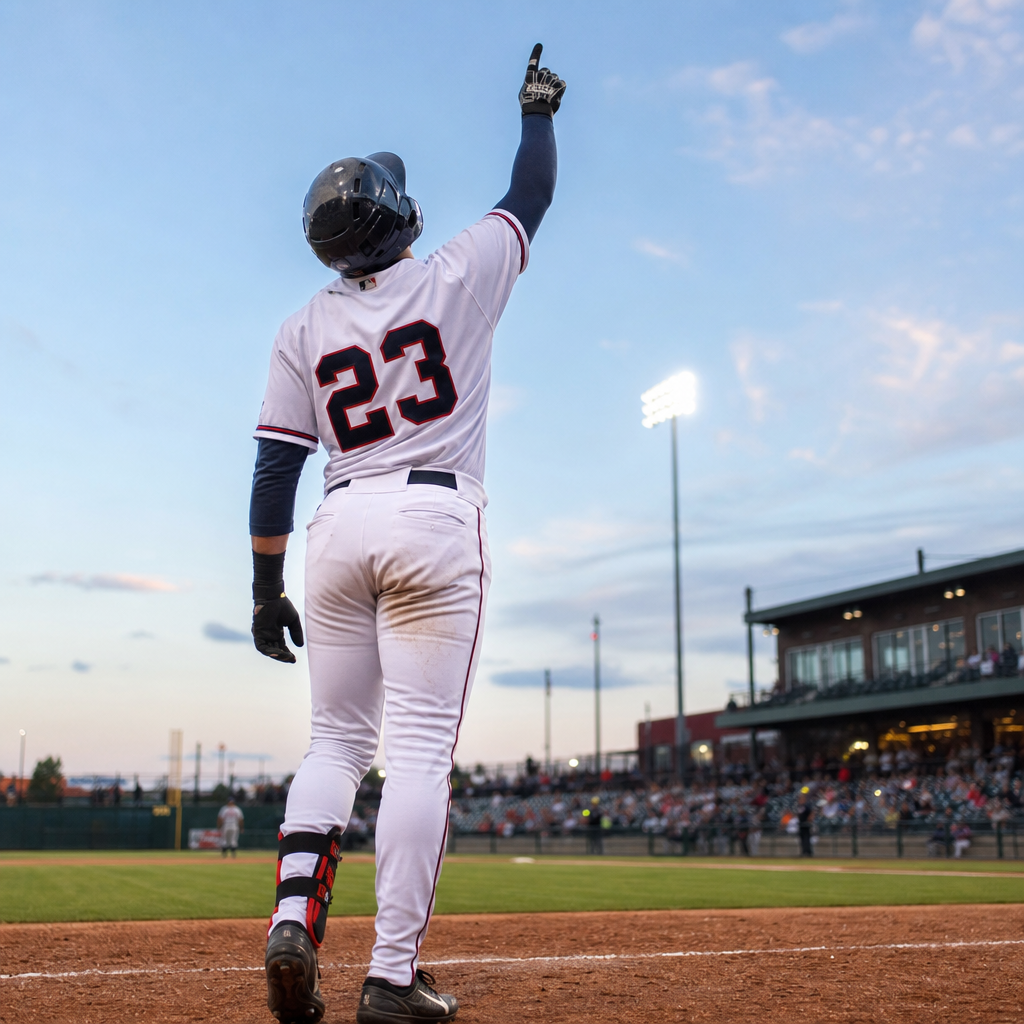
Reaching for the stars is not just a slogan in baseball’s developmental ranks; it is the daily reality of players, coaches, umpires, broadcasters, and front-office staff who build careers far from national headlines. In the broad world of minor league baseball and related college pathways, success rarely arrives in a straight line. It is earned on long bus rides, in half-empty ballparks, on back fields in spring training, and through years of adjustment after failure. That is why inspirational minor league success stories matter. They show how talent is refined, how resilience becomes a competitive advantage, and how overlooked people create lasting impact.
In this context, “minor league success” means more than reaching Major League Baseball. It includes earning a late promotion, rebuilding after injury, becoming an organizational leader, winning an independent league opportunity, moving from college baseball into pro ball, or creating a second act in coaching, scouting, analytics, or player development. I have covered and analyzed player pathways across affiliated clubs, independent leagues, and college programs, and the consistent lesson is clear: the minor leagues reward adaptability as much as raw ability. Players who survive usually improve a measurable skill, embrace instruction, and keep performing when the environment is unstable.
This hub article covers the miscellaneous side of the “Minor Leagues and College Baseball” universe: the stories, patterns, and practical lessons that tie many subtopics together. It explains why late bloomers emerge, how college players use the minors as a launchpad, what independent leagues contribute, why international and undrafted players matter, and how support systems shape outcomes. If you want one comprehensive guide to inspirational minor league success stories, this page is designed to answer the core questions and point you toward the wider landscape of development baseball fans care about most.
Why minor league success stories resonate
Minor league baseball is compelling because it strips performance down to essentials. Salaries have improved at many levels in recent years, but the lifestyle remains demanding. Players deal with frequent promotions and demotions, shared housing, inconsistent routines, and constant evaluation. Under those conditions, progress becomes visible. A hitter who cuts chase rate, improves contact quality, and earns trust against better pitching provides a clearer development story than an established star protecting a long major league résumé.
These stories resonate because they are measurable and human at the same time. A pitcher may add two miles per hour through better force production and a refined delivery, but the real breakthrough often comes from confidence in a new slider grip or a better game plan shaped by video review. A catcher may not post headline numbers, yet his game-calling, receiving, and ability to guide young arms can make him invaluable. In my experience, the most inspiring examples usually combine visible persistence with a specific adjustment that changed a career’s direction.
They also reflect the wider baseball ecosystem. Minor league clubs are linked to scouting departments, biomechanics labs, college programs, strength staffs, and data platforms such as TrackMan, Rapsodo, Hawk-Eye, and Synergy. Success is rarely accidental. Even a “feel-good” rise from obscurity usually has technical foundations: swing decisions, bat path efficiency, seam-shifted movement, vertical break, spin efficiency, or improved recovery protocols. The story inspires people because it feels improbable, but the underlying progress is usually very real.
Common paths from overlooked prospect to breakthrough performer
The classic minor league success story often begins with a player who was underrecruited, lightly drafted, cut, or ignored after an injury-marred season. From there, the breakthrough usually follows one of several patterns. First is the late physical bloom. Some players simply become stronger in their early twenties, especially after entering professional strength programs. Second is the skills reframe: a starter shifts to relief and gains velocity, or a utility player unlocks value through defensive versatility. Third is the college reset, where a player transfers, earns more reps, and improves enough to re-enter pro ball with a stronger profile.
Another path is role clarity. Minor league organizations increasingly define exactly how a player can help at the next level. Instead of asking a fringe prospect to do everything, they narrow the assignment. A left-handed hitter may focus on lifting balls to the pull side against right-handed pitching. A sinkerballer may attack with a two-pitch mix optimized for ground balls rather than chasing a broad starter arsenal. Once expectations become realistic, performance often improves.
The final pattern is survival through failure. Many of the best stories include a release, demotion, or season of poor results. What separates eventual success is not positivity alone. It is diagnostic honesty. Productive organizations review bat-tracking data, swing mechanics, movement profiles, and workload patterns to identify what is fixable. Players who accept that process give themselves another chance.
| Pathway | Typical obstacle | Breakthrough adjustment | Real-world outcome |
|---|---|---|---|
| Late bloomer | Limited early strength or exposure | Professional conditioning and regular reps | Velocity gain or power jump leading to promotion |
| College rebound | Underuse at original program | Transfer, summer ball, expanded role | Draft stock rises and pro opportunity opens |
| Role conversion | Starter or everyday profile not sustainable | Move to bullpen or utility role | Tools play up immediately against better competition |
| Independent league relaunch | Release from affiliated ball | Visible performance in front of scouts | Contract with MLB organization |
College baseball as a springboard for minor league success
College baseball is one of the most important engines behind inspirational minor league success stories because it offers structure, coaching, competition, and time. For many players, especially those not ready for pro ball at eighteen, college provides the reps that reveal a true ceiling. The Cape Cod League, Northwoods League, and strong NCAA conferences regularly expose players to advanced pitching and wood-bat environments that sharpen scouting evaluations. A player who looked ordinary in high school can become a legitimate prospect after two years of physical maturity and better instruction.
Junior colleges are especially important in miscellaneous hub coverage because they are often overlooked by casual fans. I have seen JUCO programs transform careers by giving immediate playing time to athletes who were raw, under-scouted, or academically redirected. For a catcher needing defensive innings or a pitcher rebuilding command, daily reps matter more than reputation. Those settings produce some of the best comeback and reinvention stories in baseball.
Transfers now shape the landscape as well. With the transfer portal expanding movement, players who were buried on depth charts can seek fit instead of waiting indefinitely. That can be decisive. A hitter stuck in a low-usage platoon may move to a mid-major, post strong on-base and slugging numbers, then enter affiliated ball with evidence of game power. A pitcher on a strict college role limit may transfer, start regularly, and prove durability. The minor leagues benefit because college baseball increasingly sends more polished, self-aware players into the professional system.
Independent leagues and the power of a second chance
Independent leagues are central to any honest discussion of inspirational minor league success stories. They function as proving grounds for released prospects, undrafted seniors, former major leaguers seeking another look, and international players trying to enter affiliated baseball. Leagues such as the Atlantic League and the American Association have repeatedly supplied organizations with mature players who can help immediately. The environment is highly competitive because many participants understand that every series may be an audition.
What makes independent league success notable is the level of self-management required. Players often operate with fewer organizational resources than they would in affiliated ball, yet they must still maintain strength, recover properly, study opponents, and keep performance stable. Scouts do not need perfection from these players. They need evidence that a carrying tool is real. For a reliever, that might be a fastball-slider combination with enough shape and command to miss bats. For a position player, it might be elite contact ability, speed, or defensive reliability at a premium position.
There are many examples of players who rebuilt value outside affiliated structures. Some refined pitch shapes using private labs and entered independent ball throwing better than they ever had. Others reworked swings with bat sensors and high-speed video, then turned quality at-bats into contracts. These are not miracle stories. They are cases where player ownership, transparent performance data, and opportunity finally aligned.
Undrafted, international, and nontraditional routes that produce impact
Not every minor league success story begins with a draft bonus or a high-profile signing day. Undrafted free agents, low-bonus international signees, converted two-way players, and athletes from smaller baseball regions all contribute meaningfully to professional systems. In many cases, these players advance because they arrive with less entitlement and a sharper understanding of role value. They know they must separate themselves in one or two areas immediately.
International development adds another layer. Players from the Dominican Republic, Venezuela, Mexico, Panama, Colombia, Curaçao, Japan, South Korea, and other baseball nations often face cultural adjustment in addition to normal on-field demands. Learning English, adapting to U.S. routines, and performing under contract pressure all affect development. When these players succeed, the achievement reflects far more than statistics. It reflects adaptation across language, culture, training style, and competition level.
Nontraditional backgrounds matter too. Some pitchers arrive after playing other sports and develop later because their arms have less mileage. Some infielders are converted from shortstop to center field or third base, extending their value. Some college closers become pro starters after building a third pitch. Development is not linear, and baseball history repeatedly confirms that projection can emerge from unexpected places.
The support systems behind every inspirational rise
Behind nearly every visible breakthrough is an invisible support network. Coaches matter, but so do athletic trainers, physical therapists, mental skills coordinators, nutrition staff, translators, housing coordinators, strength coaches, and family members who keep players grounded through uncertainty. Modern player development is interdisciplinary. A pitcher returning from elbow trouble needs medical oversight, throwing progression, strength planning, and honest feedback about workload. A hitter pressing through a slump may need video review, sleep correction, and a simplified mental routine more than extra cage volume.
Clubs that develop well usually communicate clearly. They tell players why a move is happening, which metrics matter, and what improvement looks like. That transparency builds trust. It also turns setbacks into usable information. In organizations with strong development cultures, demotion is framed as targeted work, not personal failure. That does not remove disappointment, but it keeps players focused on controllable steps.
Fans often remember the promotion, debut, or award. People inside the game remember the months before that moment, when a player stayed with a plan despite little external validation. That is where genuine inspiration lives, and it is why these stories continue to define the emotional core of minor league and college baseball coverage.
Inspirational minor league success stories endure because they reveal what baseball development actually looks like: uncertain, technical, exhausting, and deeply rewarding for those who keep adapting. The biggest lesson is that success in the minors is broader than a major league call-up. It includes growth after injury, reinvention through college or independent leagues, meaningful organizational roles, and long-term careers built from small advantages stacked over time.
For readers exploring the miscellaneous side of “Minor Leagues and College Baseball,” this hub should serve as a foundation. The most important patterns are consistent across levels. Late bloomers improve a specific tool. College players gain opportunity through reps and fit. Independent leagues offer credible second chances. Undrafted and international players prove that path matters less than development quality. Strong support systems turn potential into sustainable performance.
If you follow this corner of baseball closely, use these stories as more than inspiration. Use them as a guide for what to watch: swing decisions, role changes, recovery, confidence, and opportunity. Then continue through the related articles in this subtopic hub to see how these themes play out across prospects, programs, leagues, and careers.
Frequently Asked Questions
What makes minor league baseball success stories so inspiring?
Minor league baseball success stories resonate because they are built on persistence, sacrifice, and long-term belief rather than instant recognition. Unlike the major leagues, where players often perform under bright lights and national coverage, the minor league environment is defined by uncertainty. Players and staff work through modest salaries, constant travel, frequent roster changes, and the pressure of proving themselves every day. That reality makes every breakthrough feel earned. Whether it is a late-round draft pick refining a swing over several seasons, an undrafted player earning an unexpected promotion, or a front-office employee growing from intern to executive, the path is rarely smooth and almost never glamorous.
These stories are also inspiring because they reflect a wider truth about professional growth: meaningful progress often happens away from public attention. In developmental baseball, success is not always measured by becoming a superstar. Sometimes it means staying in the game long enough to adapt, learning how to recover from setbacks, or turning a short opportunity into a lasting career. Fans connect with those journeys because they reveal the human side of baseball. They show that discipline, resilience, coachability, and emotional toughness matter just as much as raw talent. In many cases, minor league success stories become powerful examples of how sustained effort can eventually open doors that once seemed out of reach.
How do players overcome setbacks and still build successful careers in the minor leagues?
Setbacks are a defining part of life in the minor leagues, so successful players usually learn to treat adversity as part of the development process rather than as a final judgment. Slumps, injuries, demotions, position changes, and roster uncertainty can all disrupt momentum, but the most successful players respond by making targeted adjustments instead of becoming overwhelmed by the size of the challenge. That often means working closely with hitting coaches, pitching coordinators, strength staff, trainers, and mental skills professionals to break larger problems into manageable improvements. A hitter might simplify a load or improve pitch recognition. A pitcher may refine command, add a new pitch, or adjust mechanics to reduce stress and increase consistency.
Equally important is the mental side. Players who last in the system often develop routines that help them stay steady through daily ups and downs. They learn that one bad week does not define a season and one bad season does not necessarily end a career. Confidence in the minors is rarely about feeling perfect; it is about continuing to prepare, compete, and believe even when results are delayed. Some of the best success stories come from players who were released, overlooked, or forced to restart at a lower level before finding their footing again. Their progress highlights a central reality of baseball development: improvement is often nonlinear, and careers are built by those who can absorb failure, learn from it, and keep moving forward with purpose.
Are inspirational success stories in the minors only about players reaching the major leagues?
No, and that is one of the most important points to understand when discussing inspirational stories in the developmental side of baseball. Reaching the major leagues is certainly a powerful and visible definition of success, but it is not the only one. Minor league baseball includes a wide network of coaches, managers, athletic trainers, strength specialists, video coordinators, broadcasters, scouts, grounds crew members, umpires, and front-office professionals, all of whom face their own demanding career paths. For many of them, success means earning greater responsibility, staying in the sport they love, and gradually building expertise through years of hard work in often challenging conditions.
Even for players, success can take many forms. A player may not become a long-term major leaguer but can still build a meaningful career by excelling in the minors, playing internationally, transitioning into coaching, or using the discipline learned in baseball to succeed in another profession. College baseball pathways and developmental programs also contribute to these stories, helping athletes mature physically and mentally before they ever enter affiliated ball. What makes these journeys inspirational is not simply the final destination. It is the willingness to pursue improvement in an environment where recognition is limited and the odds are steep. That broader perspective gives minor league success stories lasting value, because they speak to growth, character, and professional perseverance far beyond a single roster milestone.
What role do coaches, mentors, and support staff play in minor league breakthroughs?
Coaches, mentors, and support staff are often central to the most memorable success stories in minor league baseball. Development at this level is highly collaborative. A player’s raw talent may open the door, but refinement usually comes through instruction, feedback, and trust built over time. Hitting coaches help players understand swing decisions, bat path, and situational approach. Pitching coaches work on sequencing, mechanics, and command. Defensive instructors sharpen footwork, positioning, and instincts. Strength and conditioning staff keep athletes physically prepared for the grind of a long season, while trainers and medical personnel help them recover and stay available. In recent years, analysts and video coordinators have also become increasingly important, providing data that can uncover specific areas for growth.
Mentorship matters just as much as technical instruction. The minor leagues can test confidence, especially for younger players navigating failure for the first time in a professional setting. Experienced coaches and veteran teammates often help players maintain perspective, stay disciplined, and avoid letting short-term struggles define their identity. Broadcasters, front-office personnel, and other staff members also contribute to a culture that keeps clubs functioning under difficult conditions. In many inspirational stories, the breakthrough moment is not the result of one dramatic change but of a support system consistently guiding someone through hundreds of small adjustments. That is why development in the minors is best understood as a shared effort. Individual achievement is real, but it is frequently strengthened by people behind the scenes who help turn potential into progress.
Why do long bus rides, small crowds, and difficult conditions matter so much in these stories?
Those details matter because they reveal the true environment in which minor league success is built. The developmental ranks are not designed for comfort. Players and staff often deal with demanding travel schedules, inconsistent routines, unfamiliar cities, and the physical fatigue that comes from playing almost every day. Small crowds and limited attention mean there is very little external reward for the effort required. That setting strips the game down to its essentials. It asks whether a person can stay committed when applause is limited, whether preparation remains sharp when no spotlight is present, and whether motivation can come from internal standards rather than external validation.
That is exactly what makes these stories compelling. When someone rises from that environment, the achievement carries a different kind of weight. It reflects not only talent but also professionalism, emotional endurance, and love of the craft. The grind of the minors forces people to confront doubt, boredom, frustration, and uncertainty while still showing up ready to perform. For players, that can mean maintaining focus through a month-long slump or staying prepared for a call-up that may or may not come. For coaches, broadcasters, umpires, and staff, it means bringing energy and excellence to a setting that rarely receives full public appreciation. These conditions are not just background details. They are the proving ground that gives minor league success stories their authenticity, emotional depth, and lasting inspirational power.