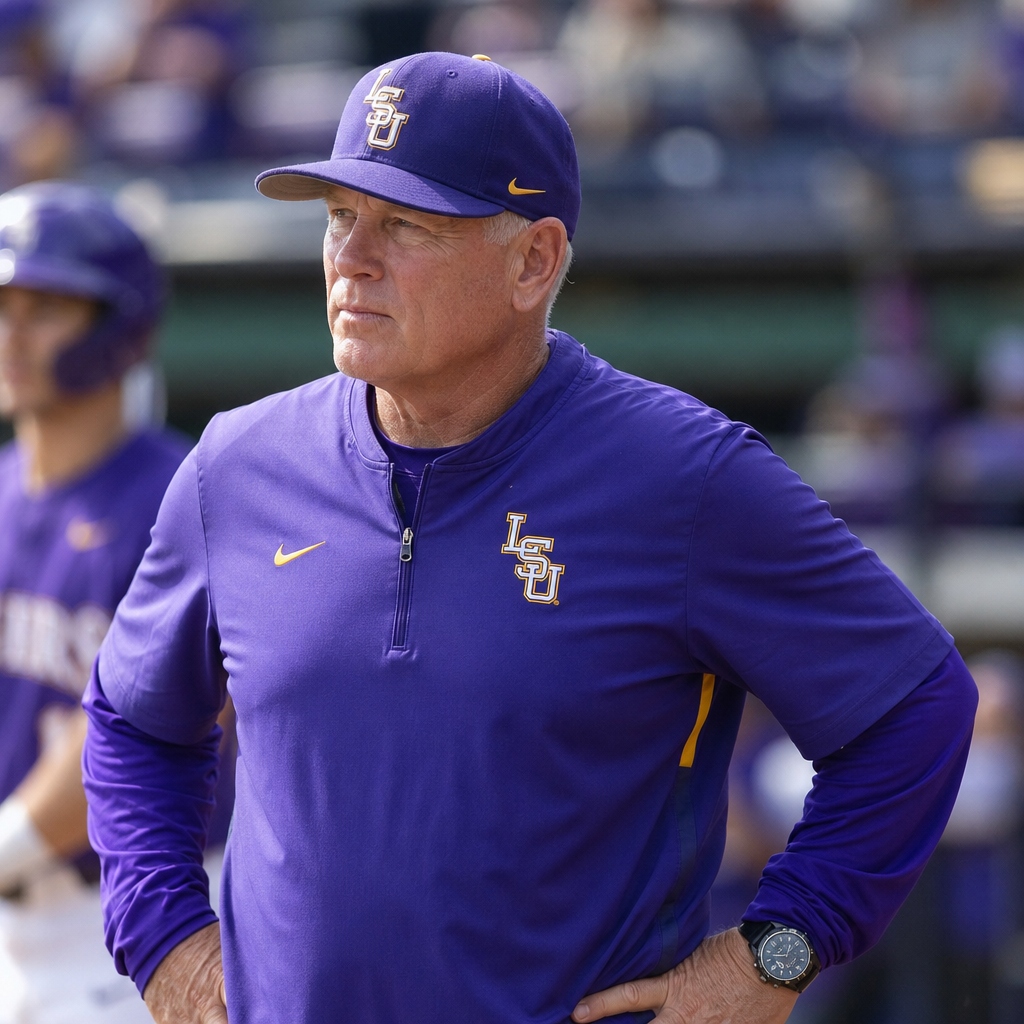
College baseball’s most successful coaches have shaped the sport far beyond the win column, building programs, sending players to professional baseball, and defining what sustained excellence looks like across generations. In college baseball, “success” does not mean one thing. It can mean career victories, national championships, conference dominance, player development, postseason consistency, recruiting strength, or the ability to modernize a program without losing its identity. After years of studying and writing about the college game, I have found that the best way to judge these coaches is to combine all of those factors rather than rely on a single number. That broader view matters because college baseball is unusually complex: scholarship limits are tight, weather affects scheduling, facilities vary sharply by region, and coaches must balance roster construction, academics, compliance, and the transfer portal. A coach who wins consistently in that environment is doing far more than filling out lineup cards. This article looks at the names most often associated with college baseball coaching greatness, explains why they stand above the field, and gives readers a useful hub for exploring the sport’s miscellaneous but essential coaching history.
How coaching success is measured in college baseball
The clearest starting point is wins, because they show whether a coach sustained performance over many seasons. Augie Garrido retired with 1,975 NCAA victories, the most in Division I history, and that record alone places him in any serious discussion of the greatest college baseball coach. Mike Martin finished with 2,029 wins at Florida State, the most all-time in Division I, although he never captured the national title that defined some of his peers. Those totals matter because they are not products of one hot stretch; they represent decades of winning through rule changes, staff turnover, and roster cycles.
Championships, however, often separate very good coaches from the truly historic ones. The College World Series in Omaha remains the sport’s central measuring stick. Rod Dedeaux won 11 national titles at USC, a standard that may never be matched because the sport is now deeper, more regionalized, and more competitive. Garrido won five national championships at Cal State Fullerton and Texas. Jim Morris won two at Miami and took Georgia Tech and Miami to Omaha repeatedly. These results show who could build teams not only good enough for the regular season, but durable enough to survive regionals, super regionals, and the pressure of the final bracket.
Player development is another core test. Ron Fraser transformed Miami by pairing charisma with modern training ideas and helped elevate the profile of the entire sport. Skip Bertman’s LSU teams produced elite professionals while also revolutionizing fan culture, marketing, and atmosphere in Baton Rouge. More recently, coaches like Tim Corbin at Vanderbilt and Kevin O’Sullivan at Florida have built systems that consistently turn premium recruits into polished professionals. Success in college baseball is therefore cumulative: win often, win big, produce talent, adapt to change, and leave the program stronger than you found it.
Rod Dedeaux, Augie Garrido, and the standard for all-time greatness
No overview of college baseball’s most successful coaches can begin anywhere but with Rod Dedeaux and Augie Garrido. Dedeaux coached USC from 1942 to 1986, with military service interruptions, and built the most dominant dynasty the sport has ever seen. USC won 11 national championships under Dedeaux, including five straight from 1970 through 1974. His teams were disciplined, fundamentally clean, and loaded with future major leaguers. More than that, Dedeaux helped define the West Coast style of college baseball: athletic defense, aggressive baserunning, and deep pitching. When historians explain why USC became the sport’s early power center, they start with Dedeaux.
Garrido’s case is different but equally compelling. He won at multiple schools, proving his methods traveled. At Cal State Fullerton, he built one of the most respected programs in the country and won three national titles. At Texas, where expectations are relentless and every season is judged against Omaha, he won two more championships and became the public face of college baseball coaching authority. Garrido was known for demanding mental precision, emotional control, and a professional standard of preparation. Coaches who worked under him often describe practices as detailed, competitive, and relentlessly intentional.
What separates Dedeaux and Garrido from merely excellent coaches is that they changed the expectations of the job itself. They did not just oversee talented rosters. They established repeatable systems, recruited nationally before that became common, and treated the college game as a sport requiring year-round program management. Their records still anchor nearly every conversation about coaching greatness because they combined longevity, championships, and influence. If a modern coach is called elite, the comparison usually traces back to one of these two men.
Skip Bertman, Ron Fraser, and coaches who changed the sport’s culture
Some coaches are remembered not only for titles, but for making college baseball matter more to more people. Skip Bertman did that at LSU. Before his arrival in 1984, LSU had baseball history but not the sustained national prominence it later enjoyed. Bertman built a powerhouse that won five national championships between 1991 and 2000. He also helped create one of the sport’s defining environments at Alex Box Stadium, where large crowds, intense fan engagement, and Omaha expectations became part of the program’s identity. Today, when athletic departments invest in baseball facilities and game-day presentation, they are following a path LSU helped normalize.
Ron Fraser’s impact at Miami was similarly transformative. Known as “The Wizard of College Baseball,” Fraser won two national championships and helped make the Hurricanes a national brand. He was an innovator in promotion, scheduling, and television visibility. Long before many coaches thought in those terms, Fraser understood that college baseball needed spectacle, storytelling, and wider exposure. He pushed the sport toward relevance by treating it as a product worth building, not just a campus activity. In practical terms, that meant stronger attendance, better recruiting, and broader recognition for players and programs.
The success of Bertman and Fraser shows that coaching influence extends beyond strategy. Both men understood that if a program creates energy, resources follow. Resources improve facilities, facilities help recruiting, recruiting supports winning, and winning reinforces the brand. That cycle is now standard across the SEC, ACC, and other major conferences. In that sense, these coaches were not just winners. They were architects of the modern college baseball business model.
Modern program builders who turned consistency into a brand
The modern era has produced its own class of highly successful coaches, and Tim Corbin stands near the top. Since taking over Vanderbilt in 2003, Corbin has turned an academically demanding private school into a national power in the toughest baseball conference in the country. Vanderbilt won national championships in 2014 and 2019 and reached multiple College World Series under his watch. Corbin’s success is especially impressive because Vanderbilt must recruit players who can handle elite academics while competing against SEC rivals with enormous fan support and resources. His player development record is exceptional, with numerous first-round draft picks and a clear reputation for preparing athletes for professional baseball.
Kevin O’Sullivan at Florida has built a similarly formidable model. Florida reached Omaha repeatedly before winning the 2017 national championship, and O’Sullivan’s teams are known for deep pitching, defensive structure, and postseason resilience. Jim Schlossnagle, first at TCU and later at Texas A&M and Texas, has also demonstrated how elite coaches can raise a program’s national ceiling quickly through culture, recruiting, and roster management. Dave Van Horn at Arkansas deserves equal mention for turning the Razorbacks into a perennial contender with strong pitching, disciplined offense, and one of the sport’s most consistent postseason profiles.
These modern coaches operate in a tougher environment than earlier generations in several ways. Scholarship restrictions remain tight at 11.7 equivalencies in Division I baseball, roster management is affected by the MLB draft and transfer movement, and national recruiting is more competitive than ever. Success now requires not only tactical ability, but operational excellence. The best modern coaches manage nutrition, sports science, analytics, and NIL-era relationship building in ways earlier legends never had to consider.
Comparing the most successful coaches by defining achievements
When readers ask who belongs on a short list of college baseball’s most successful coaches, I usually point them to a group whose records, titles, and influence stand up across eras. The table below highlights why these names continue to dominate the conversation.
| Coach | Program(s) most associated | Defining achievement | Why the legacy matters |
|---|---|---|---|
| Rod Dedeaux | USC | 11 national championships | Set the unmatched dynasty standard in college baseball |
| Augie Garrido | Cal State Fullerton, Texas | Five national titles and elite success at multiple schools | Proved championship methods could travel across programs |
| Skip Bertman | LSU | Five national championships in the 1990s | Combined winning with major cultural and attendance growth |
| Ron Fraser | Miami | Built Miami into a national brand and won two titles | Helped popularize and commercialize the college game |
| Mike Martin | Florida State | 2,029 career wins | Embodied extreme consistency and player development |
| Tim Corbin | Vanderbilt | Two national championships in the SEC era | Defined the modern development-driven program model |
This kind of comparison is useful because it avoids a false binary. A coach can be an all-time great without leading every category. Martin is the clearest example. Critics point to the absence of a national title, yet no fair reading of college baseball history excludes the winningest coach in Division I from the highest tier. Likewise, Corbin has fewer decades of work than Dedeaux or Garrido, but his influence on player development and modern roster construction is undeniable.
Why longevity, adaptation, and player development matter so much
The longer I have covered college baseball, the more I have come to value adaptation as a hallmark of coaching success. Winning for five seasons can reflect one recruiting wave. Winning for twenty-five requires constant adjustment. Coaches have had to respond to changes in bat standards, recruiting calendars, conference realignment, video scouting, strength training, and now the transfer portal. The best coaches absorb those shifts without losing their core identity. That is why longevity is not simply a counting stat; it is evidence of operational durability.
Player development offers another window into true coaching quality. In college baseball, many elite recruits arrive with raw tools but uneven polish. The most successful coaches create repeatable systems for turning velocity into command, bat speed into approach, and athleticism into dependable defense. At Vanderbilt, Florida, LSU, and Arkansas, you can often see that development arc clearly. A freshman may arrive throwing hard but lacking a reliable third pitch; by his junior year, he understands sequencing, controls the running game, and attacks hitters with a plan. That outcome reflects coaching, not chance.
There is also a human dimension that the best coaches handle well. College players are not professionals; they are navigating academics, maturity, failure, and future decisions all at once. Great coaches know when to push, when to simplify, and when to protect a player from the noise that surrounds elite competition. Their programs tend to have strong alumni networks because former players recognize that the environment prepared them for more than baseball. That kind of legacy rarely shows up in a stat line, but it is one reason certain coaches are revered long after retirement.
The hub takeaway: what successful college baseball coaches really have in common
The most successful coaches in college baseball history share a recognizable set of traits: they win consistently, build systems that outlast individual stars, develop players for the next level, and raise the profile of their programs and the sport itself. Rod Dedeaux set the dynasty benchmark at USC. Augie Garrido proved greatness could travel across schools and eras. Skip Bertman and Ron Fraser changed the culture and visibility of the game. Mike Martin demonstrated that relentless consistency matters, while modern leaders like Tim Corbin, Kevin O’Sullivan, and Dave Van Horn have shown what elite program building looks like in today’s environment.
For readers using this page as a hub within the broader minor leagues and college baseball topic, the main benefit is context. Understanding these coaches helps explain why certain programs became pipelines to pro baseball, why some schools remain annual Omaha threats, and how college baseball evolved from a regional sport into a nationally followed one. Coaching history connects directly to recruiting, player development, facilities, conference power, and the path from campus baseball to the professional ranks.
If you want to understand college baseball beyond scores and rankings, start with the coaches who defined the standard. Explore the linked program histories, postseason guides, and player development features in this subtopic to see how their influence still shapes the game today.
Frequently Asked Questions
What makes a college baseball coach “successful” beyond just total wins?
A successful college baseball coach is usually measured by much more than a large number in the win column. Career victories matter because they reflect longevity, consistency, and the ability to sustain results over many seasons, but they are only one part of the picture. In college baseball, true success often combines national championships, regular postseason appearances, conference titles, player development, recruiting strength, and the ability to build a lasting program culture. Some coaches are remembered for turning a regional team into a national contender, while others are celebrated for keeping a powerhouse at the top across multiple generations of players.
Another major factor is adaptability. The most successful coaches have often thrived across changing eras of college athletics, including scholarship limits, conference realignment, evolving recruiting rules, advances in sports science, and the rise of the transfer portal. They do not simply repeat one formula forever; they adjust while preserving the identity of their program. That ability to modernize without losing standards is a major reason certain coaches stay relevant for decades.
Player development also carries enormous weight. A coach who consistently sends players to professional baseball, helps overlooked recruits become stars, and prepares athletes to succeed after college leaves a deeper legacy than one built on wins alone. In that sense, coaching success in college baseball is about building a complete ecosystem: competitive teams, strong culture, future professionals, and a standard that lasts well beyond one great season.
Which qualities do the most successful college baseball coaches tend to have in common?
The greatest college baseball coaches usually share a core set of traits, even if their personalities and styles are very different. First, they are exceptional program builders. They know how to create an environment where players understand expectations, trust the staff, and buy into a long-term vision. That often means establishing a culture of accountability, consistency, and daily improvement rather than relying only on talent. The best coaches get players to embrace routine, preparation, and team-first habits, which is why their programs tend to remain competitive year after year.
Second, elite coaches are strong evaluators of talent. Recruiting in college baseball is not simply about signing the most highly ranked players; it is about identifying athletes who fit the program, can handle development, and have the makeup to improve under pressure. Many legendary coaches built their reputations by spotting potential others missed. They knew how to project growth, assemble balanced rosters, and develop players physically and mentally once they arrived on campus.
Third, they are outstanding teachers. College baseball is still a developmental sport, and the most respected coaches teach mechanics, situational awareness, mental toughness, and leadership. They build systems that help pitchers improve command, hitters sharpen approaches, and defenders play with confidence. Finally, they are often excellent managers of people. They motivate stars, support role players, handle adversity, and keep teams together through slumps, injuries, and postseason pressure. In short, the most successful coaches combine leadership, talent evaluation, teaching, and adaptability in a way that produces both immediate results and lasting stability.
How important are national championships when evaluating the best coaches in college baseball history?
National championships are extremely important, but they should not be the only standard used to judge greatness. Winning the College World Series is the clearest and most prestigious achievement in the sport, and coaches who capture multiple national titles usually earn a special place in college baseball history. Championships show that a coach can guide a team through the pressure of the postseason, compete against elite opponents, and finish the job at the highest level. For many fans, titles are the quickest way to define all-time status.
That said, college baseball is a sport where postseason outcomes can be influenced by timing, injuries, matchup dynamics, and the structure of regional and super regional play. Because of that, a coach can build an extraordinary career without winning multiple national titles. Consistent Omaha appearances, dominant conference records, long streaks of winning seasons, and a reputation for producing high-level teams year after year are also signs of historic success. Some coaches inherit strong programs and add championships; others spend decades building programs from the ground up and become legends through sustained excellence, even if they do not accumulate as many titles.
The most balanced way to evaluate coaching greatness is to look at the full body of work. Championships matter because they represent the sport’s highest peak, but context matters too. A coach who transforms a program, develops generations of players, and keeps a team nationally relevant for decades has built a legacy that can stand alongside championship hardware. In college baseball, the best coaching careers are often defined by both peak achievement and long-term impact.
How do successful college baseball coaches influence player development and professional baseball?
Successful college baseball coaches have a major impact on the pipeline to professional baseball because they help players improve in ways that go far beyond raw ability. At the college level, development is often where careers are made. Great coaches and staffs refine mechanics, improve baseball IQ, strengthen mental approach, and place players in competitive environments that prepare them for the demands of pro ball. A talented freshman may arrive with tools, but it often takes elite coaching to turn those tools into polished performance.
The best coaches also create systems that mirror the accountability and structure players will encounter at higher levels. They emphasize preparation, video work, scouting reports, strength programs, recovery habits, and situational execution. Pitchers may learn how to sequence effectively, attack weaknesses, and maintain command under pressure. Hitters may develop plate discipline, a plan against different pitch types, and the ability to adjust within an at-bat. Defenders improve through repetition, positioning, and sharper game awareness. These details matter tremendously to scouts and professional organizations.
Just as important, successful coaches often shape maturity and leadership. Professional baseball is demanding, and players who come from disciplined, high-standard college programs are often better equipped to handle failure, travel, competition, and constant evaluation. That is one reason certain college coaches become known for consistently producing pro-ready talent. Their influence extends beyond campus because they help define what successful transitions to the next level look like. In many cases, their legacy includes not only what their teams achieved in college but also how many players carried those lessons into long professional careers.
Why do certain college baseball coaches leave such a lasting legacy in the sport?
Certain coaches leave a lasting legacy because they change more than their own records; they influence the identity and direction of college baseball itself. Some build programs that become national brands, turning schools into annual contenders and making winning traditions feel permanent. Others redefine recruiting, player development, scheduling philosophy, or the way a program connects with fans, alumni, and professional scouts. Their legacy grows because their impact is visible in facilities, culture, expectations, and the reputations their schools carry long after they are gone.
A lasting legacy also comes from consistency across generations. College rosters change constantly, so sustaining excellence is one of the hardest accomplishments in the sport. Coaches who win with different types of teams, adapt to changing eras, and remain relevant through decades of turnover prove that their success is rooted in leadership and structure rather than one exceptional class of players. That kind of longevity earns respect from peers, players, and the broader baseball community.
Finally, memorable coaches leave a human legacy. Former players often talk about mentorship, discipline, confidence, and life lessons as much as they talk about wins and championships. The most successful coaches shape careers, but they also shape people. They become central figures in the history of their universities and in the personal stories of athletes who played for them. That is why discussions about college baseball’s most successful coaches often go beyond statistics. Their true legacy is found in the programs they built, the standards they established, and the generations of players and coaches who continue to reflect their influence.