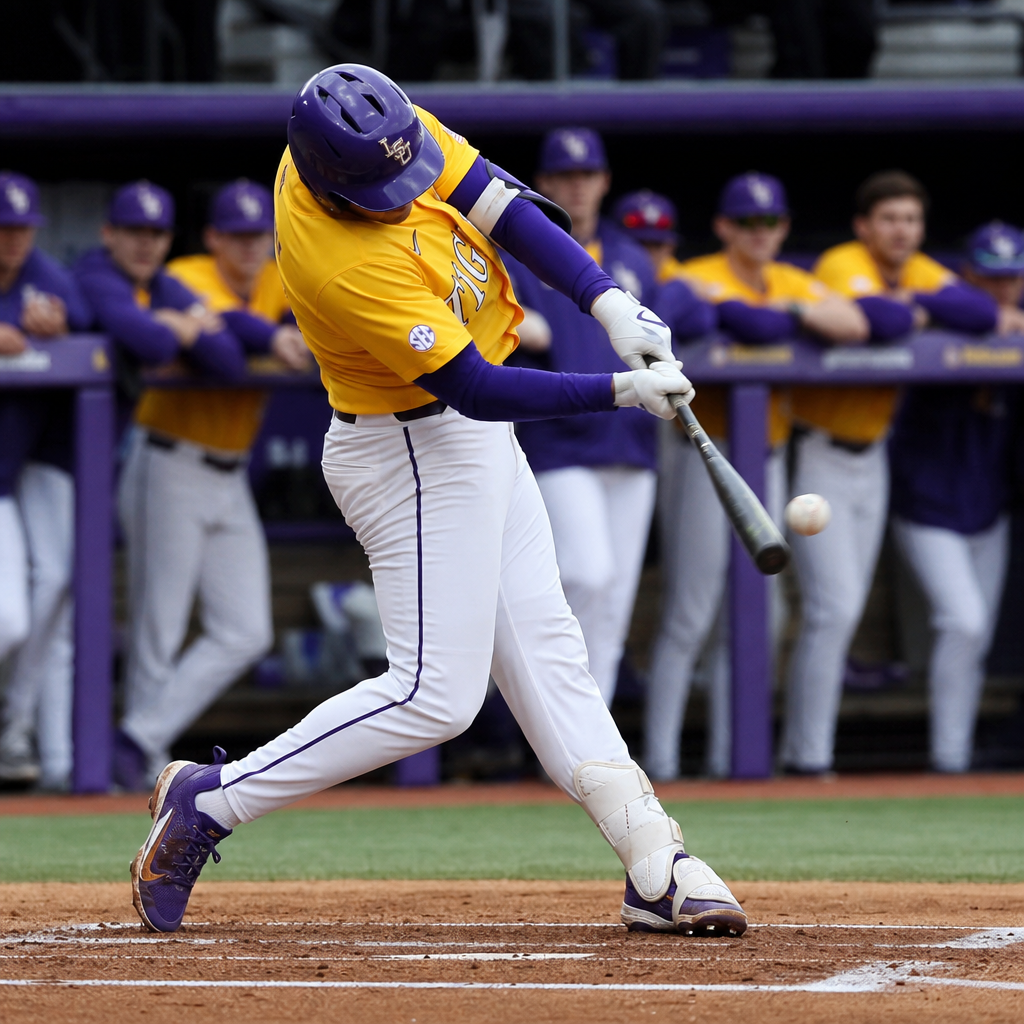
College baseball has always been a proving ground where talent, innovation, stamina, and pressure collide, and the sport’s most memorable record breakers reveal exactly how high the level can rise. In the college game, a record is more than a number in a media guide. It is a marker of dominance across a season, a career, a single game, or a tournament run, often achieved with metal bats, compressed schedules, long road trips, and the relentless scrutiny of conference play. When fans search for remarkable achievements in college baseball, they usually want more than trivia. They want context: who set the mark, why it mattered, how the performance changed expectations, and which records still shape today’s players, coaches, and scouts.
That broader view matters because college baseball sits at a unique intersection between amateur development and professional projection. The NCAA format produces intense regional and super regional pressure, while conferences such as the SEC, ACC, Big 12, and Pac-12’s historical programs have created deep traditions and measurable standards. I have spent years tracking college baseball performance, and the lesson is consistent: the most important records are the ones that survive changes in equipment, scheduling, analytics, scholarship limits, and competitive balance. Some achievements stand because they were built on unmatched skill. Others endure because the modern game makes them almost impossible to duplicate.
This hub page covers the miscellaneous record-breaking side of college baseball: career home run chases, eye-popping hit totals, strikeout machines, unbeaten seasons, single-game explosions, postseason legends, and the coaching milestones that define programs for generations. It also serves as a practical gateway for readers exploring the broader Minor Leagues and College Baseball landscape. If you are comparing eras, studying player development, or looking for examples of how college performance translates to professional opportunity, these landmark achievements offer the clearest evidence. They show what excellence looks like when competition is fierce and every weekend series can reshape a season.
To understand college baseball records clearly, it helps to separate them into categories. Counting records measure volume, such as career hits, home runs, wins, and strikeouts. Rate records capture efficiency, such as batting average or earned run average, though those require careful minimum thresholds. Single-game and single-season records often reflect explosive peaks, while career and coaching records reveal sustained excellence. Postseason records are different again because they carry elimination pressure and usually come against stronger opponents. That mix is why remarkable achievements in college baseball remain such a rich topic: they are not all measuring the same thing, yet each tells a precise story about mastery, durability, and competitive context.
Power records that changed offensive expectations
Few college baseball records attract as much attention as career home runs, because power is one of the easiest traits for fans and scouts to recognize immediately. Marshall McDougall of Florida State remains one of the sport’s defining power figures, and his 1999 game against Maryland is still the standard for a single-game offensive eruption: six home runs and 16 runs batted in. That performance was not just gaudy; it reflected elite bat speed, pitch recognition, and an approach capable of punishing mistakes repeatedly in one afternoon. It also became a benchmark whenever a player starts a hot streak, because no modern outburst is discussed without recalling McDougall.
Career home run records matter even more because they require production through slumps, scouting reports, conference travel, and roster turnover. Pete Incaviglia’s power numbers at Oklahoma State remain central to any discussion of the greatest college sluggers. His college career, before he even entered professional baseball, established a level of sustained extra-base impact that forced opposing staffs to pitch around him whenever possible. Records like his are especially impressive because they came before the current analytics era normalized launch angle language and optimized swing design. He was producing elite damage in an environment where pitchers still challenged hitters aggressively and where lineup protection was not discussed with the same modern precision.
Single-season power marks are often the clearest indicators of a player overwhelming his competition. When a hitter reaches the 30-home-run range in college baseball, he is doing more than riding favorable park conditions. He is controlling the strike zone, driving velocity, and avoiding the fatigue that causes many college lineups to cool in May. Lance Berkman’s huge season at Rice is a classic example of a star-level offensive year that translated directly to pro success. The broader lesson is simple: record-breaking college power usually combines raw strength with unusual consistency, and that combination is what separates a memorable slugger from a genuine standard-setter.
Hit machines, batting titles, and the art of offensive consistency
If home run records capture attention, hit records often reveal the purest version of offensive skill. Building a high career hit total in college baseball demands health, lineup security, situational awareness, and the ability to adjust as opponents learn weaknesses. Robin Ventura’s Oklahoma State career is still invoked whenever people discuss complete college hitters because he paired contact ability with power and strike-zone command. Great hit accumulators are not simply aggressive swingers. They tend to control at-bats, use all fields, and avoid prolonged slumps over four demanding seasons.
Batting average records require even more nuance. An elite average can be supported by speed, line-drive contact, opposite-field discipline, and selective aggression. In my experience reviewing historical leaderboards, the best college hitters are usually the ones whose process reads clearly in the box score: low strikeout totals, steady on-base production, and strong performance against top conference pitching rather than inflated numbers only in midweek games. That context matters because college schedules are uneven. A .400 season is extraordinary, but where and how those hits were produced tells you whether the performance was merely excellent or truly historic.
College baseball also rewards players who can deliver under team-oriented conditions. Aluminum or composite bats have changed offensive environments across eras, but bat technology alone has never created great hitters. The players who threaten season or career hit records are the ones who make difficult skills look routine: spoiling two-strike pitches, taking singles through the vacated side of the infield, and maintaining plate discipline when opponents stop giving them fastballs in hitter’s counts. Those details explain why offensive consistency records deserve equal billing with tape-measure power.
Pitching records built on dominance, workload, and precision
Pitching records in college baseball are harder to compare across generations because workloads, pitching development, and bullpen usage have changed dramatically. Even so, career strikeout leaders and single-season win totals remain powerful markers of dominance. Ben McDonald at LSU is one of the clearest examples of a college ace whose stuff and results aligned perfectly. His fastball power, mound presence, and capacity to miss bats in high-leverage games made him the prototype for a Friday-night starter before that phrase became common recruiting shorthand.
Strikeout records are especially meaningful because they remove some defensive variables. A pitcher who consistently piles up strikeouts is controlling the game directly through velocity, command, pitch shape, deception, or sequencing. Yet context still matters. Older eras often allowed deeper outings and heavier pitch counts, while modern programs protect arms more carefully and spread innings among specialized relievers. That means some historical career records may never fall, not because today’s pitchers are less talented, but because player development is now optimized around health, draft value, and long-term durability.
Earned run average records and winning streaks carry different lessons. A microscopic ERA can reflect command, defense, park factors, and conference strength all at once. Extended winning streaks usually belong to pitchers backed by excellent teams, but they also require emotional steadiness and repeatable mechanics. In postseason settings, those qualities become even more valuable. The college pitchers remembered longest are rarely the ones with one unhittable month. They are the arms who held premium stuff through a full schedule and then still performed when a regional final or College World Series start defined the season.
Single-game and postseason explosions that became legend
Some records endure because they happened on the biggest stage, and college baseball history is full of performances that became instant folklore. Warren Morris’s walk-off home run for LSU in the 1996 College World Series championship game is not a statistical volume record, but it is one of the sport’s most remarkable achievements because of timing, consequence, and improbability. Morris had been limited by injury, stepped into the defining at-bat of the season, and delivered a championship with one swing. That is the type of achievement that lives beyond box scores because it captures pressure as well as performance.
Postseason records often expose which players are built for elimination baseball. A hitter with a huge regional, a closer who records multiple saves in Omaha, or a starter who dominates through the super regionals has accomplished something different from compiling regular-season numbers. The stage is harder, scouting is sharper, and every mistake carries more weight. In that sense, postseason excellence can be more revealing than season-long accumulation.
| Achievement type | Why it stands out | Example |
|---|---|---|
| Single-game power outburst | Shows peak offensive dominance in a concentrated window | Marshall McDougall’s six-home-run game for Florida State |
| Championship-clinching moment | Combines skill with maximum pressure | Warren Morris’s 1996 title-winning home run for LSU |
| Career power production | Measures durability and sustained run creation | Pete Incaviglia’s Oklahoma State home run totals |
| Ace-level strikeout dominance | Reflects direct control over games against strong opponents | Ben McDonald’s LSU body of work |
What ties these examples together is memorability rooted in context. Fans remember where they were, what was at stake, and how unlikely the achievement felt in real time. That is why hub coverage of miscellaneous college baseball records needs to include both statistical records and defining moments. The sport’s history is not only built by totals. It is built by the exact afternoons and evenings when a player or team did something nobody expected to see again.
Team streaks, coaching milestones, and program-defining standards
Individual records are only part of the story. Team winning streaks, long home winning runs, repeated College World Series trips, and coaching victory totals reveal how remarkable achievements in college baseball are often institutional as well as personal. Augie Garrido’s career is the clearest example. Across Cal State Fullerton and Texas, he accumulated wins and national titles at a scale that turned coaching success into a historical category of its own. His impact was not limited to tactics. He set standards for player development, accountability, postseason preparation, and program identity.
Coaching records matter because they are usually the product of systems rather than isolated talent. A coach who wins for decades must adapt to recruiting changes, scholarship limits, evolving bat standards, and new expectations around sports science. Skip Bertman at LSU built a modern powerhouse by pairing elite recruiting with unmistakable competitive culture, and his championships changed how the SEC viewed baseball investment. Rod Dedeaux at USC set another enduring benchmark, turning sustained national dominance into part of the sport’s foundational history.
Team records can also signal broader shifts in the college game. When a program strings together conference titles or extends a home winning streak, it usually reflects facilities, depth, pitching development, and consistency in defensive play. Those achievements matter to readers because they connect records to the broader Minor Leagues and College Baseball pipeline. Strong programs repeatedly send players into professional baseball not by accident, but by creating environments where high standards become normal. That is the hidden lesson behind team and coaching milestones: record breaking often begins long before first pitch, in the design of a program capable of reproducing excellence every year.
Why some college baseball records may never be broken
Not every record is equally vulnerable. Some are likely to fall because modern training, video analysis, bat-speed tracking, and strength programs help athletes reach higher offensive ceilings. Others are protected by structural changes. Pitch counts, deeper bullpens, transfer movement, weather-adjusted schedules, and shorter leashes for struggling starters all make certain career pitching totals far harder to chase. A modern ace may be better prepared for professional baseball than predecessors were, yet still have no realistic path to an all-time innings or complete-game record.
The same logic applies to career hitting records. Players now leave earlier for the draft, transfer for opportunity, or lose at-bats in deeper, more specialized rosters. Four-year accumulation is less common for elite talent than it once was. That makes older records in hits, home runs, and runs batted in more durable than many fans assume. Even with better technology, a player needs health, lineup stability, and enough collegiate seasons to stack numbers at the historic level.
This is why era comparison requires discipline. It is tempting to declare every recent breakout season the greatest ever, but informed analysis asks harder questions. How strong was the schedule? What were the bat standards? How many games were played? Did the player face conference aces regularly? Was the record built through durability, efficiency, or a favorable environment? When readers use those questions, they get a clearer view of what makes a record genuinely remarkable rather than merely eye-catching on social media.
Record breakers give college baseball its historical spine. They connect generations of fans, provide standards for today’s stars, and explain why certain names never disappear from broadcasts, media guides, and draft conversations. The most remarkable achievements in college baseball are not memorable only because the numbers are large. They endure because they combine talent with circumstance: a power hitter who kept delivering after pitchers adjusted, an ace who dominated despite rising pressure, a coach who built excellence into a program’s routine, or a postseason hero who turned one swing into a permanent part of the sport’s identity.
As a hub for the miscellaneous side of Minor Leagues and College Baseball, this page is most useful when you treat it as a starting point for deeper exploration. Power records lead naturally to articles on elite sluggers and draft development. Pitching milestones open the door to breakdowns of college aces, workload trends, and how amateur dominance translates in pro ball. Team and coaching achievements help explain why certain programs produce professionals repeatedly while others cycle in and out of contention. In other words, the records are not isolated facts. They are entry points into the larger structure of the sport.
The key takeaway is straightforward: remarkable achievements in college baseball deserve context as much as celebration. When you evaluate a record through era, competition, pressure, and longevity, you understand not just what happened, but why it still matters. Use this hub to explore the players, teams, and moments that set the standard, then follow the connected stories across the broader college baseball and minor league landscape.
Frequently Asked Questions
What kinds of records stand out most in college baseball history?
The most memorable college baseball records usually fall into four major categories: single-game explosions, season-long dominance, career totals, and postseason achievements. Single-game records capture the sport at its wildest, whether that means an extraordinary strikeout total, a home run barrage, or an offensive performance that becomes part of campus lore. Season records often reveal the rarest blend of skill and consistency, such as a pitcher maintaining a microscopic earned run average across a demanding schedule or a hitter putting together elite power, average, and on-base numbers over months of conference and non-conference competition. Career records can be even more impressive because they require durability, adaptation, and sustained excellence against changing opponents and rising expectations.
Postseason and tournament records deserve special attention because they are set under the greatest pressure. In college baseball, a player who breaks records in a regional, super regional, conference tournament, or the College World Series is doing so while facing elite competition, high-stakes moments, and often little room for error. That is part of what makes college baseball record breakers so compelling: the records are not just statistical milestones, but snapshots of players and teams rising above fatigue, travel, scouting, and championship-level stress. When fans look back at remarkable achievements in college baseball, they are usually remembering performances that combined production, timing, and difficulty in a way that felt almost impossible in the moment.
Why are college baseball records so impressive compared with statistics in other levels of the sport?
College baseball records are impressive because the environment is uniquely demanding. The college game compresses a great deal of competition into a relatively short season, and players must perform while balancing academics, travel, recovery, and the intense rhythm of weekend series and midweek games. Unlike the professional game, where players are surrounded by a full-time baseball infrastructure, college athletes operate in a setting where time, preparation, and physical maintenance can be harder to manage. That makes sustained greatness especially difficult and helps explain why record-breaking seasons or careers stand out so sharply.
There is also a strategic and structural side to college baseball that makes certain records especially meaningful. The use of metal bats can increase offensive volatility, but that does not make elite performances automatic. Hitters still have to deal with top-tier pitching, defensive shifts, scouting reports, and pressure-packed conference play. Pitchers face deep lineups, smaller margins for mistakes, and tightly managed workloads. On top of that, the college season often includes unpredictable weather, long road trips, and frequent momentum swings. So when a player separates from the field enough to set a major record, it usually reflects more than raw talent. It reflects adaptability, physical resilience, mental toughness, and the ability to thrive in a setting where every weekend can dramatically alter a season.
Do offensive and pitching records in college baseball deserve to be viewed differently?
Yes, and understanding that difference helps fans better appreciate just how remarkable certain achievements are. Offensive records are often shaped by ballpark dimensions, lineup protection, strength of schedule, and the era in which a player competed. A hitter who sets a home run, RBI, slugging percentage, or hitting streak record may benefit from an aggressive offensive approach or favorable conditions, but those factors alone do not produce historic numbers. Truly great offensive record breakers still have to show plate discipline, bat speed, consistency against a wide range of arms, and the ability to perform when every opponent knows they are the centerpiece of the lineup.
Pitching records, meanwhile, often demand a different kind of excellence. Strikeout totals, earned run average, complete games, saves, and opponent batting average all tell slightly different stories about dominance. A record-setting starter may showcase endurance and command over many innings, while a reliever who breaks saves records must repeatedly handle the most stressful moments of a game with little margin for error. College pitching records can be especially difficult to compare across generations because coaching philosophies, pitch counts, bullpen usage, and scheduling have changed over time. That is why the best way to view these records is not as identical accomplishments, but as distinct forms of mastery. Offensive record breakers often redefine what sustained run production can look like, while pitching record breakers reveal how thoroughly one arm can control the game.
How do records from different eras of college baseball compare?
Comparing records across eras requires context. College baseball has changed in meaningful ways over the years, including equipment standards, scholarship distribution, strength and conditioning, travel conditions, analytics, roster construction, and even the way coaches deploy pitchers and lineups. A record set decades ago may have come in a very different tactical environment than one set today. Some eras encouraged more aggressive offensive play, while others featured stronger run prevention or more specialized bullpen usage. Because of that, a raw statistical comparison does not always tell the full story.
The most useful way to compare era-defining achievements is to ask how far above the norm a player or team performed at that time. A hitter who dramatically outpaced peers in batting average, power, or on-base ability in one era may be just as impressive as a player posting different-looking numbers in another. The same is true for pitchers who dominated according to the standards of their period. This broader lens helps explain why some older college baseball records still command respect even if the style of play has changed. Record breakers matter not only because of the number attached to their accomplishment, but because they pushed the boundaries of what seemed possible in their own competitive landscape. That is ultimately what gives remarkable achievements in college baseball their lasting power.
Why do fans and historians care so much about record breakers in college baseball?
Fans and historians care about college baseball record breakers because records create a bridge between generations, programs, and unforgettable moments. They give structure to the sport’s history, making it easier to understand who dominated, when they did it, and why their achievements still matter. A record can instantly connect a modern fan to a legendary season from decades earlier or remind alumni of a player who transformed a program’s identity. In that sense, records are not just numbers preserved in archives. They are storytelling devices that capture the emotion, pressure, and significance of the college game at its highest level.
They also matter because college baseball is deeply tied to place and tradition. A single player’s record-setting run can define an era for a school, energize a fan base, and shape how a team is remembered nationally. Historians value these achievements because they reveal patterns in the sport’s evolution, while fans value them because they remember where they were when those moments happened. Whether the record involves home runs, strikeouts, wins, saves, hitting streaks, or postseason heroics, the fascination comes from more than the statistic itself. It comes from the combination of talent, timing, pressure, and legacy. That is why record breakers remain central to any discussion of remarkable achievements in college baseball.