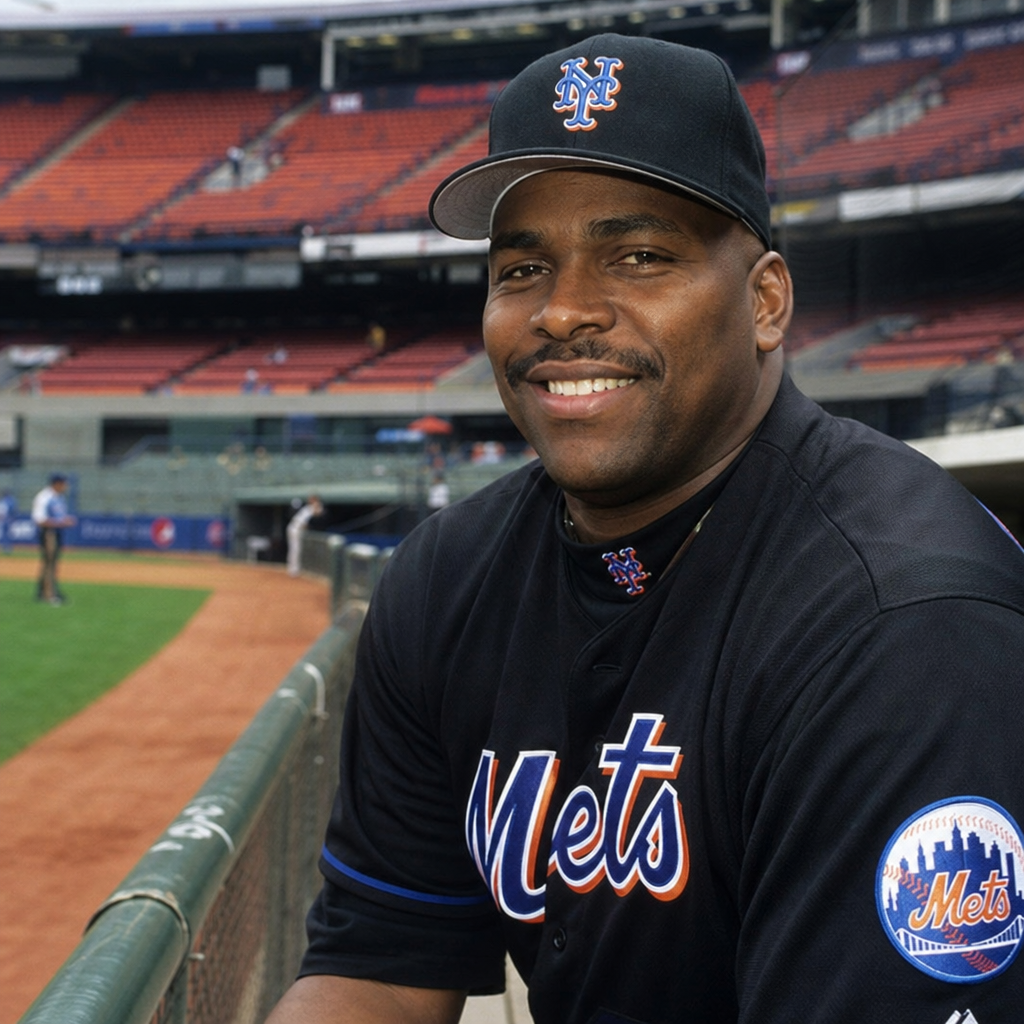
The Bobby Bonilla contract is one of Major League Baseball’s most famous financial anomalies, a deal so unusual that it became an annual holiday for sports fans every July 1. In simple terms, the contract refers to the New York Mets’ decision to defer $5.9 million owed to Bonilla in 2000 and instead pay him roughly $1.19 million every year from 2011 through 2035. What sounds like a punchline is actually a useful case study in deferred compensation, franchise cash flow, ownership risk, and the way off-field decisions can shape a team’s reputation for decades.
As someone who has spent years analyzing sports business stories, I can say this deal survives in public memory because it sits at the intersection of baseball accounting and baseball culture. Fans remember the headline number, but the deeper story involves discount rates, investment assumptions, collective bargaining rules, and a franchise ownership group that believed its capital could earn more elsewhere. The Bobby Bonilla contract matters because it shows how a perfectly legal financial structure can look brilliant in one market environment and absurd in another. It also belongs in any broad discussion of baseball’s miscellaneous controversies because it was not a cheating scandal, labor stoppage, or criminal case. It was a boardroom decision that became a public symbol of questionable judgment.
To understand why the story remains relevant, it helps to define a few key terms. Deferred compensation means salary that is earned under a contract but paid later, sometimes years after a player stops performing. Present value is the current worth of money that will be paid in the future, adjusted for time and expected return. An annuity-style schedule spreads payments over a long period rather than paying a lump sum. In MLB, these structures are not rare by themselves. What made Bonilla’s arrangement exceptional was the combination of long delay, generous interest rate, the player’s declining on-field value, and the ownership context surrounding the decision.
This article serves as a hub within the broader scandals and controversies landscape because the Bonilla deal connects to many adjacent issues: ownership strategy, accounting optics, fan trust, media myths, and other unusual baseball payouts. It also helps readers ask better questions. Was the contract actually bad finance or just bad optics? Why did the Mets choose deferral? How does it compare with modern deferred deals signed by stars like Shohei Ohtani? And what lessons should teams, agents, and fans draw from a contract that keeps generating headlines long after the player retired? The answers are more nuanced than the yearly jokes suggest.
How the Bobby Bonilla contract worked
The basic timeline is straightforward. Bobby Bonilla returned to the Mets before the 1999 season, but his second stint was disappointing and short. By 2000, the team wanted to move on while still owing him money. Instead of paying the remaining $5.9 million immediately, the Mets and Bonilla agreed to defer payment. Under the revised arrangement, the club would begin paying him on July 1, 2011, and continue making annual payments of about $1.19 million through 2035. Those payments reflected an 8 percent agreed return on the deferred amount.
That 8 percent figure is the key to understanding why the total value became so large. Deferred compensation is not just delayed salary; it usually includes a negotiated growth rate, essentially compensating the player for waiting. If you defer nearly $6 million for more than a decade and then amortize the result across twenty-five years, the headline total rises dramatically. Public estimates usually place the total nominal payout near $29.8 million. The number shocks casual fans because it compares final nominal dollars with the original amount owed, but from a finance perspective, the deal must be evaluated by expected returns and risk at the time it was signed, not by memes created years later.
The Mets did not invent deferred compensation, and Bonilla was not the only athlete to receive post-retirement checks. MLB has a long history of unusual payout structures because guaranteed contracts, luxury tax planning, and ownership cash management create incentives to shift money across seasons. What makes this contract distinctive is that the player’s baseball value had already collapsed relative to his salary, so the public interpreted every future payment as evidence of a failed roster move. The contract became shorthand for dead money before “dead money” was common sports vocabulary.
Why the Mets agreed to defer the money
The Mets’ ownership group, led by Fred Wilpon and Saul Katz, believed that deferring the payment was a rational use of capital. At the time, they were connected to investments associated with Bernie Madoff, and there was widespread confidence that available funds could earn returns comfortably above the 8 percent promised to Bonilla. If an owner expects to earn double-digit returns elsewhere, paying a player later can look smarter than paying him now. In that narrow sense, the Bobby Bonilla contract was not random. It was built on a specific investment assumption and a cash flow preference.
In practice, teams use deferrals for several reasons. They may want short-term payroll flexibility, more liquidity for operations, or room to pursue other players. They may also want to smooth expenses over future seasons. Front offices and ownership groups often think in separate time horizons: baseball executives focus on roster efficiency, while owners focus on enterprise value, debt service, media rights, and capital allocation. I have seen this split repeatedly in sports business analysis. A move that looks foolish from a clubhouse perspective can look reasonable in an ownership spreadsheet, at least until real-world outcomes expose the assumptions underneath.
The Bonilla arrangement became infamous because the Mets’ confidence in outside returns was tied to a disastrous financial ecosystem. When the Madoff fraud collapsed, the logic supporting many of the Wilpon and Katz financial decisions looked far weaker. That does not mean the contract itself was illegal or unique in structure. It means the surrounding rationale aged badly. In reputational terms, that distinction hardly mattered. Fans connected the annual Bonilla payment to a larger narrative of ownership overreach and financial misjudgment.
The real financial lesson behind the anomaly
The Bobby Bonilla contract is best understood as a lesson in opportunity cost and risk, not just as an expensive joke. If the Mets had truly been able to earn returns well above 8 percent with low perceived risk, then deferring the money may have made sense on paper. Many businesses borrow or delay obligations because they believe invested capital will outperform financing costs. The flaw appears when assumed returns are unstable, speculative, or fraudulent. Once that happens, a manageable liability becomes a symbol of poor governance.
Another lesson is the difference between nominal cost and present value. People often say the Mets turned $5.9 million into nearly $30 million, which is numerically true in nominal terms. But those dollars are spread across decades. A future payment is worth less than a present payment because money has a time value. Serious financial analysis discounts future cash flows back to the date of the decision. Even so, the 8 percent contractual growth rate was rich, especially once broader circumstances are considered. The deal may not be as mathematically absurd as public jokes imply, but it was clearly a high-cost deferral.
| Concept | What it means in the Bonilla deal | Why it matters |
|---|---|---|
| Deferred compensation | Salary paid years after the player stopped playing | Gave the Mets short-term relief but created long-term obligations |
| Interest rate | About 8 percent applied to the deferred amount | Drove the large gap between original amount owed and final payout |
| Present value | Current value of those future annual payments | Shows why headline totals alone can mislead |
| Opportunity cost | Expected returns from using the cash elsewhere | Explains why ownership believed deferral was rational |
| Risk management | Dependence on optimistic outside investment performance | Reveals the core mistake behind the public backlash |
There is also a communications lesson. Fans are willing to accept a bad trade or a failed free-agent signing if they can see the baseball logic. They are less forgiving when ownership appears to be playing financial games while the roster underperforms. That is one reason the contract became such an enduring artifact. It represented not just a sunk cost but a breach of credibility between franchise leadership and its public.
Why Bobby Bonilla Day became a cultural event
Every July 1, sports media and fans celebrate “Bobby Bonilla Day,” the date his annual payment arrives. The ritual persists because it condenses a complex financial story into a simple annual reminder. Media outlets can publish the same basic headline each year, younger fans learn the story through social sharing, and the Mets’ brand absorbs another cycle of self-inflicted embarrassment. Few contracts have produced such a durable annual content event, which is why the Bobby Bonilla contract remains far more famous than many objectively larger financial mistakes in sports.
The event also survives because it appeals to several audiences at once. Casual fans enjoy the absurdity of a retired player being paid decades later. business-minded readers are drawn to the compounding math. Rival fans use it to mock the Mets. Mets fans themselves often lean into the joke because humor is easier than relitigating ownership history. Bonilla, notably, has often handled the attention well. From his perspective, the arrangement was excellent negotiation. He accepted delay in exchange for favorable terms and achieved exactly what any player should want from a contract settlement: certainty and upside.
This annual attention has had a secondary effect. It flattened public understanding of deferrals in baseball. Many fans assume any deferred contract is inherently ridiculous. That is not true. Deferred money can be sensible for both player and team when the terms reflect realistic discount rates, tax planning, or competitive roster strategy. The Bonilla story should be remembered as an extreme example shaped by a particular ownership context, not as proof that all deferrals are bad.
How it compares with other unusual MLB contracts
Baseball is full of strange payment structures, but not all of them become cautionary tales. Bruce Sutter’s deferred deal with the Atlanta Braves saddled the club with long-running payments after his playing value disappeared. Max Scherzer and Stephen Strasburg signed contracts with deferred components that helped teams manage payroll timing. More recently, Shohei Ohtani’s agreement with the Los Angeles Dodgers deferred a massive share of salary, drawing immediate comparisons to Bonilla. The comparison is understandable but incomplete.
Ohtani’s deal differs in important ways. First, Ohtani remained an elite player at the time of signing, so the baseball value case was strong. Second, the deferrals were integrated into a broader roster-building strategy under current competitive conditions, not primarily a way to rid the team of an underperforming veteran. Third, league accounting and competitive balance tax treatment require careful interpretation of present value, meaning the structure is part of a sophisticated modern payroll strategy rather than a relic of owner optimism. In other words, deferred money is a tool. Bonilla is the cautionary tale because the tool was used in a context that magnified failure.
Another useful comparison is with “buyout” situations in which a team releases a player but still owes guaranteed salary. Those obligations can linger for years, but they usually do not carry the same cultural weight because they lack the striking annuity schedule and annual date. The Bobby Bonilla contract turned dead money into a recurring ceremony. That is unusual even by MLB standards.
What this contract reveals about baseball controversies beyond the field
Within a scandals and controversies hub, the Bonilla story matters because it broadens the definition of controversy. Not every baseball controversy involves rule-breaking. Some involve governance, judgment, transparency, or optics. The Mets did not violate league rules by structuring the deal. The controversy came from the consequences: a franchise looked financially clever in the short term and institutionally careless in the long term. That distinction is important when evaluating miscellaneous baseball controversies, because many of the most memorable stories come from legal decisions that damage trust rather than from illegal acts.
The contract also illustrates how off-field choices can become part of a franchise identity. For years, critics used the Bonilla payments to support a wider claim that the Mets were poorly run. That kind of reputational drag matters. It affects media narratives, fan confidence, and the way every later ownership decision is interpreted. In sports, perception compounds almost as powerfully as interest. One unusual contract became evidence in a much larger case about organizational competence.
For readers exploring this miscellaneous subtopic, the key takeaway is that baseball controversies often emerge from gray areas where finance, governance, and public perception intersect. The Bobby Bonilla contract remains the cleanest example. It was lawful, structured, explainable, and still became infamous because the assumptions behind it were fragile and the symbolism was devastating.
The Bobby Bonilla contract endures because it explains, in one memorable story, how sports finance can produce consequences far beyond the ledger. A deferred compensation agreement meant to solve a short-term problem became a multidecade branding problem for one of baseball’s biggest franchises. The annual payments are real, the math is understandable, and the ridicule is partly deserved. Yet the deeper lesson is not that deferred contracts are foolish. It is that financial strategy in sports only looks smart when the underlying assumptions are sound, transparent, and resilient.
For MLB fans, this case sharpens how to read future headlines about unusual contracts. Ask what is being deferred, at what rate, for how long, and why. Ask whether the player still provides baseball value, whether the team is managing tax and payroll rules efficiently, and whether ownership’s investment assumptions are realistic. Those questions separate smart structuring from expensive image damage. In that sense, the Bobby Bonilla contract is more than trivia. It is a framework for understanding how miscellaneous baseball controversies develop and why they last.
If you are building out your understanding of scandals and controversies in baseball, keep this story at the center of the miscellaneous category. It connects money, management, media narratives, and fan memory better than almost any other example. Revisit it whenever a new deferred deal makes headlines, and use it as a benchmark for judging whether a team is being innovative or simply postponing a mistake.
Frequently Asked Questions
What exactly is the Bobby Bonilla contract, and why is it so famous?
The Bobby Bonilla contract refers to a deferred payment agreement between Bobby Bonilla and the New York Mets that transformed a relatively ordinary salary obligation into one of the most discussed financial stories in professional sports. In 2000, the Mets still owed Bonilla $5.9 million. Rather than pay that amount immediately, the team negotiated a deal to delay payment and instead begin sending Bonilla annual checks of about $1.19 million starting in 2011 and continuing through 2035.
The contract became famous because of how unusual it looks on the surface: a player who had long since retired still receives money from a team every year on July 1. That annual payment date became widely known as “Bobby Bonilla Day,” turning a back-office financial decision into a recurring sports culture event. Fans, commentators, and even people who do not closely follow baseball now recognize the contract as shorthand for a seemingly never-ending payout.
What makes the deal especially interesting is that it is not just a quirky anecdote. It is a real-world example of deferred compensation, a concept used in sports and business to shift when money is paid. The agreement also reveals how teams think about short-term cash needs, expected investment returns, and financial risk. In other words, the Bobby Bonilla contract is famous not only because it is memorable, but because it shows how a franchise’s financial assumptions can shape decisions that last for decades.
Why did the New York Mets agree to defer Bonilla’s money instead of paying him right away?
The Mets deferred the money because they believed postponing the payment would be more beneficial for the organization than paying Bonilla the $5.9 million immediately. At the time, ownership thought it could put that money to better use elsewhere. A key part of the reasoning was tied to expectations that the club’s ownership-related investments would generate high returns, making the delayed payments easier to absorb later.
From a cash-flow standpoint, deferral can be attractive to a franchise. Keeping money in hand today may allow a team to cover operating costs, pursue other roster moves, invest in business opportunities, or simply preserve liquidity. In principle, if an organization can earn a higher return on its money than the effective cost of the deferred obligation, spreading payments into the future can appear financially smart.
In the Mets’ case, that logic was tied to risk. The club’s owners were connected to investment strategies that were widely believed at the time to be highly profitable. With that assumption in mind, agreeing to a larger total payout in the future may have seemed manageable, or even efficient. The problem, of course, is that financial assumptions do not always hold up. The Bobby Bonilla deal has become so famous in part because it illustrates what can happen when a team makes a long-term commitment based on optimism about future returns.
How much money will Bobby Bonilla actually receive, and did the Mets end up paying more because of the deferral?
Yes, the Mets will pay substantially more in total than the original $5.9 million they owed in 2000. Under the deferred arrangement, Bonilla receives roughly $1.19 million each year from 2011 through 2035. Over the life of the payment schedule, that adds up to nearly $30 million in total compensation.
That large difference is the result of interest built into the deferral structure. The agreement effectively compensated Bonilla for waiting years to receive his money. In practical terms, Bonilla gave up immediate payment in exchange for a guaranteed stream of future income, and the Mets accepted a much larger long-term obligation in return for delaying the cash outlay.
This is why the contract is such a useful financial example. Looking only at the original amount owed can make the deal seem straightforward, but the time value of money changes everything. Money paid later is not the same as money paid now, and deferred contracts often include terms that account for that gap. The Mets were not simply postponing a bill; they were financing it over time at a cost. That cost is what turned a $5.9 million obligation into one of the most famous long-tail payment structures in sports history.
Is the Bobby Bonilla contract really as bad for the Mets as people make it sound?
Not necessarily in the simplistic way it is often portrayed, although it is fair to say the deal became a symbol of poor long-term financial judgment. The common joke is that the Mets are still paying a retired player forever, and that part is true enough to make the contract memorable. But from a financial perspective, the better question is whether the deferral decision made sense based on what the organization expected at the time.
If the Mets had actually earned strong, reliable returns on the money they chose not to pay Bonilla in 2000, the deferral might have looked much more reasonable in hindsight. Businesses and sports franchises regularly make decisions that trade a higher future obligation for present-day flexibility. That is not automatically irresponsible. In some cases, it can be a rational strategy.
Where the contract becomes cautionary is in its connection to ownership risk and overconfidence in future outcomes. The assumptions behind the decision did not age well, and that changed how the contract was viewed. So while the annual payment itself is not necessarily crippling for a modern MLB franchise, the deal has endured as a lesson in financial planning: a strategy can appear smart on paper, but if it depends too heavily on optimistic forecasts, it can become a costly and highly public reminder of miscalculation.
What broader lessons does the Bobby Bonilla contract offer about MLB finances and deferred compensation?
The Bobby Bonilla contract is valuable because it turns an unusual headline into a clear lesson about how money works in professional sports. First, it highlights the importance of deferred compensation as a financial tool. Teams do not always think only in terms of salary totals; they also think about timing, liquidity, budgeting windows, and future obligations. When a contract is deferred, a franchise may gain short-term breathing room, but it also creates a commitment that can extend well beyond a player’s tenure.
Second, the deal underscores the central role of cash flow in team operations. A franchise may prefer to spread costs over many years if that helps manage payroll pressure or preserve available capital. That does not mean the total cost is lower. In fact, it can be much higher. The Bobby Bonilla agreement is a strong example of how reducing pressure in the present can increase expense in the future.
Third, the contract demonstrates how ownership decisions and external investment assumptions can affect baseball finances. Teams are not isolated from broader business realities. If ownership believes its capital can earn outsized returns elsewhere, it may be more willing to defer obligations. But when those expectations fail, the downside can become very visible. That is one reason this contract still resonates: it is not just about one player or one team, but about the risks that come with long-term financial engineering.
Ultimately, the Bobby Bonilla story remains relevant because it blends sports, accounting, and business judgment into one memorable case study. For fans, it is an annual curiosity. For analysts, it is a reminder that contract structures matter just as much as headline dollar amounts. And for anyone interested in MLB economics, it is one of the clearest examples of how a single decision can echo across decades.