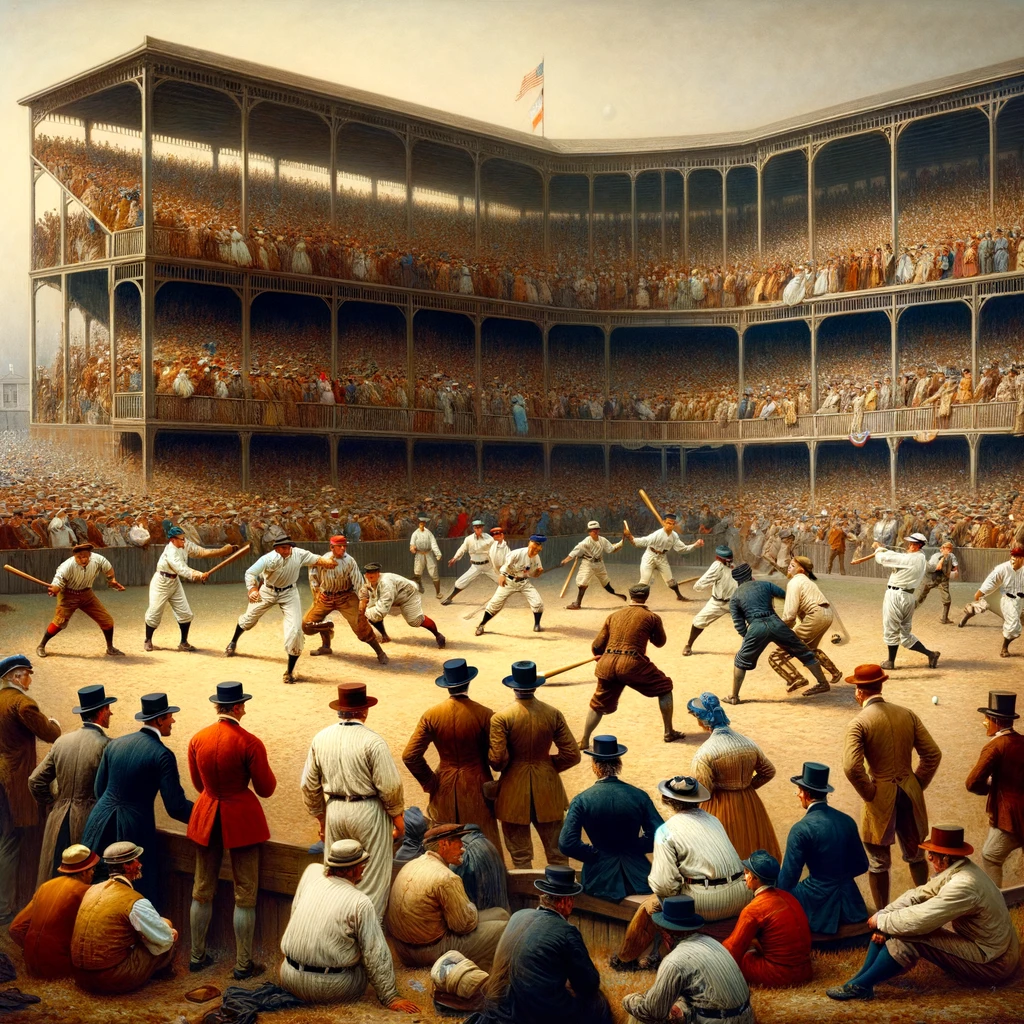
The dawn of professional baseball in America was not just a simple story of a sport finding its footing; it was a tale of rivalry, economic struggles, and a battle for the hearts of the American public. This narrative is incomplete without discussing the critical role played by the American Association (AA), a professional baseball league that emerged in the 19th century to challenge the dominance of the National League (NL). This article delves into the early history of baseball, highlighting the formation, impact, and legacy of the American Association in shaping professional baseball.
The National League: A Monopoly in Early Baseball
Before the American Association’s inception, the National League, founded in 1876, was the sole powerhouse in professional baseball. The NL’s establishment marked a significant transition from a recreational pastime to a structured professional sport. Teams like the Chicago White Stockings (now the Cubs) and the Boston Red Stockings (now the Braves) were among the original franchises. The league instituted rules, schedules, and organizational structure that laid the foundation for professional baseball. However, the NL’s control over the sport led to certain practices that alienated players and fans alike, setting the stage for the emergence of the American Association.
The Birth of the American Association
The American Association was founded in 1882, a direct response to the National League’s dominance. Led by visionary entrepreneurs, the AA aimed to provide an alternative to the NL’s strict rules and player contracts. The league started with franchises in cities like Cincinnati, Louisville, and St. Louis – areas neglected or abandoned by the NL. The AA introduced innovations that made it more attractive to a broader audience, including cheaper ticket prices, Sunday games, and the sale of beer at games, which was particularly controversial at the time.
The Beer and Whiskey League
The AA’s liberal stance on alcohol sales earned it the nickname “The Beer and Whiskey League.” This moniker reflected not only its business practices but also its appeal to the working-class demographic. In contrast to the more upscale and conservative image of the National League, the AA was seen as a league of the people. This distinction was pivotal in gaining a loyal fan base and challenging the NL’s supremacy.
Player Contracts and the Reserve Clause
One of the most significant points of contention in early professional baseball was the Reserve Clause, which the National League heavily enforced. This clause bound players to their teams indefinitely, severely limiting their mobility and earning potential. The American Association took a different approach, offering players more favorable contract terms and greater freedom. This policy not only attracted talent to the AA but also played a role in early labor dynamics in professional sports.
The Impact on Baseball and American Society
The American Association’s emergence had a profound impact on both baseball and American society. It democratized the sport, bringing it to a wider audience and making it more accessible to the average American. This inclusivity fostered a deep connection between the sport and national identity.
Rivalry and the World Series
The rivalry between the American Association and the National League was fierce, both on and off the field. This competition led to the first iteration of the World Series in 1884, a postseason championship that pitted the best teams from both leagues against each other. This event was not only a sporting spectacle but also a symbolic battleground for the two league’s competing philosophies.
Innovation and Evolution
The American Association was a hotbed of innovation. Beyond the economic and social aspects, it experimented with rules and gameplay that influenced the evolution of baseball. For instance, the AA was more open to rule changes that sped up the game and made it more exciting for fans. These innovations played a part in shaping the modern game of baseball.
Decline and Legacy
Despite its initial success, the American Association could not sustain itself in the long run. Financial struggles, coupled with the National League’s aggressive tactics, led to the decline and eventual merger of the AA into the NL in 1891. However, the legacy of the American Association is profound.
Lasting Influence on Professional Baseball
The American Association’s influence on baseball is undeniable. It challenged the status quo, led to significant changes in player contracts, and introduced elements that are now staples of the game. The AA’s push for more player rights foreshadowed future labor movements in sports.
Cultural Impact
Culturally, the American Association played a vital role in embedding baseball in the American psyche. By making the game more accessible, it helped baseball earn its title as “America’s Pastime.” The league’s willingness to embrace a broader audience, including the working class, made baseball a unifying element in a rapidly industrializing and diverse society.
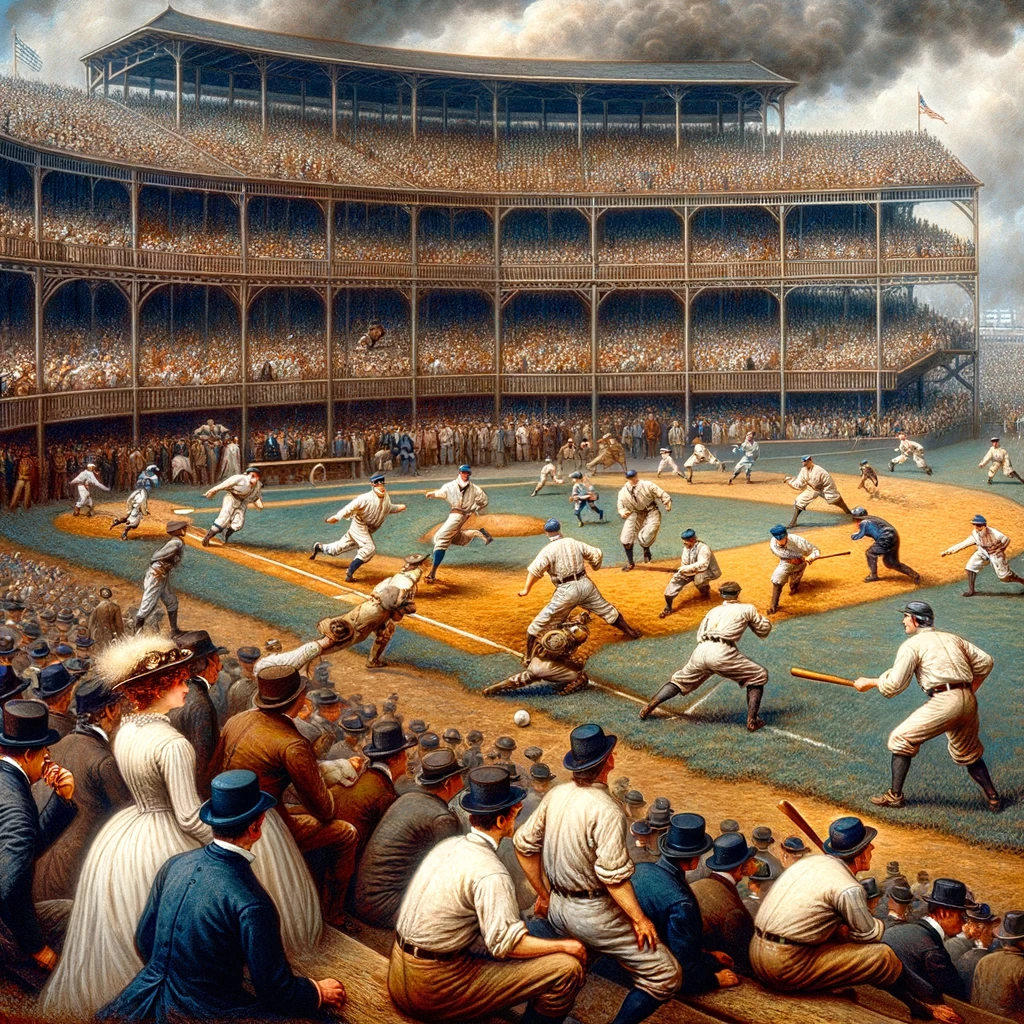
The Players and Teams of the American Association
The American Association was home to many notable teams and players who left a lasting impact on the sport. Teams like the St. Louis Browns (later the Cardinals), the Brooklyn Atlantics (later the Dodgers), and the Cincinnati Red Stockings (later the Reds) were some of the prominent franchises. These teams not only added to the competitive landscape but also enriched the sport with their unique styles and local fan bases.
Star Players
The AA boasted several star players who became legends in baseball history. Players like Pete Browning, known for his exceptional batting skills, and Bob Caruthers, a standout pitcher and outfielder, were among the league’s luminaries. These players were not just athletes; they were central figures in their communities, contributing to the league’s appeal and the growth of baseball’s popularity.
The Economic and Strategic Battles
The American Association’s existence was marked by constant economic and strategic battles with the National League. The AA’s lower ticket prices and more liberal policies on player contracts put pressure on the NL to adapt and compete. This competition was not just about attracting fans but also about gaining lucrative media attention and sponsorships, which were becoming increasingly important for the sport’s financial sustainability.
The Fight for Media and Public Attention
The struggle for media coverage and public attention was a significant aspect of the rivalry between the AA and NL. Newspapers of the time often featured baseball scores and stories, and the competition between the leagues was a hot topic. This media attention helped to elevate baseball’s status in American culture, making it a subject of daily conversation and interest.
Impact on Other Leagues and Sports
The rivalry between the American Association and the National League had a ripple effect on other sports in America. It demonstrated the viability of professional sports as a business and entertainment venture. Other sports, like football and basketball, took cues from baseball’s professionalization and the competition between the leagues, which helped lay the groundwork for their own professional structures.
The Integration of the American Association and National League
The integration of the American Association into the National League in 1891 was a pivotal moment in baseball history. It marked the end of the AA as a separate entity, but it also signified the beginning of a more unified and stable era for professional baseball.
The Merger’s Impact on the Sport
The merger brought about significant changes in how professional baseball was organized and managed. It led to a more standardized set of rules, a more balanced schedule, and a more coherent approach to player contracts and team management. This unification was crucial in stabilizing professional baseball and setting it on a path to becoming the major league structure we know today.
Legacy Teams and Rivalries
Several teams from the American Association continued in the National League, preserving the legacy and history of the AA. The rivalries and fan bases established during the AA’s existence continued to influence the sport. For example, the St. Louis Browns (AA) and the Chicago White Stockings (NL) rivalry transitioned into the National League, contributing to the rich tapestry of baseball rivalries that add excitement and drama to the sport.
Reflection and The Future of Baseball
Reflecting on the history of the American Association offers valuable insights into the evolution of professional baseball and its role in American society. The AA’s story is one of innovation, competition, and the democratization of a sport that has become an integral part of American culture.
Lessons from the American Association
The American Association’s history teaches us about the importance of competition and innovation in sports. It shows how a challenger league can influence a more established league, leading to positive changes for players, fans, and the sport as a whole. The AA’s approach to player rights, fan engagement, and media relations are lessons that remain relevant in professional sports today.
The Ongoing Evolution of Baseball
Baseball continues to evolve, influenced by technological advancements, economic factors, and cultural shifts. The spirit of innovation and competition that characterized the American Association lives on, as the sport adapts to changing times and audiences. The future of baseball, much like its past, will likely be shaped by a balance between honoring tradition and embracing change.
Conclusion
The American Association’s contribution to the history of baseball is a testament to the enduring impact of innovation and competition in sports. Its legacy is seen not only in the rules, team structures, and player rights that it influenced but also in the cultural significance of baseball in American life. As we look back on this chapter of baseball history, we are reminded of the dynamic nature of sports and the continuous interplay between tradition and progress.
Frequently Asked Questions
1. What was the American Association and why was it formed?
The American Association (AA) was a professional baseball league established in the late 19th century, specifically in 1882, as an alternative to the National League (NL). It was created primarily to challenge the dominance and control that the NL held over professional baseball in America. At the time, the NL had strict regulations and high ticket prices that were perceived as elitist and restrictive. This spurred the formation of the AA, which sought to provide a more relaxed, fan-friendly, and accessible form of baseball. The AA introduced innovations like Sunday games, beer sales at ballparks, and lower ticket prices. These changes were aimed at attracting a wider audience, particularly appealing to the working-class and immigrant communities who felt excluded by the NL’s policies. Thus, the AA wasn’t just a sports league; it was a significant social movement intending to make the game of baseball more inclusive and engaging.
2. How did the American Association impact professional baseball in America?
The American Association had a profound impact on professional baseball in America by introducing competitiveness and forcing the National League to revisit its policies. Before the AA, the NL was the sole major league, which meant they had little incentive to innovate or consider fan interests. The AA’s existence introduced healthy competition: it pushed the boundaries by adopting practices that were then considered unconventional, which included the aforementioned Sunday games and alcohol sales. This attracted a different kind of audience, which, in turn, helped further popularize the sport. Moreover, the rivalry between the AA and the NL fostered competition that eventually led to the merging of teams and innovations in the game’s organization. This rivalry also paved the way for the formation of the modern Major League Baseball system we recognize today, where the dynamic of competition among leagues continues to be a driving force for innovation and improvement in the sport.
3. Why was the rivalry between the American Association and the National League significant?
The rivalry between the American Association and the National League was significant for several reasons. Firstly, it introduced a new paradigm in the sport by creating an environment where teams and leagues needed to constantly innovate and adapt to remain competitive. This rivalry directly impacted the way games were played, experienced by fans, and organized by the teams. The competition between the two leagues intensified the public’s interest in baseball, elevating it from a mere recreational activity to a major American pastime. Secondly, the AA’s challenges forced the NL to modify its approach, leading to crucial changes in its policies to retain its position as a leading league. This iconic clash between the AA and NL established historical precedents in sports management and competition, which have rippled through the sporting world, affecting not only baseball but other sports leagues as well. Finally, it was a cultural manifestation; the AA represented an inclusive, progressive outlook contrasting with the traditional, exclusive NL, thereby influencing American culture’s evolution itself.
4. What led to the downfall of the American Association?
The downfall of the American Association can be attributed to several factors that unfolded over its relatively short-lived existence, which ended with its disbandment in 1891. Financial instability plagued the league from the start; while it aimed to make baseball more accessible, in doing so, it sometimes struggled to attract the same investment as the more established NL. The AA faced challenges in maintaining competitive teams, often losing star players to the NL due to the latter’s financial prowess and stronger public following as the rival league adapted successfully to changes instituted by the AA. Additionally, internal conflicts and management issues weakened its structural integrity. The tipping point came with the 1891 merger of several of its teams into the NL, resulting in the dissolution of the AA as an independent entity. Though its reign was short, the impact of its innovative approach lingers on, having set the stage for future developments in professional baseball.
5. How did the American Association contribute to modern baseball culture?
The American Association’s contribution to modern baseball culture is multi-faceted. It brought about cultural shifts by advocating for inclusivity in the sport. The AA’s practices of scheduling games on Sundays, offering affordable ticket prices, and allowing alcohol sales not only broadened the audience but also changed public perception from baseball being an upper-class pastime to a national sport shared across social strata. These changes democratized the sport, making it part of the American identity. The league’s willingness to embrace fan interaction through accessible policies and their push for fair player treatment sparked changes that the NL had to embrace, ultimately influencing the modern hospitality and entertainment aspects of baseball culture. Furthermore, the foundational competitiveness the AA introduced led to enduring structures like the World Series, which stemmed from the early challenges between differing leagues vying for supremacy. In this way, the legacy of the AA persists in the spirit of baseball today. The contemporary culture—accustomed to packed stadiums, lively ballpark experiences, and inclusive community spirit—can trace its roots back to the innovation and daring approach taken by the American Association.