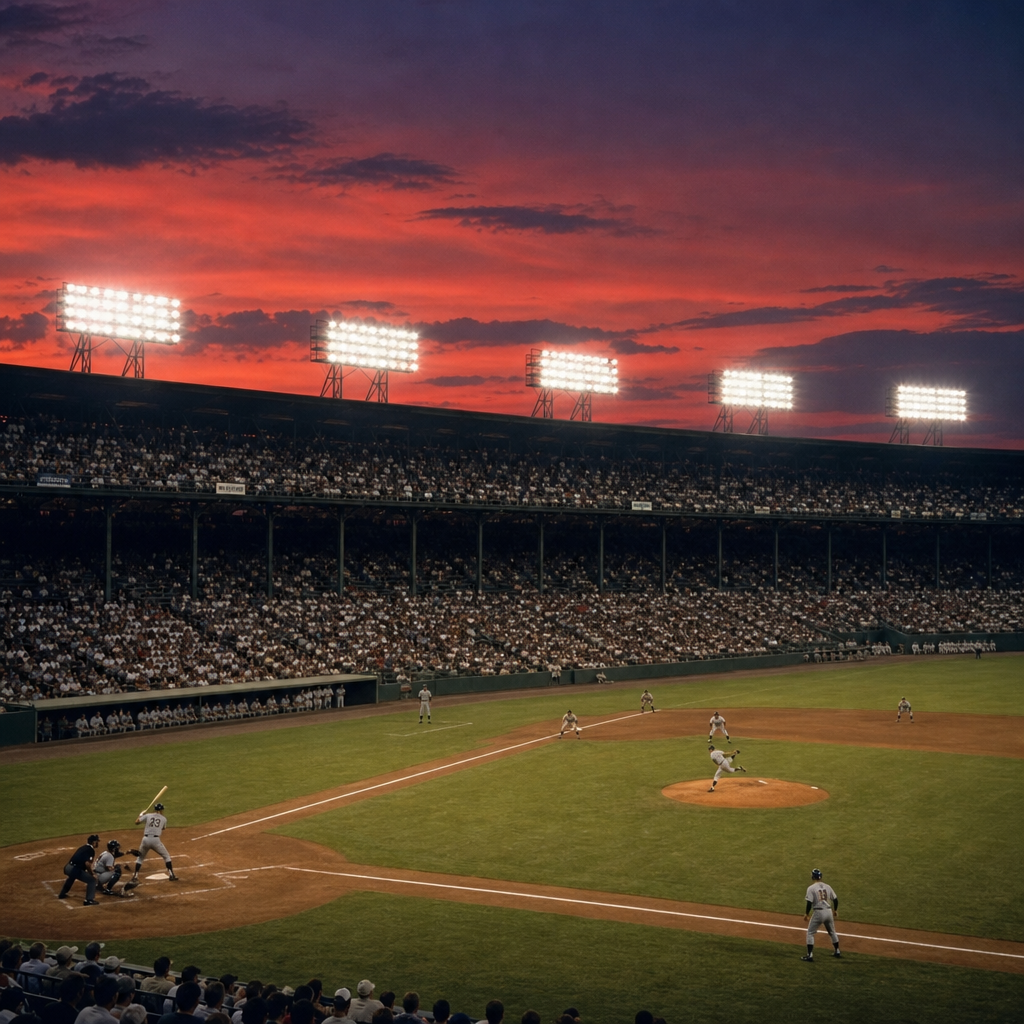
Baseball changed forever when stadium lights turned dusk from a stopping point into an opening act. The birth of night games was not a gimmick layered onto a settled sport; it was a structural innovation that reshaped scheduling, attendance, broadcasting, labor patterns, urban nightlife, and the way fans experienced baseball history. In the broad story of innovations and changes in baseball, night baseball stands beside the livelier ball, integrated leagues, television, and modern analytics as one of the developments that most clearly altered the game’s relationship with everyday American life.
Night games, in baseball terms, are official contests played under artificial illumination rather than natural daylight. That simple definition hides a complex evolution. Early experiments required advances in electrical engineering, stadium design, municipal permitting, and player acceptance. Owners wanted larger crowds from workers who could not attend weekday afternoon games. Players worried about visibility, depth perception, and injury risk. Reporters questioned whether baseball, long marketed as a sunlit pastoral pastime, would lose part of its character after dark. I have spent years working through old box scores, league records, lighting plans, and newspaper archives, and the evidence is consistent: once the technology became reliable enough, night baseball answered practical problems that daytime baseball could not solve.
This article serves as a hub for exploring historic innovations in baseball through the lens of lighting and after-dark play. It matters because the rise of night games is not an isolated event. It connects directly to attendance economics, radio and television growth, ballpark architecture, groundskeeping practices, player routines, fan travel, and the eventual spread of domed and retractable-roof stadiums. To understand why modern baseball is scheduled, sold, and consumed the way it is, you need to understand how and why owners decided to light the field. The history also offers a useful framework for examining other baseball innovations: a new idea succeeds only when it solves a real problem, survives resistance, and becomes normal enough that later generations can barely imagine the sport without it.
Why Baseball Needed the Night Game
For much of the nineteenth and early twentieth centuries, baseball was a daylight business because sunlight was the only practical illumination source. That limitation shaped everything. Most major league games began in the afternoon, often around 3 p.m., which effectively excluded many working-class fans on weekdays. The schedule reflected a country with different labor rhythms, but by the 1920s and 1930s, industrial work hours and urban commuting patterns made afternoon attendance increasingly restrictive. During the Great Depression, that restriction became a financial problem. Clubs needed new revenue, and empty weekday seats were an obvious target.
Minor league owners felt the pressure first and more intensely. Smaller markets had less cushion, lower media income, and greater dependence on the gate. Night baseball promised access to people who finished factory shifts, retail work, or office jobs after supper. The logic was straightforward: if fans could not come to baseball in daylight, baseball would have to meet fans in the evening. This same pattern appears repeatedly in baseball innovation history. Rule changes, equipment changes, and facility changes tend to gain traction fastest where financial pressure is strongest and tradition has less power to delay experimentation.
Night baseball also solved a weather and comfort issue. In many cities, summer afternoons brought heat and glare that made attendance less pleasant. Evening games offered cooler temperatures, easier travel after work, and a more social atmosphere. Those benefits sound familiar now because they became normal, but early administrators had to weigh them against the risk of poor lighting, uneven shadows, and public skepticism. In practical terms, the question was not whether baseball under lights was desirable in theory. It was whether electric lighting could reproduce enough of the visual conditions players needed to track a pitched or batted ball safely.
Early Experiments and the Path to Acceptance
Baseball under artificial light was tested before it was trusted. As early as the 1880s and 1890s, promoters staged exhibitions using primitive arc lights, but the results were inconsistent and often theatrical rather than fully competitive. The most cited breakthrough in organized professional baseball came in the minor leagues, where owners were more willing to experiment. In 1930, the town of Independence, Kansas, is often credited with hosting a landmark night game under permanent lights in organized baseball, demonstrating that modern electrical systems could support regulation play.
That success mattered because it moved the concept from novelty to business model. Minor league clubs in places such as Des Moines and others across the Western League quickly saw the attendance upside. Once promoters could show that fans would come in significant numbers after work, resistance weakened. What I find striking in period coverage is how often operators discussed engineering details alongside ticket sales. They knew credibility depended on both. A packed house for one evening was meaningless if outfielders could not pick up line drives or hitters lost the ball in uneven brightness.
By the early 1930s, lighting firms and baseball operators were refining pole placement, lamp intensity, reflector angles, and infield-to-outfield balance. These were not cosmetic adjustments. The visual demands of baseball are unusually exacting: the white ball travels fast, crosses changing backgrounds, and must be tracked in three dimensions. Football and boxing could adapt to less precise illumination more easily. Baseball required a broader and more even field of vision, especially for fly balls and high popups. The move from experiment to adoption happened because those technical problems became manageable rather than because traditionalists suddenly embraced change.
The Cincinnati Reds and the Major League Turning Point
The defining major league milestone came on May 24, 1935, when the Cincinnati Reds hosted the Philadelphia Phillies at Crosley Field in the first official Major League Baseball night game. President Franklin D. Roosevelt symbolically switched on the lights from Washington, reinforcing the event’s national importance. The Reds, owned by Powel Crosley Jr., were not simply staging a spectacle. They were using innovation to revive a struggling franchise in a difficult economy. Crosley understood radio, mass audiences, and consumer habits better than many of his peers, and he saw clearly that baseball needed to fit the schedules of modern fans.
The game drew a strong crowd and, more importantly, proved operationally sound. Players could see the ball well enough. Fans embraced the atmosphere. Newspapers treated it as history, not just entertainment. From that point forward, the argument shifted. Instead of asking whether night baseball could work at all, clubs began asking how quickly they could install their own systems and how many dates should move after sunset. Adoption did not occur overnight, but the proof point was decisive.
The Reds’ example highlights a larger pattern in baseball innovation: transformative change often emerges when a club combines necessity with competent execution. Cincinnati needed attendance. It invested in technology, planning, and public presentation. It then created a replicable model. Other clubs could examine costs, fan response, and game quality rather than relying on speculation. That is how innovations spread in sports history—through visible, successful implementation that reduces uncertainty for everyone else.
How Stadium Lighting Worked and Why It Was Hard
Early baseball lighting systems depended on tall steel towers, clusters of high-intensity lamps, carefully angled reflectors, and extensive wiring infrastructure. The objective was not merely brightness. It was uniformity. Good baseball lighting minimizes harsh shadows, reduces glare into the batter’s or fielder’s line of sight, and preserves contrast between the ball and background. Designers had to account for the infield dirt, grass reflectance, wall colors, and the geometry of foul territory. A poorly lit outfield could turn routine fly balls into hazards.
From a standards perspective, later decades brought more formal measurements such as foot-candles on the infield and outfield, but even in the 1930s operators understood the practical benchmark: if players complained consistently about visibility, the system had failed. Grounds crews also had to adapt. Infield preparation, pregame batting practice, and maintenance schedules changed once games ended later. Umpires and league officials became part of the evaluation process, because fairness depended on both teams playing in equivalent visual conditions.
| Challenge | Why It Mattered | How Teams Addressed It |
|---|---|---|
| Uneven brightness | Fly balls disappeared between light zones | More towers and improved reflector angles |
| Glare for hitters | Pitch recognition suffered, raising safety concerns | Adjusted lamp height and directional shielding |
| Dark outfield backgrounds | White ball blended into stands or sky | Controlled sightlines and painted surfaces strategically |
| Electrical reliability | Outages could stop games and damage confidence | Upgraded power systems and maintenance routines |
| Late-night field care | Poor surfaces increased errors and injuries | Reworked staffing and postgame grounds schedules |
These engineering lessons carried forward into every later ballpark. Modern LED systems are far more precise, efficient, and broadcast-friendly, but they solve the same essential problem first confronted by early adopters: give players a stable visual environment and give spectators a clear, comfortable view.
Attendance, Broadcasts, and the Business of Baseball After Dark
The strongest immediate case for night games was economic. Evening schedules opened baseball to workers, families, and regional travelers in ways afternoon games never could. Clubs that added lights often saw weekday attendance rise sharply. Minor league operators reported dramatic gains because they had discovered unused demand. Major league owners, once skeptical, quickly recognized that gate receipts, concessions, and local publicity all improved when games aligned with ordinary work lives.
Night baseball also fit perfectly with radio, and later television. Radio audiences were larger in the evening, when families were home and listening together. That habit strengthened team identity beyond the ballpark and made games more commercially valuable. When television matured after World War II, night baseball became even more important. Prime-time scheduling increased advertising value and helped turn baseball into a regular evening product rather than an occasional afternoon diversion. In that sense, stadium lighting was a precursor to the modern sports media economy.
There were tradeoffs. Late finishes complicated travel, especially before charter flights and modern scheduling software. Players had to recalibrate sleep, meal timing, and pregame routines. Local residents near ballparks dealt with brighter skies, traffic, and noise. Yet the benefits proved stronger than the drawbacks. Once clubs saw that lights expanded their audience and integrated baseball into the rhythms of urban evening life, retreat was impossible. Night games did not replace day games entirely, but they permanently changed baseball’s business model.
What Night Games Changed Across Baseball Culture
The cultural shift was as important as the financial one. Day baseball had long been tied to ideas of leisure, sunlight, and an older pace of city life. Night baseball made the sport feel more modern, more accessible, and more closely linked to working people. A father could finish a shift and take a child to the park. Friends could treat a game as the centerpiece of an evening out. Pennant races gained a more dramatic atmosphere under lights, and postseason baseball eventually became inseparable from prime-time viewing.
Night games also influenced strategy and player perception. Some pitchers believed darkness enhanced deception. Some hitters preferred cooler air and reduced glare. Fielders had to learn the stadium-specific behavior of balls against lit skies, especially in parks with unusual backgrounds or light standards. Those local quirks became part of baseball lore, much like odd outfield walls or wind patterns. The innovation therefore did more than extend hours; it introduced a new environmental layer to competitive play.
As a hub within the broader story of exploring historic innovations, the rise of night baseball points naturally toward related subjects: the growth of radio broadcasts, the redesign of ballparks, the economics of the Depression-era game, postwar television scheduling, domed stadium construction, and the eventual move to high-definition lighting for replay and broadcasting. Each topic builds on the same lesson. Baseball evolves when technology changes access. Lights made access wider, and that wider access changed everything from payroll potential to fan memory.
The birth of night games is one of the clearest examples of innovation solving baseball’s most practical problem: how to bring more people to the sport without changing its core rules. What began as a risky electrical experiment became a permanent feature of the game because it expanded attendance, improved scheduling flexibility, strengthened radio and television value, and connected baseball to the daily lives of working fans. The first major league night game in Cincinnati in 1935 remains the signature turning point, but the real story starts earlier in the minor leagues and continues through every modern stadium system in use today.
For anyone studying innovations and changes in baseball, this subject offers an ideal entry point. It combines engineering, economics, culture, labor history, media history, and on-field adaptation in one development you can trace from novelty to necessity. The key takeaway is simple: baseball did not merely add lights; it redefined when, how, and for whom the game could be played. That transformation helped build the modern sport.
Use this hub as your starting place for deeper exploration of historic baseball innovations, then follow the connected topics that grow out of it: ballpark design, broadcasting, scheduling, equipment changes, and the technologies that continue to reshape the game. Understanding night baseball makes the rest of baseball history easier to see.
Frequently Asked Questions
Why were night games such a turning point in baseball history?
Night games changed baseball at a structural level because they freed the sport from the limits of daylight. Before stadium lighting, most games had to be played in the afternoon, which meant attendance was heavily shaped by who could leave work, who lived close enough to the ballpark, and how much travel time cities demanded. Once teams could reliably play after dark, baseball became far more accessible to working-class fans, families, and city residents whose schedules did not align with daytime entertainment. That shift was not merely convenient; it expanded the audience, altered ticket sales patterns, and helped clubs stabilize revenue during difficult economic periods.
Just as important, night baseball transformed the atmosphere of the game. Under lights, the ballpark took on a more theatrical identity, with brighter visual contrast, larger evening crowds, and a stronger sense of occasion. Fans were no longer fitting baseball into the workday; they were making it the main event of the evening. That changed the emotional rhythm of the sport. Night games also helped baseball adapt to modern urban life, where entertainment increasingly competed with movies, restaurants, and other nightlife options. In that sense, stadium lighting did more than illuminate the field. It repositioned baseball as a modern, flexible, mass entertainment product ready for the twentieth century’s changing social and economic realities.
When did night baseball begin, and how quickly did it spread through the major leagues?
Night baseball developed gradually rather than appearing all at once. Experiments with artificial lighting had occurred earlier at lower levels of the game, but the real breakthrough came when teams and league officials began to trust that lighting systems were good enough for high-level competitive play and attractive enough for paying spectators. Minor league clubs were often the first to embrace the idea because they needed practical solutions to attendance problems. They discovered that evening games could draw larger crowds, especially in communities where people worked during the day and wanted affordable entertainment at night.
The major league turning point arrived in the 1930s, when clubs facing financial pressure during the Great Depression had strong reasons to consider innovation. Once one major league team demonstrated that a properly lit night game could be both successful and profitable, resistance began to weaken. Adoption still took time, because some owners, traditionalists, and players had concerns about visibility, competitive fairness, and whether baseball should preserve its daytime character. But economics spoke loudly. As teams saw rivals benefiting from bigger evening gates, more clubs installed lights. Over the following decades, night games moved from novelty to accepted feature, and eventually to a central part of the schedule. By the postwar era, they were no longer an experiment. They were part of baseball’s standard operating model.
How did stadium lights affect attendance, scheduling, and the business side of baseball?
Stadium lighting had an immediate and lasting business impact because it expanded the number of people who could realistically attend games. Day baseball excluded many workers, especially in industrial and office-based urban economies where leaving in midafternoon was impossible. Night games opened the gates to those fans, often resulting in stronger attendance on weekdays and more dependable revenue streams for clubs. For teams in smaller markets or financially unstable situations, that additional flexibility could be the difference between survival and decline. Evening baseball allowed owners to monetize dates that would otherwise have underperformed, and it helped make the schedule more responsive to fan demand rather than the sun’s timetable.
Scheduling also became more sophisticated. Teams could better manage travel, reduce some of the pressure caused by weather delays, and create attractive series openers and special-event atmospheres around night dates. Over time, lighting gave leagues more control over marquee matchups, holiday games, and weekend planning. It also laid groundwork for the broadcasting era, because radio and later television thrived on nighttime audiences who were home from work and available to listen or watch. In that respect, lights did not just improve attendance inside the ballpark; they increased the commercial value of baseball beyond the stadium. Advertising, media rights, concession sales, and promotional strategy all benefited from the expanded reach of games played after dark.
Did everyone welcome night games, or was there resistance to the change?
There was real resistance, and understanding that resistance helps explain how dramatic the change actually was. Many baseball traditionalists believed the game belonged in sunlight, tied to pastoral imagery, summer afternoons, and a slower civic rhythm. To them, night baseball felt artificial, overly commercial, or even slightly improper, as though the sport were borrowing too much from show business. Some players and managers worried about the quality of play under early lighting systems, especially tracking fly balls, judging spin, and adjusting to shadows and glare. In an era before today’s precision lighting design, those concerns were not trivial.
Owners and league officials were divided as well. Some saw lights as a necessary innovation; others feared they would cheapen the game or disrupt local customs. There were also community concerns about noise, traffic, and the changing use of urban space after dark. But as the practical benefits became undeniable, much of the resistance faded. Fans came in larger numbers, teams made more money, and the game itself proved adaptable. What had looked to some like a threat to baseball’s identity gradually became part of that identity. This pattern is common in sports history: innovations are often criticized as departures from tradition until success redefines tradition around them. Night games followed exactly that path.
How did night games change the fan experience and baseball’s place in American culture?
Night games changed not only when fans watched baseball, but how they experienced it. Evening baseball felt more communal and more ceremonial. People arrived after work, often in groups, turning the game into a social outing rather than a daytime interruption. The illuminated field against a dark sky created a visual drama that daylight games could not replicate, and that atmosphere helped deepen baseball’s connection to memory, ritual, and city life. For many fans, the night game became associated with summer leisure itself: dinner before first pitch, the stadium lights flicking on, the crowd settling in, and the game unfolding as the city transitioned from work to entertainment.
Culturally, night baseball helped integrate the sport into the rhythms of modern America. It aligned baseball with radio listening habits and later with prime-time television, making the game easier to consume nationally. It reinforced the ballpark as part of urban nightlife and gave baseball a stronger presence in the after-hours economy of bars, transit systems, nearby businesses, and media coverage. It also shaped labor patterns for everyone connected to the sport, from stadium workers and vendors to broadcasters and journalists. In a larger historical sense, night games helped baseball remain relevant as society changed. Rather than staying bound to older daily routines, the sport adapted to industrial work schedules, mass media, and modern entertainment culture. That is why the birth of night games belongs among baseball’s most important innovations: it did not simply add light to the field, it expanded the game’s role in American life.