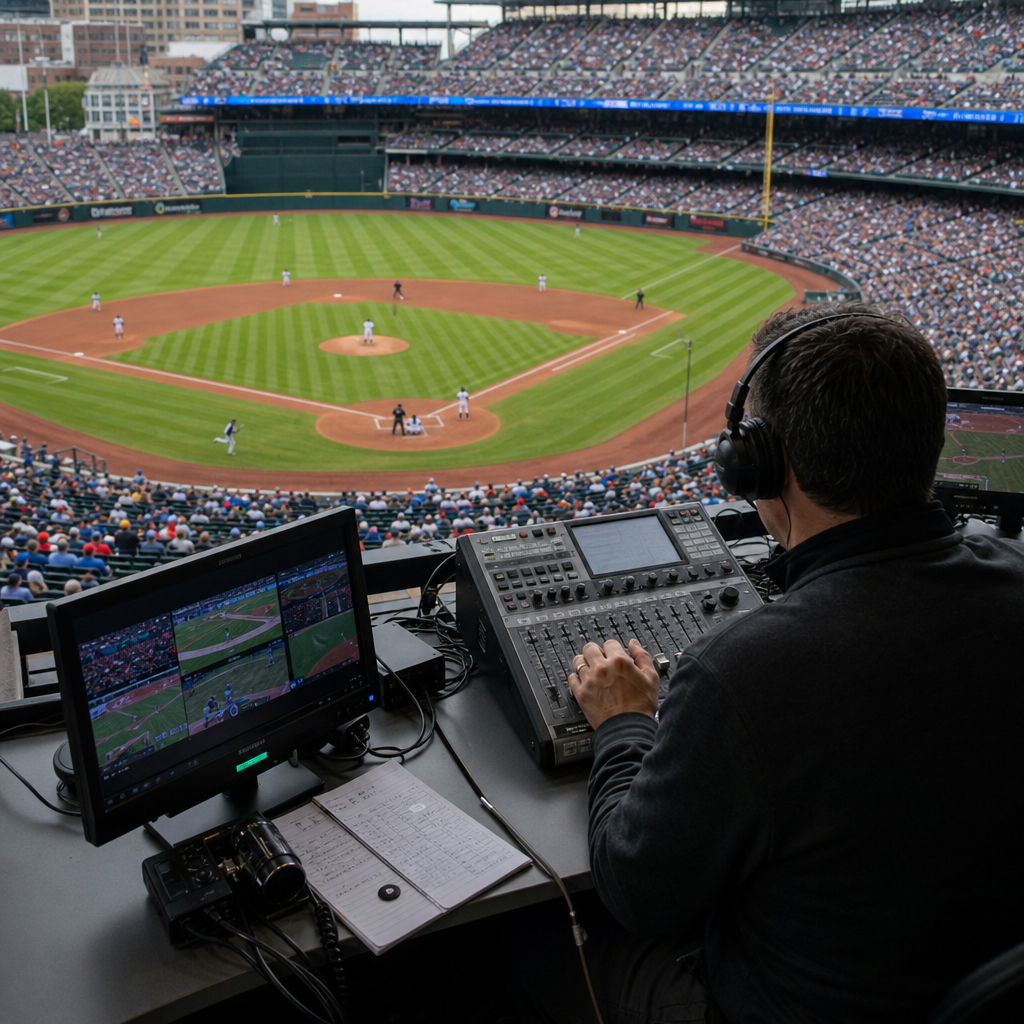
Broadcast rights and revenue are the financial backbone of baseball because media money shapes payrolls, franchise values, competitive balance, labor strategy, and even how fans experience the game. In baseball, broadcast rights are the contractual permissions that allow television networks, regional sports channels, streaming platforms, and radio partners to distribute games in exchange for fees. Revenue is the broader pool of money those deals create through rights payments, advertising, subscriptions, affiliate fees, sponsorships, and related commercial activity. I have worked with sports business reporting and media-rights analysis long enough to see one pattern repeat: when broadcast economics shift, every other baseball decision eventually shifts with them. That is why any serious discussion of economic shifts and their effects must start with media. This hub explains how national and local rights work, why they became so valuable, what happens when regional sports networks weaken, how streaming changes pricing and reach, and why future baseball innovation will depend as much on distribution strategy as on rules or technology.
How baseball broadcast rights became central to the sport’s economy
Baseball was an early broadcast product because its long season created dependable inventory. A club plays 162 regular-season games, which gives local broadcasters a near-daily schedule and gives advertisers repeated access to the same audience. That quantity matters. The National Football League may command larger audiences per game, but baseball’s volume has historically made it ideal for local television business models, especially the regional sports network, or RSN. For decades, RSNs paid clubs substantial annual rights fees, then recovered those costs through cable affiliate fees charged to distributors and through advertising sales. This structure turned local media into a predictable cash engine.
National rights added another layer. Major League Baseball negotiates leaguewide packages with partners such as FOX, ESPN, Turner Sports, and now digital companies including Apple. These deals cover national windows, postseason games, highlights, and special packages. National money is especially important because it is shared more broadly across clubs, helping support leaguewide stability. Local rights, by contrast, have historically varied dramatically by market size. The New York Yankees, through YES Network economics, operated in a different media universe than smaller-market clubs. That gap fed payroll disparities and shaped how front offices approached roster construction.
The key economic concept is that media rights convert fan attention into recurring contracted income. Ticket sales fluctuate with weather, team performance, and local conditions. Broadcast deals, once signed, deliver scheduled payments over multiple years. Lenders, owners, and executives value that reliability because it supports debt financing, payroll planning, and long-term capital spending. It also raises franchise valuations. When buyers assess a club, they do not just examine attendance; they examine media contracts, carriage reach, direct-to-consumer potential, and market exclusivity.
The revenue model behind local and national baseball media
Baseball media revenue comes from several linked streams, and understanding them explains why rights negotiations are so consequential. At the local level, the traditional RSN model depended on three pillars: carriage fees paid by cable and satellite distributors, advertising sold during games, and in some cases ownership stakes held by clubs. Carriage fees were the hidden powerhouse. Even households that rarely watched baseball often paid for sports channels through bundled television packages, which helped subsidize expensive rights deals. As long as the bundle stayed healthy, clubs could count on escalating payments.
At the national level, the league sells premium access to broad audiences. National partners want marquee rivalry games, exclusive windows, postseason series, and event programming such as the All-Star Game. Because these broadcasts attract larger and more geographically dispersed audiences, they command high advertising rates and strategic value for networks. The league then distributes that income according to collectively agreed formulas. This broader sharing is one reason national media deals matter beyond the biggest brands.
Radio rights remain smaller in absolute dollars but still matter, especially for baseball, where radio listening has a durable tradition. Spanish-language rights, international rights, highlight licensing, betting-related data products, and shoulder programming all contribute incremental value. Increasingly, direct-to-consumer streaming subscriptions and authenticated app viewing are becoming core rather than peripheral. MLB.TV, club streaming packages, and in-market digital experiments are reshaping how rights are sliced and sold.
| Revenue source | How it works | Primary financial effect |
|---|---|---|
| Local television rights | Club licenses game distribution to an RSN or local platform | Supports payroll planning and boosts club valuation |
| National television rights | League sells packages to national broadcasters and streamers | Creates shared income across all teams |
| Advertising | Networks and platforms sell commercial inventory around games | Helps justify higher rights fees |
| Affiliate or subscription fees | Distributors or consumers pay for channel or app access | Provides recurring revenue beyond game-day attendance |
| Streaming and digital extras | Apps, out-of-market packages, data, and ancillary content | Expands reach and creates future growth paths |
When these streams are healthy, clubs can invest more aggressively. When they weaken, owners often become more cautious in free agency, stadium planning, and front-office hiring. That is why media economics are not an isolated accounting issue; they directly affect baseball operations.
How broadcast income shapes payroll, competition, and labor dynamics
One of the clearest effects of broadcast rights revenue is on payroll capacity. Clubs with rich local media deals have historically been able to sustain larger payrolls, absorb long-term contracts, and tolerate mistakes better than clubs with weaker deals. Media money does not automatically guarantee smart spending, but it increases margin for error. A wealthy team can survive an injured star or a contract that underperforms. A lower-revenue club often cannot.
That gap influences competitive balance. Baseball has revenue sharing and a competitive balance tax, but neither fully erases the advantage created by superior local rights income. For years, large-market teams benefited from RSN economics that smaller clubs could not match. Front offices in smaller markets responded by emphasizing player development, pre-arbitration value, and trade timing. This was not just a philosophical preference. It was a financial adaptation to unequal media environments.
Labor relations are tied to this structure. Players and the MLB Players Association closely watch media trends because rights revenue affects clubs’ claims about affordability and profitability. During collective bargaining discussions, disagreements often center on whether clubs are reinvesting revenue into payroll or banking gains from centralized and local media growth. From my experience analyzing labor disputes, media opacity is often the hidden issue. Public payroll numbers are visible; the full economics of local rights agreements, network ownership stakes, debt service, and affiliate-fee declines are not always transparent.
Broadcast money also affects tanking debates. If a club receives substantial shared national revenue and other distributions, critics argue it should field a more competitive roster rather than minimizing payroll. On the other hand, clubs facing unstable local media contracts may argue that revenue risk justifies restraint. Both claims contain some truth. The important point is that media structure changes incentives, and incentives shape on-field behavior.
The collapse of the regional sports network model and its effects
The biggest recent economic shift in baseball has been the weakening of the RSN model. Cord-cutting reduced the number of households paying for cable bundles, which undermined the affiliate-fee base that had supported escalating rights payments. When distributors lose subscribers, sports channels lose leverage. At the same time, consumers became less willing to subsidize channels they did not watch. This is not a baseball-specific issue, but baseball has been highly exposed because of its reliance on local television.
The most visible disruption came through Diamond Sports Group, operator of Bally Sports regional networks, which entered bankruptcy protection in 2023. That event forced baseball executives, club owners, and lenders to confront a reality they had delayed: some rights fees once treated as stable might no longer be secure. MLB responded by preparing to produce and distribute games for affected clubs, a major operational shift. Rather than simply licensing content to an intermediary, the league became more directly involved in production, carriage negotiation, and streaming access.
The consequences are broad. First, clubs facing uncertain local payments may revise payroll expectations downward. Second, leagues gain an incentive to centralize distribution so they can control customer relationships and data. Third, fans may benefit from simpler streaming access if blackout restrictions loosen, though pricing remains a challenge. Fourth, the valuation premium once attached to RSN-linked franchises becomes harder to justify without durable carriage economics.
This disruption also exposes an old weakness in baseball’s media design: fragmentation. Fans often need one service for national games, another for local games, and a separate package for out-of-market access. In a cable era, that complexity was hidden inside the bundle. In a streaming era, it becomes friction. Every point of friction reduces casual viewing, which matters for a sport competing for younger audiences and everyday attention.
Streaming, direct-to-consumer access, and the next media rights era
Streaming is not simply a new distribution method; it changes the economics of baseball rights. In the old model, networks earned money from broad household penetration, including nonfans. In the direct-to-consumer model, revenue depends more heavily on persuading actual fans to subscribe and remain subscribed over a six-month season. That creates both opportunity and risk. The opportunity is better customer data, more flexible packaging, and potentially wider access for fans who no longer buy cable. The risk is that the full cost of baseball rights becomes more visible to the consumer, and many fans may resist paying for multiple overlapping services.
MLB has a significant advantage here because its digital infrastructure has long been strong. MLB Advanced Media, before its evolution and broader technology role, was widely respected as one of the most capable streaming operations in sports. That technical competence matters. It means baseball is better positioned than some leagues to manage direct distribution, integrate commerce, personalize feeds, and sell subscriptions globally.
Still, streaming does not automatically replace lost RSN money. To do that, leagues need scale, pricing discipline, low churn, and advertising innovation. Hybrid models are likely. Some clubs will pair over-the-air broadcasts with paid streaming. Others will pursue league-managed in-market packages. National platforms will continue buying selective exclusives because live sports remain one of the few products that reliably attract real-time audiences. Apple’s Friday night package is a useful example: not every package needs maximum scale if it serves a strategic platform goal.
For fans, the ideal future is straightforward access with fewer blackouts and clear pricing. For clubs, the ideal future is stable recurring income. Those goals overlap, but they are not identical, which is why rights strategy remains one of baseball’s most important innovation challenges.
Why this hub matters for understanding economic shifts across baseball
Broadcast rights are the hub issue for economic shifts and their effects because they connect to every major baseball business question. Stadium development depends on predictable media cash flow. Franchise sales depend on future rights assumptions. Payroll strategy, competitive balance debates, and labor tensions all trace back to who controls media money and how securely it arrives. Even rule changes and pace-of-play reforms have a media dimension because a more watchable product is easier to package, sponsor, and stream.
This hub should guide readers into related topics across the broader innovations and changes in baseball landscape: revenue sharing design, franchise valuation growth, private equity involvement, sports betting integration, blackout reform, attendance trends, and the long-term future of local media. If you understand how baseball sells attention, you understand why clubs make the financial choices they do. The old cable bundle built the modern payroll era, but that foundation is shifting under the sport.
The central takeaway is simple. Broadcast rights are not background business details; they are the operating system of baseball economics. Follow local rights stability, national package strategy, streaming adoption, and league control over distribution, and you can forecast where the sport is headed. Use this hub as the starting point for deeper analysis across baseball’s changing economy, because every major financial story in the game now runs through media.
Frequently Asked Questions
What are broadcast rights in baseball, and why are they so financially important?
Broadcast rights are the legal and commercial agreements that give television networks, regional sports channels, radio partners, and streaming platforms permission to air baseball games. In return, teams and leagues receive rights fees, which often become one of the most stable and significant sources of income in the sport. These deals matter because baseball plays a long season with a huge volume of live content, making it especially valuable to media companies that need programming capable of attracting loyal audiences over many months. Unlike one-time events or short schedules, baseball provides consistent inventory for advertisers, subscription platforms, and networks trying to keep viewers engaged on a near-daily basis.
That financial importance reaches far beyond the broadcast booth. Media revenue helps fund player salaries, front-office operations, stadium improvements, scouting, analytics departments, and long-term franchise planning. It also influences franchise values, because buyers are not just purchasing a team’s on-field potential but also its share of dependable media-related cash flow. In practical terms, strong broadcast agreements can give organizations more flexibility to spend, invest, and weather downturns in ticket sales or other local revenue streams. That is why broadcast rights are often described as the financial backbone of baseball: they create recurring revenue that supports the entire business structure of the game.
How do broadcast deals affect team payrolls and roster-building strategies?
Broadcast deals can have a direct effect on how much a team is willing and able to spend on players. When a club has a strong local television contract, a favorable regional sports network arrangement, or access to robust streaming-related income, it often has more predictable cash flow. That predictability can make ownership more comfortable taking on large multi-year player contracts, extending star talent, or absorbing short-term financial risk in pursuit of contention. While payroll decisions are never based on media revenue alone, strong rights income can expand the range of options available to a front office.
These deals also shape roster-building strategy in more subtle ways. Teams with substantial media revenue may invest not only in major league payroll but also in player development, international scouting, data infrastructure, sports science, and depth across the organization. By contrast, clubs with weaker media environments may rely more heavily on cost-controlled talent, prospect pipelines, and disciplined spending models. This does not automatically determine who wins, but it does influence the margin for error. A team with large and steady broadcast income can recover more easily from a bad contract or a disappointing season, while a lower-revenue team may need to make more conservative choices. In that sense, media money affects both headline spending and the strategic philosophy behind building a competitive roster.
Why do broadcast rights play such a big role in competitive balance across baseball?
Competitive balance in baseball is closely tied to revenue disparities, and broadcast rights are a major part of that equation. Not all teams operate in the same media markets, and not all markets generate the same value for local broadcasts. Clubs in larger markets may command significantly richer television and media agreements because they can deliver more viewers, higher advertising rates, and broader regional influence. That additional revenue can strengthen every area of the organization, from payroll to technology to player retention. Smaller-market teams, meanwhile, may not be able to generate the same media income even if they are well run.
This uneven landscape creates ongoing debate about fairness and sustainability. League-level national broadcast deals can help distribute some money more broadly, but local rights often remain a key separator between high-revenue and low-revenue clubs. Revenue-sharing systems, luxury tax mechanisms, and labor negotiations are all shaped by this reality. Broadcast economics do not guarantee dominance for big-market teams or doom smaller-market teams to failure, but they do create structural advantages that can influence long-term competitiveness. When people discuss competitive balance in baseball, they are often really discussing how media money is created, distributed, and translated into baseball operations.
How do broadcast rights influence labor negotiations and the business relationship between players and owners?
Broadcast rights sit at the center of labor discussions because they help define how much money is flowing into the sport and who benefits from it. Players and owners may disagree on salary structures, payroll growth, competitive incentives, and the overall economics of the league, but many of those disagreements are ultimately tied to revenue. As media rights fees increase, players often argue that payrolls should reflect that growth more clearly. Owners, meanwhile, may point to expenses, debt obligations, market differences, and long-term business uncertainty when resisting direct salary expansion. The result is that media revenue becomes a critical reference point in collective bargaining and labor strategy.
This is especially true as the media landscape changes. Traditional regional sports models have faced pressure from cord-cutting, while streaming platforms have introduced new opportunities and new questions about valuation, access, and future growth. Those shifts affect how confidently clubs project future income, which can influence free-agent spending, arbitration positions, and broader labor policy discussions. In other words, broadcast rights are not just passive income streams; they are active drivers of negotiation power, financial expectations, and strategic positioning between labor and management. When baseball’s business side becomes tense, media revenue is almost always part of the story.
How do changing broadcast models affect fans and the way baseball is consumed?
Broadcast rights have a major impact on the fan experience because they determine where games are available, how much access costs, and what type of viewing experience is offered. Traditional television contracts long made regional sports channels the primary home for local games, but the rise of streaming has changed audience expectations. Fans now want flexibility: live games on smart TVs, mobile devices, league apps, and direct-to-consumer platforms. As rights evolve, teams and leagues are trying to balance reach, revenue, exclusivity, and convenience. That balance matters because a highly profitable deal is not always the most fan-friendly if it limits availability or creates confusing blackout restrictions.
At the same time, new broadcast models can improve the product in meaningful ways. Streaming services and advanced broadcast partners may offer alternate feeds, real-time statistics, personalized viewing options, interactive features, and expanded behind-the-scenes content. Those innovations can deepen engagement and help baseball connect with younger and more digitally native audiences. Still, every distribution model involves tradeoffs. If rights are fragmented across too many platforms, fans may face higher costs and more inconvenience. If access becomes simpler and more modern, the sport may gain audience loyalty and long-term growth. That is why broadcast rights are not just about money in a narrow accounting sense; they shape how fans discover, follow, and emotionally connect with baseball.