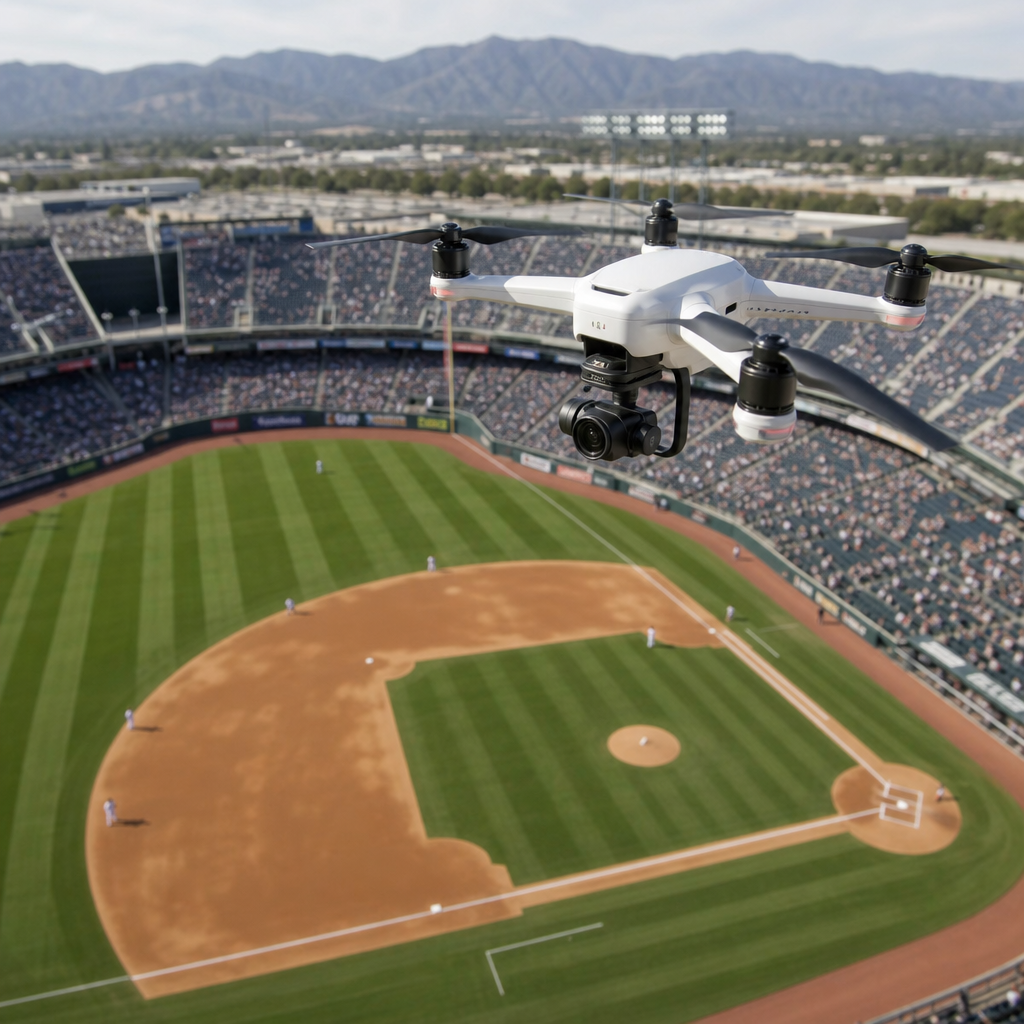
Baseball broadcasting has changed from a fixed-camera television product into a layered viewing experience, and drones now play a central role in delivering unique angles that traditional rigs cannot match. In the context of baseball, drones are small unmanned aerial systems equipped with stabilized cameras, remote transmission hardware, and flight control software that allow crews to capture dynamic overhead, tracking, and environmental shots around ballparks. Their value is not novelty alone. They expand how producers establish place, show strategy, present crowd energy, and connect live action with the wider story of a game day. For a subtopic centered on modern media and broadcasting techniques, drones matter because they sit at the intersection of cinematography, sports production, safety regulation, analytics, and audience expectations.
I have worked around live sports workflows long enough to see how quickly a new camera tool moves from experimental feature to expected standard once directors understand where it truly adds context. That has happened with aerial systems in baseball. The question is no longer whether a drone can fly over a stadium district or track a pregame player entrance. The real question is when a drone shot improves the broadcast and when a conventional hard camera, cable camera, or handheld unit remains the better choice. Good baseball production is built on clarity. Every technology has to support that goal.
Modern baseball coverage now spans national television, regional sports networks, direct-to-consumer streaming, social clips, team-controlled digital channels, and in-stadium video boards. Each platform rewards compelling visuals, and drone footage supplies a type of perspective audiences instantly recognize. A sunrise push toward the outfield gates sets tone before first pitch. A climb above the upper deck explains weather conditions. A smooth orbit outside the park helps a broadcaster frame rivalry, attendance, or urban geography. These are not decorative details. They shape storytelling, sponsorship inventory, and retention, especially during pregame, postgame, and inning transitions where production teams fight for attention.
Drones also fit the broader evolution of baseball media toward immersive presentation. Fans now expect alternate camera feeds, Statcast-driven graphics, social-first edits, and more transparent access to player routines and venue operations. Unique angles support that demand by revealing dimensions of the sport that standard center-field and high-home cameras cannot easily show. At the same time, baseball presents strict operational limits. Flight paths, Federal Aviation Administration rules, crowd safety, weather, radio interference, and league or venue restrictions define what can be captured and how. Understanding the role of drones therefore requires balancing creative upside with technical discipline. When used well, they make baseball broadcasts more informative, cinematic, and commercially valuable without distracting from the game itself.
Why Drone Angles Matter in Baseball Broadcasting
Drone angles matter because baseball is a spatial sport. The distance from mound to plate, the positioning of fielders, the asymmetry of many parks, and the relationship between crowd, architecture, and weather all influence what viewers should understand. Traditional cameras excel at pitch tracking, batter isolation, and replay from fixed positions. Drones excel at showing the whole environment. They can visualize the footprint of the stadium, the depth of the outfield alleys, rooftop seating beyond the walls, nearby transit flow, and pregame activity around gates and plazas. For viewers, that widens the frame from isolated plays to the full event.
In practice, producers use drone footage most effectively for scene-setting and transition. Before a national broadcast, an aerial reveal can introduce the city skyline and route into the ballpark in one continuous move. During a weather delay, elevated shots help explain incoming rain bands or wind direction across the field. During postseason coverage, a drone can show crowd buildup hours before first pitch, giving broadcasters visual evidence of atmosphere rather than merely describing it. These shots become editorial tools. They answer basic audience questions quickly: Where are we, what is the setting, how full is the park, and what conditions may affect play?
There is also a strategic storytelling benefit. Baseball parks differ dramatically in wall height, foul territory, seating layout, and neighborhood context. Aerial footage can explain why Oracle Park plays differently from Dodger Stadium, or how Wrigley Field’s urban embedding changes camera possibilities compared with suburban complexes. For local broadcasts, drones help teams emphasize venue identity and fan traditions. For national broadcasts, they help casual viewers orient themselves. In both cases, the angle is not unique merely because it comes from the air. It is unique because it clarifies information unavailable from ground level.
How Production Teams Use Drones Across the Broadcast Window
Most baseball broadcasts do not rely on drones during active live play over the field, especially in crowded venues, because safety and regulatory restrictions are paramount. Instead, crews deploy them across the wider broadcast window: open, teases, sponsor bumps, coming-back-from-break transitions, postgame wraps, and shoulder programming for digital platforms. This is where drones produce the highest return. A single morning flight can provide dozens of reusable clips for the day’s package, from exterior beauty shots to parking-lot arrivals and skyline passes.
Pregame is the strongest use case. Producers often need to establish mood, scale, and anticipation before analysts reach their first talking points. A drone can travel from a nearby landmark toward the stadium, then hand off visually to a jib or handheld on the concourse. That creates continuity across camera systems and gives the show a premium feel. Teams increasingly use the same footage for social media countdowns, app notifications, and in-stadium displays, making drones part of a larger content pipeline rather than a one-time broadcast accessory.
Postgame is another useful slot. Once crowds thin and risk is lower, drone operators can capture exit flows, city lights, or fireworks from angles unavailable earlier. This footage supports wrap-up segments and next-day promos. Spring training and minor league environments expand the possibilities further because venues are less dense, operations are more flexible, and access is easier to coordinate. In those settings, drones may also capture practice fields, backfield drills, and facility tours that enrich player-development coverage.
| Broadcast phase | Typical drone use | Main value |
|---|---|---|
| Pregame | Approach shots, exterior reveals, crowd arrival footage | Sets location and anticipation |
| Inning breaks | Short skyline or stadium beauty shots | Maintains visual variety without interrupting analysis |
| Weather or delay coverage | Elevated views of clouds, wind effects, stadium conditions | Explains external factors affecting play |
| Postgame | Night aerials, dispersing crowds, fireworks, city context | Extends storytelling beyond final out |
| Digital extras | Venue tours, practice footage, sponsor features | Creates reusable multi-platform content |
Technical Advantages Over Traditional Camera Systems
Drone cameras bring flexibility that fixed mounts, cranes, and cable systems cannot always provide. A hard camera offers unmatched reliability for core game coverage, but it is tied to a permanent position. A jib adds elegant motion, yet its arc is physically limited. A cable camera can traverse the field dramatically, though installation is complex and expensive. Drones occupy the gap between these systems by delivering motion-rich coverage with relatively fast deployment. For production teams under tight setup windows, that matters.
Today’s broadcast-capable drones typically combine three-axis gimbals, high-bitrate codecs, RAW or log recording options, obstacle sensing, programmable flight modes, and low-latency video transmission. Models from DJI’s professional line, Freefly systems used with cinema payloads, and specialized broadcast integrations allow crews to match color profiles more closely with main camera chains. That color matching is critical. Drone footage feels disconnected when white balance, dynamic range, or frame cadence do not align with the rest of the show.
Another technical advantage is movement through constrained exterior spaces. Around many ballparks, physical placement options for trucks, towers, or cranes are limited by roads, fan zones, neighboring buildings, and security perimeters. A drone can often capture a clean establishing shot without heavy infrastructure. It can also adapt quickly when sunlight shifts or a producer wants an alternate route. In practical terms, this means more coverage options at lower marginal cost.
However, drones are not replacements for primary game cameras. They are supplements. Their image compression, susceptibility to wind, battery limits, and transmission risks make them less dependable for continuous critical action. The best baseball producers treat them as a specialty camera with specific jobs: reveal, explain, transition, and elevate scale.
Safety, Regulation, and Operational Limits
Any serious discussion of drones in baseball broadcasting has to start with safety. In the United States, commercial drone operations generally fall under FAA Part 107 rules unless a different authorization applies. Operators must understand airspace classifications, remote pilot certification requirements, visual line-of-sight standards, night operation provisions, and restrictions on flights over people. Stadium environments often trigger additional constraints because they combine dense crowds, nearby controlled airspace, temporary flight restrictions for major events, and venue-specific policies.
For baseball broadcasters, compliance is not a paperwork exercise. It shapes editorial planning. Many shots that seem obvious on paper are impractical or prohibited in live conditions. Flying directly above seated fans, hovering near active play, or operating close to players without extensive coordination can create unacceptable risk. Even where regulations allow flight, teams, leagues, insurers, and venue managers may set tighter rules. Wind shear around upper decks, signal congestion from broadcast equipment, and emergency egress routes must also be evaluated.
Professional crews mitigate these issues through layered protocols: site surveys, geofencing, locked shot lists, takeoff and landing zones separated from the public, dedicated visual observers, radio coordination with production, and strict no-fly trigger points tied to weather or crowd movement. Redundancy matters too. Batteries are tracked by cycle count, firmware is updated on controlled schedules, and fail-safe return-to-home settings are tested in advance. From experience, the difference between a useful drone day and a canceled one often comes down to planning discipline rather than pilot skill alone.
Editorial Value: Storytelling, Atmosphere, and Fan Engagement
The editorial value of drones is strongest when they support a story viewers already care about. Aerial footage of a sellout crowd pouring through the gates before Opening Day communicates anticipation in seconds. A high, slow pass over the Green Monster before a Red Sox-Yankees game evokes history and rivalry before the first graphic appears. A descending shot into a minor league park on a fireworks night captures family entertainment, local sponsorship activation, and community identity at once. These are editorial gains because they compress context into a single image.
Fan engagement benefits follow naturally. Broadcasters and clubs now clip drone sequences for Instagram Reels, YouTube intros, connected TV promotions, and team apps. The footage often performs well because it feels premium but accessible; fans recognize the ballpark, yet see it from an unfamiliar viewpoint. In a crowded content market, that combination increases stop rate and shareability. It also gives sponsors attractive integration opportunities, especially for branded pregame opens, travel partners, and community features tied to the city surrounding the venue.
Drones are especially valuable in baseball because of the sport’s pace. Unlike sports with constant end-to-end action, baseball has natural breathing room between innings and after major moments. Producers can insert an aerial reset without confusing viewers. Used sparingly, these shots refresh the eye and reinforce place. Used excessively, they become repetitive. Editorial restraint is therefore part of effective drone strategy.
The Future of Modern Baseball Broadcasting Techniques
Drones are part of a broader modernization of baseball broadcasting that includes Statcast overlays, volumetric replay experiments, automated clipping, remote production workflows, and direct-to-consumer distribution. Their future role will expand as battery efficiency improves, obstacle sensing becomes more reliable, and camera payloads better match broadcast standards. We are also likely to see tighter integration between aerial footage and data storytelling. Imagine a pregame drone shot that transitions seamlessly into a graphic showing park dimensions, prevailing wind patterns, and spray-chart tendencies for that night’s hitters. The technology already points in that direction.
There are limits to how far this will go. Baseball viewers still need clean pitch coverage, accurate replay angles, and intelligible commentary more than cinematic flourishes. The most successful broadcasters understand that innovation works only when it serves comprehension. Drones will not define baseball coverage by themselves, but they have become one of the clearest examples of how modern media techniques can deepen understanding and elevate production value at the same time.
For this hub within modern media and broadcasting techniques, the key takeaway is simple: drones give baseball producers a powerful new language for showing place, scale, and atmosphere, provided they operate within rigorous safety and editorial standards. They work best as complements to traditional cameras, not replacements for them. If you are building coverage plans, evaluating broadcast upgrades, or mapping the future of baseball media, start by identifying where an aerial angle answers a viewer question better than any fixed lens can, then design the workflow around that purpose.
Frequently Asked Questions
How do drones improve baseball broadcasts compared with traditional camera setups?
Drones expand what a baseball broadcast can show by adding movement, elevation, and spatial context that fixed cameras, cable cams, and handheld rigs often cannot provide on their own. Traditional baseball coverage has long relied on center-field cameras, high-home angles, dugout shots, and a handful of specialty positions, which are all useful for showing pitch sequences, baserunning, and close plays. Drones complement those tools by capturing sweeping overhead views of the ballpark, fluid tracking shots around the stadium exterior, and dynamic perspectives that reveal how the field, crowd, architecture, and game atmosphere connect into one visual experience. That broader visual language helps transform a broadcast from a straightforward record of the action into a more immersive production.
They are especially valuable for transitions, scene-setting, and storytelling. Before first pitch, a drone can establish the skyline, parking lots filling with fans, batting practice on the field, and the scale of the venue in a single elegant sequence. During breaks in play, producers can use drone footage to reorient viewers, highlight weather conditions, show fan energy, or move smoothly between gameplay and feature segments. In replay packages or documentary-style inserts, aerial movement adds cinematic quality without requiring expensive cranes or helicopters. The result is not that drones replace core game cameras, but that they add visual layers that make the broadcast feel more modern, polished, and complete.
What kinds of drone angles are most useful in baseball broadcasting?
The most useful drone angles in baseball broadcasting are the ones that add information and atmosphere without distracting from the game itself. Overhead establishing shots are among the most effective because they instantly show the layout of the park, field dimensions, seating bowl, and surrounding cityscape. These shots are useful for opening teases, returns from commercial, and special-event coverage because they give viewers a strong sense of place. Tracking shots are also valuable, especially outside the stadium or in controlled areas where a drone can follow fans entering the park, circle statues and landmarks, or glide over tailgating scenes to build anticipation before the game starts.
Inside or near the venue, drones can provide elevated perspectives that help illustrate how weather, lighting, and architecture affect the experience. For example, an aerial shot may show wind direction across the outfield, shadow patterns moving across the infield, or how a retractable roof changes the environment. They can also support storytelling during features on stadium design, renovations, local history, or unique ballpark elements such as outfield walls, concourses, scoreboards, and surrounding neighborhoods. In some production plans, drones may be used for carefully controlled beauty shots that frame the diamond from unusual but informative vantage points, helping audiences appreciate the geometry of the game in ways conventional positions rarely show.
The best angles are chosen with editorial discipline. Baseball depends on clarity, timing, and continuity, so drone footage is most effective when it is integrated thoughtfully rather than used constantly. Producers typically reserve these shots for moments when spatial perspective matters, when the atmosphere deserves emphasis, or when the story benefits from visual motion and scale.
Are drones used during live gameplay, or are they mainly for pregame and supplemental footage?
In most baseball productions, drones are used more often for pregame, postgame, exterior, and supplemental footage than for continuous coverage during live gameplay. That is largely because live baseball demands precise visual focus on the pitcher, batter, catcher, basepaths, and ball flight, and those responsibilities are still handled best by dedicated broadcast cameras in fixed, optimized positions. Drones can contribute during live windows, but they are usually deployed in tightly controlled ways, often for scenic cutaways, stadium atmosphere shots, or transitions between innings rather than as primary cameras for pitches or active plays. Producers are careful not to sacrifice clarity or risk viewer confusion during key moments.
There are also practical and regulatory reasons for this approach. Flying near large crowds, athletes, and active competition raises safety, coordination, and compliance questions that require strict operational planning. Broadcasters must consider flight paths, no-fly zones, line-of-sight rules, local stadium policies, league approval, and the need to avoid interference with players, umpires, and spectators. Even when permitted, drone flights during live action may be limited to specific altitudes, corridors, or time windows. Because of those constraints, many broadcasts rely on drones primarily for controlled visual elements that enhance the telecast without complicating the core presentation of the game.
That said, the role is growing. As drone technology becomes quieter, more stable, and more tightly integrated into production workflows, some broadcasters are finding additional uses for real-time aerial support. The key is that drones work best as part of a larger camera ecosystem. They add perspective and production value, but the foundational responsibility for live game coverage still belongs to the cameras designed specifically for baseball action.
What technology allows drones to deliver high-quality baseball broadcast footage?
Modern broadcast drones combine several technologies that work together to produce stable, usable, and visually compelling footage in a demanding sports environment. One of the most important components is the stabilized camera gimbal, which keeps the camera level and smooth even when the aircraft is moving through wind or changing direction. That stabilization is what makes aerial footage appear cinematic rather than shaky, and it is essential in a baseball setting where viewers expect professional-grade image quality. The cameras themselves may support high-resolution capture, strong low-light performance, variable frame rates, and broadcast-friendly color profiles, all of which help the footage match other cameras in the production.
Equally important is the drone’s transmission system. For broadcast use, it is not enough to record footage onboard; crews often need low-latency video feeds that can be monitored live, routed into production systems, and sometimes used on air in real time. Advanced wireless transmission hardware and robust frequency management help maintain signal reliability around metal structures, dense crowds, and electronic interference common in stadium environments. Flight control software also plays a major role by enabling accurate positioning, route planning, obstacle awareness, and repeatable movements, which is especially useful when a production wants a clean, consistent shot at multiple points in a game or series.
Battery systems, geofencing tools, weather monitoring, and operator interfaces all contribute to the final result as well. Baseball broadcasts require efficiency, so operators need aircraft that can launch quickly, fly predictably, and integrate with the pace of a live event. In professional settings, drone teams often work in coordination with directors, technical staff, and safety personnel to ensure the aerial feed matches the larger visual plan. When all of these technologies are aligned, drones stop being a novelty and become a practical broadcast instrument capable of delivering polished shots that fit seamlessly into a top-tier baseball telecast.
What challenges and limitations come with using drones in baseball broadcasting?
While drones offer exciting visual possibilities, they also come with real limitations that broadcasters must manage carefully. Safety is the most obvious concern. Baseball stadiums are crowded, complex environments with athletes, officials, fans, cables, light towers, scoreboards, and constantly changing movement patterns. Any aircraft operating in or around that space must be handled with precision and under clear rules. Weather is another major factor. Wind, rain, heat, and changing light conditions can affect flight stability, battery performance, and overall image quality, making some planned shots impractical or unsafe on a given day.
Regulation and permissions are equally important. Drone flights near sports venues can be subject to aviation laws, municipal restrictions, league policies, team rules, and venue-specific operating procedures. Broadcast crews may need licensed pilots, waivers, insurance coverage, preapproved flight plans, and coordination with security and event operations. That means drone deployment is often more complex than simply adding another camera operator. There are also editorial limits to consider. A visually impressive aerial shot is not automatically the right shot for baseball, which is a sport built on anticipation, timing, and viewer comprehension. If drone footage is overused or inserted at the wrong moment, it can disrupt the rhythm of the telecast rather than improve it.
Cost and logistics can also be barriers. Professional drone operations require specialized personnel, maintenance, spare batteries, signal planning, and integration with the broader production crew. Not every venue is equally drone-friendly, and not every game justifies the added expense. Still, when broadcasters approach these challenges strategically, the benefits can be substantial. The most successful use of drones in baseball comes from understanding both their strengths and their boundaries. They are at their best when they serve the story, respect the operational environment, and enhance the viewing experience without compromising safety or clarity.