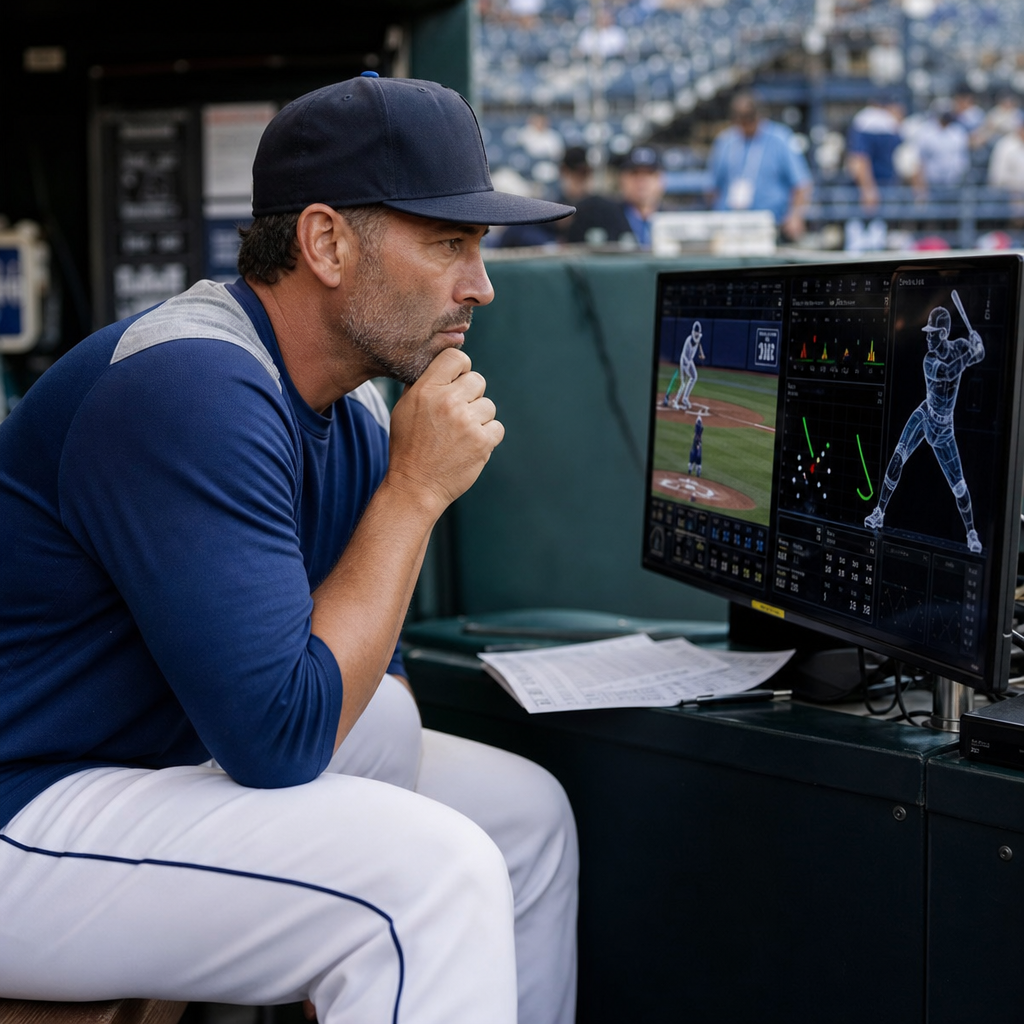
Artificial intelligence coaches are moving from speculative conversation to practical baseball strategy, and that shift matters because coaching sits at the center of player development, game planning, injury prevention, and roster construction. In baseball, an AI coach does not mean a robot standing in the dugout calling bunts. It means software systems that analyze tracking data, video, biomechanics, medical inputs, scouting reports, and historical outcomes to recommend decisions faster and more consistently than a human staff can manage alone. I have worked with player performance datasets and video review workflows, and the pattern is clear: teams already use algorithmic tools in pieces, while the next question is whether those tools can act more like full coaching partners. That possibility belongs squarely within future trends and predictions because it touches every level of the sport, from youth instruction to the major leagues. It also links naturally to related discussions about automated umpiring, wearable technology, front office analytics, fan-facing broadcasts, and the changing economics of player development. A hub article on this topic needs to answer the basic question directly: could artificial intelligence coaches become a real part of baseball’s future? Yes, but not as a total replacement for human coaches. The more realistic future is a hybrid model in which AI handles pattern recognition, personalized planning, and scenario simulation, while human coaches supply trust, communication, motivation, and context. Understanding that balance is essential for anyone following how baseball will change over the next decade.
What an Artificial Intelligence Coach Would Actually Do
An artificial intelligence coach in baseball would combine several existing technologies into one decision-support layer. Today, clubs already rely on Hawk-Eye tracking, bat sensors, motion-capture systems, force plates, high-speed cameras, and databases of pitch characteristics and swing outcomes. An AI coaching platform would take those inputs and turn them into actionable recommendations: adjust attack angle two degrees, move a fielder three steps toward the line, reduce weekly throwing volume by fifteen percent, or sequence sliders differently against a hitter with a high chase rate below the zone. In plain terms, the system would function like a tireless analyst, bullpen coordinator, hitting strategist, and sports scientist working at once.
The strongest use case is personalization. Human coaches can study film and data, but they cannot process every comparable swing, release point, fatigue signal, and opponent tendency in real time. A well-trained model can. If a young pitcher’s elbow stress spikes when his stride shortens by even a small margin, the system can flag that pattern before velocity drops or pain appears. If a hitter performs best against high fastballs after seeing a first-pitch breaking ball, the model can shape batting practice and pregame plans around that tendency. In that sense, AI coaching is less about replacing baseball wisdom and more about making baseball knowledge specific to the individual player standing in front of you.
Another important function is scenario planning. Baseball offers thousands of repeatable micro-situations: 1-1 counts against left-handed pull hitters, reliever usage on back-to-back days, defensive alignments with a runner on first and one out, or pinch-hit choices in late innings. AI systems excel when the problem is probabilistic and the data volume is large. That makes game preparation an obvious fit. Before a series, a coaching model could generate opponent-specific plans, estimate likely counter-adjustments, and present concise options to staff members. The best systems would not merely produce one answer; they would explain the tradeoffs behind several viable choices.
Where Baseball Already Uses AI-Style Coaching Tools
Baseball is not starting from zero. Major League Baseball and many college programs already operate in an environment shaped by machine learning, computer vision, and predictive analytics. Hawk-Eye became MLB’s tracking standard in 2020, replacing earlier systems and expanding the quality of ball-flight and player-movement data. Teams use Edgertronic and other high-speed video tools to break down pitch grips and bat paths frame by frame. Driveline Baseball popularized data-rich pitching and hitting development using Rapsodo, TrackMan, and biomechanics assessments. Those are not full AI coaches, but they are components of one.
On the performance side, machine learning models help identify pitch types, predict pitch movement, estimate expected outcomes such as expected batting average and expected slugging percentage, and cluster hitters or pitchers into meaningful archetypes. On the health side, teams increasingly monitor workload, recovery, and movement efficiency, even if public visibility into those systems is limited. In player acquisition, organizations use projection systems and risk models to decide which skills are likely to translate across levels. A future AI coach would connect these currently separate pipelines and deliver recommendations in one place.
The practical lesson from current use is that adoption depends less on technical possibility than on workflow design. I have seen advanced reports ignored because coaches received them too late, in language players did not understand, or in formats too dense to apply between innings. The baseball future belongs to tools that turn complexity into clear choices. If an AI platform cannot explain why a hitter should alter his setup or why a pitcher should shelve a sinker against one lineup, it will not earn trust, no matter how accurate the underlying model may be.
| Baseball Area | Current Tools | Likely AI Coach Role | Main Benefit |
|---|---|---|---|
| Hitting | Hawk-Eye, Blast Motion, high-speed video | Personalized swing adjustments and pitch attack plans | Faster skill development |
| Pitching | Rapsodo, TrackMan, biomechanics labs | Pitch design, workload forecasting, sequencing advice | Better stuff with lower injury risk |
| Defense | Positioning models, reaction tracking | Real-time alignment and first-step training cues | More converted outs |
| Medical | Wearables, force plates, screening data | Fatigue alerts and return-to-play decision support | Healthier players |
| Game Strategy | Advance scouting databases, win expectancy models | Bench, bullpen, and matchup recommendations | More efficient decisions |
How AI Could Improve Player Development and Game Strategy
The biggest competitive advantage will likely appear in player development. Baseball improvement is rarely linear. A prospect may gain bat speed yet lose contact quality, or add velocity while sacrificing command. AI can map those tradeoffs with more precision than traditional observation alone. For hitters, that means identifying whether the root problem is swing timing, bat path inefficiency, pitch recognition, lower-half sequencing, or zone decision-making. For pitchers, it means separating velocity gains that are sustainable from gains produced by mechanics that increase injury risk. This matters because development plans fail when coaches prescribe generic fixes to highly specific problems.
AI systems can also compress feedback loops. Instead of waiting for a week of games to confirm whether an adjustment worked, players can compare live practice data against target movement patterns and expected outcomes immediately. A catcher could receive framing or blocking feedback after every bullpen. An infielder could train first-step reactions against simulated batted-ball profiles derived from actual opposing hitters. A baserunner could review lead size, jump efficiency, and steal success probabilities with objective benchmarks. That speed turns development into a controlled cycle of hypothesis, test, and refinement.
In strategy, AI offers value because baseball rewards marginal gains accumulated over long seasons. Better bullpen timing, sharper defensive positioning, and smarter lineup construction may each be worth only a few runs, but a few runs can change playoff odds. The Tampa Bay Rays, Los Angeles Dodgers, and Houston Astros have shown how integrated analytics can shape organizational identity, even though they still rely heavily on human coaching. Future AI coaching platforms would push that model further by translating organizational strategy into player-specific actions every day. The likely result is not dramatic science fiction. It is quieter and more powerful: more players placed in situations where their strengths show up consistently.
The Limits: Trust, Ethics, Bias, and Human Communication
The case against AI coaches is serious and should not be dismissed. First, data quality remains uneven. Minor league parks, amateur environments, and international scouting settings do not always produce clean, standardized inputs. A flawed dataset can create confident but wrong recommendations. Second, bias can enter through historical patterns. If a model learns from past decisions shaped by unequal opportunity, it may reinforce them in playing time, promotion, or evaluation. Third, baseball players are not laboratory subjects. They need communication tailored to personality, culture, confidence, and stress level. A correct recommendation delivered poorly can still fail.
Trust is the decisive barrier. Clubhouses run on relationships. Players often accept difficult changes because a coach has credibility built through years of shared work, not because a dashboard assigns a high confidence score. I have watched players ignore excellent video evidence until a respected coach framed the same idea in language tied to feel rather than metrics. That does not make the data weaker; it shows that coaching is partly emotional translation. AI can describe patterns, but it cannot fully replicate presence, accountability, or the timing of a difficult conversation after a bad outing.
There are also governance concerns. Who owns biometric data? How long should teams retain movement profiles or fatigue scores? Could insurance, arbitration, or contract negotiations use AI-derived health risk estimates against players? Leagues and unions will need clear rules, much as other sports and industries have needed standards around data collection and automated decision systems. Without guardrails, the same tools designed to optimize performance could undermine privacy and bargaining power. Any credible future forecast for baseball must account for those tradeoffs.
Future Trends and Predictions for Baseball’s Next Decade
Over the next decade, artificial intelligence coaches will likely spread through baseball in layers. First, expect wider use in player development settings where experimentation is easier and the benefits are easiest to measure. Rookie ball, college programs, private labs, and rehab environments are ideal testing grounds because they generate repetitive drills and controlled interventions. Second, expect AI to become more conversational. Instead of reading static reports, coaches and players will ask systems questions in plain language: why is my vertical break down, which counts should I hunt for a first-pitch fastball, or what changed in my hip-shoulder separation this month?
Third, expect stronger integration across departments. The future baseball organization will not treat scouting, player development, sports medicine, and major league strategy as separate silos. AI will connect them. A scouting report on a draft prospect could feed directly into a development blueprint. A rehab assignment could update roster planning models in real time. A hitter’s cage work could inform broadcast analysis and fan education. This hub topic also connects to broader innovations and changes in baseball, including virtual reality training, automated officiating, smarter wearables, and more individualized fan experiences built from the same underlying data infrastructure.
My prediction is straightforward. By the early 2030s, most competitive baseball organizations will use AI as a standard coaching layer, but almost none will hand complete authority to machines. The winning model will be augmented coaching: human leaders supported by systems that are fast, searchable, and personalized. Organizations that train coaches to interpret and communicate AI insights will gain more than organizations that simply buy software. For players, the benefit will be more precise development and potentially healthier careers. For teams, the benefit will be smarter decisions repeated daily. For fans and industry observers, the important takeaway is simple: artificial intelligence coaches are a real possibility for baseball’s future, but their success will depend on human judgment, ethical design, and practical implementation. If you are tracking future trends and predictions in baseball, start here, then explore the connected topics shaping how the sport will be taught, managed, and played next.
Frequently Asked Questions
What is an artificial intelligence coach in baseball, and what would it actually do?
An artificial intelligence coach in baseball is best understood as a decision-support system rather than a human replacement standing in the dugout. In practical terms, it would combine large amounts of information—pitch tracking, bat speed, swing path, biomechanics, defensive positioning, player workload, medical trends, scouting reports, weather, opponent tendencies, and historical game results—to identify patterns and recommend actions. That could include suggesting optimal pitch usage for a specific hitter, flagging mechanical changes in a pitcher before performance drops, helping a hitting coach tailor drills to an individual player’s weaknesses, or informing roster and lineup decisions based on matchup probabilities.
The most important point is that AI coaching would likely work in layers. At the development level, it could help minor league players improve faster by showing exactly where they lose efficiency in their movement or approach. At the game-planning level, it could process opponent data faster than any staff member and offer situation-specific recommendations. At the health level, it could monitor workload, recovery indicators, and movement patterns to reduce injury risk. And at the front-office level, it could support long-term planning by connecting player development trends to roster construction. In that sense, AI is less about replacing baseball knowledge and more about expanding a coaching staff’s ability to see, compare, and respond to complex information in real time.
Could AI realistically replace human baseball coaches?
In the near future, full replacement is highly unlikely, and for good reason. Coaching is not just about identifying the statistically correct decision. It also involves communication, trust, leadership, psychology, accountability, conflict management, and understanding what a player is ready to hear in a specific moment. A hitter in a slump may not need ten data points; he may need one clear cue delivered by someone who knows his personality. A young pitcher may need confidence and routine as much as pitch-design insight. Those human elements are central to performance, and they are difficult to automate in any meaningful way.
What is far more realistic is a hybrid model in which AI handles the heavy analytical workload and human coaches interpret, prioritize, and deliver the information. That arrangement makes sense because baseball decisions rarely happen in a vacuum. Even if an AI model recommends a defensive shift, a bullpen move, or a training adjustment, a coach still has to weigh clubhouse dynamics, player comfort, recent fatigue, weather conditions, and the flow of the game. The future, if AI continues advancing in baseball, is likely to involve smarter human coaches using better tools—not machines independently running teams. The competitive edge will come from how well organizations integrate AI into coaching culture, not from trying to remove people from the process entirely.
How could AI coaches improve player development and performance?
AI could have a major impact on player development because baseball improvement often depends on finding small, repeatable gains across many areas at once. Traditional coaching already uses video, radar data, and observational feedback, but AI can connect those inputs at a much larger scale and with greater speed. For example, it could compare a hitter’s current mechanics to his most productive stretches, identify subtle changes in timing or bat path, and recommend individualized drills. For pitchers, it could track arm slot consistency, release point changes, spin efficiency, and movement profiles to detect what is working and what is drifting. Instead of relying solely on general instruction, coaches could build highly customized plans based on evidence tied to each player’s physical and competitive profile.
Another major advantage is consistency across an organization. AI systems can create shared benchmarks and development frameworks from rookie ball through the major leagues, which helps ensure players receive aligned instruction as they move up. That matters because inconsistent messaging can slow development. AI could also accelerate feedback loops by turning game and practice data into actionable recommendations almost immediately. A player may no longer need to wait days for deep review when a system can highlight key adjustments after a session. Used correctly, that kind of speed can turn player development into a more precise and adaptive process. The best results, however, would still depend on coaches who know how to translate technical recommendations into manageable, player-friendly teaching.
Can artificial intelligence help prevent injuries in baseball?
AI has strong potential in injury prevention because baseball injuries often emerge from a combination of workload, fatigue, mechanical inefficiency, recovery quality, and past medical history. These variables are difficult for any one coach or trainer to track perfectly across an entire roster, especially over a long season. AI systems can analyze trends in throwing volume, velocity fluctuations, movement changes, sleep and recovery data, biomechanics, and prior injury patterns to identify warning signs earlier than traditional methods alone. If a pitcher’s mechanics begin to drift in a way that historically correlates with elbow stress, or if a position player shows changes in sprint efficiency and rotational power that suggest rising soft-tissue risk, the system could alert staff before the problem becomes severe.
That said, injury prevention is one of the areas where overconfidence in technology can be dangerous. Baseball bodies are complex, and not every red flag leads to injury, just as not every injury can be predicted. AI can improve risk assessment, but it cannot eliminate uncertainty. The smartest use of AI in health and performance would be as part of a broader medical and training framework, where doctors, athletic trainers, strength staff, and coaches interpret the system’s recommendations together. In that role, AI becomes a valuable early-warning and planning tool, helping teams manage workloads, tailor recovery programs, and make more informed return-to-play decisions without pretending that injuries can be fully solved by software.
What are the biggest challenges or risks of using AI as a baseball coaching tool?
The biggest challenge is not whether AI can process baseball information; it is whether organizations can use it responsibly and effectively. Data quality is a major concern. If the underlying information is incomplete, biased, poorly labeled, or taken out of context, the recommendations may sound precise while still being wrong. Baseball also includes many variables that are difficult to quantify, such as confidence, adaptability, pain tolerance, leadership, and the effect of pressure. A model can miss those realities if teams start treating numbers as complete truth instead of one part of the picture. There is also the risk of information overload. Coaches and players can become less effective, not more, if they are buried in nonstop outputs and conflicting recommendations.
Beyond performance concerns, there are cultural and ethical issues. Players may resist systems they believe are constantly monitoring them or reducing them to data profiles. Teams will also have to think carefully about privacy, especially when medical inputs and biometric information are involved. Competitive balance is another issue, because wealthier organizations may be able to build more advanced systems and widen the gap between resource-rich and resource-poor clubs. Finally, there is the danger of deskilling human coaching if organizations rely too heavily on automated guidance. The most successful baseball operations will likely be the ones that treat AI as a powerful assistant—one that enhances judgment, sharpens preparation, and improves development—without surrendering the human insight that still defines great coaching.