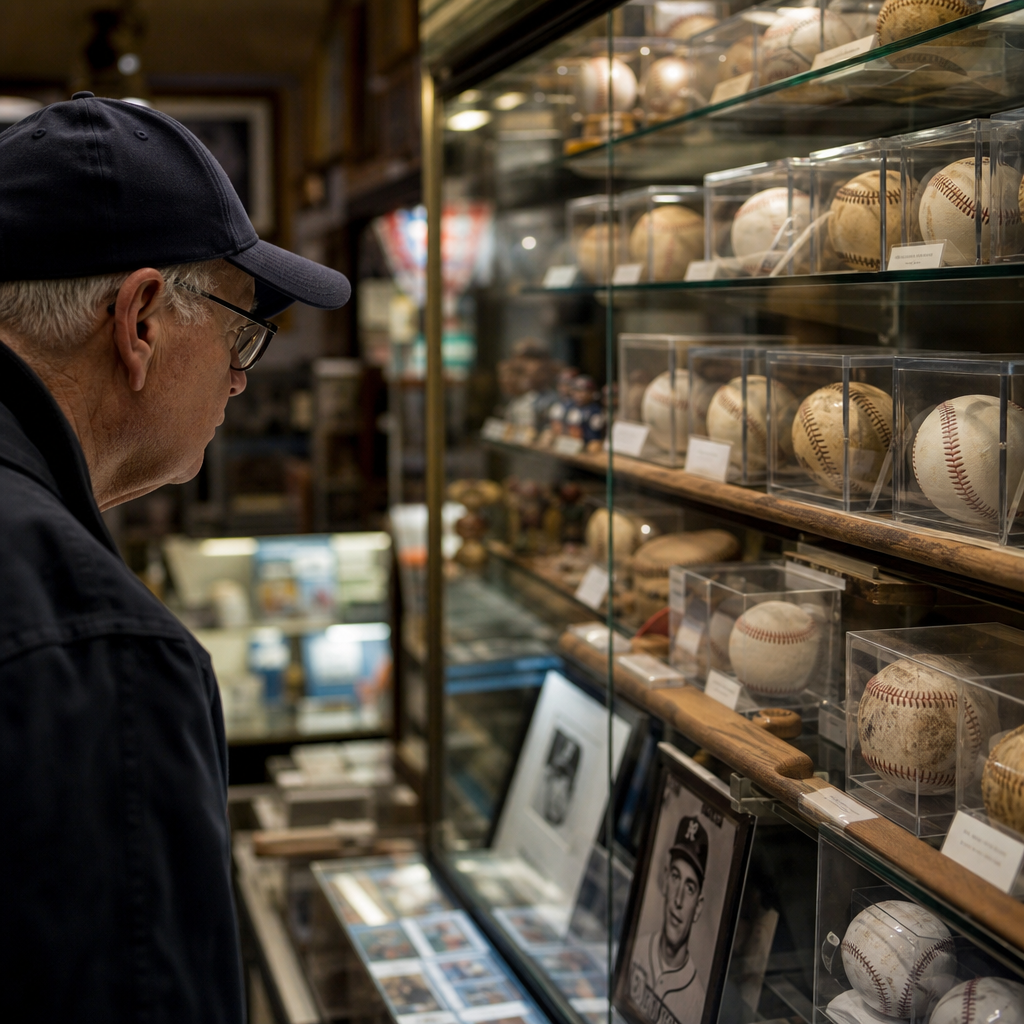
Baseball memorabilia sits at the intersection of sport, nostalgia, licensing, and investment, turning personal memories into a market that reflects broader economic shifts across the game. In practical terms, baseball memorabilia includes trading cards, autographed balls, game-used equipment, vintage programs, championship merchandise, bobbleheads, ticket stubs, digital collectibles, and almost anything officially produced or personally connected to players, teams, and historic moments. The economy of baseball memorabilia matters because it shows how fans assign value, how leagues monetize identity, and how outside forces such as inflation, media technology, labor change, and platform economics reshape spending behavior. I have watched this market move from card shops and convention tables to auction platforms, authentication databases, and livestream breaks, and each stage changed who could participate and what counted as desirable. For readers following innovations and changes in baseball, memorabilia is not a side story. It is a measurable record of commercialization, fan culture, and shifting wealth within the sport’s ecosystem. When a rookie card spikes after a playoff run or a game-worn jersey doubles in value because of authenticated provenance, that price movement reflects not just collector taste but the larger economics of attention, scarcity, and trust.
Understanding the baseball memorabilia economy starts with a few key terms. Primary market refers to the first sale of an item by a manufacturer, team store, or licensee. Secondary market describes resale through dealers, collectors, auction houses, marketplaces, and shops. Scarcity can be natural, as with a one-of-one card or a bat used in a specific game, or manufactured through limited print runs and serial numbering. Provenance is the documented history of ownership and use, especially critical for game-used items. Authentication is the process of verifying that an autograph, item, or game connection is genuine, often through firms such as PSA, Beckett Authentication Services, JSA, or MLB’s own authentication program. Grading evaluates condition, usually for cards, with standards that materially affect price. These concepts explain why two visually similar items can have radically different values. They also explain why the baseball memorabilia market is especially sensitive to changes in technology, consumer confidence, and league policy. As a hub topic within economic shifts and their effects, memorabilia offers a useful lens because it connects labor, media rights, retail strategy, collectibles speculation, and fan identity in one highly visible marketplace.
From Souvenirs to Structured Markets
The baseball memorabilia economy did not begin as a formal investment category. Early collecting centered on keepsakes: scorecards, tobacco cards, photos, and team-issued souvenirs saved by fans rather than purchased as financial assets. Over time, scarcity and historical importance transformed those objects into market goods. The T206 Honus Wagner card remains the classic example because its rarity, age, and iconic status create extraordinary value, with high-grade copies selling for millions. Yet the larger shift was not just about a few famous pieces. It was the gradual professionalization of the market through card manufacturers, price guides, conventions, dealer networks, and catalog auctions. By the 1980s and 1990s, baseball memorabilia had become a recognizable economic segment supported by national brands such as Topps, Upper Deck, Fleer, and Donruss. Those companies standardized production and distribution, while hobby publications and storefronts helped establish a common language of value. I saw firsthand how local card shops once functioned as both market makers and community hubs, teaching collectors what a mint condition card meant and why a short print mattered.
Economic shifts strongly influenced that development. During periods of disposable income growth, collecting widened beyond dedicated hobbyists to casual buyers, gift purchasers, and speculators. During downturns, demand narrowed toward blue-chip items with proven liquidity, such as vintage Hall of Famers, flagship rookie cards, and authenticated game-used artifacts. The so-called junk wax era illustrates how overproduction can damage perceived scarcity and depress long-term values. Manufacturers printed enormous volumes because demand seemed endless, but too much supply undermined future appreciation for many cards from that period. That lesson still shapes the industry. Modern releases use serial numbering, autograph inserts, relic cards, and limited parallels to prevent another supply glut and preserve premium pricing. What changed economically is that baseball memorabilia stopped being only emotional consumption and became a category managed through scarcity strategies, intellectual property controls, and increasingly data-driven resale markets.
Licensing, Branding, and Revenue Expansion
Licensing transformed memorabilia from scattered fan merchandise into a coordinated revenue engine. Major League Baseball, the MLB Players Association, and individual clubs built systems that monetize logos, player likenesses, event marks, and historical branding. Official licensing matters because it creates legal exclusivity and price differentiation. A World Series patch used on an authenticated jersey carries more market power than an unlicensed replica because buyers trust the origin, design accuracy, and resale desirability. The same principle applies to baseball cards. Exclusive arrangements among leagues, unions, and manufacturers determine which company can produce cards with team logos or active player images, and those rights shape the structure of the entire primary market. When exclusive licensing tightens, fewer producers compete, product lines become more curated, and premium releases can command higher prices.
This shift has broad economic effects. For teams, memorabilia and branded merchandise diversify revenue beyond tickets and concessions. For players, licensing arrangements convert athletic performance into long-tail commercial income. For retailers, official supply channels reduce legal uncertainty but can also squeeze margins when access is controlled by a small number of dominant brands. Fans feel the impact in pricing. Limited-edition drops, city-connect merchandise, commemorative balls, and stadium exclusives all lean on brand authority and event-driven demand. Consider Shohei Ohtani merchandise after major milestones or Aaron Judge home run chase products tied to record-driven attention. These are not random spikes. They are examples of how baseball’s modern commercial system turns moments into monetizable inventory almost instantly. The economy of baseball memorabilia increasingly depends on this conversion of live attention into collectible product, backed by licensing infrastructure that protects scarcity and legitimizes price.
Authentication, Grading, and the Price of Trust
Trust is the central economic variable in baseball memorabilia. Without reliable verification, buyers discount prices to account for forgery risk, restoration, trimming, counterfeit patches, and fabricated stories about game use. Authentication and grading exist because trust can be systematized and sold. PSA, SGC, Beckett Grading Services, JSA, and MLB Authentication each perform a slightly different role, but together they create a framework that makes remote transactions possible at scale. MLB’s authentication program, introduced in 2001, is especially important for game-used items. Clubhouse staff and authenticated personnel affix tamper-evident holograms to baseballs, bases, jerseys, and lineup cards, linking them to a database entry that records date, game, and event. That level of traceability changes value materially because provenance becomes searchable rather than anecdotal.
In the card market, grading compresses uncertainty into a familiar number. A PSA 10 and a PSA 8 of the same rookie card can trade at dramatically different levels because condition rarity matters. Population reports deepen that effect by showing how many examples have reached each grade. During the pandemic-era boom, grading backlogs and rising submission fees highlighted how central these firms had become to market liquidity. I have seen raw cards that looked impressive under casual inspection lose substantial value once edge wear, centering issues, or surface print lines became visible under grading standards. That is why the price of trust is real: buyers pay premiums for third-party verification because it reduces dispute risk and improves resale confidence. There are tradeoffs, however. Grading can encourage over-financialization, and authentication is not infallible. Still, the market functions more efficiently when standards are clear, records are persistent, and authenticity can be checked without relying on memory or reputation alone.
Digital Platforms and New Buyer Behavior
The internet changed baseball memorabilia more than any single innovation since mass card production. Online marketplaces expanded access, broadened price discovery, and reduced geographic barriers that once favored major card shows and urban auction houses. eBay normalized constant resale, while Goldin, Heritage Auctions, and SCP Auctions elevated premium memorabilia into a highly visible auction environment with marketing reach far beyond traditional hobby circles. Social platforms and livestream commerce then changed how products are sold and discussed. Box breaks, repacks, influencer-led channels, and collector communities on YouTube, Instagram, Reddit, and Whatnot turned collecting into participatory media. Instead of waiting for a monthly price guide, collectors now react to daily comps, grading reveals, injury news, prospect call-ups, and playoff narratives in real time.
This digital shift also changed who buys. Younger entrants often arrive through social content and sports betting-style excitement around prospects, while older collectors increasingly use online tools for set completion, vintage acquisition, and estate liquidation. Price transparency improved, but volatility also increased because sentiment spreads faster. A viral highlight can move card demand overnight. A scandal, suspension, or injury can do the same in reverse. Fractional ownership platforms and digital collectibles briefly suggested that memorabilia might behave even more like financial markets, though speculative peaks proved difficult to sustain without lasting collector utility. The enduring lesson is that platform economics now shape value. Search ranking, seller ratings, scanned images, shipping reliability, and social proof all affect realized prices. Baseball memorabilia remains rooted in history, but its market behavior now resembles other internet-native commerce sectors where trust, visibility, and network effects determine winners.
How Economic Cycles Reshape Demand
Baseball memorabilia follows broader economic cycles, but not uniformly across categories. High-end vintage pieces often hold value better than mass-produced modern items because scarcity is fixed and demand comes from wealthier buyers less sensitive to short-term downturns. Mid-tier collectibles, by contrast, can soften when inflation reduces discretionary spending. During strong economies, collectors are more willing to chase prospects, unopened wax, and speculative autographs. During recessions or periods of consumer caution, spending tends to shift toward iconic names such as Babe Ruth, Jackie Robinson, Mickey Mantle, Ken Griffey Jr., Derek Jeter, or established contemporary stars with Hall of Fame trajectories. In other words, risk appetite changes the composition of demand. The memorabilia market does not stop during economic stress, but it becomes more selective.
| Economic Shift | Typical Effect on Memorabilia | Example |
|---|---|---|
| Inflation | Collectors reduce impulse buying and prioritize proven assets | Fewer purchases of retail wax, stronger interest in vintage stars |
| Low interest rates | Speculative buying often rises as investors seek alternative assets | Rookie card surges during 2020 and 2021 |
| Recession fears | Liquidity concentrates in authenticated, graded, historically important items | Game-used jerseys outperform common inserts |
| Media hype cycles | Short-term spikes tied to milestones, awards, or prospect debuts | Julio Rodríguez and Elly De La Cruz card jumps after breakout attention |
The COVID-19 period made these relationships especially visible. Stimulus spending, low rates, lockdown collecting, and social-media enthusiasm fueled a sharp surge in cards and memorabilia. Submission volumes exploded, prices for modern rookies climbed quickly, and sealed product became difficult to find at retail. Then normalization followed. As grading supply increased and macroeconomic conditions tightened, many speculative prices corrected. What remained strongest were categories supported by true rarity, cultural significance, and verified provenance. That pattern mirrors other collectible sectors, but baseball adds a unique variable: on-field performance can materially alter value. Few markets react so directly to a player’s daily output. Because of that, memorabilia is both a consumer good and a sentiment-sensitive asset class, with all the instability that combination implies.
The Hub Role: Linking Baseball’s Wider Economic Changes
As a hub within economic shifts and their effects, baseball memorabilia connects to several broader changes across the sport. Revenue concentration at the league and franchise level affects merchandising strategy and pricing. Global player pipelines expand the buyer base, as seen in rising demand for stars from Japan, Latin America, and Korea. Stadium modernization creates new premium retail environments and limited in-venue exclusives. Data analytics influence prospect valuation, which then feeds card pricing before players establish major league track records. Labor dynamics matter as well. Free agency, contract extensions, and team changes can alter collectible demand by shifting a player’s market identity. Even rule changes that speed up games or encourage action influence fan engagement, which shapes merchandise conversion and collecting enthusiasm. I have found that memorabilia often registers these changes earlier than casual observers expect, because collectors respond immediately to narrative, access, and uncertainty.
For readers exploring this subtopic further, the key takeaway is that memorabilia is not peripheral to baseball’s economic story. It is a compressed version of it. The same forces driving the sport at large—media expansion, licensing control, technology adoption, globalization, and shifting consumer budgets—also determine what fans buy, what resellers profit from, and which artifacts endure as valuable cultural property. To understand innovations and changes in baseball, follow the memorabilia market closely. It shows where attention is moving, where trust is strongest, and how the business of memory keeps evolving. Use this hub as the starting point for deeper articles on licensing structures, card grading economics, online resale platforms, game-used authentication, and the changing spending patterns of modern fans.
Frequently Asked Questions
What makes baseball memorabilia economically valuable beyond simple fan sentiment?
Baseball memorabilia has value because it combines emotional attachment with the same market forces that shape other collectible and luxury categories: scarcity, authenticity, condition, demand, and cultural relevance. A signed baseball from a beloved player may carry personal meaning for one fan, but in the broader marketplace its price is usually determined by how rare it is, how well documented it is, how desirable the player or event remains, and how many comparable items exist. A mass-produced souvenir sold at a ballpark gift shop can still be meaningful, but it will usually not command the same premium as a game-used bat, a low-population rookie card, or an item tied to a milestone such as a World Series, a record-breaking home run, or a Hall of Fame career.
The baseball memorabilia economy also reflects larger patterns in sports history and media exposure. When a player’s legacy rises, so can the value of items connected to that player. When a team wins a championship, regional demand for related merchandise often spikes. Vintage material frequently gains strength because fewer examples survive in high-grade condition, creating scarcity over time. In that sense, memorabilia is not just about objects; it is about stories that the market agrees are important. Buyers are often paying for a tangible link to baseball history, and the stronger and more widely recognized that history is, the stronger the pricing tends to be.
How do licensing, branding, and official authentication affect the baseball memorabilia market?
Licensing and authentication are central to the economics of baseball memorabilia because they create trust, legitimacy, and market differentiation. Officially licensed products from Major League Baseball, teams, players’ associations, or authorized manufacturers generally carry more credibility than unlicensed items because buyers know the branding and imagery were approved for use. That matters in a market where visual identity, trademarks, and player likenesses are not just decorative elements but part of what gives an item commercial value. A licensed championship shirt, commemorative pin, or team-issued collectible is often more desirable because it is seen as an official artifact of the event rather than an imitation.
Authentication becomes even more important for higher-value categories such as autographs, game-used gear, and vintage collectibles. Third-party grading and authentication services help establish whether a signature is genuine, whether a card is original, and what condition standard an item meets. This can significantly affect price. Two seemingly identical baseball cards may sell for dramatically different amounts if one has been professionally graded higher. Likewise, a bat claimed to be game-used becomes much more valuable when it is matched to photo evidence, team records, or a reputable authentication program. In economic terms, authentication reduces information asymmetry: it gives buyers more confidence and lowers the perceived risk of fraud, which in turn supports stronger prices and more liquid markets.
Why do some baseball items become strong investments while others remain low-value souvenirs?
The difference usually comes down to rarity, provenance, historical importance, condition, and sustained collector demand. Most souvenirs are produced in large quantities for immediate consumption, which means they are easy to find later and therefore less likely to appreciate meaningfully. By contrast, items with limited supply and strong long-term narratives tend to perform better. A rookie card from a legendary player, a ticket stub from a historic game, or a jersey worn during a documented milestone can become investment-grade because collectors see those objects as hard-to-replicate pieces of baseball history.
Provenance is especially important. An item with a clear chain of ownership or direct link to a notable moment is much easier to value than something with only anecdotal background. Condition also matters enormously, particularly in cards and paper goods, where small flaws can cause major price drops. But even excellent condition is not enough by itself. Demand must endure over time, and that usually depends on the lasting relevance of the player, team, or moment. A collectible can surge during a player’s breakout season and cool just as quickly if the player’s career falters. That is why baseball memorabilia should be understood as a market with both emotional upside and speculative risk, not as a guaranteed investment class.
How has the baseball memorabilia economy changed with online marketplaces and digital collectibles?
Online marketplaces have made the memorabilia economy larger, faster, and more transparent, while also making competition and price discovery much more immediate. In earlier decades, collectors often relied on card shows, specialty shops, auction catalogs, and personal networks. Today, buyers can compare listings, recent sale prices, grading populations, and authentication details across multiple platforms in minutes. That broad access has expanded the market by bringing in casual fans, international buyers, and niche collectors who may focus on specific teams, eras, or item types. It has also made the market more data-driven, since pricing is increasingly influenced by public sale histories and real-time demand patterns.
At the same time, digital collectibles have added a new layer to the definition of memorabilia. Instead of owning only physical objects such as cards, balls, and programs, collectors may now purchase officially produced digital assets tied to highlights, players, or special events. These products test the boundaries of what fans consider authentic and meaningful ownership. Some collectors embrace them as a modern extension of the hobby, especially younger audiences comfortable with digital scarcity and online communities. Others remain skeptical because digital items do not offer the tactile and historical qualities of physical memorabilia. Economically, this shift shows that the memorabilia market evolves with media technology, and that value increasingly depends not only on physical rarity but also on how effectively leagues, brands, and platforms create trust, community, and perceived exclusivity.
What should new collectors understand before buying baseball memorabilia for personal enjoyment or financial reasons?
New collectors should begin by deciding whether their main goal is emotional satisfaction, historical connection, portfolio-style speculation, or some combination of all three. That distinction matters because it shapes what counts as a successful purchase. If you are collecting for enjoyment, the best item may be one that connects you to your favorite team, childhood memories, or a meaningful game, even if it never rises in price. If you are buying partly for value retention or appreciation, you need to think much more carefully about authentication, grading, market timing, player legacy, and resale demand. The smartest approach is usually to collect what you genuinely appreciate while staying disciplined about quality and documentation.
It is also important to research before spending heavily. Learn how to spot reputable sellers, understand the role of grading companies, compare recent sales instead of relying on asking prices, and be cautious about trends fueled by hype. Preservation matters too. Proper storage, handling, and display can protect an item’s long-term condition and value. Most importantly, collectors should remember that baseball memorabilia is a living market shaped by nostalgia, media attention, economic cycles, and changing fan behavior. Prices can rise quickly, but they can also flatten or fall. A thoughtful buyer treats memorabilia as both a cultural artifact and a market product, recognizing that its greatest value often comes from the way it preserves a connection between personal memory and baseball history.