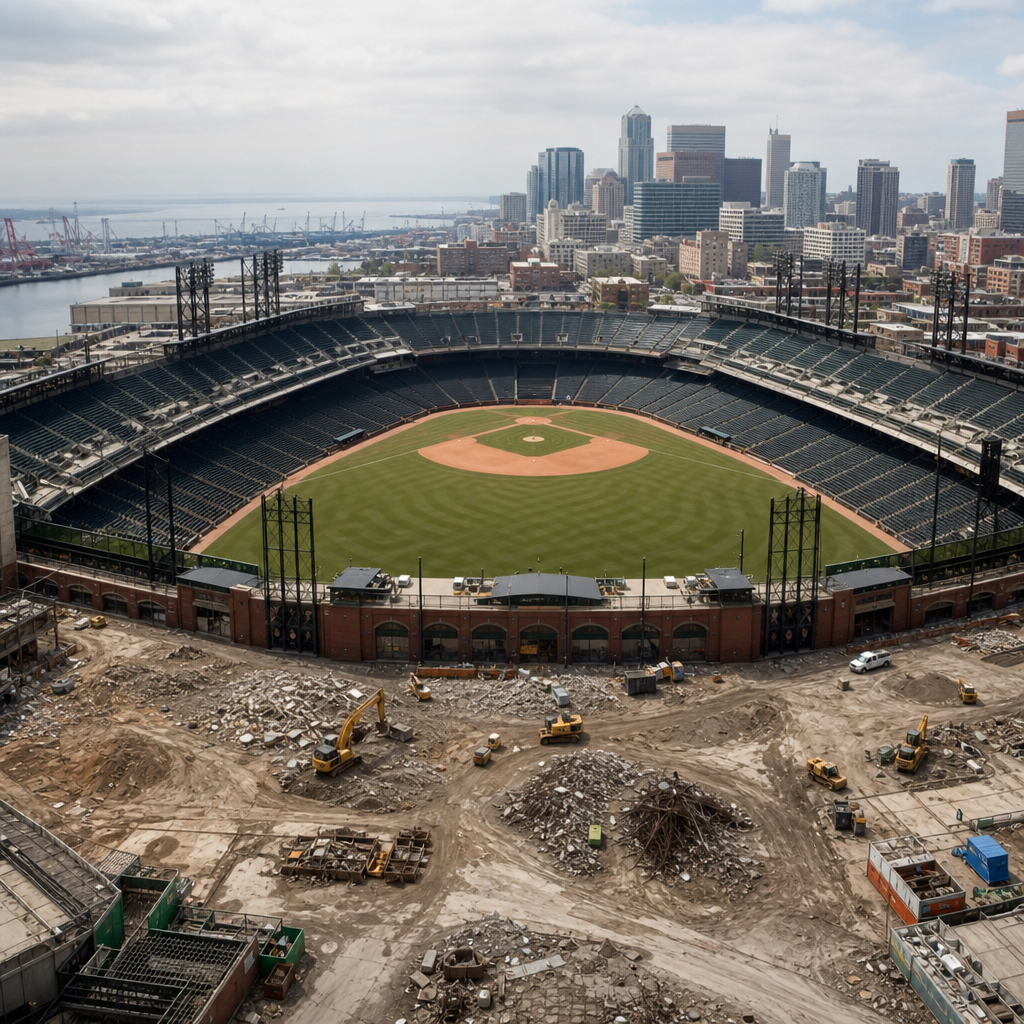
Baseball stadiums are far more than fields with seats. They are expensive civic assets, private entertainment businesses, labor hubs, real estate anchors, and symbols of local identity. Stadium economics describes the full financial system behind building, operating, upgrading, and justifying venues that host America’s pastime. It includes construction costs, public subsidies, debt service, team revenues, neighborhood development, tax effects, fan spending, and the opportunity cost of using land and public money for a ballpark instead of other needs.
This subject matters because the economics of baseball have changed dramatically over the last three decades. Teams once relied heavily on ticket sales and simple concession income. Today, the business model includes naming rights, premium seating, sponsorship inventory, mixed-use districts, streaming-related media strategies, dynamic pricing, and non-baseball events. At the same time, construction costs have escalated, public scrutiny has sharpened, and cities now demand clearer evidence that stadium projects create durable value. I have worked through enough venue budgets and development proposals to know that the headline construction number rarely tells the real story. Financing structure, maintenance obligations, infrastructure upgrades, and revenue control usually determine whether a deal succeeds or becomes a long-term burden.
As a hub for economic shifts and their effects, this article explains how stadium costs are formed, who pays, who benefits, and where claims often outrun evidence. It also connects the wider forces reshaping baseball: urban redevelopment, labor economics, tourism strategy, municipal debt, and the growing premium on fan experience. Understanding these moving parts helps readers evaluate both historic stadium debates and the next generation of ballpark proposals.
The True Cost of Building and Running a Baseball Stadium
The visible price tag on a new baseball stadium usually covers only direct construction. In practice, the total project cost often includes land acquisition, environmental remediation, utility relocation, roads, transit improvements, structured parking, security systems, scoreboards, club spaces, and technology infrastructure. Soft costs such as architecture, legal work, insurance, owner’s representation, and financing fees can add substantial percentages. Inflation in steel, concrete, and skilled labor has made timing a major variable. A ballpark budget approved in one market cycle can look outdated by groundbreaking.
Operating costs also reshape the equation. Stadium operators pay for staffing, field maintenance, housekeeping, insurance, food service support, security screening, digital ticketing systems, and ongoing capital reserves. Older parks often face expensive deferred maintenance, from seating replacement to HVAC overhauls. Revenue-producing upgrades are now routine because teams compete on amenities as much as wins. A new premium club or expanded social deck can lift per-cap spending, but it also raises expectations for continuous reinvestment.
Consider how lifecycle costs differ from ribbon-cutting costs. An owner may celebrate a $700 million park, yet over 30 years the venue can require hundreds of millions more in repairs and modernization. That is why professional feasibility studies increasingly model not just construction but net present value, replacement cycles, and revenue sensitivity under different attendance scenarios.
Who Pays: Private Capital, Public Money, and Hybrid Deals
Most modern baseball stadium deals are hybrids. Team owners may contribute equity, secure private loans, or pre-sell premium inventory, while governments provide land, tax-exempt bonds, infrastructure, or dedicated taxes on hotels, rental cars, or sales. The financing mix matters because it determines risk transfer. If a city backs debt with broad tax revenues, taxpayers may absorb downside if projected activity fails to materialize. If the club funds construction privately but receives development rights around the park, the public subsidy may be less obvious but still meaningful.
Tax-exempt municipal bonds have historically lowered borrowing costs for stadium projects, though critics argue they socialize financing benefits for largely private gains. Public officials often justify support by citing job creation, downtown activation, and competitiveness with peer cities. In some markets, the political appeal is strong because losing a franchise carries reputational cost. Yet economists have repeatedly found that direct metropolitan income gains are usually smaller than promotional rhetoric suggests, especially when spending is substituted from other local entertainment options.
Teams favor public participation because venue economics reward control. The more revenue streams a club controls, the more valuable a stadium becomes. Lease terms covering naming rights, concessions, parking, and adjacent development can be worth as much as visible rent discounts. That is why reading only the percentage split of construction funding is misleading. Control rights are often the real subsidy.
How Teams Make Money Inside the Ballpark
Traditional gate receipts remain important, but the modern baseball stadium is built around revenue segmentation. Teams divide fans into tiers and sell different experiences at different price points. Premium clubs, suites, field-level hospitality, party decks, and all-inclusive areas produce far higher margins than standard seating. Dynamic pricing software adjusts ticket prices by opponent, weather outlook, day of week, and demand velocity. Food and beverage strategy has also evolved from commodity concessions toward curated local brands, craft beverage programs, and mobile ordering designed to lift average transaction values.
Naming rights are a major capital support tool. A long-term naming agreement can generate tens or even hundreds of millions of dollars over the life of the contract, depending on market size and brand fit. Sponsorship inventory inside the stadium now extends far beyond outfield signs. Teams monetize gates, sections, replay features, lounges, entry plazas, and digital content integrations. In many cases, the venue functions like a three-dimensional advertising platform.
Non-game uses matter too. Concerts, college games, corporate events, winter attractions, and community programming help fill dark dates. Baseball parks do not host as many large events as domed multiuse venues, but the right calendar can materially improve asset utilization. From an operator’s perspective, the ideal stadium is not a building used 81 home dates. It is a year-round revenue engine.
The Public Case for Stadiums and the Evidence Behind It
Supporters of public financing usually make four claims: stadiums create jobs, raise tax revenues, spark neighborhood development, and strengthen civic identity. Each claim contains some truth, but the scale varies. Construction produces temporary employment, and stadium operations support permanent jobs in food service, security, groundskeeping, retail, and management. However, many of these jobs are part-time or event-based, and not all pay wages that transform household economics.
Tax revenue gains can occur through sales taxes, hotel occupancy taxes, admissions taxes, and property value increases near redeveloped districts. Yet substitution effects are real. A family spending money at a ballpark may simply spend less at a restaurant, theater, or other local attraction. In that case, the city captures activity in a new location without creating large net growth. Academic literature has often reached this conclusion in metro-wide assessments.
Civic value is harder to quantify but should not be dismissed. Teams can contribute to regional branding, downtown confidence, and community ritual. During my review of stadium impact reports, I have seen projects that failed as broad economic multipliers but succeeded as targeted district anchors. The key question is not whether a stadium has value. It is whether that value matches the public price and whether the deal structure protects residents when projected benefits fall short.
Neighborhood Development, Real Estate, and the Ballpark District Model
The strongest modern economic argument for a baseball stadium is often not the park itself but the district built around it. Teams and development partners increasingly seek control of adjacent land so they can capture value from apartments, hotels, offices, retail, and entertainment. This model changes the economics from event-based revenue to place-based revenue. The stadium becomes an anchor for a larger real estate strategy.
Examples across professional sports show why this matters. When a ballpark sits within a coordinated mixed-use plan, nearby property values can rise, tax bases can expand, and year-round foot traffic can improve. But outcomes depend on location, transit access, existing demand, and execution quality. A district in a growing urban core performs differently from one on isolated land with weak surrounding demand. Ballparks are catalysts, not magic.
There is also a distribution question. Redevelopment can increase rents, shift local business mix, and pressure long-time residents. Cities that negotiate community benefit agreements, local hiring commitments, affordable housing components, and infrastructure upgrades tend to produce more balanced outcomes. Without those protections, a celebrated entertainment district may generate private upside while displacing the communities used to justify the subsidy.
Key Economic Shifts Reshaping Baseball Stadium Decisions
The economics of hosting baseball have changed because the market now rewards flexibility, premiumization, and adjacent development more than raw seat count. Teams are designing fewer seats, more social spaces, and better sightlines because scarcity and experience support higher per-cap revenue. Technology has shifted spending patterns as well. Mobile ticketing reduces fraud and enables data collection, while cashless concessions and in-seat ordering increase throughput and average spend. Sustainability standards now influence design through energy systems, water management, and durable materials, affecting both upfront cost and long-term operating expense.
Media fragmentation has also altered priorities. Local media rights once underwrote much of team economics, but instability in regional sports networks has increased the importance of direct fan monetization and controlled venue income. That pressure helps explain why clubs pursue more premium inventory and surrounding development rights. At the same time, higher interest rates can make new projects harder to finance, pushing owners back toward public support or phased development models.
| Economic Shift | What Changed | Effect on Stadium Strategy |
|---|---|---|
| Premium seating growth | Higher demand for clubs, suites, and exclusive spaces | More revenue per attendee, less reliance on total capacity |
| Digital ticketing and pricing | Real-time demand signals and customer data | Dynamic pricing, better yield management, targeted marketing |
| Mixed-use development | Teams seek income beyond game days | Ballparks planned as anchors for year-round districts |
| Media uncertainty | Local broadcast revenues less predictable | Greater emphasis on in-venue spending and sponsorships |
| Construction inflation | Materials, labor, and borrowing costs increased | More complex financing and stronger scrutiny of subsidies |
These shifts have real effects on fans and cities. Ticket maps become more segmented. Public negotiations become more contentious. Team valuation depends increasingly on venue control rather than only on-field performance. In practical terms, the baseball stadium has evolved from a sports facility into a diversified commercial platform.
What Cities, Fans, and Policymakers Should Evaluate Before Approving a Deal
A sound stadium proposal should answer a few direct questions. First, what is the full public cost, including infrastructure, tax abatements, land transfers, and ongoing maintenance obligations? Second, who controls the major revenue streams? Third, what independent evidence supports attendance, tax, and development projections? Fourth, what happens if those projections miss? Strong agreements include guarantees, transparent reporting, enforceable community benefits, and clear capital responsibility over the life of the lease.
Fans should also understand the tradeoffs. New parks can improve comfort, accessibility, and neighborhood vitality, but they can also bring higher ticket prices and more emphasis on corporate inventory. Policymakers should test whether the same public dollars could generate greater economic return through transit, housing, schools, or small business support. That does not mean every subsidy is unjustified. It means every subsidy should compete against credible alternatives.
The best deals align incentives. Private owners should bear meaningful risk if they retain the upside. Public partners should secure measurable benefits if they provide land, bonds, or tax support. When those principles hold, stadium economics can work. When they do not, communities pay premium prices for benefits that remain frustratingly hard to measure.
Stadium economics sits at the center of baseball’s broader evolution because every major change in the sport eventually touches the venue. Revenue models, media disruption, labor needs, urban development, and fan expectations all converge at the ballpark. That is why debates over hosting America’s pastime are never just about architecture or nostalgia. They are about capital allocation, public accountability, and who gets to capture the value created by a beloved civic institution.
The clearest takeaway is simple: the cost of a baseball stadium is never only the construction bill, and the benefit is never only attendance. Real outcomes depend on financing design, control of revenue streams, neighborhood context, and long-term operating discipline. Some projects become productive district anchors with measurable tax growth and stronger fan experiences. Others deliver attractive buildings but weak public returns. The difference usually appears in the details of the deal, not the grandeur of the renderings.
Use this hub as the starting point for evaluating every article in the economic shifts and their effects category. Compare funding models, study district outcomes, follow revenue control, and ask what assumptions drive each claim. If you want to understand how baseball is changing, start with the stadium ledger, because the numbers around the field often explain the future of the game better than the scoreboard does.
Frequently Asked Questions
What does “stadium economics” actually include beyond the cost of building a ballpark?
Stadium economics covers the entire financial ecosystem surrounding a baseball venue, not just the headline construction price. The initial cost to design and build a stadium is only one piece of the equation. A full economic picture also includes land acquisition, infrastructure improvements, environmental remediation, financing costs, bond interest, maintenance, capital repairs, technology upgrades, security, utilities, staffing, insurance, and long-term renovation needs. Many stadiums also require ongoing investments after opening, from scoreboard replacements and premium seating expansions to accessibility improvements and energy system upgrades.
On the revenue side, stadium economics includes ticket sales, luxury suites, concessions, parking, sponsorships, naming rights, merchandise, non-baseball events, and media-related income that can be tied to venue operations. It also extends outward into the local economy through adjacent real estate development, hotel demand, restaurant activity, retail spending, and transportation use. At the same time, economists examine tax revenues, public subsidy structures, debt service obligations, and whether claimed economic benefits are new growth or simply spending shifted from other parts of the city. In other words, stadium economics is about how a ballpark functions as a business asset, a public investment, a jobs center, and a land-use decision all at once.
Why are baseball stadiums so expensive to build and maintain?
Baseball stadiums are costly because they are highly specialized, large-scale facilities that combine sports infrastructure, entertainment design, public assembly requirements, and increasingly complex commercial features. Modern ballparks are not just fields with seating bowls. They include premium clubs, suites, kitchens, broadcast infrastructure, retail areas, team offices, event spaces, advanced video boards, sound systems, player development amenities, security systems, and extensive mechanical and electrical networks. Design expectations have also risen dramatically. Teams and cities often want a venue that is architecturally distinctive, fan-friendly, technologically current, and capable of hosting concerts, festivals, and other revenue-generating events.
Location adds another layer of cost. Urban stadium projects often require expensive land assembly, demolition, road reconfiguration, utility relocation, transit coordination, and site preparation. If the project is part of a larger redevelopment district, public investment may also extend beyond the stadium itself to sidewalks, parking structures, public spaces, and surrounding infrastructure. Financing costs can be substantial as well, particularly when projects are funded through municipal bonds or public-private partnership structures. Once the stadium opens, maintenance remains expensive because these buildings experience heavy use, must meet strict safety standards, and are expected to stay visually competitive for decades. Even relatively new venues can face pressure for upgrades as teams seek more premium inventory, improved fan experiences, and better revenue efficiency.
How do public subsidies for baseball stadiums work, and why are they so controversial?
Public subsidies can take many forms, and they are often more complicated than a simple taxpayer check. A city, county, or state may contribute by issuing bonds, dedicating hotel or sales taxes, providing land, funding infrastructure, granting property tax abatements, creating tax-increment financing districts, or covering operating and maintenance obligations. In some deals, public entities finance the stadium shell while the team pays rent or contributes to interior improvements. In others, the public share is partly hidden in discounted land transfers, future tax concessions, or public spending on roads, transit access, and parking facilities that support the ballpark district.
The controversy comes from the gap between political promises and academic findings. Supporters argue that stadium subsidies can preserve a team, boost civic pride, create construction and service jobs, catalyze redevelopment, and keep entertainment spending within the region. Critics counter that many projected gains are overstated, especially when consumer spending at the stadium replaces spending that would have happened elsewhere locally. Economists also focus on opportunity cost: every dollar committed to a ballpark is a dollar not spent on schools, transit, housing, public safety, parks, or other infrastructure. The core debate is not whether stadiums have value, but whether the public return justifies the public cost, and whether those benefits are broadly shared or concentrated among team owners, nearby property holders, and high-income consumers.
Do baseball stadiums really help local neighborhoods and downtown development?
They can, but the results are highly uneven and depend on context. A stadium is most likely to support neighborhood development when it is part of a broader strategy that includes mixed-use planning, transit access, housing policy, pedestrian design, and year-round activity. In those cases, a ballpark can help anchor restaurants, bars, hotels, apartments, offices, and entertainment venues. It can increase visibility for an area, attract private investment, and create a sense of place that makes a district more marketable. Stadium-adjacent development can also raise land values, increase property tax potential, and strengthen a city’s branding and tourism appeal.
However, a stadium alone is not a guaranteed development engine. Baseball teams play a limited number of home games, and many venues sit relatively quiet outside event days unless the district is designed for constant use. Some projects generate activity largely confined to game times, with spending flowing to team-controlled properties rather than to the broader neighborhood. There can also be downsides, including rising rents, displacement pressures, traffic congestion, and land being devoted to parking or entertainment uses instead of housing or other community needs. The most important economic question is whether the stadium creates net new development or simply relocates investment that would have happened elsewhere. A successful district usually requires coordinated planning, complementary private development, and policies that connect the ballpark to the local economy rather than isolating it as a stand-alone destination.
How do teams and cities decide whether a stadium investment is financially worth it?
They typically evaluate stadium investments through different lenses, which is one reason negotiations can become so complex. Teams focus on revenue generation, franchise valuation, fan demand, and competitive positioning. A newer or upgraded stadium can increase premium seating sales, sponsorship opportunities, naming rights value, concessions revenue, and event-booking flexibility. It can also improve the team’s leverage in media and corporate partnerships while supporting long-term brand growth. For ownership groups, the question is often whether the facility strengthens the business of the franchise over decades, not just whether annual game-day revenue rises immediately.
Cities and public agencies, by contrast, are supposed to assess broader public return. That means examining tax revenue potential, debt repayment schedules, employment effects, neighborhood development prospects, infrastructure burdens, and the opportunity cost of dedicating public land or funds to a stadium project. Analysts may compare projected fiscal benefits against bond obligations, estimate whether tourism and spending are genuinely incremental, and consider who bears the risk if revenues fall short. They also look at intangible factors such as civic identity, major league status, political visibility, and public sentiment. Ultimately, whether a stadium is “worth it” depends on the assumptions built into the model. If projections are realistic, public risk is limited, and surrounding development is well planned, a project may make financial and civic sense. If the deal relies on inflated economic impact claims or shifts too much cost onto taxpayers, the investment can be far harder to justify.