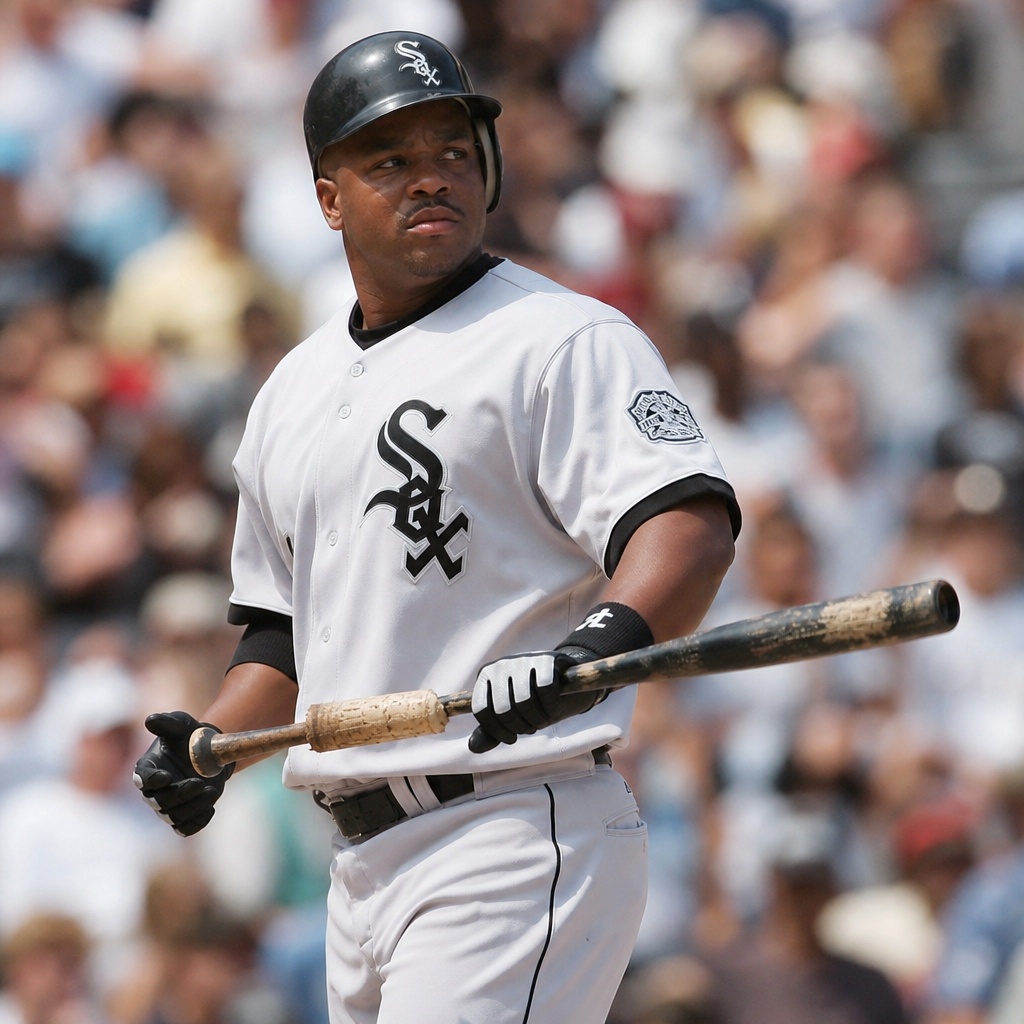
Few baseball controversies capture the sport’s blend of gamesmanship, paranoia, and theater better than the Albert Belle bat corking scandal. The incident, which unfolded in July 1994, was not about performance-enhancing drugs, gambling, or sign stealing. It centered on a far older suspicion: whether a hitter had illegally altered his bat to gain an advantage. For fans researching baseball scandals and controversies, Belle’s case remains one of the clearest examples of how a seemingly small rules violation can become a defining reputation marker.
In baseball, a corked bat is a bat that has been hollowed out and filled with lighter material such as cork, superballs, or other substances. Under Major League Baseball rules, that kind of tampering is illegal because players are required to use bats made from one piece of solid wood, subject to specific manufacturing standards. The popular myth is that corking makes the ball fly farther. In practice, lab testing and later analysis have shown a more complicated truth: corking may make a bat lighter and quicker through the hitting zone, but it does not reliably increase batted-ball distance. The rule still matters because altered equipment undermines competitive integrity.
What made the Albert Belle episode so memorable was not only the accusation itself, but the bizarre sequence that followed: an umpire’s suspicion, a confiscated bat, a clubhouse ceiling swap, and a league investigation that exposed deliberate deception. I have worked on baseball controversy timelines before, and Belle’s case always stands out because it combines hard evidence, eyewitness testimony, and an almost unbelievable cover-up. Unlike many sports scandals that remain clouded by rumor, this one produced a concrete chain of events, a suspension, and years of debate about intent, enforcement, and legacy.
This article serves as a hub for miscellaneous baseball scandals and controversies by using the Belle case as a model for how offbeat rules violations can spiral into major historical moments. To understand the facts and fallout, it helps to separate three questions. First, what actually happened in the game between the Cleveland Indians and the Chicago White Sox? Second, what did the rules and the evidence show? Third, why has this scandal endured long after many larger baseball disputes faded from casual memory?
What happened on July 15, 1994
The scandal began during a game at Comiskey Park between Cleveland and Chicago. Albert Belle, one of the most feared power hitters of the era, came to the plate carrying unusual scrutiny because opposing teams already viewed him as an intense and uncompromising competitor. White Sox manager Gene Lamont reportedly became suspicious that Belle’s bat might be corked after it was used in the game. Umpires removed the bat for inspection and secured it in the umpires’ dressing room. At that stage, the matter was serious but still routine: hold the bat, check compliance, and let the league handle the result.
What transformed the episode into baseball legend was Cleveland’s response. With the confiscated bat stored away, Indians pitchers Jason Grimsley and others became part of a desperate attempt to retrieve or replace it. The story, later confirmed through multiple accounts, involved Grimsley crawling through a ceiling space to access the umpires’ room and swap the suspect bat with a different bat. That act turned a possible equipment violation into a broader integrity scandal. If the original bat had been ordinary, there would have been no reason to engineer such a risky exchange.
The attempted deception did not work. Umpires and league officials determined that the bat in the room had been switched. Eventually, the original bat was identified and inspected. Investigators concluded that it was indeed corked. Belle was suspended by the American League for seven games, though the penalty was later reduced to six after an appeal because a rainout altered the counting of games. The punishment itself was modest by modern standards, but the public embarrassment was far more damaging than the lost playing time.
The timeline matters because it shows why the scandal is remembered as more than a bat violation. There were really two connected incidents: the use of an illegal bat and the covert attempt to hide evidence. In sports controversy analysis, that distinction is critical. Fans often forgive edge-seeking behavior more readily than a clumsy cover-up. The cover-up made the story larger, funnier, and more enduring.
Why corked bats are illegal and what advantage players seek
Baseball rules require bats to meet strict specifications for material, shape, and construction. In Major League Baseball, approved bats must be smooth, round sticks made of solid wood, not more than 2.61 inches in diameter at the thickest part and not more than 42 inches in length. Altering a bat by drilling into it and inserting foreign material violates both the letter and spirit of those standards. The issue is not only physics; it is uniformity. Rules exist so pitchers and hitters compete with the same baseline equipment limits.
Players who cork bats usually seek improved bat speed and control, not magical home-run power. A lighter bat can help a hitter start later, adjust more easily to off-speed pitches, and get the barrel to the ball faster. For contact-oriented hitters, that can feel valuable. The tradeoff is reduced mass, which can lower collision efficiency. Modern testing by physicists and sports engineers has repeatedly shown that corked bats generally do not produce harder contact than unmodified solid-wood bats. In some tests, they perform worse because the loss of mass offsets any swing-speed gain.
That scientific point is important when evaluating the Albert Belle bat corking scandal. Belle was not a marginal hitter looking for a gimmick to manufacture power. He was already one of baseball’s elite sluggers, known for violent bat speed and extraordinary strength. If he used a corked bat, the likely purpose was not to turn warning-track fly balls into home runs, but to gain a feel-based advantage in swing quickness. Players often trust sensation over laboratory results. If an altered bat feels faster, some will believe it helps, whether the data agree or not.
| Issue | Common Belief | What evidence suggests |
|---|---|---|
| Bat speed | Corking makes the bat easier to swing | Usually true because the bat is lighter |
| Home-run distance | Corking makes the ball travel farther | Generally unsupported by controlled testing |
| Contact control | Corking can help hitters react later | Plausible for some hitters because of reduced weight |
| Legality | Minor equipment tweak | Clear rules violation with disciplinary consequences |
The larger lesson is that illegal equipment often persists in sports even when the advantage is uncertain. Athletes at the highest level are deeply sensitive to routine, confidence, and marginal gains. If they think a modification helps them square up a fastball, they may risk the penalty. That is exactly why enforcement matters. Rules cannot depend on whether the competitive edge is scientifically large; they depend on whether the equipment is legal and standardized.
The investigation, the suspension, and the league response
Once the bat was examined and the switch attempt came to light, Major League Baseball had little room for discretion on the core violation. Belle was disciplined for using an illegal bat, and the incident became one of the most publicized equipment scandals of the 1990s. The league’s response reflected the standards of the time: swift suspension, public confirmation, and formal appeal. Compared with later investigations into steroids or electronic sign stealing, the process was relatively straightforward because the evidence was physical and immediate.
Still, the case exposed weaknesses in game-day enforcement. Umpires can inspect equipment, but most bats are never scrutinized unless an opponent raises a concern or something appears unusual. That creates a reactive system. In Belle’s case, the rules worked only after suspicion was voiced. The attempted substitution also highlighted chain-of-custody problems. Today, any serious equipment evidence would likely be secured with tighter controls, documented handling, and more restricted access. The 1994 incident helped illustrate why those procedures matter.
For Cleveland, the scandal landed awkwardly because the club was emerging as one of baseball’s most talented teams. Belle was central to that rise. He finished his career with 381 home runs and one of the most intimidating offensive profiles of his generation. In 1994 specifically, he was in the middle of a dominant season before the strike ended play. That context shaped public reaction. A superstar caught in an avoidable scandal invites harsher judgment than a fringe player does, because the obvious question is why he felt any need to tamper at all.
The suspension did not erase Belle’s production, but it permanently attached an asterisk-like anecdote to his public image. This is common across miscellaneous sports controversies. Even when the formal penalty is brief, the searchable historical record lasts for decades. Anyone studying Albert Belle’s career eventually encounters the corked bat story. That is the real enforcement power of public scandal: memory can outlast sanctions.
How the scandal shaped Albert Belle’s reputation and legacy
Albert Belle was already one of baseball’s most polarizing figures before the corking incident. He was brilliant, productive, and fiercely competitive, but also known for volatility with media and opponents. The scandal fit an existing narrative, which is one reason it stuck so hard. In reputation analysis, prior perception often determines whether a controversy feels shocking or confirming. Belle’s case felt confirming to many observers, fair or not, because it aligned with his image as a player willing to push boundaries.
That reputational effect mattered later when Hall of Fame debates surfaced. Belle’s candidacy was complicated by injuries, a relatively short peak, and strained relationships with writers. The corked bat scandal was not the sole reason he fell short, but it contributed to the overall portrait of a difficult and compromised star. Baseball history is full of players whose statistical records are filtered through personality and controversy. Belle remains a textbook example.
At the same time, a balanced assessment should avoid exaggeration. The Albert Belle bat corking scandal did not prove that his career achievements were fraudulent. Corked bats are not equivalent to systematic chemical enhancement, and there is no credible evidence that every milestone he reached depended on altered equipment. He was an exceptional hitter by any serious evaluation. In 1995, for example, he became the first player to record 50 doubles and 50 home runs in the same season, a feat rooted in elite talent rather than trick bats. The scandal damaged trust, but it did not erase skill.
This nuance is essential for readers exploring scandals and controversies as a broader category. Not every violation carries the same competitive impact, and not every tainted moment should be interpreted in maximal terms. The Belle incident was serious because it involved rule-breaking and deception. It was not serious because it single-handedly explained his greatness. Good historical writing keeps those distinctions clear.
Why this case remains a key “miscellaneous” baseball scandal
Some controversies dominate because they alter championships or expose league-wide corruption. Others endure because they are so strange, vivid, and human that they become impossible to forget. The Albert Belle bat corking scandal belongs in the second group. The image of a player or teammate sneaking through a clubhouse ceiling to swap evidence has become part of baseball folklore. That narrative gives the story unusual staying power, especially for readers browsing miscellaneous scandals and controversies rather than searching only for the sport’s largest crises.
It also serves as a useful hub example because it connects several recurring themes found across offbeat baseball disputes: equipment tampering, informal clubhouse culture, selective enforcement, and the reputational cost of bad decisions made in the heat of competition. Similar patterns appear in pine tar cases, illegally scuffed baseball allegations, and hidden-sign mechanics. The details differ, but the structure is familiar. A player seeks an edge, an opponent notices, officials intervene, and the response often creates a bigger scandal than the initial act.
For anyone building a deeper understanding of baseball scandals, Belle’s case offers a practical framework. Ask what rule was broken, what advantage was sought, how the evidence was secured, what the league did, and how the public remembered it. Those five questions help distinguish myth from fact in almost every controversy. They are especially valuable in miscellaneous cases, where colorful storytelling can overwhelm the underlying substance.
The core facts are settled. In 1994, Albert Belle used a corked bat, his team attempted to substitute the evidence, the deception failed, and he was suspended. The fallout extended far beyond a week off the field. The incident deepened public suspicion, hardened Belle’s complicated reputation, and secured a permanent place in baseball’s catalog of memorable scandals. It also demonstrated a lasting truth about sports integrity: even when the competitive gain is debatable, the decision to break equipment rules can define how a player is remembered.
If you are exploring scandals and controversies within baseball’s miscellaneous history, start with this case and use it as a lens for the rest. It shows how rules, evidence, narrative, and legacy intersect in a single episode. Follow those threads through other incidents, and the sport’s strangest controversies become much easier to understand.
Frequently Asked Questions
What exactly happened in the Albert Belle bat corking scandal?
The Albert Belle bat corking scandal took place in July 1994 during a game between the Cleveland Indians and the Chicago White Sox. White Sox manager Gene Lamont became suspicious that Belle may have been using an illegally altered bat, specifically one that had been corked. In baseball, a corked bat is typically a bat that has been hollowed out and filled with lighter material such as cork or rubber, an illegal modification under Major League Baseball rules. Umpires removed Belle’s bat from play for inspection, and what followed quickly became one of the most memorable and bizarre episodes in baseball controversy history.
The scandal became especially famous because of the attempted switch that happened after the bat was confiscated. Cleveland pitcher Jason Grimsley reportedly crawled through a ceiling space in the umpires’ area at Comiskey Park in an effort to swap the suspect bat with a clean one before it could be examined. The attempt failed, the original bat was ultimately inspected, and the evidence pointed to illegal tampering. What might have otherwise been a routine rules violation turned into a story filled with secrecy, panic, and theatrical desperation, which is a major reason the incident still stands out decades later.
At its core, the Belle scandal was about more than one player and one bat. It highlighted how seriously teams took even small competitive edges, how quickly suspicion could escalate, and how baseball’s culture of gamesmanship could slide into outright misconduct. That combination of rule breaking and absurd cover-up is what turned the episode into a lasting piece of baseball lore.
What is a corked bat, and why is it illegal in Major League Baseball?
A corked bat is a bat that has been altered by drilling a hole into the barrel and filling the cavity with lighter material such as cork, rubber balls, or similar substances before sealing it back up. The idea behind the modification is that a lighter bat may allow a hitter to swing faster. Whether corking actually helps a hitter perform better has long been debated, but the rule itself is not ambiguous: altered bats are illegal in Major League Baseball.
MLB prohibits corked bats because they violate the equipment standards meant to preserve fairness and consistency. The league requires bats to conform to specific size, shape, and material rules. Once a bat has been tampered with internally, it no longer meets those standards. Even if a player believes the change only affects feel or bat speed rather than raw power, the act of altering the bat creates an unfair equipment advantage and undermines confidence in the legitimacy of competition.
The Albert Belle case is often cited because it gave fans a vivid, real-world example of how seriously baseball treats this kind of violation. The scandal also helped reinforce a broader point: in baseball, not every controversy involves the biggest headlines like steroids or gambling. Sometimes a much older issue, such as bat tampering, can reveal just as much about the sport’s obsession with rules, edge-seeking, and competitive integrity.
Did corking a bat actually help Albert Belle hit better?
That question has been debated for years, and the honest answer is that there is no clear evidence that corking a bat meaningfully improves hitting performance in the way many fans assume. Traditional baseball thinking held that a lighter bat could be swung faster, potentially helping a hitter react more quickly or generate better bat control. However, scientific testing and later analysis have often suggested that corked bats do not necessarily make the ball travel farther and may not provide the dramatic advantage players imagine.
In Albert Belle’s case, the bigger issue was not whether the bat transformed him into a dangerous hitter. Belle was already one of the most feared sluggers in baseball during the 1990s. His reputation did not depend on one suspicious bat. That is one reason the scandal remains so fascinating: it involved a star player who hardly needed a gimmick to be productive. The episode raised the possibility that even elite athletes may still chase marginal advantages, whether because of superstition, routine, comfort, or a desire to gain any possible edge in an intensely competitive environment.
So while the practical benefit of a corked bat remains uncertain, the rules violation itself was enough to trigger punishment and public scrutiny. In baseball, perception matters almost as much as measurable impact. If a player uses illegal equipment, the controversy becomes about trust, fairness, and intent, not just whether the adjustment worked.
What punishment did Albert Belle receive, and what were the immediate consequences?
After the bat was examined and determined to be illegally altered, Albert Belle was suspended by Major League Baseball. The original punishment was significant, though it was later reduced on appeal. Even with that reduction, the incident damaged Belle’s image and added another volatile chapter to a career already marked by intensity and controversy. For many fans, the punishment was only part of the fallout. The public embarrassment of being tied to such a blatant equipment violation, combined with the attempted cover-up, magnified the scandal far beyond a standard suspension.
The Cleveland Indians organization also absorbed reputational damage. The incident suggested that this was not simply a private player mistake but part of a broader clubhouse effort to avoid consequences. Jason Grimsley’s role in trying to replace the bat turned the story into a team-wide embarrassment and gave the scandal an almost unbelievable quality. Instead of ending with a quiet rules enforcement matter, the event became national baseball news and a case study in how a small infraction can spiral when people panic.
The immediate consequences also extended to fan perception. Belle was already a polarizing figure, and the scandal reinforced the view among critics that he played on the edge of acceptable conduct. At the same time, some supporters saw the episode as part of baseball’s long tradition of bending rules and testing limits. That tension in how fans interpreted the punishment is one reason the scandal remains a useful lens for understanding baseball culture in the pre-steroid mid-1990s.
Why does the Albert Belle bat corking scandal still matter in baseball history?
The scandal still matters because it captures several enduring truths about baseball in one unforgettable incident. First, it shows how deeply the sport is shaped by its rules and by the constant effort to work around them. Baseball has always had a complicated relationship with gamesmanship. Players look for legal edges, flirt with illegal ones, and often operate in a culture where suspicion is never far away. The Belle episode distilled all of that into a single story involving a confiscated bat, an opposing manager’s challenge, and a wildly desperate attempt to avoid detection.
Second, the scandal remains relevant because it happened just before baseball’s public controversies became dominated by steroids. In hindsight, the Belle case feels like a bridge between older forms of baseball cheating and the larger integrity debates that would soon define the sport. It reminds fans that concern over unfair advantage did not begin with performance-enhancing drugs. Long before the steroid era overwhelmed public discussion, baseball was already wrestling with questions about equipment tampering, competitive ethics, and the line between cleverness and cheating.
Finally, the story endures because it is memorable in a way few scandals are. The facts are clear enough to be teachable, but strange enough to feel almost cinematic. That makes the Albert Belle bat corking scandal one of the clearest and most accessible examples of how a seemingly small rule violation can produce lasting consequences for a player, a team, and the sport’s broader conversation about integrity. For anyone researching baseball scandals and controversies, it remains an essential case because it combines hard facts, colorful drama, and lasting historical significance.