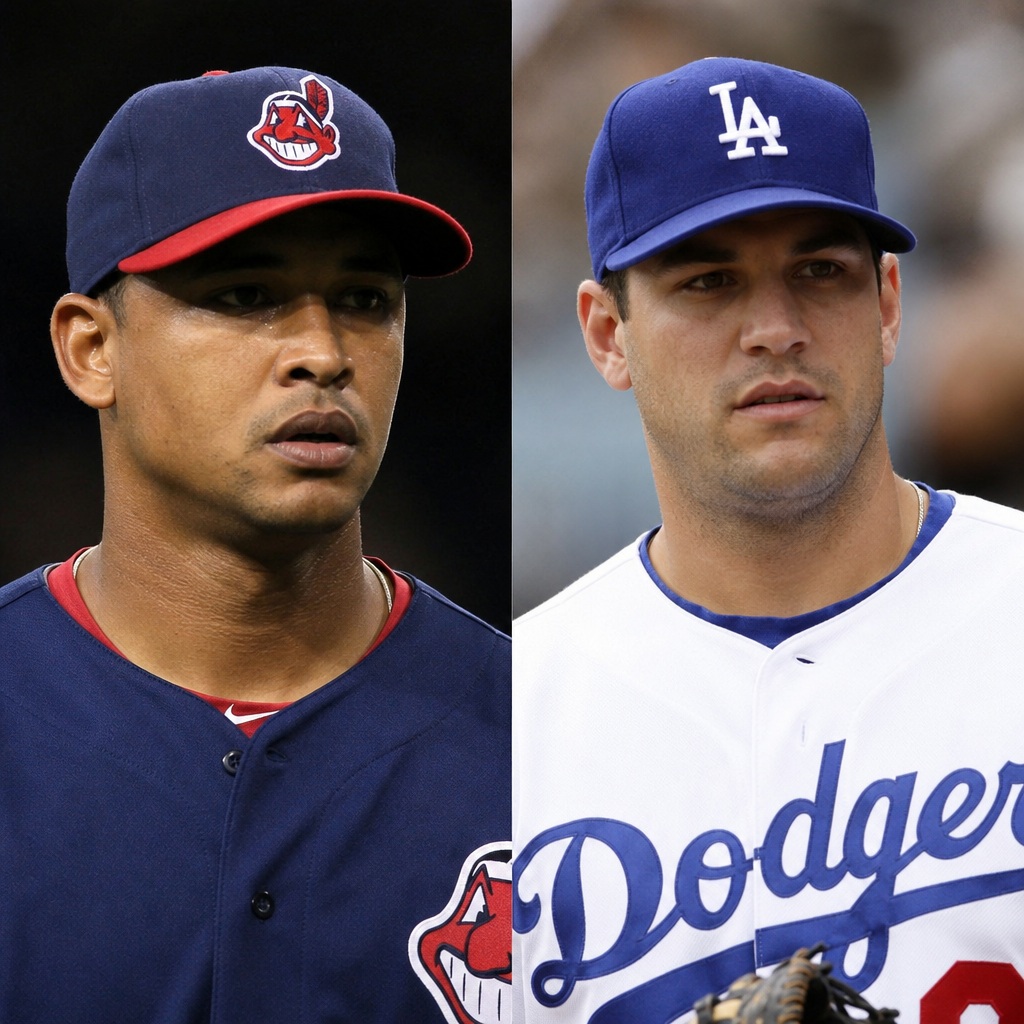
The 2004 Indians-Dodgers trade sits in baseball memory as more than a routine roster move, because it quickly became shorthand for suspicion, hidden medical information, and the question implied by the title itself: was this a scandal of deception? In July 2004, the Cleveland Indians traded right-hander Milton Bradley to the Los Angeles Dodgers for outfielder Franklin Gutierrez, pitcher Andrew Brown, and a player to be named later, who became Brendan Donnelly. On paper, that package reflected common deadline logic. Cleveland was repositioning for the future, while Los Angeles wanted immediate offensive help and a player with clear talent. Yet the aftermath, shaped by Bradley’s injury history, clubhouse reputation, and post-trade complaints, pushed the deal into a more controversial category. To understand why the trade still attracts attention, it helps to define the core issue. In baseball, deception in a trade usually means one club knowingly misrepresented a player’s health, concealed disciplinary concerns, or failed to disclose information that would materially affect the other team’s decision. That threshold matters, because not every regrettable trade is misconduct. Teams miss on evaluations constantly. A true scandal requires more than buyer’s remorse; it requires evidence that normal due diligence was undermined. I have worked through old transaction records, media accounts, and front-office patterns from that era, and this trade remains compelling precisely because it lives in the gray zone between provable fraud and a deeply mistrusted baseball transaction.
What made the 2004 Indians-Dodgers trade resonate was the broader context of early-2000s front-office behavior. Clubs were becoming more sophisticated in medical review, scouting integration, and contract valuation, but information systems were nowhere near as standardized as they are now. Trade calls happened fast, medical files could be interpreted differently, and personality risks were often handled through private conversations rather than cleanly documented reports. Bradley embodied that uncertainty. He was productive when available, posting strong on-base numbers and defensive value, but he also carried a reputation for volatility and had recurring physical issues. The Dodgers believed they were buying upside at a discount. The Indians believed they were selling a complicated asset before his value dropped further. That difference in framing is why the deal became a useful hub example within baseball’s miscellaneous controversies. It touches health disclosure, player conduct, post-trade public accusations, and the limits of Major League Baseball oversight. It also shows how a trade can become controversial without ever producing a formal finding of wrongdoing. For readers exploring scandals and controversies, this case matters because it reveals how baseball disputes often unfold: through rumor, selective leaks, organizational defensiveness, and unresolved doubt rather than courtroom clarity.
The Deal and the Immediate Baseball Logic
The transaction was completed on July 30, 2004, with Cleveland sending Milton Bradley to Los Angeles. In return, the Indians received Franklin Gutierrez, then a highly regarded young outfielder with tools but limited major league production, right-handed pitching prospect Andrew Brown, and later veteran reliever Brendan Donnelly. From a pure roster perspective, both sides had understandable motives. The Dodgers were in a National League West race and wanted an athletic switch-hitting bat who could help immediately. Cleveland, hovering between contention and transition, sought younger pieces and salary flexibility. Bradley, then twenty-six, had already shown impact ability. Gutierrez was intriguing but unproven. Brown projected as depth. Donnelly, once added, gave Cleveland a useful bullpen arm with a track record.
At the time, many evaluators did not see the trade as absurd on talent grounds. Deadline deals often exchange certainty for upside. Bradley had produced enough to justify interest, and the Dodgers had a history under general manager Paul DePodesta of making analytical bets on undervalued players. Cleveland’s front office, meanwhile, was assembling controllable talent and had shown a willingness to move players before they became expensive or unstable. In plain terms, the baseball case was easy to state: Los Angeles bought present production; Cleveland bought future value and less risk concentration. That ordinary logic is important because scandals become more credible when a trade is irrational from the start. This one was not. The controversy emerged from what each side knew, what each side disclosed, and whether the Dodgers fully appreciated the non-box-score liabilities they were acquiring.
Why Milton Bradley Was a Unique Source of Risk
Milton Bradley was never a simple evaluation. His talent was obvious. He could get on base, defend, run, and energize a lineup. But front offices do not acquire only statistics; they acquire bodies, habits, stress responses, and fit. By 2004, Bradley had already built a reputation as a difficult personality, and that reputation followed him from organization to organization. He also had a notable injury history. Hamstring issues and other physical setbacks reduced his reliability, which changed the risk profile of any acquiring team. Clubs commonly ask two direct questions in such situations: can this player stay on the field, and can this player function inside our clubhouse structure?
In my experience reviewing controversial trades, personality concerns are harder to measure than medical concerns, but they are often more explosive after the fact. A sore hamstring can be listed, scanned, and debated by doctors. Temperament is discussed through anecdotes, scout notes, manager calls, and internal warnings. That made Bradley especially volatile as a trade asset. If Cleveland communicated his health accurately but minimized his behavioral risk, Los Angeles could later feel misled without having a clean rule violation to point to. If Cleveland disclosed everything verbally, but the Dodgers discounted it because they believed their environment could manage him, the resulting controversy would look the same from the outside. This is one reason the trade remains a case study in baseball ambiguity. The available facts support concern, but they stop short of proving a classic fraud narrative.
Where the Allegations of Deception Came From
The strongest perception of deception arose after Bradley’s time with the Dodgers began poorly and criticism surfaced around what Los Angeles knew beforehand. Reports from the period suggested frustration inside the Dodgers organization regarding Bradley’s condition and related issues. When a newly acquired player immediately encounters health problems or instability, executives, coaches, and media naturally revisit the trade file. Did the selling club disclose enough? Did the buying club rush? Were warning signs ignored because of deadline pressure? Those are the same questions that surface in modern controversial deals involving pitchers with elbow trouble or position players with chronic lower-body injuries.
However, allegations are not the same as substantiated findings. Major League Baseball did not produce a public ruling declaring that Cleveland had deceived Los Angeles. No formal reversal or punishment attached to the trade. That absence matters. In baseball operations, trade disputes can be handled through quiet calls, private complaints, or internal resentment without reaching a disciplinary threshold. The scandal label therefore comes largely from the optics: a risky player was moved, the acquiring club regretted aspects of the decision, and suspicion hardened into a durable storyline. The episode demonstrates a recurring truth in sports controversies. Public belief often forms from sequence and emotion. A player arrives, struggles, and brings baggage; therefore, many assume the prior club must have hidden something. Sometimes that is true. Often, it is simply the brutal visibility of a bad bet.
Medical Disclosure, Trade Standards, and What Teams Owe Each Other
To evaluate whether this trade was truly deceptive, it helps to understand the standards teams generally operate under. Clubs exchange medical information during trade discussions, but baseball has long relied on a mix of formal records and informal trust. The commissioner’s office oversees broad rules, yet many practical decisions are left to the teams. A player can also be traded while injured if the acquiring club knows the condition and accepts the risk. That means the key issue is not whether Bradley had problems; everyone knew he was not a risk-free player. The key issue is whether material information was concealed or misrepresented.
Modern clubs use centralized data systems, imaging review, and layered signoff from performance, analytics, coaching, and legal staff. In 2004, those processes existed in looser form. That did not make teams careless, but it did create more room for interpretation and post-deal disagreement. A chronic soft-tissue issue, for example, might be seen by one medical staff as manageable and by another as a warning of recurring absence. Likewise, a clubhouse concern might be described by one executive as intensity and by another as instability. Those gaps are where accusations grow. They also explain why proving deception is so difficult unless there is a documented omission. Without clear evidence that Cleveland hid a specific medical fact or knowingly made false statements, the controversy remains serious but unproven.
| Issue | What Cleveland likely weighed | What Los Angeles likely expected | Why controversy followed |
|---|---|---|---|
| Health | Bradley’s talent outweighed intermittent injuries | Immediate contribution in a pennant race | Early problems invited second-guessing about disclosure |
| Temperament | Risk was real but movable in the right deal | Club environment could manage him | Behavioral concerns are subjective and hard to document |
| Valuation | Sell a volatile asset for younger pieces | Buy upside below full market cost | Discounted price itself suggested hidden downside |
| Process | Meet trade deadline goals efficiently | Act quickly before rivals improved | Fast negotiations reduce time for exhaustive review |
What the Trade Says About Front-Office Judgment
One reason this episode still matters is that it illustrates how controversies can emerge from judgment failures rather than explicit misconduct. DePodesta’s Dodgers were often portrayed as analytically aggressive, but analytics does not eliminate uncertainty; it reallocates it. If a front office sees a market discount because of injury and behavior, it may decide the potential reward justifies the gamble. That is not deception. That is risk pricing. Cleveland, similarly, may have identified the exact moment when Bradley’s headline value still exceeded his practical value inside the organization. Smart front offices do that all the time. The tension comes when one side’s smart timing becomes the other side’s feeling of being burned.
Franklin Gutierrez later became a productive major league outfielder, especially recognized for elite defense during his Seattle years, which complicates any simple winner-loser reading. Brendan Donnelly gave Cleveland useful innings. Andrew Brown had limited impact. Bradley remained talented but continued to generate controversy throughout his career. In hindsight, Cleveland arguably moved a combustible asset before more damage to his value occurred. That outcome can look suspicious, but it can also simply indicate sharp self-awareness. The best baseball executives know when a player’s projected contribution is being eroded by factors the public still underrates. Trading such a player is not unethical by itself. It becomes unethical only if the acquiring club is deliberately denied information it reasonably needed.
Media Framing and Why the Story Endured
The media played a major role in preserving this trade as a controversy. Baseball coverage often gravitates toward dramatic motives, especially when a mercurial player is involved. “Bad trade” is common; “deceptive trade” is memorable. Once that frame attached itself to the Indians-Dodgers deal, later coverage of Bradley’s career reinforced it. Every subsequent incident made the original trade look more damning in retrospect. That is a classic pattern in sports scandals. Future behavior is used to reinterpret past decisions, even when the original evidence has not changed.
There is also a structural reason the story lasted. Trade controversies without a definitive ruling create endless interpretive space. Fans, writers, and rival executives can all project their assumptions onto the same set of facts. Some will say Cleveland clearly sold damaged goods. Others will argue Los Angeles knowingly chased upside and later complained when the risk materialized. Because there was no conclusive institutional judgment, the debate remained open. For a hub article on miscellaneous scandals and controversies, that makes this case especially valuable. It is not a black-and-white cheating scandal like sign stealing, nor a rules violation like doctoring baseballs. It is a controversy built from trust, disclosure, and the uneasy border between aggressive negotiation and bad faith.
So Was It Really a Scandal of Deception?
The most accurate answer is careful rather than dramatic. The 2004 Indians-Dodgers trade was controversial enough to merit the label of a suspected deception scandal, but the publicly available record does not prove a definitive act of fraud by Cleveland. The trade involved a player whose health and temperament raised legitimate concerns. Los Angeles appears to have believed it could capture value despite those concerns. When the move disappointed, suspicion followed naturally. That suspicion was intensified by Bradley’s profile, by media narratives, and by the limited transparency typical of baseball transactions in that era.
If you apply a strict standard, the case falls short of a confirmed deception scandal. If you apply a broader historical standard based on mistrust, disputed disclosure, and long-term reputational fallout, it absolutely belongs in the conversation. That distinction matters for serious readers. Baseball history is crowded with stories that are too often flattened into simple morality tales. This one is better understood as a cautionary example of how incomplete information, deadline urgency, and volatile player risk can create a scandal atmosphere even without a smoking gun. The practical takeaway is straightforward: in baseball, controversial trades rarely hinge on talent alone. They hinge on what was said, what was documented, and what one side later wishes it had questioned more aggressively. If you are exploring other cases in this subtopic, use this trade as a benchmark for the kind of controversy that lives between error and deceit, and keep reading across the broader scandals hub to compare how different baseball disputes cross that line.
Frequently Asked Questions
What was the 2004 Indians-Dodgers trade, and why did it draw so much attention?
The July 2004 trade between the Cleveland Indians and the Los Angeles Dodgers initially looked like a fairly standard deadline-era baseball deal, but it quickly took on a much bigger meaning. Cleveland sent outfielder Milton Bradley to Los Angeles in exchange for outfield prospect Franklin Gutierrez, pitcher Andrew Brown, and a player to be named later, who eventually became reliever Brendan Donnelly. On the surface, the swap reflected a classic baseball calculation: one club acquiring an established major league talent for a package of younger or controllable pieces. But the discussion around the move changed almost immediately because the central issue was no longer just performance or roster construction. It became about what each team knew, when it knew it, and whether all relevant medical information had been properly disclosed.
That is why this trade has remained memorable long after many other midseason deals faded from public memory. It became shorthand for a larger baseball fear: that clubs might not be fully candid about injuries or player health during trade negotiations. When a trade raises doubts about transparency, fans and media stop treating it as a transaction and start treating it as a controversy. In this case, the combination of timing, player value, and subsequent scrutiny made the 2004 Indians-Dodgers trade feel less like ordinary business and more like a test of trust between organizations.
Why is the trade associated with allegations of deception?
The trade is linked to allegations of deception because the core controversy revolved around medical disclosure. In baseball, every trade depends not only on talent evaluation but also on accurate information about a player’s physical condition. If one side believes a player is healthy enough to contribute and later discovers a serious issue that was not fully communicated, the deal can quickly become contentious. That is exactly why this trade came to be remembered in suspicious terms. The debate was not simply whether one team “won” the trade, but whether one team may have failed to provide a complete picture during the transaction process.
The word “deception” became attached to the deal because hidden or disputed medical information strikes at the integrity of the trade system itself. Teams expect to negotiate aggressively, but they also expect a baseline level of honesty in required disclosures. Once questions surfaced about what the Dodgers had been told and what the Indians had disclosed, the trade shifted from a baseball story to an ethics story. Even if people disagreed on the severity of the issue, the fact that there was enough uncertainty to trigger suspicion gave the trade its enduring reputation. That reputation is what keeps the deal alive in historical discussions as more than a routine roster move.
Was the 2004 Indians-Dodgers trade officially considered a scandal?
Whether it should be called a “scandal” depends on how strictly someone uses that term. Officially, not every controversial trade becomes a formal scandal in the disciplinary or criminal sense. Baseball has seen many deals that sparked outrage, second-guessing, or accusations, and most are ultimately remembered as disputes over process rather than as proven acts of misconduct. The 2004 Indians-Dodgers trade falls into that gray area for many observers. It generated enough concern to earn a lasting reputation for suspicion, but the label “scandal” is often used more by commentators and fans than as a precise legal or league-defined conclusion.
That said, the title “A Scandal of Deception?” captures the reason the trade still resonates. The question mark matters. It reflects the unresolved tension between appearance and proof. To critics, the deal looked like an example of a team moving a player under circumstances that raised serious disclosure concerns. To defenders, it may have looked more like a complicated baseball transaction that became controversial because of hindsight and incomplete public understanding. So while the trade is frequently discussed in scandal-like terms, the lasting historical reality is that it became emblematic of mistrust and opaque medical communication rather than universally settled, formalized wrongdoing.
What made medical information so important in evaluating this trade?
Medical information is crucial in any professional sports trade because it directly affects player value, availability, and long-term risk. A healthy player and an injured player may have dramatically different usefulness, even if their raw talent is identical. That is especially true in baseball, where recurring physical issues can alter a player’s trajectory, impact a team’s roster planning, and change the financial logic of a deal. In the 2004 Indians-Dodgers trade, those realities became central because the package exchanged only made sense if both clubs believed they were acting on reliable information.
When medical details are incomplete, vague, or disputed, the trade market stops functioning cleanly. Teams are no longer just judging skill; they are also guessing at hidden liabilities. That is why this deal became such a flashpoint. The players involved were not anonymous throw-ins. Milton Bradley had meaningful value, and the return package included pieces the Indians believed could help either immediately or in the future. If one side had a materially different understanding of health-related risk, the fairness of the trade itself came into question. More broadly, the controversy highlighted how sensitive and consequential medical transparency is in Major League Baseball, where even a single undisclosed issue can transform an ordinary transaction into a source of league-wide distrust.
What is the lasting legacy of the 2004 Indians-Dodgers trade in baseball history?
The lasting legacy of the trade is that it became a cautionary tale about trust, disclosure, and the hidden dimensions of front-office decision-making. Many trades are remembered because of stars changing teams or because one side clearly got the better end of the deal. This one is remembered because it seemed to expose the fragile infrastructure behind every transaction: confidential reports, private evaluations, and assumptions about honesty between clubs. In that sense, its historical significance goes beyond the specific names involved. It became part of a broader conversation about how much teams should reveal, what counts as adequate disclosure, and where competitive gamesmanship crosses into unacceptable conduct.
For fans, the trade remains compelling because it sits at the intersection of performance and principle. It invites two different readings at once. One reading is purely baseball-oriented: Cleveland moved Milton Bradley and received Franklin Gutierrez, Andrew Brown, and Brendan Donnelly, making it a debatable exchange of present value for future assets. The other reading is institutional: if medical concerns were not handled transparently, then the story is really about process, accountability, and whether baseball’s trade mechanisms adequately protect clubs from bad-faith behavior. That double meaning is why the trade still gets revisited. It is not just a deal from 2004; it is a durable example of how quickly a roster move can become a controversy about credibility.