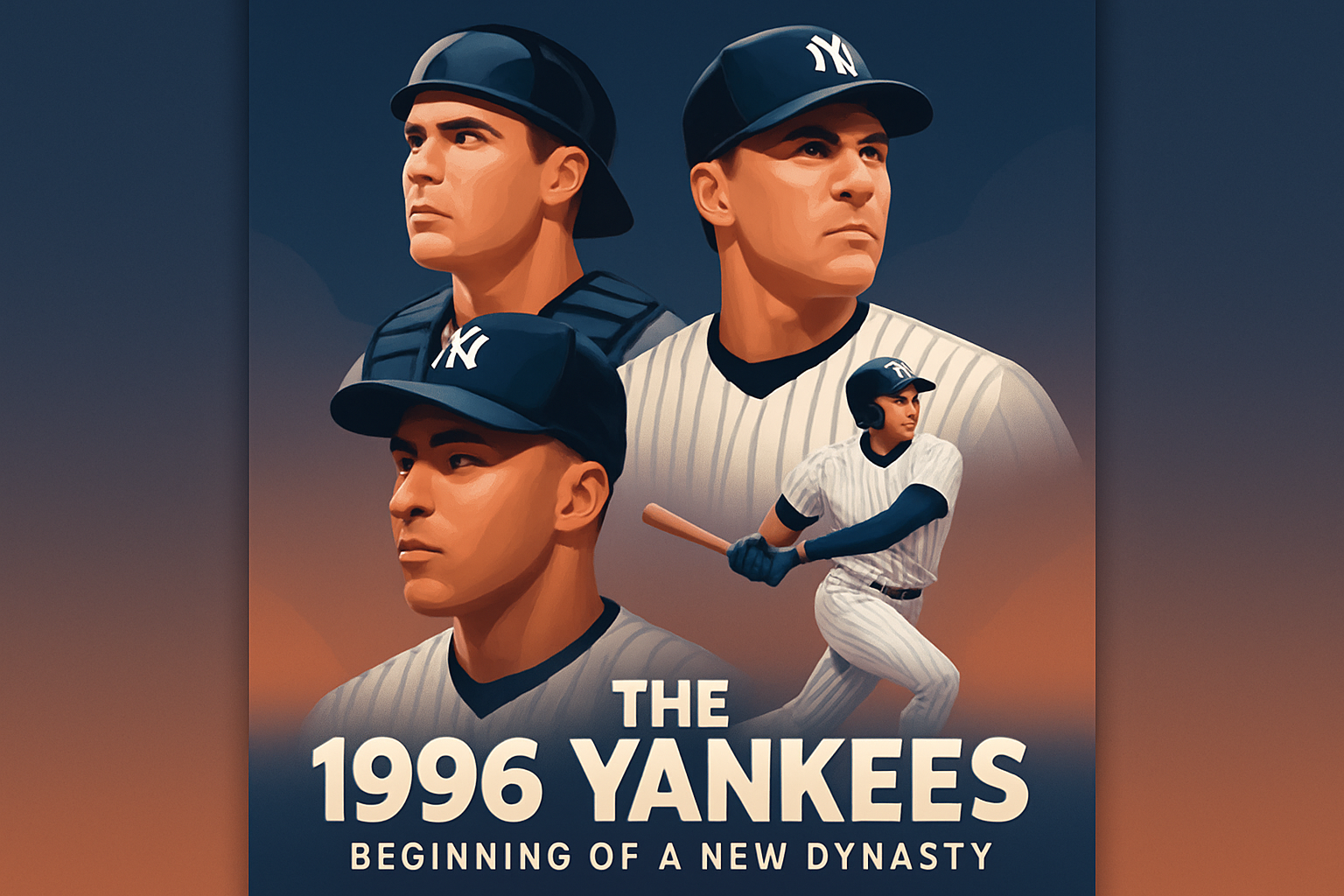
The 1996 New York Yankees are often hailed as the beginning of a new dynasty in Major League Baseball history. They marked a return to glory for a franchise steeped in tradition and success after years of mediocrity. This newfound success captured the imagination of baseball fans and signaled an era of dominance. In this article, we will explore how the Yankees rebuilt to form a formidable team, the key players who propelled them to victory, and why this matters in the wider context of sports history.
In the world of baseball, a dynasty is more than just winning a series of championships; it is about creating a team culture and legacy that stands the test of time. The Yankees achieved precisely this starting in 1996, laying the foundation for what many consider one of the greatest dynasties in sports history. This resurgence mattered because it redefined success in baseball and exemplified how strategic management, along with raw talent, can turn a team into perennial champions.
The Building Blocks of a New Era
To understand the 1996 Yankees, one must appreciate the groundwork laid prior to this season. The early 90s were not kind to the Yankees, as they struggled to recreate their past success. Front office changes and strategic decisions were at the heart of their renaissance. This meant recruiting promising young players, instilling a winning mindset, and sculpting a team capable of extraordinary feats.
General Manager Bob Watson and Manager Joe Torre were pivotal in driving this transformation. Watson, a trailblazer as the first African American GM to win a World Series, steered the Yankees with tactical trades and robust drafts. Torre, on the other hand, brought a steady hand and a strategic mind. His track record of turning around struggling teams earned him the respect of players and fans alike.
The Yankees’ strategy leveraged a balance of burgeoning talent and seasoned veterans. Players like Derek Jeter, who would eventually become the face of the franchise, showcased the youthful energy needed to sustain long-term success. Complementing this youthful zeal were veterans such as Wade Boggs and David Cone, who brought experience and leadership.
The Players Who Defined the Season
The 1996 roster was a blend of seasoned expertise and youthful promise that resonated with fans. Derek Jeter, the rookie shortstop, quickly became a pivotal element. His remarkable poise and performance led to him being named American League Rookie of the Year. Jeter’s emergence was a testament to the Yankees’ commitment to nurturing home-grown talent.
Another key player was closer John Wetteland, whose reliability in the bullpen was unmatched. Wetteland’s ability to shut down games under high pressure situations earned him the World Series MVP. Together with setup man Mariano Rivera, Wetteland formed one of the most formidable bullpen pairings in baseball, a crucial element in the Yankees’ 1996 success.
- Derek Jeter – Rookie of the Year, strong presence both on offense and defense.
- Mariano Rivera – Integral to the bullpen, setting up for Wetteland.
- John Wetteland – 1996 World Series MVP, crucial closer for the team.
- Bernie Williams – Provided consistent offensive output.
- Andy Pettitte – Emerging as a consistent starting pitcher.
The Yankees were not solely reliant on Jeter and Wetteland. Bernie Williams, with his consistent offensive performance, ensured the Yankees had a balanced lineup. Andy Pettitte, a young left-handed pitcher, emerged as a reliable starting pitcher who would become key to subsequent seasons.
A Memorable World Series Victory
The 1996 World Series was a captivating display of the Yankees’ prowess. Facing the Atlanta Braves, a team with formidable pitching, the Yankees went in as underdogs. The series began unfavorably, with the Braves taking the first two games. However, in a stunning comeback, the Yankees secured the next four games, winning their 23rd World Series title.
This victory was significant not only for the win itself but also for how it was achieved. The Yankees’ resolve and grit were evident in the way they bounced back from an early deficit. Their resilience was underpinned by key performances from several players who left a lasting legacy.
A Legacy Beyond 1996
The 1996 Yankees were the keystone of a dynasty that would dominate the late 90s and early 2000s. Over the following years, they clinched three consecutive World Series titles from 1998 to 2000, cementing their place in history. This era of success catapulted the Yankees back to the forefront of baseball, a position they have largely maintained ever since.
The team’s success also had a broader impact on American sports culture. They exemplified the blend of business acumen and athletic prowess necessary to build a winning team. The Yankees’ dynasty prompted other franchises to rethink their strategies, investing more heavily in recruiting young talent and cultivating a robust farm system.
| Year | World Series Outcome | Final Opponent |
|---|---|---|
| 1996 | Won | Atlanta Braves |
| 1998 | Won | San Diego Padres |
| 1999 | Won | Atlanta Braves |
| 2000 | Won | New York Mets |
The leadership style adopted by Joe Torre, coupled with the camaraderie among players, became a template for building successful teams. The Yankees of this era showcased not just superior skills but also an indomitable spirit and impeccable teamwork.
The Impact and Cultural Relevance
The rejuvenation of the Yankees franchise in 1996 mattered beyond just the boundaries of the baseball diamond. It reinvigorated a passion for baseball across New York City and contributed to the revival of the “Yankee mystique.” This era signified more than just sports success; it was a powerful symbol of resurgence and hope, both in sports and within broader societal narratives.
The Yankees’ dominance also sparked myriad cultural references and inspired a generation of fans and young players alike. Television, films, and books from this era often allude to the Yankees’ achievements, embedding their legacy in popular culture. The Yankees’ revival underlined the potential for greatness, even for teams that find themselves downtrodden.
Conclusion: A Blueprint for Future Success
The 1996 Yankees marked the beginning of a historic dynasty, characterized by strategic brilliance, strong leadership, and a talented roster. This team exemplified the impact of meticulous planning and player development on achieving sustained success. As a blueprint for future teams aiming to build a legacy, the Yankees of this era remind us of the importance of balancing young talent with seasoned professionalism.
For sports fans and aspiring athletes alike, the 1996 Yankees provide valuable lessons in resilience, talent cultivation, and strategic management. Their story encourages us to reflect on how syndicates can harmonize various elements to recreate such success. As we analyze the legacy of the Yankees, we’re reminded to appreciate strategic foresight in crafting successful teams.
If this era teaches us one thing, it’s that a dynasty is built on foundation stones of teamwork, foresight, and relentless pursuit of excellence. As a takeaway, both individuals and organizations can use this model to achieve and sustain greatness in their respective fields. Let the enduring legacy of the 1996 Yankees inspire you to strive for excellence in all your endeavors.
Consider diving deeper into how leadership, strategic planning, and raw talent can foster the development of successful enterprises, sports teams, or projects. Meanwhile, relive the magic of this era, remember their profound impacts, and see how these lessons can apply in new contexts today.
Explore the rich history of the Yankees and discover how even contemporary teams can apply these principles to forge their path to greatness.
Frequently Asked Questions
1. How did the 1996 Yankees mark the beginning of a new dynasty?
The 1996 New York Yankees represented a pivotal shift for a franchise that had experienced a lengthy period of mediocrity. Before this season, the Yankees hadn’t won a World Series since 1978. The team’s success in 1996 indicated a return to dominance, ushering in a new era of excellence. This resurgence was largely due to a combination of savvy management, the rise of key player talent, and a renewed team spirit under Manager Joe Torre. The Yankees’ victory in the 1996 World Series against the Atlanta Braves was not just a triumph for the team but was also symbolic of the rebirth of the Yankees as a formidable power in Major League Baseball. This victory was the first in a series of World Series titles from 1996 to 2000, cementing the team’s status as a dynasty.
2. Who were the key players that contributed to the success of the 1996 Yankees?
The 1996 Yankees boasted a rich blend of seasoned veterans and promising young players, creating a synergy that fueled their success. Key figures included Derek Jeter, a rookie shortstop whose exceptional talent and leadership qualities set the tone for the team’s winning mindset. Then there was Bernie Williams, whose consistent batting and solid defense in centerfield were invaluable. The experienced presence of veterans such as Paul O’Neill and Wade Boggs provided stability and guidance, especially during high-pressure moments in the season. On the pitching side, the reliable arm of Andy Pettitte and the intimidating presence of closer Mariano Rivera gave the Yankees an edge over their opponents. Rivera, in particular, emerged as a pivotal figure, whose prowess in the bullpen became legendary and played a crucial role in many critical games.
3. What strategies did the Yankees use to rebuild their team leading up to 1996?
The transformation of the Yankees into the powerhouse they became in the mid-90s began with strategic management decisions and focused team-building initiatives. Under the leadership of General Manager Bob Watson and with the guidance of Manager Joe Torre, the Yankees focused on cultivating talent from within their farm system while also acquiring key players through trades and free agency. This dual-strategy approach allowed them to maintain a strong core of homegrown talent while supplementing their roster with skilled veterans. The development of a strong farm system was emphasized, producing crucial players like Derek Jeter, Mariano Rivera, and Jorge Posada. Additionally, the team’s management prioritized building a supportive and positive team culture, which complemented their strategic player acquisitions and contributed significantly to their cohesive performance on the field.
4. What impact did the 1996 Yankees have on Major League Baseball and sports history?
The 1996 Yankees had a profound impact not only on the franchise but also on Major League Baseball as an institution. Their World Series victory marked the start of a period of dominance in baseball that revitalized one of the sport’s most storied teams. This turnaround drew widespread attention, as the Yankees once again became a benchmark of success against which other teams measured themselves. The 1996 victory also reignited the intense media spotlight and global fan interest in the Yankees, elevating them to a cultural icon in the sports world. The team’s success in building a durable, high-performing squad from both homegrown and acquired talent inspired similar strategies in team building across the league, influencing how franchises approached team development and player acquisition moving forward.
5. How did the Yankees’ management under Joe Torre contribute to their success?
Joe Torre’s leadership as manager was instrumental in the resurgence of the Yankees in 1996. Torre brought a sense of calm and unity to a team that was under considerable pressure to perform. His management style emphasized building trust and camaraderie within the team, ensuring that players felt supported and motivated. Torre’s ability to manage egos, maintain harmony in the locker room, and make strategic on-field decisions were critical elements of the Yankees’ championship run. Furthermore, Torre leveraged the strengths of his coaching staff, such as pitching coach Mel Stottlemyre, to optimize player performance and strategy. Under his guidance, the Yankees were able to maximize their potential, playing with a disciplined yet dynamic approach that became a hallmark of their games. Torre’s leadership and strategic thinking were key factors in establishing the foundation for the Yankees’ success in the years that followed.