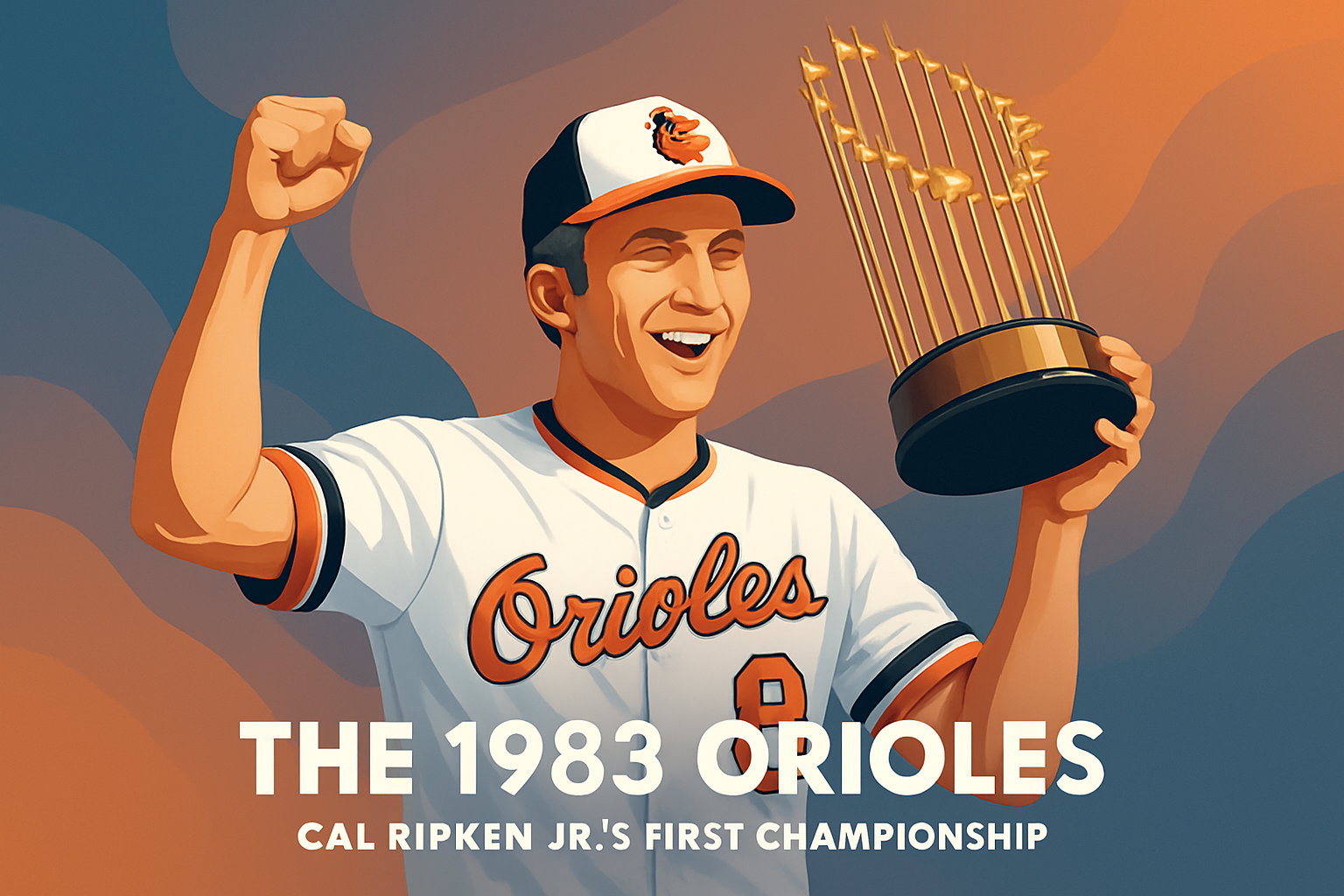
In the rich history of Major League Baseball, certain teams and seasons stand out as particularly memorable. One such season is the Baltimore Orioles’ 1983 championship victory, which marked a significant milestone in the career of baseball legend Cal Ripken Jr. This season was not only pivotal because it brought the Orioles their third World Series title, but also because it was the year that a young and talented Cal Ripken Jr. won his first championship. This victory is more than just a historical footnote; it signifies the dawn of an era defined by perseverance, skill, and legacy.
The 1983 Orioles represented the culmination of years of strategic team building, a refined playing style, and standout individual performances. Led by iconic manager Joe Altobelli, the Orioles created a unique blend of veteran presence and youthful potential. At the heart of this dynamic was Cal Ripken Jr., an emerging star who was beginning to make waves in the major leagues. But why does this particular season matter, both to baseball enthusiasts and to the sports world at large? It matters because it underscores the importance of teamwork, resilience, and emerging talent in shaping the legacy of sports franchises.
The Rise of Cal Ripken Jr. and His Impact on the Team
Cal Ripken Jr., often known as “The Iron Man”, was just beginning to establish himself as an indispensable part of the Orioles in the early 1980s. Drafted by the Orioles organization in 1978, Ripken showed promise early on and made his major league debut in 1981. By 1983, he was already emerging as one of the most promising talents in the league. His ability to play both shortstop and third base added a significant layer of flexibility to the team.
Ripken’s presence was a game-changer for the Orioles, bringing in a mix of consistent performance and leadership that inspired his teammates. His ability to deliver key plays in the most critical of moments contributed significantly to the team’s season-long success. One memorable example of Ripken’s prowess was his stellar performance during the World Series against the Philadelphia Phillies. With the spotlight shining brightly on the young shortstop, Ripken’s defensive plays were instrumental in crucial games, helping clinch victories that added up to the championship win.
Leadership Under Joe Altobelli
The 1983 Orioles had another ace up their sleeve in manager Joe Altobelli. Taking over from the legendary Earl Weaver, Altobelli had big shoes to fill. However, he approached the task with a sense of calm determination and tactical awareness, traits that resonated well with the players. Altobelli’s managerial strategies were characterized by a focus on defensive cohesion and smart batting approaches, which aligned perfectly with the team’s strengths.
Altobelli’s impact was seen in the composure the Orioles maintained throughout the playoffs, especially during the World Series. His leadership was pivotal in balancing the dynamic energy of younger players like Ripken with the seasoned expertise of veterans. By allowing players to capitalize on their strengths and play to their potential, Altobelli created an environment where success was a natural outcome. His strategic decisions often reflected the team’s collective strengths, highlighting the importance of well-rounded leadership in achieving championship success.
Key Plays and Memorable Moments of the 1983 Season
The 1983 season was littered with remarkable plays and unforgettable moments, many of which are etched into the annals of MLB history. The Orioles did not solely depend on star power to win games; instead, it was their teamwork and execution that often made the difference. Throughout the season, fans were treated to stellar batting, exceptional fielding, and strategic pitching that disrupted opponents’ playbooks.
One of the season’s iconic moments came during the American League Championship Series (ALCS) against the Chicago White Sox. The Orioles managed to clinch the series in four games, with key performances coming from not just Ripken, but also the likes of Mike Boddicker and Eddie Murray. A defining moment was Boddicker’s complete-game shutout that paved the way for the Orioles to move on to the World Series. Such performances highlighted the blend of individual brilliance and team cohesion that marked the Orioles’ campaign.
To illustrate the Orioles’ strengths across various aspects of the game, consider the following breakdown of the World Series games:
| Game | Opposition | Key Moment | Outcome |
|---|---|---|---|
| Game 1 | Philadelphia Phillies | Baltimore takes lead from clutch hitting | Loses 1-2 |
| Game 2 | Philadelphia Phillies | Murray hits critical home runs | Wins 4-1 |
| Game 3 | Philadelphia Phillies | Boddicker’s pitching masterclass | Wins 3-2 |
| Game 4 | Philadelphia Phillies | Double play seals the victory | Wins 5-4 |
| Game 5 | Philadelphia Phillies | Ripken’s stellar defense secures lead | Wins 5-0 |
This table highlights the Orioles’ ability to come together as a team and perform when it mattered the most, demonstrating their readiness and ability to capture glory.
Fan Experiences and Community Impact
The impact of the 1983 Orioles’ championship win extended far beyond the baseball diamond. The team was greeted with tremendous support from fans who had remained loyal through thick and thin. Baltimore, a city known for its passionate sports enthusiasts, came alive with the Orioles’ success. Stadiums were packed, streets adorned with pennants, and the collective spirit of the city soared as the Orioles marched toward their coveted victory.
For many fans, the 1983 season epitomized a form of hope and joy, bringing a sense of community and shared identity. Local businesses flourished thanks to the excitement generated by the Orioles’ exploits, and the team itself became a symbol of perseverance for the city. The spirit of camaraderie and celebration filled the air during each game, reminding everyone in Baltimore of the unifying power that sports can have.
Legacy and Influence on Future Generations
The 1983 Orioles and Cal Ripken Jr.’s championship win left a lasting impact on future generations of players and fans. Ripken’s career, defined by consistency and commitment, served as inspiration to young players who envisioned themselves achieving greatness. The Orioles’ triumph became a case study in resilience, teamwork, and strategic play—a model that many aspiring baseball teams sought to emulate.
Ripken Jr. would go on to have a Hall of Fame career, characterized by his record-setting consecutive games played, which cemented his status as one of baseball’s all-time greats. His journey, which began in earnest with the 1983 season, remains influential, motivating countless others to pursue their dreams with diligence and dedication. The legacy of the 1983 Orioles remains as relevant today as it was back then, illustrating how one successful season can have a ripple effect through generations, shaping the future of baseball and the community it serves.
Cal Ripken Jr.’s Personal Growth and Evolution
In exploring the 1983 season, it is vital to reflect on how this pivotal year shaped the trajectory of Cal Ripken Jr.’s illustrious career. Before 1983, Ripken had shown flashes of brilliance, but his performance during this championship year set a foundation for his evolution as a player and leader. Making important plays during high-pressure situations revealed his immense potential and foreshadowed his career-defining stamina and skill.
The World Series championship wasn’t merely a triumph for the team; it was a personal milestone for Ripken, boosting his confidence and establishing him as a household name. As the seasons passed, he continued to develop his craft, becoming a role model and a leader both on and off the field. His career arc, beginning with the jubilation of 1983, raised the bar for what was expected of both shortstops and athletes in general, exemplifying dedication and talent in a manner that transcended the sport itself.
Conclusion: Reflecting on the Significance of 1983
The 1983 season is more than a series of games leading to a championship title for the Baltimore Orioles; it is a story of growth, teamwork, and triumph against the odds. This particular victory laid the groundwork for the careers of many players, especially for Cal Ripken Jr., who became an enduring figure in baseball history. For fans and aspiring players alike, the 1983 Orioles symbolize the essence of what it means to be a champion.
For the future, looking back at this legendary team serves as a reminder of the importance of cohesive team dynamics, effective leadership, and individual excellence. It encourages us all to strive for success, not only as individuals but also as parts of the communities we cherish. As we reflect on this unforgettable season, let us continue to celebrate and learn from the legacy of the 1983 Orioles, using their story as motivation to pursue excellence in our own lives. Whether you are an athlete, a fan, or a member of a close-knit community, take inspiration from this extraordinary season and apply its lessons to your journey.
Frequently Asked Questions
1. What made the 1983 Baltimore Orioles season significant in Major League Baseball history?
The 1983 season was a standout year in Major League Baseball history primarily because it signaled an end of a productive era for the Baltimore Orioles. The team captured their third World Series title by defeating the Philadelphia Phillies in five games. This season is further immortalized by the remarkable performances of several legendary players. Eddie Murray, for example, played a key role with his clutch hitting, while the outstanding pitching staff led by Mike Boddicker dominated on the mound. However, the season’s true significance lies in its impact on Cal Ripken Jr.’s illustrious career as it marked his first championship title. Ripken, famously known for his extraordinary streak of consecutive games played, solidified his reputation as a durable and talented player during this season. The year also highlighted the end of an era as this championship win would be the Orioles’ last of the 20th century, making it a nostalgic and poignant chapter in the team’s storied history.
2. How did Cal Ripken Jr. perform during the 1983 season and why is it considered a landmark year for him?
Cal Ripken Jr.’s performance in the 1983 season was nothing short of phenomenal and paved the way for his Hall of Fame career. Ripken, known for his stamina and skill, became a cornerstone for the Orioles’ success that year. He played in all 162 games of the regular season, swiftly earning a reputation for reliability and endurance — qualities that would define his career. Notably, Ripken was awarded the American League MVP for his extraordinary play that season, registering a .318 batting average, 27 home runs, and 102 RBIs. His dynamic combination of offensive firepower and exceptional defensive skill at shortstop made him one of the most valuable players in the league. The 1983 season stamped his name among the baseball elite, setting him on a trajectory that would eventually see him break Lou Gehrig’s longstanding consecutive games played record, thus becoming known as “The Iron Man” of baseball.
3. What were some key factors that contributed to the Orioles’ success in the 1983 World Series?
Several crucial factors contributed to the Baltimore Orioles’ success in clinching the 1983 World Series title. First, the team’s depth and versatility played an integral role — they had an excellent blend of seasoned veterans and young talents who worked seamlessly together. Offensively, Eddie Murray was instrumental, delivering a powerful performance across the series, including two home runs in the decisive game five. Furthermore, the Orioles’ pitching staff was a formidable unit, with Mike Boddicker emerging as a standout performer. His dazzling shutout in Game 2 and his overall work in both the ALCS and World Series earned him a spotlight on the national stage. Another key factor was manager Joe Altobelli, who took the reins after Earl Weaver’s retirement and expertly guided the team through the challenges of the postseason. Finally, Cal Ripken Jr.’s contribution, both at the plate and in the field, provided critical support to the Orioles’ championship campaign. Collectively, these elements resulted in a dominant performance that overpowered the Phillies and secured the coveted title.
4. How did the 1983 World Series victory impact the legacy of Cal Ripken Jr. and the Orioles?
Winning the 1983 World Series significantly bolstered Cal Ripken Jr.’s legacy, embedding him deeper in baseball’s pantheon of legends. This triumph not only validated his emerging proto-career but also marked him as a player capable of succeeding at the highest level under intense pressure. For Ripken, it was the first of many accolades that would define his legacy, yet it became foundational as his initial championship win, reinforcing his image as a clutch performer. For the Orioles, the 1983 win represented the pinnacle of their success in Major League Baseball. It was their last World Series title of the 20th century and helped entrench them as a formidable franchise during that era. The championship further cemented the legacy of key figures like Eddie Murray, Jim Palmer, and the managerial prowess of Joe Altobelli. The victory became part of the Orioles’ identity, a benchmark that future teams would strive to emulate, fostering a tradition of excellence that continues to inspire aspiring athletes affiliated with the franchise.
5. What role did the Orioles’ management and coaching staff play in the 1983 championship season?
The Orioles’ management and coaching staff were pivotal to their success in the 1983 championship season. The transition from the legendary manager Earl Weaver to Joe Altobelli was smooth and effective, largely due to Altobelli’s adaptable and seasoned approach. He maintained the strategic core that Weaver had established, which emphasized strong pitching, solid defense, and timely hitting. Under Altobelli’s leadership, the Orioles excelled in integrating their diverse roster, blending the talent of superstars like Cal Ripken Jr. and Eddie Murray with the indispensable contributions of role players. The coaching staff played a vital role in maximizing the potential of the Orioles’ lineup, especially the pitching coaches, who refined the skills of pitchers such as Mike Boddicker and Scott McGregor. Their ability to harness the collective strengths of the squad ensured that the Orioles could adapt to different challenges throughout the season, ultimately guiding them to the top of Major League Baseball and securing their place in championship history.