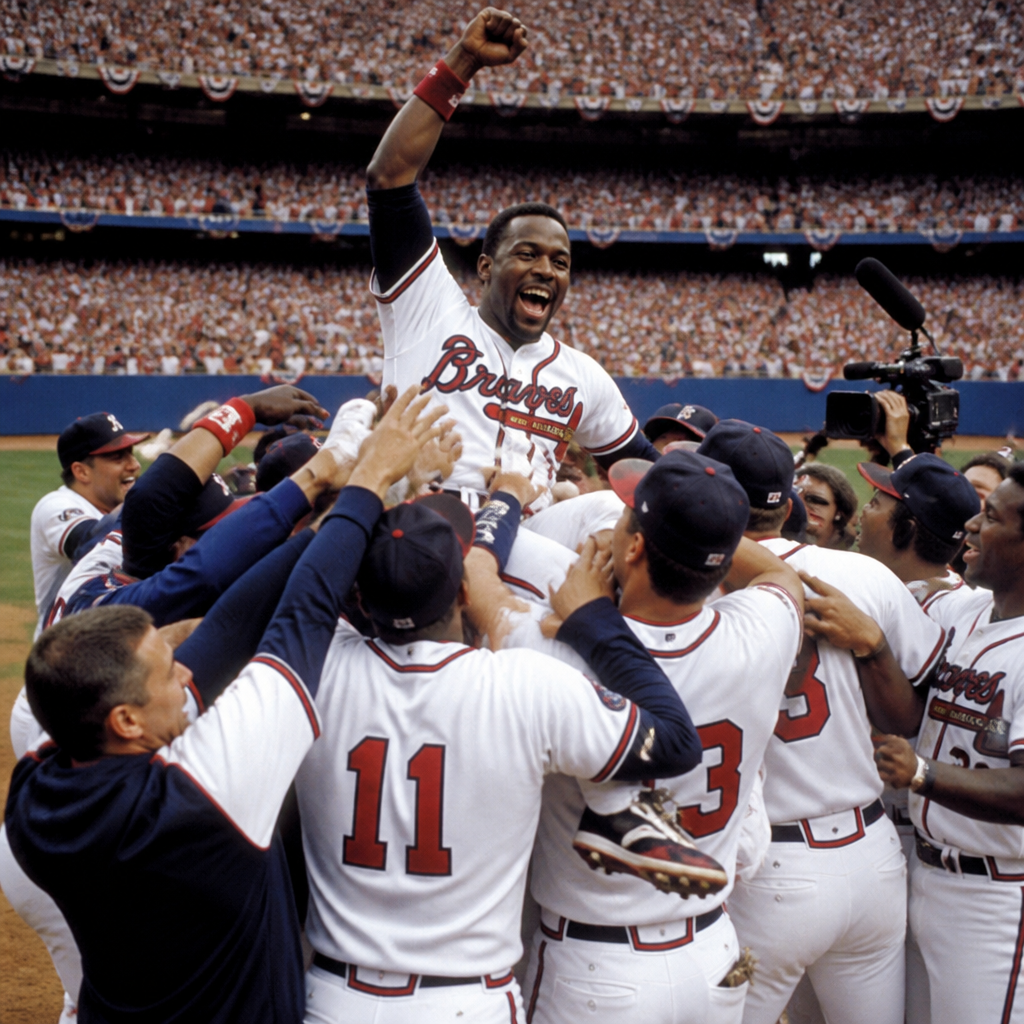
The 1991 Atlanta Braves transformed from baseball’s laughingstock into the sport’s most compelling success story, and that worst-to-first leap launched one of the longest sustained division runs in modern North American sports. In baseball terms, “worst to first” means finishing last in a division one season and first the next, a reversal so difficult that it usually requires improvements in talent, health, leadership, and timing all at once. The 1991 Braves did exactly that after going 65-97 in 1990 and then surging to 94-68 to win the National League West. Their rise mattered beyond a single pennant race because it marked the true beginning of Atlanta’s 14-year streak of division titles from 1991 through 2005, excluding the strike-canceled 1994 postseason. For readers exploring dynasties and great teams, this club is a natural hub because it sits at the intersection of turnaround story, player development model, and long-cycle contender. I have always viewed the 1991 Braves as the point where a franchise stopped chasing respectability and started building an identity around pitching, defense, and internal talent. To understand why that season still stands out, you have to examine the roster, the front office, the competitive context, and the October drama that made the Braves more than a surprise team.
Why the 1991 Braves Were a Historic Worst-to-First Team
The basic case for the 1991 Braves is simple: they improved by 29 games, won a division they had not captured since moving to Atlanta, and did it with a roster that mixed emerging stars with veteran stabilizers. That kind of jump is rare in any era, but especially in a pre-wild-card landscape where only two teams in each league reached the postseason. Atlanta did not back into October. The Braves had to beat a deep National League West field that included the Dodgers, Reds, and Giants. Their final record, 94-68, reflected real quality, not a short hot streak. They also played under pressure for months, then outlasted Los Angeles in a tightly contested race that turned in September.
The turnaround began with run prevention. In 1990, Atlanta allowed too many runs and lacked rotation reliability. In 1991, the team became significantly harder to score on because the starting pitching matured and the defense sharpened. The Braves finished near the top of the league in earned run average, and that shift changed the emotional shape of the season. Instead of needing six or seven runs every night, they could win lower-scoring games and stay competitive when the offense stalled. That is often the first sign of a legitimate contender: the team no longer depends on one game script.
Their 1991 success also fits a broader pattern seen in great baseball teams that become mini-dynasties or full dynasties. Usually the breakthrough season arrives before the roster reaches its final form. The first title run or pennant chase often comes when young pitchers are ascending but not yet fully polished, while position-player depth is still being assembled. That was Atlanta in 1991. The Braves were not yet the complete machine they would become in the mid and late 1990s, but the foundation was unmistakable. The season answered the hardest organizational question: can this core win meaningful games? Once that answer became yes, the franchise could build with conviction.
The Core That Changed the Franchise
No discussion of the 1991 Atlanta Braves works without starting with the players who became franchise pillars. Tom Glavine was already established as a high-level left-hander, and in 1991 he won the National League Cy Young Award with 20 victories and a 2.55 ERA. His style mattered as much as his numbers. Glavine did not overpower hitters in the classic power-pitcher mold; he changed speeds, worked the corners, and forced weak contact. He gave the staff credibility every fifth day. Alongside him, a young John Smoltz took a major step forward. Smoltz’s 14-13 record does not fully capture his growth, because his stuff and poise played a major role in the Braves becoming dangerous in big games.
Steve Avery, only 21 in 1991, completed the young rotation trio that would define Atlanta’s future. Avery went 18-8 with a 3.38 ERA and pitched with a maturity that made the staff feel older than it was. Add veteran Charlie Leibrandt and useful depth behind the primary starters, and the Braves had the beginnings of a pitching identity that would dominate the National League for years. Although Greg Maddux would not arrive until 1993, the template was already visible in 1991: attack with quality starters, shorten games, and trust your arms.
Position-player improvement was just as important. Terry Pendleton, signed before the 1991 season after leaving St. Louis, gave Atlanta a middle-of-the-order bat and an edge that the club badly needed. He won the National League MVP by hitting .319 with 22 home runs and 86 runs batted in while providing strong defense at third base. Pendleton’s value was not only statistical. He brought competitive seriousness to a young clubhouse. When a rebuilding team adds one veteran who expects to win every day, the effect can be structural rather than cosmetic. That was Pendleton.
Ron Gant supplied power and speed with 32 home runs and 22 stolen bases. David Justice, the 1990 Rookie of the Year, added left-handed impact even in a season where injuries and inconsistency tested him. Sid Bream contributed key at-bats and became immortal in October, while Rafael Belliard strengthened the infield defense with sure hands at shortstop. This was not an all-time offensive juggernaut. It was a balanced club with enough power, enough athleticism, and enough pitching to pressure opponents into mistakes. In a division race, that profile wins more often than a lineup-heavy team with weak run prevention.
Leadership, Development, and the Front Office Blueprint
Every dynasty has a baseball operations story behind the box scores, and the 1991 Braves are a prime example. General manager John Schuerholz, hired after the 1990 season, brought urgency and clarity. He had helped build winners in Kansas City and understood that Atlanta needed both immediate competence and long-range structure. His first winter was not reckless. He targeted specific needs, especially third base and veteran steadiness, and resisted the temptation to chase a fake quick fix. Pendleton was the signature move, but the larger achievement was organizational alignment.
Bobby Cox’s role is equally central. Cox had moved from the front office back to the dugout in 1990, and by 1991 his influence was obvious. He trusted young players, managed with consistency, and created a clubhouse environment where daily process mattered more than emotional swings. Cox’s best teams were rarely frantic. They played with patience, accepted strikeouts, took walks when available, and relied on pitching depth. Those qualities do not always read as dramatic, but they are the building blocks of six-month success. In 1991, Cox gave a volatile roster a stable routine.
Atlanta’s farm system deserves real credit as well. The Braves of the early 1990s are a case study in why player development is the lifeblood of a sustained contender. Homegrown pitching allowed the team to spend selectively rather than desperately. It also gave the front office leverage. When a club develops frontline starters internally, it can devote resources to targeted veteran additions instead of overpaying for every need on the open market. The Braves later added stars, but 1991 proved the internal pipeline was producing impact talent at the hardest positions to fill.
| Key Figure | 1991 Role | Why It Mattered |
|---|---|---|
| Bobby Cox | Manager | Set a steady culture, trusted young talent, and kept the team focused through a long pennant race. |
| John Schuerholz | General Manager | Added Terry Pendleton and reshaped the roster without sacrificing long-term flexibility. |
| Tom Glavine | Ace starter | Provided top-of-rotation excellence and won the Cy Young Award. |
| Terry Pendleton | Third baseman | Brought MVP production and a veteran winning mindset. |
| John Smoltz and Steve Avery | Young starters | Turned the rotation from a weakness into a foundation for a decade of contention. |
The 1991 National League Race and What Atlanta Proved
The Braves did not dominate from Opening Day to wire. Their rise was gradual, with periods where it still looked possible that youth would betray them. That matters because great turnaround teams are usually tested before they are believed. By midsummer, Atlanta had shown enough to be taken seriously, but the division remained unsettled. Los Angeles had experience, Cincinnati had recent championship credibility, and San Francisco was dangerous. The Braves had to prove they could absorb slumps, injuries, and scoreboard pressure.
What they proved was resilience. One strength of the 1991 Braves was their ability to win close games without appearing lucky. Good starting pitching kept them within one swing, and Pendleton, Gant, Justice, and Bream delivered enough timely offense to convert narrow leads into wins. Another strength was emotional elasticity. The team could lose a painful game, then come back the next night and play clean baseball. That trait often separates one-year surprises from the beginning of a lasting run. Fluky teams tend to fade when adversity arrives. Atlanta got stronger under it.
The season’s final weeks became a referendum on legitimacy. As September tightened, every start by Glavine, Avery, and Smoltz felt larger. Atlanta answered with poise, and when the Braves clinched the division, the achievement resonated nationally because it felt earned. The phrase “America’s Team” attached to the Braves in part because of TBS’s national reach, but also because neutral fans recognized the appeal of a last-place club becoming a pennant winner through player growth and smart leadership. It was a baseball story that made intuitive sense even to casual viewers.
The 1991 World Series and the Birth of a Dynasty Mindset
The Braves lost the 1991 World Series to the Minnesota Twins in seven games, but that result did not diminish the season’s long-term significance. In many ways, the Series amplified Atlanta’s stature. It is still remembered as one of the greatest World Series ever played, with dramatic pitching duels, extra-inning tension, and Game 7 ending 1-0 after ten innings. Smoltz was brilliant in that deciding game, yet Jack Morris authored a ten-inning shutout for Minnesota. Atlanta came close enough to a championship that the franchise and its fan base could see the path ahead clearly.
Several moments from that Series became permanent baseball history. Lonnie Smith’s baserunning hesitation in Game 7 remains one of the most analyzed plays in postseason lore. Kirby Puckett’s Game 6 heroics forced a seventh game. And Sid Bream’s overall postseason contributions reinforced how role players shape October outcomes. For Atlanta, the lesson was not that the roster was inadequate. The lesson was that the Braves were now operating at championship level and needed only continued development and refinement.
This is where the 1991 team becomes essential within any discussion of baseball dynasties and great teams. Not every dynasty starts with a title. Some start with a breakthrough season that changes expectations permanently. The 1991 Braves fit that model. They normalized winning in Atlanta. They taught the organization how to handle a pennant race, how to prepare for postseason baseball, and how to evaluate roster needs from a position of strength. By the time Maddux joined and the division-title machine accelerated, the psychological groundwork had already been laid.
How the 1991 Braves Fit Among Baseball Dynasties and Great Teams
When fans hear “dynasty,” they often think first of teams that collected multiple championships, such as the Yankees of various eras, the Big Red Machine, or the late-1990s Yankees. The Braves are a more complicated case because their 14 straight division titles produced only one World Series championship, in 1995. That reality should be acknowledged honestly. If championships alone define greatness, Atlanta underachieved relative to its regular-season excellence. But if sustained contention, player development, and era-long relevance matter, the Braves belong in any serious conversation about baseball’s great team runs.
The 1991 club is the doorway into that conversation because it began the streak and established the model. From a hub perspective within famous baseball teams, this season connects naturally to broader dynasty themes: the value of homegrown pitching, the importance of managerial continuity, the challenge of converting division titles into championships, and the way postseason randomness can distort public memory. A seven-game series can turn on one swing, one defensive play, or one hot opposing starter. A 14-year run says more about organizational excellence than any single October disappointment.
That is the central takeaway. The 1991 Atlanta Braves were not simply a charming underdog story. They were the first expression of a deeply repeatable competitive system. They won because their rotation matured, their front office made precise upgrades, their manager created consistency, and their core players rose together at the right moment. For anyone studying famous baseball teams, dynasties, and great-team construction, this club deserves close attention. It shows how a franchise can move from irrelevance to annual contention without relying on luck alone. If you are building out your understanding of baseball’s most important teams, start with the 1991 Braves, then follow the division-title run that they made possible.
Frequently Asked Questions
What does “worst to first” mean, and why was the 1991 Atlanta Braves turnaround such a big deal?
In baseball, “worst to first” refers to a team finishing in last place one season and then jumping all the way to first place the next. That kind of turnaround is exceptionally rare because it usually requires several things to break right at the same time: major player development, healthier pitching, better defense, smarter roster construction, and strong leadership in both the clubhouse and the dugout. For the 1991 Atlanta Braves, it was especially dramatic because the franchise had gone 65-97 in 1990 and had spent much of the previous decade buried in the National League standings. They were not viewed as a sleeping giant on the verge of a breakthrough. To many fans and observers, they were simply a struggling team with a losing culture.
What made the 1991 season so memorable was that the Braves did not just improve modestly; they became one of the best stories in sports almost overnight. They surged to the top of the National League West, captured the division title, and reintroduced the franchise to a national audience. The shift felt bigger than a single successful season because it changed the identity of the organization. Instead of being known for disappointment, the Braves became known for resilience, young talent, elite pitching, and late-season nerve. That is why the 1991 turnaround still stands as one of baseball’s classic examples of a franchise changing its trajectory in a single season.
Who were the key players and leaders behind the Braves’ 1991 turnaround?
The 1991 Braves were driven by a combination of emerging stars, veteran contributors, and strong leadership from the manager’s office to the front office. At the center of the transformation was manager Bobby Cox, whose steady style and long-term belief in the organization helped establish a winning culture. Cox is often remembered for his calm confidence and ability to manage personalities, develop younger players, and keep a team focused during a pennant race. His leadership was crucial because the Braves were learning how to win in real time, and that kind of growth can easily unravel without the right voice in the dugout.
On the field, the rotation was the foundation. Tom Glavine developed into a true ace and won the 1991 National League Cy Young Award, giving Atlanta a reliable front-line starter every time he took the mound. John Smoltz emerged as another key arm, and Steve Avery added even more youthful electricity to the staff. Together, they formed the core of the pitching dominance that would define the Braves for years. In the lineup, Terry Pendleton delivered a major impact after arriving as a free-agent signing, providing both leadership and MVP-level production. Ron Gant brought power and athleticism, while David Justice remained an important middle-of-the-order force. Sid Bream, though not the biggest star statistically, became a symbol of the team’s grit and is forever linked to one of the most iconic moments of that postseason. The 1991 Braves worked because they had a rare blend: veteran stability, young frontline talent, and leaders who knew how to turn belief into results.
How did the 1991 Braves go from 65 wins in 1990 to a division title in 1991?
The turnaround was not the result of one miracle fix. It happened because multiple parts of the roster improved at once, and the organization’s long-term rebuilding plan finally started to pay off. First, the pitching took a major leap forward. Young starters matured quickly, especially Glavine, Smoltz, and Avery, and that gave the Braves a consistent advantage in a sport where reliable starting pitching can change everything. A good rotation shortens losing streaks, stabilizes the bullpen, and allows a team to stay competitive even when the offense cools off.
Second, Atlanta made meaningful improvements to its everyday lineup and overall baseball IQ. Terry Pendleton was a massive addition because he brought more than production; he brought professionalism and a winning edge. The Braves also got important contributions from holdovers and developing players who were now more experienced and better positioned to succeed. Defense improved, situational execution improved, and the club became much tougher in close games. Third, the team developed momentum and confidence. Once the Braves proved they could hang in the race, expectations changed inside the clubhouse. Instead of hoping to avoid last place, they began to expect to win series and compete for the division.
It is also important to remember that organizational patience mattered. The Braves had invested in player development and had begun assembling a core that would be strong for more than just one season. In 1991, those investments showed up all at once. The result was not a fluke in the sense of a random hot streak. It was a breakthrough year in which talent, timing, health, and leadership aligned perfectly.
How important was the 1991 season in starting the Braves’ 14-year division run?
The 1991 season was absolutely foundational. It was not just the first division title in a long string of them; it established the blueprint for everything that followed. When people talk about the Braves’ 14-year division run, they are really talking about an organizational model that came into focus in 1991: build around elite starting pitching, trust player development, maintain continuity in leadership, and create a clubhouse standard where contending becomes the expectation rather than the exception.
That first breakthrough matters because sustained success in sports usually begins with a season that changes how a franchise sees itself. Before 1991, the Braves were trying to escape irrelevance. After 1991, they were building a contender’s identity. Over the years that followed, Atlanta became one of baseball’s defining powers, regularly winning division titles and consistently sending top-tier pitching to the mound. The rotation evolved into one of the most respected groups of its era, and the franchise became known for stability in an age when many teams cycled rapidly between rebuilding and contention.
The 14-year division streak also deserves context because it came during a period of real change in Major League Baseball, including league realignment and the 1994 strike-shortened season. Even with those disruptions, the Braves kept winning divisions. That level of consistency is incredibly difficult in baseball because of injuries, roster turnover, free agency, and the randomness built into a 162-game season. The 1991 team lit the fuse. It proved the Braves could win, and just as importantly, it showed they had built a system capable of winning over and over again.
Did the 1991 Braves win the World Series, and why is that season still remembered so vividly?
No, the 1991 Braves did not win the World Series, but that fact has done almost nothing to diminish the season’s place in baseball history. After winning the National League pennant, Atlanta faced the Minnesota Twins in a World Series that is widely regarded as one of the greatest ever played. The series went the full seven games and featured extraordinary tension, dramatic swings, and multiple extra-inning classics. Although the Braves ultimately fell short, their run from last place to pennant winner gave the season a storybook quality that fans and historians still celebrate.
The reason 1991 remains so vivid is that it had everything people remember in sports: a dramatic turnaround, breakout stars, unforgettable postseason moments, and the feeling that something new had begun. The Braves were no longer just a surprise team by October; they looked like the beginning of a powerhouse. The season also connected emotionally with fans because it represented hope realized. Supporters who had endured years of losing suddenly saw a team that played with energy, confidence, and October credibility.
In many ways, the 1991 season is remembered not only for what the Braves accomplished that year, but for what it announced about the decade ahead. It was the opening chapter of one of baseball’s most sustained runs of excellence. Even without a championship, it remains one of the most important and compelling seasons in franchise history because it changed the Braves from a cautionary tale into a model contender.