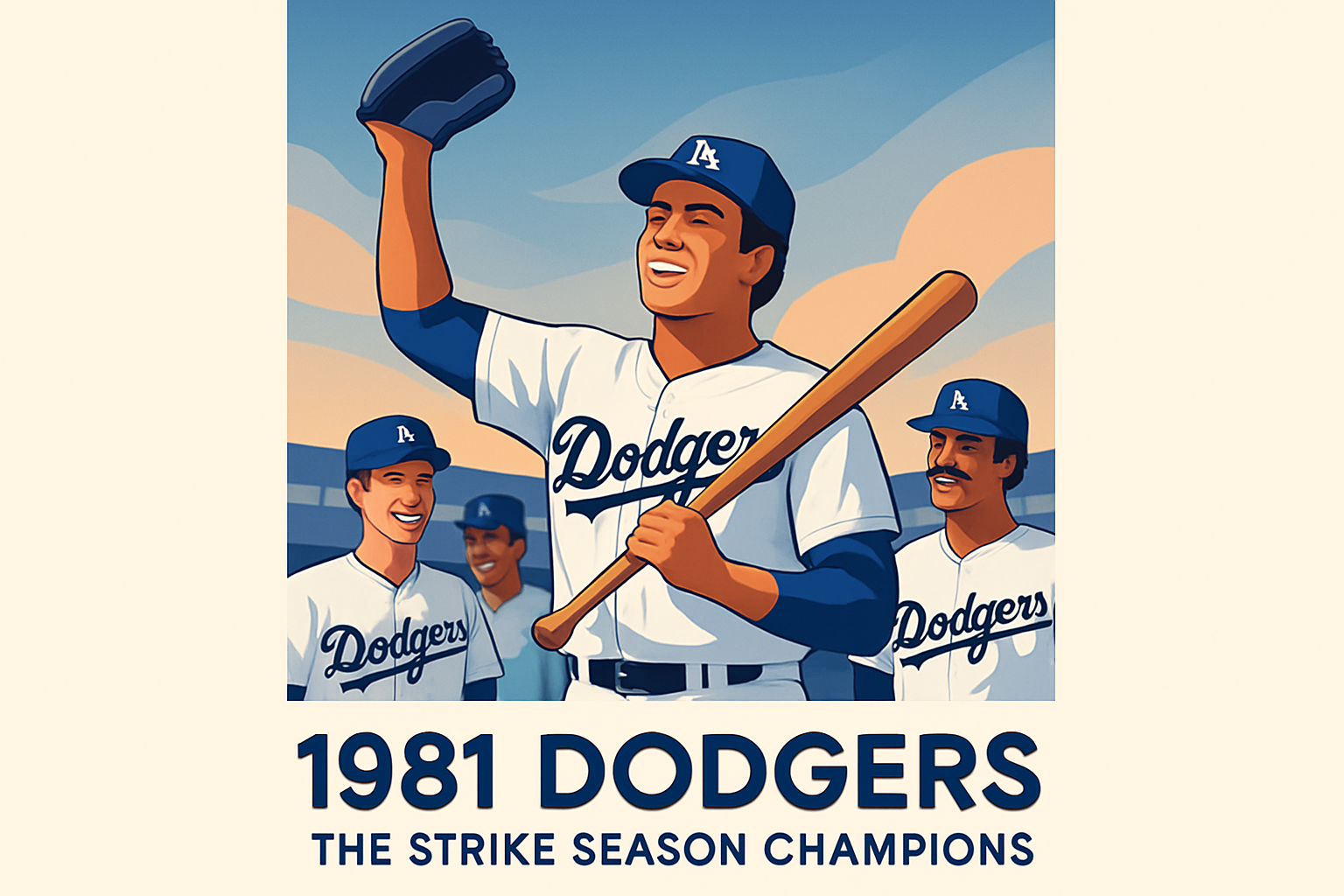
The story of the 1981 Los Angeles Dodgers is one of triumph against adversity, emblematic of perseverance and determination. This legendary team rose to prominence during a time of unprecedented disruption in Major League Baseball—a players’ strike that halted the season for nearly two months. In this article, we will delve into the journey of the 1981 Dodgers, analyzing the challenges they faced, the strategies they employed, and the monumental achievements they accomplished as they emerged as champions. This period in baseball history is crucial not only for its unique circumstances but also for the way it speaks to the resilience of both players and fans alike.
A “strike” in sports refers to an organized work stoppage by athletes aiming to leverage better terms with management through collective bargaining. The 1981 MLB strike, caused primarily by disputes over free-agent compensation, led to a split-season, altering the dynamics of the league. Understanding this context is essential to appreciating the Dodgers’ success. Their victory not only added another championship to their legacy but also symbolized hope and perseverance for fans during a time of uncertainty. Let us explore the remarkable journey of the 1981 Dodgers, a team that overcame both disruption and competition to cement their place in history.
The Era of Upheaval: Major League Baseball Strike of 1981
The 1981 MLB strike began on June 12, 1981, and lasted for 50 days, from June to August. It was a period marked by uncertainty as players and management negotiated over issues related to free agency and player compensation. The strike resulted in the cancellation of 713 games, effectively splitting the season into two halves. Teams leading their respective divisions at the end of each half faced off in the postseason.
For the Dodgers, the strike provided both a challenge and an opportunity. The disruption required teams to navigate uncharted territories in terms of preparation and strategy. Manager Tommy Lasorda and his staff had to keep players physically fit and mentally prepared during the hiatus, unsure of when or if the season would resume. This involved maintaining rigorous training schedules and keeping morale high, which Lasorda famously excelled at with his enthusiastic leadership style.
The impact of the strike was unprecedented. Fans were left in limbo, with the sport they loved suddenly on hiatus. However, when the season did resume, there was a renewed vigor and passion for the sport. The strike’s resolution, although contentious, was a moment of relief and rejuvenation, setting the stage for teams to capitalize on fresh opportunities. The Dodgers, known for their robust organizational resilience, seized this moment to refocus their efforts on securing a division title.
Strategizing Amid Uncertainty: The Dodgers’ Tactical Excellence
In the aftermath of the strike, the Dodgers found themselves navigating a unique playoff landscape. With a split-season format, they needed to secure victories in both halves or perform well enough to qualify for the playoffs through the wildcard format. Lasorda and his coaching staff utilized a diverse range of tactics to ensure victory. Key players like Fernando Valenzuela, Steve Garvey, and Davey Lopes rose to the occasion, with Valenzuela, in particular, becoming a cultural sensation.
Known for his unorthodox pitching style, rookie Valenzuela became the ace of the Dodgers’ staff, captivating fans with “Fernandomania.” His performance was pivotal as he posted a record of 13-7 with a 2.48 ERA, earning him both the Rookie of the Year and Cy Young Awards. The Dodgers’ offense was powered by stalwarts like Garvey who consistently delivered in clutch situations, and Lopes who set the tone on the bases with his speed.
| Player | Position | Key Contribution |
|---|---|---|
| Fernando Valenzuela | Pitcher | Cy Young Award & Rookie of the Year |
| Steve Garvey | First Baseman | Consistent Offensive Power |
| Davey Lopes | Second Baseman | Speed & Base Running |
The Dodgers’ strategic planning and adaptive gameplay were instrumental as they advanced through the postseason. The reliance on young talent, blended with veteran leadership, allowed them to navigate the unique pressures of the restructured season effectively. Their innovative tactics, rigorous conditioning, and ability to adjust strategy dynamically earned them victories when they mattered the most.
Postseason Heroics: Seizing the Championship
The postseason of 1981 tested the mettle of any team vying for the ultimate prize. The Dodgers faced fierce competition in a newly structured playoff format, conquering challenging opponents in each round. Their path to the championship involved crucial series against teams like the Houston Astros, Montreal Expos, and New York Yankees, each presenting its own set of challenges.
The National League Division Series against the Yankees was a showdown of titans. The Yankees, boasting a roster of immense talent, were the defending champions and posed a significant challenge. However, the Dodgers’ resilience and strategic prowess came to the forefront. The final series was highlighted by standout performances, including a dramatic home run by Pedro Guerrero and the consistent pitching brilliance of Valenzuela.
This culminating event was a testament to the Dodgers’ skill and tenacity. Overcoming the Yankees, a team with a storied legacy themselves, underscored the Dodgers’ excellence and ability to succeed under pressure. The victory was not just a win for the team, but a celebration for the fans who had stood by baseball through the tumult of labor disputes and the ongoing challenges of the season.
The Legacy of the 1981 Dodgers
The 1981 Dodgers left an indelible mark on the history of Major League Baseball. Their championship represented more than just victory on the field—it was a powerful narrative of triumph over adversity. The season’s conclusion reaffirmed the unifying power of sports, as communities once divided by the strike came together to celebrate the success of their team.
For players like Valenzuela, Garvey, and others, this victory solidified their places in baseball lore. Valenzuela, in particular, became an icon, embodying the spirit of the season and demonstrating how fresh talent could rise to prominence even amidst uncertainty. The Dodgers’ championship run also cemented Tommy Lasorda’s legacy as a visionary leader, capable of inspiring greatness in his players and guiding them through uncharted territories.
The success of the 1981 Dodgers also had lasting impacts on the team’s fanbase and the broader baseball community. It rekindled enthusiasm for the sport, showcasing the enduring appeal of baseball’s traditions and the excitement of its unpredictability. This championship paved the way for future generations to see what dedication and teamwork could achieve even when faced with the most formidable challenges.
Conclusion: Celebrating Resilience and Triumph
The journey of the 1981 Los Angeles Dodgers is a tale of resilience, strategic excellence, and unwavering determination. Their ability to thrive in the face of a players’ strike showcased the power of adaptability and preparation. Each player, coach, and fan played a role in making the 1981 season a hallmark of triumph over adversity.
The Dodgers’ victory serves as a reminder of sports’ ability to unite and inspire during challenging times. It stands as a testament to what can be achieved through collective effort and a resolute spirit. For fans and historians alike, the 1981 Dodgers remain a symbol of the enduring appeal of baseball and the thrilling unpredictability of the game.
As we reflect on this pivotal season, let us draw inspiration from the Dodgers’ example. Whether navigating personal challenges or team endeavors, may we all tap into the resilience and passion that defined the 1981 Dodgers, continuing to overcome obstacles and rise to greatness. Celebrate the champions of 1981 by revisiting their games, reading more about their legacy, and sharing the story of their triumph with others.
Frequently Asked Questions
1. What challenges did the 1981 Los Angeles Dodgers face during the strike season?
The 1981 Los Angeles Dodgers faced significant challenges due to a players’ strike that caused a major disruption in Major League Baseball. This strike led to the suspension of the season for almost two months, creating a temporary halt that tested the resilience and adaptability of all teams, including the Dodgers. During this time, players were removed from regular play, disrupting their routines and challenging their physical fitness and mental focus. The sudden pause in the season meant that strategies had to be rapidly reevaluated and adjusted to address the uncertainty of when and how the season would resume. The Dodgers, like other teams, had to remain prepared and united, dealing not only with the unpredictability of the strike itself but also the logistical challenges that came with it, such as maintaining cohesion and fitness without regular games.
2. How did the 1981 Dodgers maintain their performance during the season interruption?
The Dodgers’ ability to maintain their performance during the season interruption is a testament to their exceptional team dynamics and leadership. Even in the absence of regular play, the team made concerted efforts to stay in peak physical condition. Players emphasized rigorous individual training schedules and worked closely with the coaching staff to simulate game scenarios as much as possible. Team leaders took the initiative to motivate and inspire their teammates, fostering a sense of unity and shared purpose. Mentally, they adopted a ‘one game at a time’ approach, which allowed them to focus on incremental improvements rather than becoming overwhelmed by the chaos surrounding the strike. This mental fortitude and strategic continuity contributed significantly to their resilience and preparedness when the season resumed.
3. What strategies did the Dodgers employ to secure their championship win in 1981?
After the season resumed, the Dodgers implemented several key strategies that proved instrumental in their journey to the championship. They concentrated heavily on building a robust pitching lineup, recognizing that a strong defense was crucial in a season fraught with uncertainty. The pitching staff, led by Fernando Valenzuela, who became a breakout star with his ‘Fernandomania,’ delivered consistently excellent performances that kept opposing teams’ scores low. Offensively, they adopted an aggressive yet calculated approach, capitalizing on scoring opportunities whenever possible. Moreover, the Dodgers emphasized a team-first mentality, where each player had a clear, defined role and understood how their individual performance contributed to the team’s overall success. This collective effort and strategic alignment enabled them to excel in the high-pressure environments of the postseason, ultimately culminating in their triumph in the World Series.
4. Who were the standout players on the 1981 Dodgers team, and what impact did they have?
Several standout players made invaluable contributions to the 1981 Dodgers’ success. Fernando Valenzuela was undoubtedly the most prominent, becoming a sensation with his remarkable abilities on the mound during his rookie season. His performances earned him both the National League Rookie of the Year and the Cy Young Award. His pitching prowess became a critical factor in guiding the Dodgers through tough match-ups. Another noteworthy player was Steve Garvey, who provided leadership and clutch hitting that galvanized the team and inspired his teammates. Ron Cey, Dusty Baker, and Pedro Guerrero also played pivotal roles with their consistent batting and fielding skills, providing the necessary offensive power throughout the season and playoffs. The collective impact of these players, alongside their camaraderie and shared determination, created a formidable team that rose above the challenges of the season to achieve victory.
5. Why is the 1981 Dodgers team considered legendary in the history of Major League Baseball?
The 1981 Dodgers are celebrated as a legendary team in Major League Baseball history mainly due to their inspiring journey through an exceptionally turbulent season marked by a significant players’ strike. They embody the spirit of determination and perseverance, overcoming significant obstacles that tested their professional and personal limits. The team’s resilience, bolstered by strong leadership, strategic adaptability, and an unwavering commitment to excellence, showcased exceptional teamwork and dedication. Their ability to coalesce under challenging circumstances and emerge victorious in the World Series demonstrated their capacity for greatness and has left an indelible mark on baseball history. Their triumph serves as an enduring legacy and a beacon to other teams facing adversity, highlighting the importance of unity, strategic planning, and tenacity on the path to success.