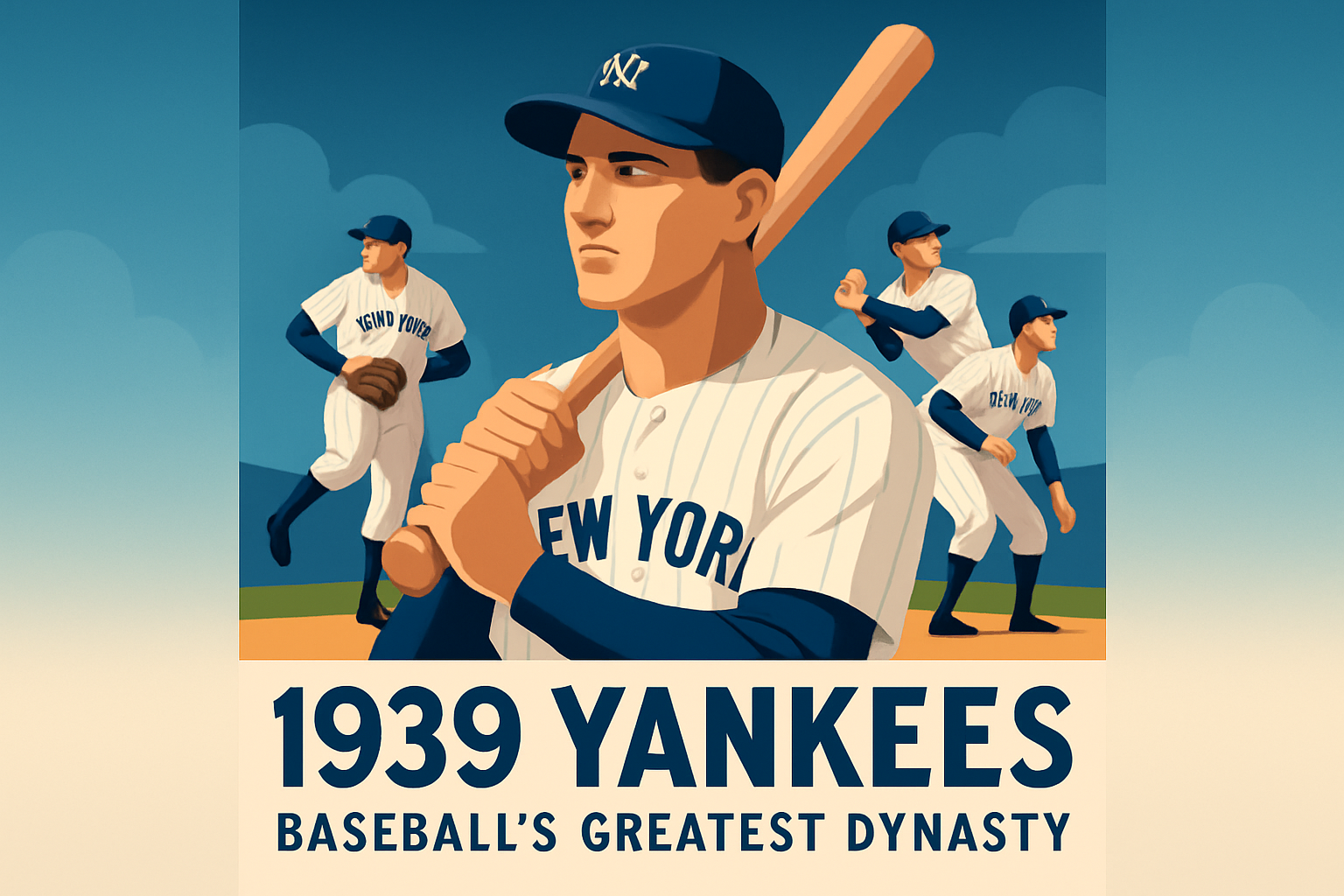
The 1939 New York Yankees are often held in high regard as one of baseball’s greatest teams. This moniker is not handed out lightly, as the team represented a significant peak in a long line of successes for the Yankees franchise. Labeling a team as the “greatest dynasty” calls for a deep exploration of what constitutes a dynasty in sports. Generally, a dynasty suggests sustained success over a period, characterized by multiple championship wins, standout performances, innovations in strategy, and a lasting impact on the sport. The relevance of examining the 1939 Yankees lies in understanding the components that contribute to sustained excellence and how these components can be appreciated by enthusiasts and embraced by contemporaries looking to emulate such success.
For fans of America’s pastime, the Yankees stand as a beacon of excellence. From their passionate fan base to their historical contributions to the sport, the importance of the Yankees extends beyond mere trophies and accolades. The 1939 Yankees are particularly pivotal because they encapsulated a peak period within a broader era of dominance from 1927 to 1964, winning 29 American League pennants and 20 World Series championships. The significance of this team in the sporting world is profound, providing aspirational benchmarks for teams within Major League Baseball and informative case studies of excellence in team dynamics and management. The exploration of the 1939 team holds valuable lessons in leadership, teamwork, and the spirit of resilience.
Historical Context: The Late 1930s in Baseball
To appreciate the 1939 Yankees, it’s essential to place them within their historical context. The late 1930s were marked by a growth in baseball’s popularity, with the sport becoming ingrained in American culture as “America’s Pastime.” The impact of the Great Depression still lingered, but baseball provided a reprieve from economic woes, offering hope and a sense of community unity. This period also saw increased competition, as teams scrambled to attract the best talent and improve their strategies to stand out in the league.
The Yankees, during this era, had invested significantly in building a strong roster driven by both seasoned professionals and young, promising talents. The competitiveness of the era meant that the Yankees had to constantly innovate and adapt to maintain their leading edge in the sport. Under the leadership of manager Joe McCarthy, they implemented strategies that balanced both defense and potent offensive plays, cementing their status as one of the premier teams in the league.
The Legendary Roster
The backbone of the 1939 Yankees was their exceptional roster. The team was studded with legendary players who have since been immortalized in the annals of baseball history. Central to this was Joe DiMaggio, whose extraordinary performance contributed significantly to the team’s success. DiMaggio’s batting prowess, coupled with his graceful fielding, epitomized the excellence the team achieved.
Other notable contributors included Lou Gehrig, famous for his reliability and dubbed the “Iron Horse” for his durability. He had to step away from baseball mid-season due to a debilitating illness now known as Lou Gehrig’s disease. Despite his absence, his influence lingered, as he had been a key element of the Yankees’ robust lineup for years. Additionally, the roster included impactful players like Bill Dickey, a catching powerhouse, and Red Ruffing, a dominant pitcher.
- Joe DiMaggio: Centerfielder with a .381 batting average in 1939
- Lou Gehrig: First baseman, managed 2 games in 1939 before retiring
- Bill Dickey: Catcher, maintained a .302 batting average
- Red Ruffing: Pitcher, achieved a 2.93 ERA
Dominance in the World Series
The 1939 Yankees clinched their spot in baseball history with an outstanding performance in the World Series. Facing off against the Cincinnati Reds, the Yankees showcased their supremacy over the four-game series. Their 4-0 sweep underscored their dominance, with each game featuring a potent demonstration of strategic plays and superior skills. Game two of the series, in particular, was memorable for its 4-0 scoreline, highlighting the Yankees’ ability to shut out the competition with both offensive and defensive prowess.
This championship win wasn’t just a title for the year—it served as their fourth consecutive World Series win, further solidifying their legacy. Their achievement in the 1939 series highlighted their exceptional depth and skill, with multiple players stepping up to deliver under pressure. The Yankees’ management and coaching staff orchestrated a perfect blend of seasoned leadership and explosive young talent, years ahead of their time in terms of developmental strategies.
The Impact of Joe McCarthy’s Leadership
Joe McCarthy’s role as manager was instrumental in crafting the Yankees of the late 1930s into a formidable dynasty. Known for his strategic acumen and player management skills, McCarthy was a credible force behind the scenes, steering the Yankees to success through calculated decision-making and fostering a culture of unity and hard work.
McCarthy’s leadership was particularly evident in how he managed to nurture the talent of younger players while leveraging the experience of veterans. His ability to energize the team, engender cooperation, and adapt his strategies to optimize the team’s strengths was a hallmark of his tenure. His focused approach and managerial prowess have since become a template for coaches and managers across sports disciplines.
Long-Lasting Influence and Legacy
The legacy of the 1939 Yankees extends beyond their immediate achievements in the league. Their dominance and strategic innovation have influenced the organizational aspirations of teams across generations. The success of the Yankees during this peak period contributed to a culture of success that the franchise maintained in subsequent decades, reinforcing their brand as leaders in the baseball world.
Moreover, the players of this era, such as Joe DiMaggio and Lou Gehrig, became cultural icons, inspiring a new generation of athletes. The statistical accomplishments, memorable games, and vibrant personalities of these players bolstered baseball’s popularity and solidified its status in American culture. The Yankee dynasty is a touchstone for future talents aiming to balance personal excellence with team success.
The Importance of Baseball Strategy and Team Dynamics
One of the keys to understanding the Yankees’ dominance is the study of their baseball strategies and team dynamics. The 1939 Yankees excelled through a combination of rigorous training, a focus on fundamentals, and strategic game planning. They embraced a culture of adaptability and innovation, frequently altering their tactics to exploit opponents’ weaknesses.
| Strategy | Example from 1939 Yankees |
|---|---|
| Offensive Strategy | Leveraging the batting order to maximize DiMaggio’s impact |
| Defensive Alignment | Positioned outfielders to neutralize Cincinnati’s key batters |
| Pitching Rotation | Utilizing Red Ruffing effectively in high-stakes games |
This meticulous approach to strategy and team building ensured they were consistently a step ahead of their competitors, adapting swiftly to the challenges met throughout the season.
Technological Advances and Modernization
The late 1930s also marked a period of technological innovation in baseball, impacting how the game was played and viewed. The Yankees were at the forefront of adopting techniques and technologies that improved their training and performance analysis. For instance, by embracing broadcast technologies, they managed to expand their fanbase nationally, which also introduced systematic approaches to scouting and player development.
The team’s forward-thinking approach to employing these advances allowed them to enhance in-game decision making and fine-tune player performance throughout the season. Such modernization fostered an environment where management was data-driven, paving the way for future teams to follow suit and embrace technology as a fundamental aspect of sport.
Conclusion: Lessons from the 1939 Yankees
The 1939 Yankees epitomize the apex of baseball success, their story providing a wealth of knowledge for athletes, managers, and fans alike. Their commitment to excellence, strategic ingenuity, and ability to thrive under pressure exemplify the traits necessary for sustained dominance. This team set a gold standard in professional baseball, from teamwork and leadership to resilience in facing challenges.
The journey of the 1939 Yankees inspires contemporary teams to aim for greatness, drawing actionable insights from strategies, leadership methods, and innovative approaches to team management. Their legacy continues to influence the ethos of sports across disciplines, underscoring the timeless value of dedication and a solid game plan.
For fans, researchers, and sports professionals, a haunting reassessment of what made this dynasty tick ignites inspiration and serves as a blueprint. It invites replication of success, fostering an ambition that continually pushes the boundaries of what is possible in the sport.
To aspire is to take action, and examining teams like the 1939 Yankees reminds us of the pinnacle that is within reach when fortified by determination, innovation, and a strategic mindset.
Frequently Asked Questions
1. What makes the 1939 Yankees considered “Baseball’s Greatest Dynasty”?
The 1939 Yankees are lauded as baseball’s greatest dynasty due to their extraordinary achievements and impact on the game. The Yankees, under the management of Joe McCarthy, won four consecutive World Series titles from 1936 to 1939, showcasing their dominance in Major League Baseball. This period in Yankee history is characterized by an unbeatable combination of talent, strategic innovation, and unyielding competitive spirit. The team had an enviable roster, boasting baseball legends like Joe DiMaggio, Lou Gehrig, and Lefty Gomez, each of whom played pivotal roles in their consistent success. DiMaggio’s remarkable 56-game hitting streak and Gehrig’s ironman record for consecutive games played added to their legendary status. This era was not just about winning; it was about setting standards in team cohesion, sportsmanship, and tactical prowess that would shape the future of baseball, certifying the 1939 Yankees as a benchmark of excellence.
2. How did the individual players contribute to the 1939 Yankees’ success?
Individual contributions from key players were integral to the 1939 Yankees’ dominating performance. Joe DiMaggio, often described as one of the most complete players of all time, was exceptional on both offense and defense. His ability to hit for average and power while providing stellar outfield play added immense value to the team. Lou Gehrig, despite facing health challenges that would end his career early, was a source of inspiration and leadership. Although he played only parts of the season in 1939 due to illness, his presence and past performances laid a solid foundation for the team’s ethos. Additionally, the pitching staff, highlighted by Red Ruffing and Lefty Gomez, consistently executed strategic plays that neutralized opponents’ offenses. The blend of these top-performing athletes, each excelling in their respective roles, resulted in a well-rounded, formidable team that left an indelible mark on baseball history.
3. In what ways did the 1939 Yankees innovate or influence baseball strategies?
The 1939 Yankees not only dominated through sheer talent but also through innovative strategies that influenced the future of baseball. During this era, the team excelled in optimizing player positions and matchups to exploit the weaknesses of their opponents. Their strategic use of bullpen pitching, orchestrated by manager Joe McCarthy, allowed the team to sustain performance levels throughout games, ensuring optimal use of their pitching roster. This forward-thinking approach to game management was a significant departure from traditional strategies and paved the way for modern-day bullpen usage. Furthermore, the Yankees emphasized fundamentals such as fielding, base running, and situational hitting, reinforcing the importance of a well-rounded playstyle over reliance on single facets of the game. These tactical innovations, coupled with their ability to maximize each player’s strengths, set a new standard for baseball strategy.
4. How did the 1939 Yankees perform statistically during their season?
The 1939 Yankees delivered an awe-inspiring statistical performance which underscored their dominance. They finished the regular season with an astounding 106-45 record, winning the American League by a comfortable 17-game margin over their nearest rivals, the Boston Red Sox. The team showcased a remarkable run differential, having scored a total of 967 runs while allowing only 556 — a testament to both their offensive prowess and defensive strength. At the plate, New York’s lineup boasted a team batting average of .287, with Joe DiMaggio batting .381 and contributing 30 home runs. Their pitching was equally formidable; the team’s ERA was a meager 3.31, which was among the best in the league. Red Ruffing and Lefty Gomez played pivotal roles, consistently delivering on the mound to keep opposition batting at bay. These statistical achievements were both remarkable for their dominance and reflective of the all-around consistency that has made the 1939 Yankees legendary.
5. What was the lasting impact of the 1939 Yankees on the sport of baseball?
The lasting impact of the 1939 Yankees on baseball transcends their on-field achievements, influencing the sport at multiple levels. Their success amplified the Yankees’ reputation as a premier franchise, setting a benchmark for excellence that future teams aspired to emulate. The team’s ability to blend star talent with deep strategic insights transformed expectations around how baseball teams should be assembled and managed. The 1939 Yankees also left an enduring cultural legacy; their star players became household names whose legends inspire admiration across generations. Lou Gehrig’s story, in particular, contributed profoundly to sports culture — both for his achievements and his dignified response to personal adversity, as evidenced by his poignant retirement speech, which remains iconic in sports history. Furthermore, the advanced strategies employed by the Yankees during this period informed the evolving tactical landscape in baseball, influencing management and playstyle. In all these ways, the 1939 Yankees did more than win games; they reshaped baseball’s legacy and influenced its progression for decades.