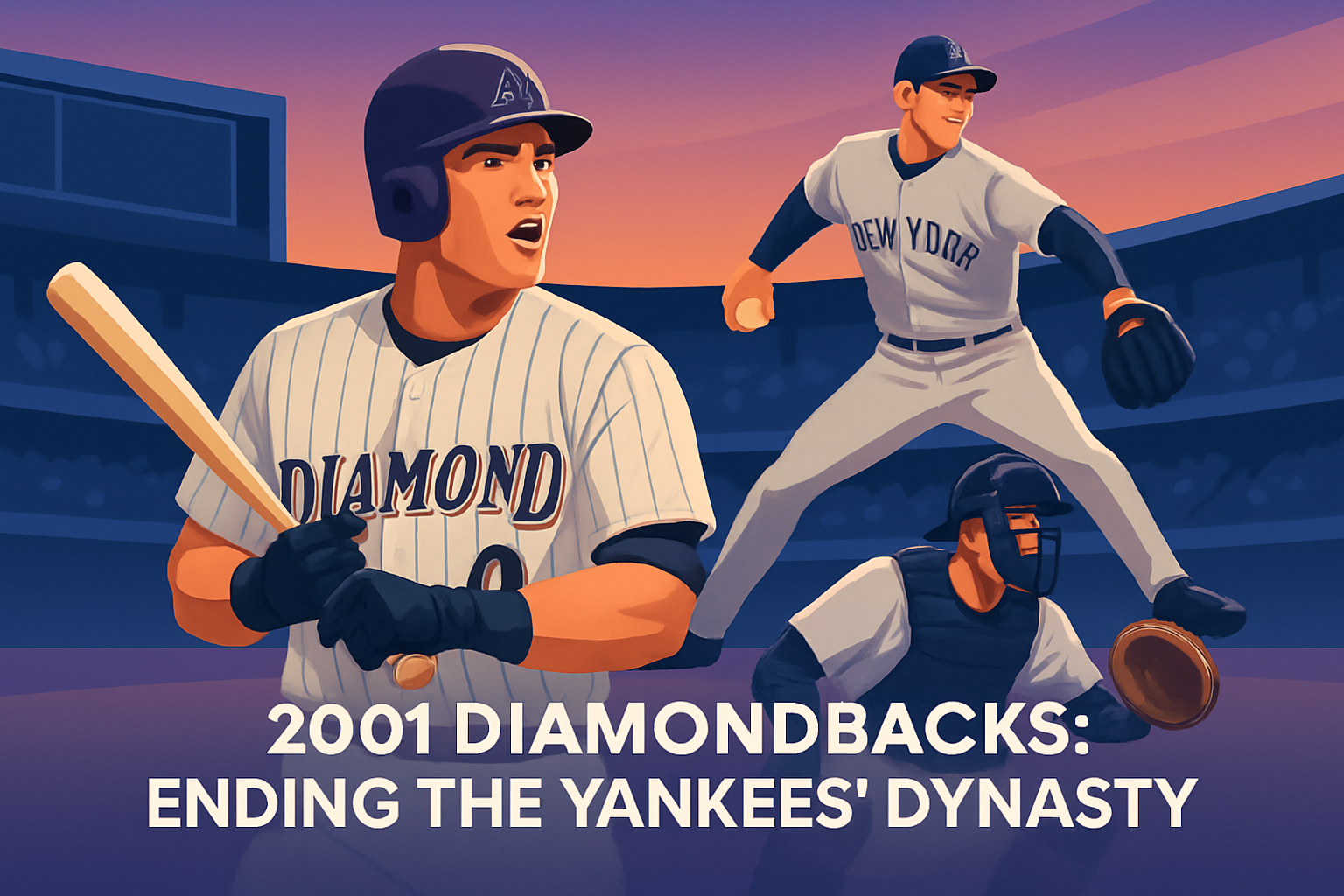
In 2001, the Arizona Diamondbacks achieved a milestone that shook the world of Major League Baseball (MLB) and rewrote history in the sport. Their triumph against the New York Yankees in the World Series marked the end of a dominant era helmed by the Yankees, who were on a three-year winning streak and a significant player in the MLB for over a decade. This victory was not just a single success— it symbolized a seismic shift in the landscape of baseball, proving that even the most established dynasties could be toppled by determination, strategic gameplay, and unexpected heroes. Understanding the story of the 2001 Diamondbacks is crucial because it illustrates how focused teamwork and strategy can prevail over experience and tradition, offering inspiration to teams across all sports.
The Rise of the 2001 Arizona Diamondbacks
The Arizona Diamondbacks were relatively new to the MLB, having been established only in 1998. In spite of their novice status, they quickly built a formidable team that showcased their potential. The team’s management, led by owner Jerry Colangelo and General Manager Joe Garagiola Jr., was committed to developing a competitive squad through aggressive trades and astute coaching strategies. The signing of key players like Randy Johnson and Curt Schilling transformed the lineup, with these pitchers establishing a fearsome duo known for overpowering their opponents with exceptional performances.
During the regular season, the Diamondbacks demonstrated their prowess by finishing with a 92-70 record, which secured the National League (NL) West title. They defeated the St. Louis Cardinals in the National League Division Series (NLDS) and the Atlanta Braves in the National League Championship Series (NLCS), showcasing resilience and skill. Their determination was evident as they prepared for the formidable task ahead—facing off against the dominant New York Yankees in the World Series.
The Feared New York Yankees
The New York Yankees, known for their extensive history of success and being a perennial powerhouse, were on a three-year winning streak in the World Series from 1998 to 2000. Managed by Joe Torre, the team boasted outstanding talent that included the likes of Derek Jeter, Mariano Rivera, and Bernie Williams. Their lineup was a blend of experience and athleticism, making them formidable opponents who had already amassed 26 World Series titles by 2001.
During the 2001 season, the Yankees finished with a record of 95-65, highlighting both consistency and excellence. Their path to the World Series saw them overcoming challenges from the Oakland Athletics in the American League Division Series (ALDS) and the Seattle Mariners in the American League Championship Series (ALCS). Their confidence and track record set high expectations from fans and analysts, reinforcing the perception that they were the favorites to capture yet another title.
- 1998 World Series: Yankees defeated Padres
- 1999 World Series: Yankees defeated Braves
- 2000 World Series: Yankees defeated Mets
A Historic World Series: Down to Game 7
The 2001 World Series was a classic clash between an emerging force and an established dynasty, extending to the maximum length of seven games. It was marked by intense battles, emotional highs and lows, and unforgettable moments. After splitting the first four games, the series was tied, showcasing both teams’ strengths and determination.
Games 5 and 6 were pivotal. In Game 5, the Yankees capitalized on late-inning heroics with Scott Brosius’s game-tying home run, eventually winning in extra innings. However, the Diamondbacks responded positively in Game 6, demolishing the Yankees 15-2, setting the stage for the final showdown in Game 7 in Arizona. The decisive game brought immense tension and excitement as Diamondbacks fans anticipated witnessing history in the making.
Heroes and Narrative: Game 7 Unfolds
Game 7 of the 2001 World Series became etched in baseball lore as one of the most thrilling spectacles the sport has ever seen. Held in Bank One Ballpark (now Chase Field) in Phoenix, Arizona, it brought together over 49,000 fervent spectators eagerly watching the drama unfold. Curt Schilling took the mound for the Diamondbacks, while the Yankees turned to Roger Clemens, creating an electrifying pitching duel.
For most of the game, pitching reigned supreme, leading to tight defense and strategic plays. Heading into the bottom of the ninth inning, the Yankees held a slim 2-1 lead, thanks to the combined efforts of Clemens and reliever Mike Stanton. However, the Diamondbacks were not ready to concede. Their patience and precision were put on full display when Tony Womack’s double tied the game, and Luis Gonzalez’s bloop single off Mariano Rivera, arguably the best closer in history, turned the game-winning run into home plate. The Diamondbacks sealed a legendary 3-2 victory, cementing themselves in baseball history.
| Players | Key Performance |
|---|---|
| Curt Schilling | Outstanding Pitching |
| Randy Johnson | Heroics in Relief |
| Luis Gonzalez | Winning Hit in Game 7 |
| Mariano Rivera | Blown Save in Game 7 |
The Aftermath and Legacy
The 2001 World Series was more than just a contest for the championship; it was a momentous event that had long-term implications in baseball. For the Diamondbacks, it was a testament to the effectiveness of their strategy, teamwork, and tenacity, catapulting them into the limelight of MLB history. The impact of their victory was felt across the baseball world, inspiring other underdog teams to believe in their potential.
Conversely, the defeat marked the beginning of the end for the Yankees’ dynasty. While the team continued to perform well in subsequent seasons, their aura of invincibility was broken, prompting introspection and reevaluation by the organization. The Yankees’ journey post-2001 involved periods of restructuring, refocusing on building a robust farm system, and eventually reclaiming the World Series title in 2009. Yet, the memory of the Diamondbacks’ upset remained a reminder of the volatility and competitiveness of the sport.
Memorable Moments and Cultural Impact
The 2001 World Series wasn’t just significant for its outcome but for the memorable moments that occurred during the series. Beyond Gonzalez’s iconic hit, Randy Johnson delivered an MVP performance, pitching in three games, including a crucial relief appearance in Game 7. The series also evoked emotional responses due to its timing in the wake of the September 11 attacks, offering sports as a unifying, uplifting force during a national tragedy.
The cultural impact extended beyond American borders, garnering international attention and reinforcing baseball’s global reach. The Diamondbacks’ victory story became an emblem of perseverance and success against all odds, resonating with fans across the globe and capturing the imagination of future baseball players.
Conclusion: Legacy of the 2001 Diamondbacks
The triumph of the 2001 Arizona Diamondbacks against the New York Yankees is one of the most compelling underdog stories in sports history. They proved that dedication, smart management, and resilience can triumph even against the most overwhelming odds. The victory marked a shift in MLB dynamics, showing that any team with the right combination of leadership, talent, and determination could achieve glory.
The lessons learned from this series are valuable not only for baseball but for any competitive environment. They underscore the importance of teamwork, strategic thinking, and having the courage to challenge established powers. For readers, the story of the 2001 Diamondbacks serves as an inspiration to believe in the potential of their endeavors, regardless of how daunting the opposition might seem.
As we reflect on the legacy of the 2001 Diamondbacks, let us remain inspired to pursue our goals with unyielding resolve. To capture the spirit of this remarkable achievement, draw motivation from this historical episode and approach your challenges with enduring confidence and commitment.
Frequently Asked Questions
1. How did the 2001 Diamondbacks manage to defeat the Yankees, a team with such a strong dynasty?
The 2001 Arizona Diamondbacks’ victory over the New York Yankees was both a strategic and emotional triumph. The Diamondbacks, a relatively young franchise at the time, relied heavily on a solid blend of seasoned veterans and talented newcomers. Their strategy was predominantly anchored by exceptional pitching, with two of the best in the business, Randy Johnson and Curt Schilling, leading the charge. These two pitching powerhouses worked as a formidable one-two punch throughout the series, providing the Diamondbacks with a significant edge in starting rotation. Additionally, the team leveraged their home-field advantage at Bank One Ballpark, creating an electrifying atmosphere that visibly rattled the otherwise composed Yankees.
Offensively, the Diamondbacks capitalized on timely hitting and aggressive base running. Luis Gonzalez’s game-winning hit in Game 7 was a memorable moment that sealed their historic victory. Furthermore, their teamwork and resilience during pressure-filled moments kept the Yankees on their back foot. Smaller but crucial contributions came from players like Craig Counsell and Tony Womack, who provided critical hits and defensive stability when it mattered most. The mix of strategic brilliance, raw talent, and the ‘never give up’ attitude was pivotal in ending the Yankees’ remarkable dynasty, proving that with the right combination of skills and determination, even a supposedly invincible team could be dethroned.
2. What were some key moments in the 2001 World Series that led to the Diamondbacks’ victory?
The 2001 World Series between the Diamondbacks and the Yankees was one for the ages, filled with several key moments that facilitated the Diamondbacks’ victory. From the outset, the Diamondbacks set the tone by dominating the first two games in Arizona, thanks mainly to stellar performances by Randy Johnson and Curt Schilling. However, the series reached an emotional peak during Game 4 in New York. In a dramatic late-inning comeback, Yankees star Derek Jeter hit a solo home run in the 10th inning, earning him the nickname “Mr. November” – a thrilling moment that reinforced the Yankees’ tenacity. Yet, this only added to the gravity of the Diamondbacks’ ultimate win.
Game 7 turned out to be the decisive encounter, providing a showcase of high drama and tension. With Mariano Rivera, arguably the greatest closer in MLB history, on the mound for the Yankees, it initially seemed like the championship was theirs to lose. However, the Diamondbacks’ combination of youthful fearlessness and veteran savvy shone through. Tony Womack’s clutch game-tying double followed by Luis Gonzalez’s iconic bloop single past a drawn-in infield sealed their fate as World Series champions. This final game underscored the Diamondbacks’ tenacity and fighting spirit, embodying the unpredictable and thrilling nature of baseball.
3. How did the 2001 World Series affect Major League Baseball and its fans?
The 2001 World Series had a profound impact on Major League Baseball and its vast community of fans. For starters, it ended the Yankees’ dynasty, a feat that many thought to be virtually impossible at the time. The series showed that competitive balance and parity were achievable, reigniting hope and passion among fans of other teams, who could now envision similar achievements for their favored franchises against seemingly invincible opponents.
Moreover, the series took place shortly after the tragic events of September 11, 2001, meaning it played an essential role in the healing process of the nation. Baseball, often referred to as America’s pastime, provided solace and a sense of normalcy. The Yankees, playing in the heart of the city that had witnessed so much tragedy, were unwittingly cast as sentimental favorites, while the Diamondbacks represented the underdog spirit thriving against adversity. The games were a catalyst for unity and resilience, offering extraordinary entertainment and a comforting escape during troubled times.
Lastly, individual performances, such as those from Randy Johnson and Curt Schilling, set new standards for excellence in postseason pitching. These performances and the series itself enriched the lore of MLB, ensuring that the 2001 World Series remains a legendary chapter remembered and referenced for decades to come by fans and historians alike.
4. How did the aftermath of the 2001 World Series win influence the Diamondbacks’ franchise?
The aftermath of the 2001 World Series win had both positive and challenging effects on the Arizona Diamondbacks’ franchise. Initially, the victory brought an unparalleled boost of spirit and legitimacy to the team and its fan base. The triumph over a team as storied as the Yankees put the Diamondbacks on the map, having cemented them as a formidable force within MLB. The franchise garnered national respect and media attention, bolstering its organizational brand and solidifying a dedicated fan base in Arizona.
However, the victory also came with its share of hurdles. Shortly after the win, the Diamondbacks underwent financial difficulties, largely due to hefty contracts and deferred payment deals given to key players to assemble their championship roster. This financial strain forced the franchise to trade away or release several of its star players, aiming to stabilize its payroll for future seasons. Despite these challenges, the 2001 victory fostered a long-lasting competitive mindset and spirit within the organization, shaping its future endeavors and aspirations to replicate the glory of that landmark year.
5. What made the 2001 Diamondbacks’ roster so effective against the Yankees?
The 2001 Arizona Diamondbacks’ roster possessed a unique combination of talent, experience, and strategic mastery, making it exceptionally effective against the Yankees. The standout factor was undoubtedly their pitching staff, led by Randy Johnson and Curt Schilling, both of whom were well established as two of the league’s elite pitchers. Their ability to dominate the powerful Yankees lineup neutralized New York’s offensive threats and kept games close, setting the stage for Diamondbacks’ batters to deliver opportune hits.
In addition, the team was intelligently assembled with a mix of seasoned veterans and rising stars. Players such as Luis Gonzalez, who had an exceptional year and was crucial offensively, and Craig Counsell, whose defensive skills and batting consistency provided stability, were instrumental during high-pressure situations. The strategic management by Bob Brenly, the Diamondbacks’ manager, who demonstrated a keen understanding of game dynamics and player utilization, further bolstered their effectiveness. Overall, it was this delicate balance and depth across all positions that allowed the Diamondbacks to successfully dismantle a Yankees team that had previously appeared unbeatable.