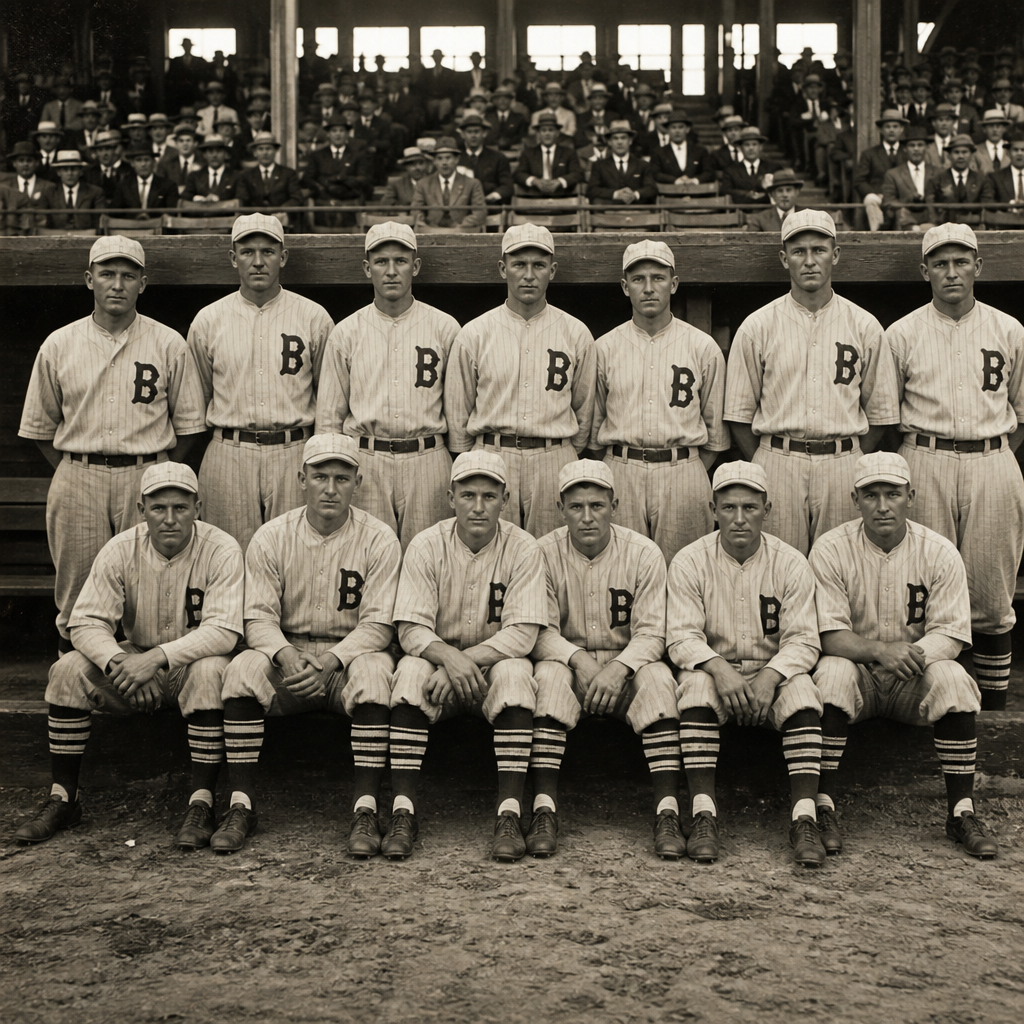
The 1914 Boston Braves remain one of baseball’s most startling stories: a last-place club on July 4 that surged to the National League pennant and then swept Connie Mack’s powerful Philadelphia Athletics in the World Series. Because the turnaround was so abrupt, later readers sometimes ask a provocative question: was it a miracle, or was something improper at work? To answer that fairly, you have to separate legend from evidence, place the season within the gambling culture of early twentieth-century baseball, and understand why this club became known as the “Miracle Braves” in the first place.
In baseball history, “match-fixing” means players, managers, umpires, or gamblers deliberately manipulating a game’s outcome or key events for profit. A “miracle,” by contrast, is sports shorthand for an outcome that seems wildly improbable but can still be explained by performance, health, tactics, and timing. I have spent years working through old box scores, league records, newspaper archives, and gambling-era case studies, and the 1914 Braves consistently look like the second category. They were not a mystical team, but they were a legitimate contender that found its true level late and then sustained it at exactly the right moment.
This matters because the 1914 Braves sit at the intersection of two enduring baseball fascinations: impossible comebacks and corruption anxiety. Fans know the Black Sox scandal of 1919, the Hal Chase allegations, and the loose betting environment that shadowed the dead-ball era. That context makes skepticism reasonable. Yet skepticism should lead to investigation, not assumption. The central historical task is straightforward: examine whether there is credible contemporary evidence of thrown games, suspicious financial ties, manipulated umpiring, or admissions from participants. On those points, the record is notably thin. What exists in abundance is evidence of roster stabilization, elite pitching, improved defense, and a schedule stretch the Braves exploited better than anyone else in the National League.
Why the 1914 Braves looked suspicious to later generations
The case for suspicion begins with the standings. On July 4, Boston was buried in eighth place, roughly fifteen games behind the league leader depending on the exact accounting used by different newspapers. By season’s end, the Braves had gone 94–59, won the pennant by a wide margin, and then beat the Athletics four games to none. Any team that moves from irrelevance to dominance this quickly invites conspiracy theories, especially when viewed backward through the lens of later scandals.
There are also structural reasons early baseball attracts these questions. Before Commissioner Kenesaw Mountain Landis imposed a harder line after 1920, gambling around the sport was common, visible, and imperfectly policed. Players were not paid like modern stars, owners were inconsistent disciplinarians, and information moved through clubhouses, hotels, and press boxes with little insulation. In that environment, unusual outcomes could feel tainted even when they were not. The Braves’ story therefore gets pulled into a broader suspicion narrative simply because it occurred in an era when baseball genuinely had integrity vulnerabilities.
Still, suspicion alone is not evidence. Historians evaluating a fixing claim look for betting spikes, testimony, implausible in-game decisions, repeated fielding blunders by the same players, or later confessions. The 1914 Braves do not produce that pattern. Their improvement was sustained over months, spread across the roster, and anchored by measurable run prevention. That profile looks like a team getting healthy and hot, not a handful of games being steered from outside.
What actually changed for Boston during the comeback
The strongest explanation for the Braves’ rise is baseball-specific, not conspiratorial. Manager George Stallings finally had a club that fit his style: deep pitching, aggressive baserunning, and a defense capable of supporting contact-oriented arms in the dead-ball era. Early in the season, Boston was uneven, with injuries and inconsistency disrupting lineup continuity. As the summer progressed, the roster settled. Johnny Evers provided experienced infield leadership, Rabbit Maranville gave the club range and energy at shortstop, and Hank Gowdy emerged as a complete catcher who handled pitchers exceptionally well.
The pitching staff was the engine. Bill James, Dick Rudolph, and Lefty Tyler gave Boston a reliable core, and in 1914 reliable innings mattered enormously. Teams rode their starters hard, bullpens were limited, and a club that could avoid collapses in the middle innings gained a major edge. Rudolph won 26 games, James won 26, and Tyler added 16. More important than the win totals, which reflect era usage, was the staff’s overall run suppression. Boston allowed fewer runs than every National League team except the Giants, and during the pennant charge they were especially hard to score on.
Offensively, the Braves were not a fearsome slugging machine; this was dead-ball baseball, where bunting, hit-and-run execution, extra bases on errors, and contact quality often mattered more than home runs. What changed was timely hitting and pressure baseball. The club also benefited from George Stallings’ tactical decisiveness. He was nicknamed “the Miracle Man,” but his methods were practical: he rode the hot hand, trusted veterans in pressure spots, and managed with urgency once he sensed the race tightening.
The statistical case against a fixing theory
If a pennant race was manipulated, the data usually show bizarre discontinuities that do not align with team quality. The Braves’ 1914 profile does not behave that way. They improved primarily through run prevention, and that kind of improvement can plausibly come from healthy pitchers, cleaner defense, and better deployment. Their second-half success was not built on one-run luck alone or a fluky batting average with runners in scoring position detached from broader team form. It was built on repeatedly holding opponents down.
Boston’s season record of 94–59 translates to a .614 winning percentage, elite but not historically impossible. Their World Series sweep can mislead modern readers into thinking they overwhelmed the Athletics by pure force, yet the games themselves were competitive and low scoring, exactly what you would expect from a dead-ball club leaning on pitching and defense. In other words, the Braves won in a way consistent with their strengths. There is no statistical fingerprint of sabotage by Philadelphia, no rash of inexplicable errors, and no improbable scoring patterns that demand an external explanation.
| Question | What the historical record shows | Why it matters |
|---|---|---|
| Did Boston improve suddenly? | Yes, especially after early July, with sustained winning over months. | Hot stretches happen; duration alone does not prove manipulation. |
| Was the improvement rooted in one area? | Mainly pitching, defense, and steadier lineup health. | That is a credible baseball explanation in the dead-ball era. |
| Are there betting or confession records? | No major contemporary evidence ties the Braves’ run to a fixing scheme. | Serious fixing claims require direct evidence, not improbability. |
| Did the World Series look thrown? | No; games were tight and consistent with Boston’s style. | Competitive low-scoring results fit the teams involved. |
The gambling environment of the era and why context matters
To dismiss all fixing fears would be naïve. Baseball before the 1920s was vulnerable. Gamblers cultivated players, betting markets were less regulated, and league governance lacked the investigative capacity seen later. Hal Chase, one of the era’s most notorious figures, repeatedly drew accusations of game manipulation. The 1919 White Sox conspiracy proved that high-level players on a championship-caliber team could indeed participate in a fix. So when people ask whether another famous upset or surge was rigged, they are not inventing concern out of thin air.
But responsible historical method requires discrimination between “possible in the era” and “supported in this case.” Plenty of dead-ball seasons featured dramatic pennant swings because travel was rough, roster depth was thin, and one or two pitchers could transform a team over six weeks. Newspaper culture also amplified swings emotionally. A club could look hopeless in June, then look unbeatable in August, and writers would frame the turnaround in almost supernatural language. “Miracle” was a headline term before it was a verdict.
The Braves’ run fits that pattern. There is no equivalent here to the testimony, grand jury interest, or post hoc admissions that shadow genuine scandals. No central figure on Boston’s roster became associated with a fixing network. No historian working from primary documents has produced a persuasive corruption case against the 1914 pennant. The absence of proof is not always proof of absence, but after more than a century, the evidentiary silence is meaningful.
The World Series sweep and the rise of the myth
The sweep of the Athletics did more than win a title; it hardened the “miracle” label into legend. Philadelphia was a dynasty club, with stars such as Eddie Collins, Home Run Baker, and Chief Bender, and Connie Mack’s teams were viewed as baseball’s standard of excellence. When Boston beat them four straight, later audiences naturally searched for hidden explanations. Upsets of that magnitude often generate two reflexes: romanticism and suspicion. The Braves attracted both.
Yet the series itself supports the straightforward interpretation. Boston’s pitchers controlled contact, the defense held together, and the Braves capitalized on the low-scoring texture of the games. The Athletics scored only six runs in the series. That was not because they forgot how to play baseball; it was because Boston’s run prevention remained sharp under the biggest pressure. In dead-ball conditions, a club that strings together quality starts and avoids mistakes can absolutely suppress a more celebrated lineup over four games.
The mythology expanded because the team’s rise was easy to package. Last place on Independence Day. Pennant in September. Sweep in October. A compact narrative survives better than a nuanced one about staff usage, defensive efficiency, and midseason roster normalization. Over time, the cleaner story wins public memory. That is why the hub of “Miscellaneous” controversies should treat the Braves not as a solved scandal, but as a model case in how improbable sports stories become conspiracy bait.
How historians evaluate “myth or match-fixing” claims today
When I assess a baseball controversy like this, I use a simple hierarchy of evidence. First come primary sources: league records, betting reports, correspondence, court files, and direct testimony. Second come contemporary newspapers, which are useful but uneven because sports pages mixed reporting, rumor, and promotion. Third come retrospective memoirs, which can clarify personalities yet often distort timelines. By that standard, the 1914 Braves are much stronger as a performance story than a scandal story.
The practical lesson is broader than one team. Not every shocking result is fraudulent, and not every era with real corruption taints every champion. Analysts should ask four direct questions. Was there motive? Was there opportunity? Is there evidence of execution? Is there corroboration from independent sources? On the Braves, motive and opportunity existed in the general environment because baseball had gambling exposure. What is missing is execution evidence and corroboration. Without those, “match-fixing” remains speculation, not history.
For readers exploring scandals and controversies across baseball, that distinction matters. Some cases, like the Black Sox affair, rest on substantial documentation even where details remain debated. Others, like the 1914 Miracle Braves, survive mostly as suspicion attached to an improbable result. If you are building out this subtopic, treat Boston as a caution against overreading coincidence. Study the era’s gambling culture, yes, but also respect the baseball reasons a team can transform. The best next step is simple: compare the Braves with documented scandals and see how differently real evidence behaves.
Frequently Asked Questions
Was the 1914 Braves’ turnaround really unprecedented, or have teams made similar comebacks?
The 1914 Boston Braves earned the nickname “Miracle Braves” for a reason: their climb from the bottom of the National League standings on July 4 to a pennant and then a World Series sweep was extraordinary by any standard. At midseason, they looked like a second-division club, not a champion. Yet from that point forward they played at a dominant pace, overtook clubs that had seemed far more stable, and carried that momentum straight through October. In historical memory, the combination of a last-place July position and a championship finish made the story feel almost supernatural.
That said, “unprecedented” can sometimes be overstated when it is used as proof that something suspicious must have happened. Baseball seasons in the dead-ball era could swing sharply for reasons modern fans do not always appreciate. Teams played under very different travel conditions, medical standards were limited, pitching depth mattered enormously, and even a few injuries or a hot streak by a pitching staff could transform a race. The Braves were not merely lucky for a week or two; they sustained excellent play over a long enough stretch to suggest real improvement, strong health, and confidence rather than a one-off fluke.
The comeback also became larger in legend because it ended with a sweep of Connie Mack’s Philadelphia Athletics, one of the era’s powerhouse clubs. That final flourish helped fix the season in baseball folklore. So yes, the turnaround was genuinely remarkable, and that is why it still invites debate. But remarkable does not automatically mean impossible, and impossible is not the same thing as fixed. The season stands out because it was rare, dramatic, and perfectly timed for mythmaking, not because the raw fact of a comeback is itself evidence of wrongdoing.
Is there actual evidence that the 1914 Braves benefited from match-fixing or gambling influence?
No solid historical evidence shows that the 1914 Braves won the pennant or the World Series because of match-fixing. That is the most important point to establish clearly. The provocative question persists largely because early twentieth-century baseball existed in a broader sporting culture where gambling was common, rumor traveled quickly, and later scandals cast a long shadow backward. Once the 1919 Black Sox scandal became part of baseball’s national story, many earlier odd results or surprising pennant races began to look suspicious to later generations, even when the documentary record did not support those suspicions.
When historians look for proof of fixing, they look for more than disbelief at an upset. They want testimony, betting records, corroborated confessions, suspicious patterns of play linked to known gamblers, contemporary investigations, or credible claims from participants with evidence that can be checked against the record. For the 1914 Braves, that kind of evidence is lacking. There is no accepted body of proof showing that Boston’s opponents intentionally lost, that Braves players were bought, or that the World Series outcome was manipulated in any organized way.
What does exist is the environment of the era: baseball had porous boundaries with gamblers, players were not highly paid by modern standards, and clubhouses were not insulated from betting interests. That context means the question is not absurd; it is historically fair to ask it. But asking a question and proving a charge are very different things. In the case of the Miracle Braves, the surviving evidence supports an astonishing baseball story far more than it supports a corruption narrative. Historians may discuss possibility, culture, and rumor, but possibility is not proof, and rumor is not a case.
Why do people connect the 1914 Braves to gambling at all if there is no strong proof?
The connection comes from context, hindsight, and the way sports history gets retold. Early twentieth-century baseball was not a sealed, tightly regulated industry. Gambling was woven into the social and commercial fabric of the sport in ways that now seem startling. Bettors, bookmakers, and hangers-on were part of the landscape around ballparks and hotels. Players and officials lived in a world where betting chatter was common, anti-corruption systems were weak, and league discipline could be inconsistent. Because of that, any dramatic result from the period can invite suspicion.
Hindsight also plays a huge role. After the Black Sox scandal exploded in 1919 and the public learned how vulnerable baseball could be to corruption, fans and writers naturally looked backward with fresh skepticism. Outcomes that had once seemed merely surprising now seemed potentially tainted. The 1914 Braves were especially vulnerable to this kind of retrospective doubt because their story had all the ingredients of a legend: a hopeless-looking club, a sudden surge, a toppled favorite, and a World Series sweep over an Athletics team many believed to be superior on paper.
There is also a simpler psychological reason. People often struggle to accept that sports can produce extreme outcomes without hidden causes. A dramatic reversal feels easier to explain if there is a secret mechanism behind it. But baseball history is full of examples where timing, confidence, pitching form, injuries, managerial decisions, and schedule quirks produce results that look improbable until you examine them closely. In other words, the gambling connection persists less because of direct evidence against the Braves and more because the era invites suspicion and the story itself feels almost too cinematic to be real.
What baseball reasons help explain the Braves’ second-half surge without resorting to conspiracy?
There are several grounded baseball explanations for the Braves’ surge, and together they make the comeback far easier to understand. The most important is that teams are not static. A club can underperform early and then stabilize once roles become clearer, players get healthier, and the pitching staff settles into a workable rhythm. In the dead-ball era especially, strong pitching, tighter defense, bunting, baserunning, and timely hitting could create sustained winning streaks without requiring overwhelming offensive firepower. If a team found confidence and consistency in those areas, it could flip its season dramatically.
The Braves also benefited from the fact that pennant races then were often compressed and volatile. A leader that looked secure in June or early July could be far less secure than it appeared. Hot stretches mattered greatly, and the Braves had more than a hot stretch: they played elite baseball over an extended period. Their staff tightened up, the club defended well, and they built enough momentum that opponents were suddenly dealing with a team playing every game with urgency and belief. Confidence is difficult to quantify, but in baseball it can shape managerial choices, pitching usage, and the way players perform in close games.
Another factor is that later summaries can flatten the season into a neat miracle narrative, as if the Braves transformed overnight. In reality, turnarounds usually emerge through a series of adjustments, favorable breaks, and sustained execution. A club might have been better than its early record suggested. It might have had poor luck in one-run games, weak early offense that normalized, or a roster that finally began functioning as intended. None of this diminishes the achievement. It simply reminds us that “miracle” in sports often means “unlikely but explainable,” not “inexplicable unless someone cheated.”
So, was the 1914 Braves story a genuine miracle, a myth, or something darker?
The fairest conclusion is that the 1914 Braves were a genuine baseball miracle in the everyday sports sense of the word, while the darker interpretation remains unproven. If by “miracle” we mean an astonishing, emotionally gripping comeback that seemed impossible when summer began, then the label fits. If by “myth” we mean the tendency of later retellings to simplify a complex season into a magical overnight transformation, then there is some truth there too. Legends compress reality. They smooth out the grinding details of scheduling, pitching form, incremental improvement, and the instability of pennant races.
What the available evidence does not support is a confident claim that the season was driven by match-fixing. The gambling culture of early twentieth-century baseball absolutely deserves attention, and responsible historians should not sanitize that background. The period was vulnerable to corruption in ways modern fans should understand clearly. But applying that broader truth to a specific team and season requires evidence, not just intrigue. In the Braves’ case, the record points much more convincingly to a remarkable athletic surge than to a hidden plot.
So the best way to frame the 1914 Braves is this: the miracle was real, the mythology grew around it, and the suspicion tells us as much about baseball’s troubled relationship with gambling as it does about the Braves themselves. That balance matters. It allows us to appreciate one of the sport’s greatest comeback stories while still taking the era’s ethical vulnerabilities seriously. In historical terms, that is usually the soundest place to land: open-eyed about the context, careful with the evidence, and willing to let an extraordinary achievement remain extraordinary.