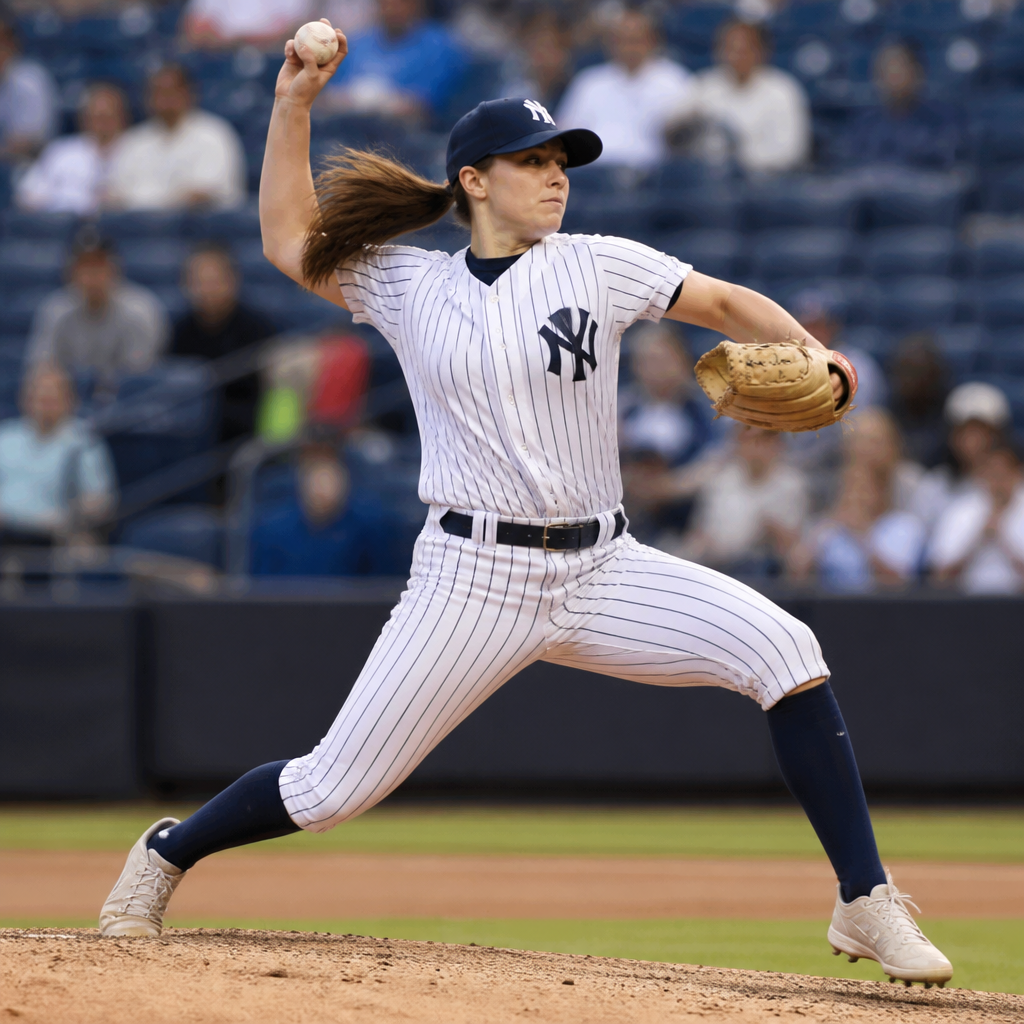
Baseball has long been sold as a men’s domain, yet that story has never matched reality. Women have played, coached, scouted, owned teams, analyzed games, shaped policy, and built fan communities around baseball for more than a century. “Women in baseball” is not a novelty category; it is a broad field that includes professional players, girls in youth pipelines, front office leaders, broadcasters, historians, trainers, entrepreneurs, and advocates working across every level of the sport. When people talk about women’s rising influence in baseball today, they are describing a visible acceleration of a much older movement.
This matters because baseball is both a business and a cultural institution. Who gets access to instruction, facilities, hiring pipelines, media visibility, and leadership roles affects how the game develops. I have worked on baseball content and athlete development projects long enough to see the pattern up close: when organizations treat women as participants rather than exceptions, the talent pool expands, fan engagement improves, and decision-making gets better. The sport benefits in practical ways, from stronger youth retention to smarter front office operations.
This hub article covers the miscellaneous landscape of women in baseball comprehensively. It defines the main areas where influence is growing, explains why barriers persist, and maps the topics readers should understand before diving into more specialized pages. If you want a clear view of where women are changing baseball now, this is the starting point.
The historical record is deeper than most fans realize
Women have been present in baseball since the game’s earliest organized forms. In the nineteenth century, women’s clubs drew crowds in the United States, and Bloomer Girls teams traveled widely in the late 1800s and early 1900s, often facing men’s semipro competition. During World War II, the All-American Girls Professional Baseball League gave women a national platform while many male players were serving overseas. That league mattered not because it was a curiosity, but because it proved women could attract audiences, train at high levels, and sustain a professional structure under pressure.
The postwar period narrowed those opportunities, but it did not erase women from the game. Girls continued playing in youth settings, women coached informally, and pioneers kept challenging exclusion. Little League Baseball did not formally allow girls until the 1970s after legal disputes and public pressure. That policy change was foundational because it moved baseball access from private exception to recognized right. Once girls could enter mainstream youth baseball, the conversation shifted from “should they play?” to “how do we support them well?”
Several milestones illustrate the point. Ila Borders became the first woman to pitch in men’s professional baseball in the modern era. Kim Ng became Major League Baseball’s first female general manager when the Miami Marlins hired her in 2020. Alyssa Nakken broke ground as an on-field coach in the major leagues. Rachel Balkovec became the first woman to manage an affiliated minor league team. These are not isolated feel-good moments. They mark structural openings in player development, roster construction, and baseball operations.
Where women are influencing baseball right now
Women’s influence in baseball is no longer limited to one lane. It spans participation, leadership, media, medicine, technology, and community building. The easiest way to understand the current landscape is to look at the functions that keep the sport running every day.
| Area | How women are shaping it | Real-world example |
|---|---|---|
| Player pipeline | Competing in youth, high school, college club, national, and international programs | Girls Baseball events and national team pathways supported by USA Baseball |
| Coaching and development | Running drills, managing teams, designing practice plans, and teaching skills | Rachel Balkovec managing in affiliated Minor League Baseball |
| Front office leadership | Using scouting, contracts, analytics, and roster strategy to build organizations | Kim Ng leading baseball operations with the Marlins |
| Medical and performance roles | Supporting injury prevention, rehab, biomechanics, strength, and nutrition | Women serving as athletic trainers, PTs, and performance specialists across pro ball |
| Broadcast and journalism | Explaining the game, shaping public understanding, and expanding audience reach | Women analysts and play-by-play voices on regional and national broadcasts |
| Fan and community ecosystems | Creating clinics, nonprofits, merchandise brands, and advocacy networks | Baseball For All expanding girls baseball access nationwide |
Each area reinforces the others. More girls in baseball create demand for coaches who understand their needs. More women in coaching and operations make organizations better at identifying overlooked talent. Better representation in media normalizes expertise and changes who imagines themselves in the sport. In my experience, progress becomes durable when it is built as an ecosystem rather than a publicity campaign.
The player pathway remains the central issue
If one topic anchors every discussion about women in baseball, it is the player pathway. Softball provides meaningful opportunities, but it is not a substitute for baseball. The sports share some skills, yet they differ in pitching mechanics, field dimensions, offensive timing, tactical patterns, and developmental systems. Girls who want baseball specifically need repeated access to baseball instruction, baseball competition, and baseball peers.
This is where many talented players still face friction. In local leagues, girls are often the only female player on a roster. That can be manageable with good coaching, but it can also produce social isolation, reduced playing time, or subtle pressure to switch sports. At older ages, the gap widens because school baseball structures are still inconsistent for girls, and college baseball opportunities remain limited compared with softball. As a result, many promising players hit a dead end not because they lack ability, but because the ladder above them is incomplete.
Organizations are trying to close that gap. Baseball For All has created tournament and development spaces centered on girls baseball. USA Baseball has expanded identification and national team efforts. Internationally, the Women’s Baseball World Cup under the World Baseball Softball Confederation gives elite players a legitimate competitive target. These programs matter because athletes improve when they can see the next step clearly. Talent development is rarely mysterious; it usually depends on reps, coaching quality, competition level, and continuity over time.
Leadership roles are changing how teams operate
One of the most important shifts in modern baseball is the rise of women in leadership positions that directly affect wins and losses. Front office work is not ceremonial. It involves player acquisition, contract valuation, scouting process design, performance integration, and risk management. When women advance into those roles, they influence core baseball decisions, not just organizational culture.
Kim Ng’s path is instructive. Before becoming a general manager, she built decades of experience with the Chicago White Sox, New York Yankees, Los Angeles Dodgers, and MLB’s central office. That matters because credibility in baseball operations is earned through process fluency: understanding labor rules, player valuation, amateur and professional scouting, and the timing of roster decisions. Her appointment did not lower standards; it reflected standards met at the highest level.
The same is true in coaching. Alyssa Nakken’s breakthrough with the San Francisco Giants and Rachel Balkovec’s development track through biomechanics, hitting, and strength settings showed that women can progress through baseball’s technical coaching ladder. On strong staffs, expertise is judged by skill transfer. Can a coach improve swing decisions, defensive footwork, recovery protocols, or game preparation? Players buy in when the answer is yes. In clubhouses I have observed, competence eliminates most novelty faster than any slogan ever could.
Media visibility shapes legitimacy and opportunity
Representation in baseball media is not superficial. It affects hiring, sponsorship, recruiting, and fan expectations. When women are visible as analysts, reporters, historians, and commentators, they change the public’s baseline understanding of who possesses baseball authority. That shift matters for girls deciding whether they belong in the sport and for executives deciding whom to trust in high-profile roles.
Consider the difference between token coverage and substantive analysis. Token coverage focuses on firsts and symbolism alone. Substantive coverage explains mechanics, strategy, player development, labor questions, and business trends. The second type builds durable legitimacy because it treats women as baseball experts rather than side stories. Outlets that do this well help the sport mature. They show that women’s influence touches every baseball conversation, from pitch design and bat speed to attendance strategy and minor league economics.
Digital media has accelerated this shift. Podcasts, newsletters, independent video channels, and social platforms allow women to build trusted baseball audiences without waiting for traditional gatekeepers. That does not solve everything; large platforms still matter. But it broadens the route to authority. I have seen niche creators become essential sources because they consistently explain the game better than legacy outlets chasing viral headlines.
What still holds women back in baseball
Progress is real, but barriers remain structural. Access is still uneven by region, income, race, and age group. Many families cannot find girls baseball teams nearby, afford travel circuits, or locate coaches familiar with female athlete retention in baseball settings. Equipment and facilities are additional friction points, especially when organizations allocate prime fields and indoor training hours to established boys programs by default.
Bias also persists, although it often appears in quieter forms than open exclusion. Women in baseball are frequently expected to prove technical competence repeatedly in ways men are not. Some are steered toward communications or support functions even when their skills align with player development or operations. Others face the “only one in the room” problem, where visibility is high but peer support is thin. Those conditions increase burnout and turnover.
There is also a data problem. Baseball organizations track measurable performance relentlessly, yet participation and advancement data for girls and women are still fragmented across leagues, nonprofits, schools, and private programs. Without consistent numbers, it becomes harder to identify leakage points in the pipeline or justify investment to skeptical stakeholders. Better measurement would improve strategy immediately.
How organizations can build lasting change
The practical answer is not a single campaign but a set of repeatable operating decisions. Start with access: offer girls baseball divisions where local numbers allow, and integrate girls confidently in coed environments where they do not. Train coaches on inclusive practice design, communication standards, and equitable role assignment. Audit playing time, field usage, scheduling, and equipment distribution. Publish transparent hiring criteria for internships, scouting roles, coaching positions, and baseball operations jobs.
Next, build progression points. Host clinics, identification events, mentorship programs, and internships tied to actual advancement rather than photo opportunities. Connect youth players to high school, college club, national team, and international pathways. In professional settings, pair entry with development. Staff members need project ownership, feedback systems, and visible promotion ladders. The organizations that retain women well are usually the ones that treat development as infrastructure.
Finally, tell the truth about standards. Inclusion does not require lowering performance expectations. It requires removing irrelevant barriers that prevent qualified people from entering and advancing. Baseball is at its best when instruction is precise, evaluation is fair, and opportunity is broad. Teams, leagues, and community programs that want stronger talent pools should act accordingly. Read the related pages in this Women in Baseball hub, share this article with your organization, and use it as a checklist for better decisions.
Frequently Asked Questions
Why is baseball often viewed as a male-dominated sport, and how is that perception changing?
Baseball has traditionally been marketed and remembered through male-centered narratives, which is a major reason many people still think of it as a men’s sport. Professional leagues, media coverage, memorabilia, films, and Hall of Fame storytelling have historically focused far more on male players and male leadership. That visibility gap created a distorted impression that women were absent from baseball, when in reality they have been participating for generations as players, coaches, owners, executives, scouts, broadcasters, writers, trainers, and organizers. The issue has never been a lack of female involvement; it has been a lack of consistent recognition.
That perception is changing because the evidence is becoming harder to ignore. More women are appearing in visible baseball roles at the amateur, collegiate, professional, and executive levels. Girls are entering development pipelines earlier, women are taking on decision-making jobs in front offices and player development, and media platforms are telling broader, more accurate stories about the sport’s history. Public understanding is also improving as fans learn about women’s longstanding contributions, from barnstorming teams and wartime leagues to modern leadership in analytics, broadcasting, and organizational strategy. The shift is not just symbolic. It reflects a deeper correction in how baseball defines expertise, talent, and belonging.
What roles do women currently hold in baseball beyond playing on the field?
Women are active in virtually every part of the baseball ecosystem, and that breadth is one of the most important things to understand when discussing women’s influence in the sport. On the business and operations side, women serve as team owners, presidents, general managers, assistant general managers, farm directors, player development specialists, operations coordinators, legal advisors, and marketing executives. In talent evaluation and performance, they work as scouts, analysts, strength coaches, athletic trainers, nutrition professionals, mental skills coaches, biomechanists, and medical staff members. In media and communication, women shape how fans understand baseball as broadcasters, play-by-play voices, color analysts, sideline reporters, editors, historians, documentary producers, photographers, and digital content creators.
Just as importantly, women are influencing baseball through advocacy and community-building. They run youth programs, lead nonprofit initiatives, preserve baseball history, create fan spaces, teach the game, and push organizations to expand opportunity at the grassroots level. Some work directly in uniformed roles on coaching staffs, while others influence the game through policy, development systems, and culture. This range matters because it shows that women’s impact is not confined to a single headline-making breakthrough. It is structural, ongoing, and increasingly essential to how baseball operates, grows, and connects with new generations.
Why does representation of women in baseball matter for the future of the sport?
Representation matters because baseball’s future depends on widening access to talent, leadership, and fandom rather than limiting them. When women are visible in the sport, girls are more likely to imagine a place for themselves in it, whether that means pursuing baseball as athletes, studying the game professionally, or building careers around it. Representation also challenges old assumptions about who is qualified to lead, evaluate players, teach mechanics, or speak with authority about the sport. That shift has practical consequences: organizations that open doors to broader perspectives often gain stronger problem-solving, richer talent pipelines, and a better understanding of diverse fan communities.
There is also a cultural dimension. Baseball has long presented itself as a reflection of society, tradition, and national identity. If the sport wants to remain relevant, it cannot afford to tell an incomplete story about who belongs in it. Seeing women in meaningful baseball roles helps normalize inclusion, updates outdated ideas about gender and expertise, and creates a more accurate picture of the game’s past and present. Representation is not about optics alone. It shapes hiring, mentorship, media narratives, youth participation, and institutional priorities. In that sense, greater visibility for women is not a side issue; it is directly tied to baseball’s long-term health and credibility.
What barriers have women in baseball faced, and what progress is being made to remove them?
Women in baseball have faced a mix of structural, cultural, and visibility-related barriers. Historically, many were excluded from formal opportunities to play, coach, or advance into leadership, even when they had the skills and experience to do so. Stereotypes about physical ability, baseball knowledge, authority, and “fit” have often limited access to jobs, development pathways, and media respect. In some cases, women have had to prove their competence repeatedly in spaces where men were presumed qualified by default. Limited coverage and weak historical recognition also made it harder for aspiring participants to find role models or see viable futures in the sport.
Progress is happening, though it is uneven and still incomplete. More organizations are investing in girls’ baseball programs, inclusive hiring, mentorship initiatives, and leadership development. Women are increasingly being appointed to coaching staffs, front office positions, and on-air analysis roles, giving them both influence and visibility. Independent advocacy groups, historians, and journalists have also helped recover forgotten stories and push institutions to take women’s baseball contributions more seriously. The most meaningful progress comes when change moves beyond symbolic firsts and becomes systemic, with clear pipelines, equitable resources, and long-term support. The direction is encouraging, but continued commitment is necessary to ensure opportunity is not exceptional, but expected.
How can fans, parents, and baseball organizations support women’s continued rise in the sport?
Support starts with taking women in baseball seriously as participants, professionals, and experts rather than treating their presence as unusual or temporary. Fans can help by following women’s baseball stories, supporting girls’ and women’s teams, sharing accurate historical information, and engaging with coverage that highlights women’s contributions across the sport. Parents can make a major difference by encouraging girls to stay in baseball for as long as they want, seeking out competitive development opportunities, and challenging the idea that softball is the only acceptable path for girls who love the diamond. Language matters too. When adults treat baseball as gender-neutral in opportunity and expectation, young athletes notice.
For organizations, meaningful support requires more than celebratory messaging. It means investing in youth access, coaching education, recruitment, facilities, media exposure, and professional advancement pathways. Teams and leagues can create stronger environments by hiring women into substantive roles, ensuring equal access to training and leadership opportunities, and building mentorship networks that help retain talent over time. Schools, community programs, and governing bodies can also expand participation by funding girls’ baseball initiatives and making room for women to lead at every level. The most effective support is practical, visible, and sustained. When institutions back women with real opportunity and fans respond with real interest, baseball becomes stronger, smarter, and more inclusive for everyone.