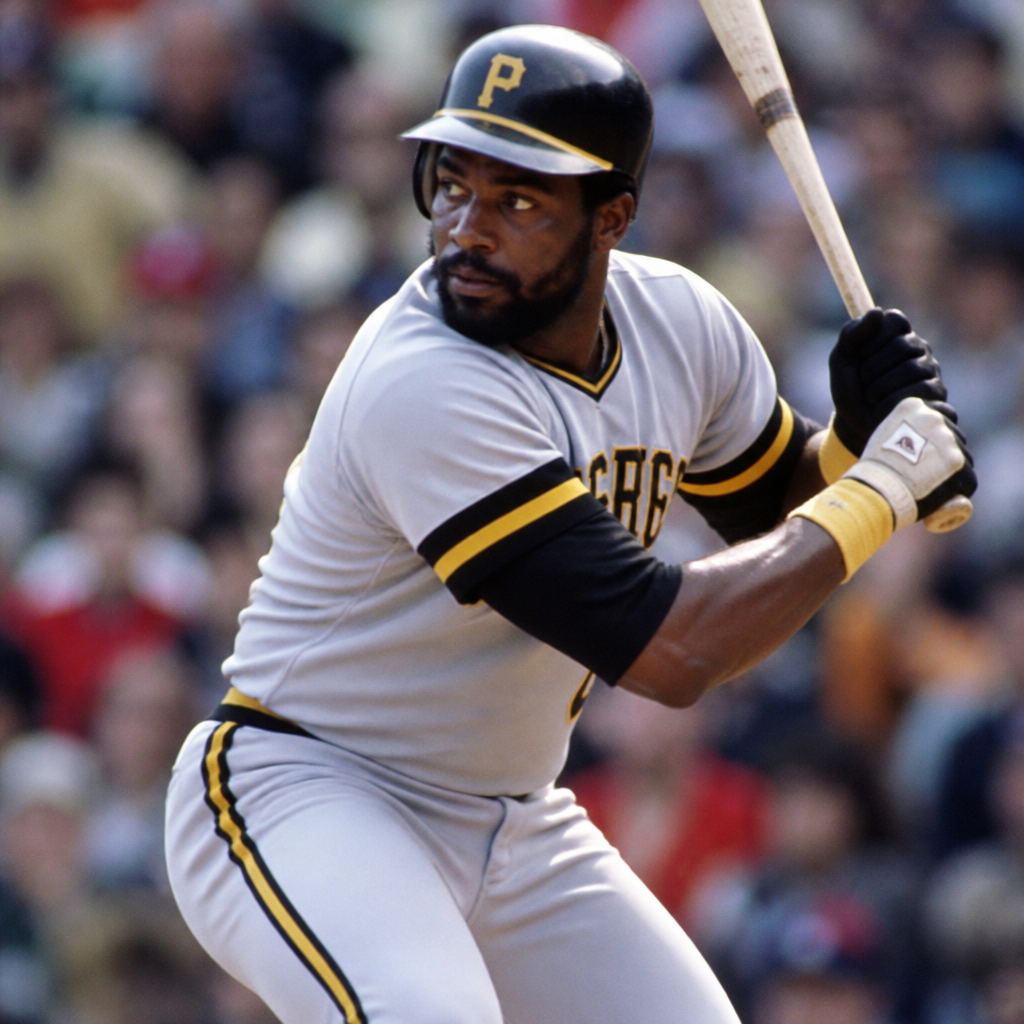
Dave Parker belongs near the center of any serious discussion of baseball’s legendary players because his career combines obvious peak greatness with a longer, more complicated path to recognition. Known as “The Cobra,” Parker built his reputation on three visible tools that changed games immediately: elite arm strength in right field, middle-of-the-order power, and the kind of physical presence that altered how opponents pitched and ran. A player profile of Parker is more than a recap of awards and statistics. It is a study in how superstardom looks in real time, how context shapes reputation, and why Hall of Fame cases often depend on more than a back-of-the-baseball-card summary.
When I evaluate player profiles for a legendary players hub, I look for three things: peak performance, durability across different phases of a career, and influence on the way the sport remembers a player. Parker checks all three. He was the National League MVP in 1978, won batting titles in 1977 and 1978, earned multiple Gold Gloves and Silver Slugger honors, and finished with 339 home runs, 1,493 runs batted in, and 2,712 hits. Those totals matter, but they only partially explain his place in baseball history. The stronger case comes from understanding the environments he played in, the complete skill set he brought to right field, and the adversity that complicated how writers and fans judged him for decades.
Parker’s story also matters because it helps define what a player profile should do. A strong profile explains not just what happened, but why it mattered. It connects the player to team context, era context, and historical comparison. For readers exploring the broader “Legendary Players” topic, Parker serves as an ideal hub subject because his career opens doors to several related themes: the 1970s Pirates, star culture in Major League Baseball, the evolution of defensive evaluation, the impact of injuries and off-field narratives, and the Hall of Fame debate. He is not simply a great right fielder. He is an example of how baseball excellence can be both undeniable and, for years, under-credited.
Defining the key terms around Parker clarifies the discussion. Arm strength refers to the carrying power, velocity, and accuracy of a fielder’s throw, especially from the outfield to bases or the plate. Power means more than home run totals; it includes hard contact, extra-base damage, and run production. Cooperstown is shorthand for the National Baseball Hall of Fame, where election signals sustained historical significance rather than one excellent stretch. Parker’s “long road” to Cooperstown describes the gap between his actual value as a player and the delayed consensus around that value. That gap is the core of his legacy, and understanding it gives this player profile lasting relevance.
Early rise with Pittsburgh and the making of “The Cobra”
Born in Grenada, Mississippi, and raised in Cincinnati, Parker signed with the Pittsburgh Pirates and reached the majors in 1973. By the middle of the decade, he had become one of the sport’s most intimidating young stars. The Pirates of that era were talented, colorful, and often ahead of the culture, and Parker fit naturally into their identity. At 6-foot-5 with uncommon athleticism, he looked different from many corner outfielders. He could run, throw, and hit for average and power, making him a complete player rather than a one-dimensional slugger.
His breakout came in 1975, when he hit .308 and signaled that he was more than a promising regular. Then came the true superstar phase. In 1977 Parker won the National League batting title with a .338 average. He followed that by hitting .334 in 1978, winning another batting title and the NL MVP award. During those seasons, he was not just productive; he was central to how opponents game-planned. Pitchers had to navigate his bat in all situations, and baserunners had to account for his arm every time a ball was hit to right field.
The nickname “The Cobra” suited both his style and his image. Parker had a coiled, explosive quality at the plate and in the field. He played with swagger at a time when that trait could invite criticism as much as admiration, especially from traditional media. That matters when reviewing his profile because public reaction shaped his reputation almost as much as his numbers did. In the 1970s, a star who carried himself boldly could be described as polarizing even while producing at an MVP level.
What made Parker special: hit tool, power, and throwing arm
Parker’s offensive game worked because he was not selling out for home runs. He was an advanced all-fields hitter who could drive pitches with authority from line to line. In his prime, he combined batting average, slugging, and run production in a way that made him one of the most complete right fielders in baseball. He hit 30 home runs in 1978 and drove in 117 runs, but the larger point is that he could hurt a team in several ways. He could take a pitch the other way, handle velocity, and punish mistakes without the swing-and-miss profile associated with later power hitters.
His arm, however, was the tool people remembered first. Parker’s throws were not just strong; they were game-changing. The best-known sequence came during the 1979 All-Star Game, when he threw out Jim Rice at third base and Brian Downing at home plate. Those assists were nationally televised proof of what National League opponents already knew. In an era before modern tracking data such as arm strength leaderboards, Parker’s reputation came from repeated visible demonstrations. Managers adjusted baserunning decisions because challenging him could cost an inning.
Defensively, Parker won Gold Gloves in 1977, 1978, and 1979. Modern metrics for older outfield defense are imperfect, but the combination of awards, eyewitness accounts, and game footage supports the conclusion that he was an impact defender in his prime. He closed space better than many large outfielders, and his accuracy turned deep flies into high-risk adventures for aggressive runners. When building player profiles, this is exactly where context matters: a right fielder with Parker’s arm affected strategy in ways traditional stat lines cannot fully capture.
Peak years, championships, and career milestones
Parker’s prime was concentrated but substantial, and his later years added meaningful longevity. With Pittsburgh, he was a foundational star on the 1979 World Series championship club, a team remembered for the “We Are Family” identity and deep roster strength. He was not at his personal statistical peak in that season, but his status as the franchise’s marquee talent remained intact. The championship strengthened his legacy because it connected his individual excellence to the highest team achievement.
After Pittsburgh, Parker’s career evolved rather than collapsed. He played for Cincinnati, Oakland, Milwaukee, California, and Toronto, adapting from all-around superstar to productive veteran run producer. In 1985 with the Reds, he led the National League with 125 RBIs. In 1986, he hit 31 home runs and drove in 116. Those seasons matter because they show a second act that many Hall of Fame discussions once overlooked. He was no longer the dynamic five-tool force of the late 1970s, but he remained a dangerous middle-order hitter on contending clubs.
| Career marker | Detail | Why it matters |
|---|---|---|
| MLB debut | 1973 with Pittsburgh Pirates | Start of a 19-season career across multiple competitive teams |
| Batting titles | 1977 and 1978 | Confirms elite contact ability, not just power |
| NL MVP | 1978 | Recognizes him as the league’s best all-around player at peak |
| World Series title | 1979 Pirates | Links personal stardom to championship success |
| Career totals | 2,712 hits, 339 home runs, 1,493 RBIs | Shows both prime excellence and lasting production |
He finished with seven All-Star selections, three Gold Gloves, three Silver Sluggers, and totals that compare favorably with many decorated outfielders. The historical takeaway is straightforward: Parker was not a brief sensation. He had an MVP peak, championship credibility, and enough later-career production to remain relevant well beyond his athletic prime.
The obstacles: injuries, perception, and the Hall of Fame delay
If Parker was this accomplished, why did Cooperstown take so long? The answer starts with injuries. Knee problems reduced his mobility and changed the shape of his career. Players of his size often depend on lower-half strength for both defensive range and offensive force, and once that base erodes, the full package becomes harder to sustain. Parker still hit, but the breathtaking all-around version of “The Cobra” became harder to see every day.
Then there was perception. Parker played with confidence, signed a then-record contract extension, and carried himself like a superstar. In another era, that image might have been celebrated more consistently. Instead, some coverage framed him as a symbol of baseball excess. During the 1980s, his name also surfaced in relation to baseball’s drug trials, an episode that complicated public memory even though his career record remained much broader than that controversy. Hall of Fame voting often reflects emotion and narrative as much as measured analysis, and Parker’s candidacy suffered from that reality.
I have reviewed many Hall cases where the central problem is not a lack of greatness but a messy arc. Parker is a textbook example. His best seasons were extraordinary, yet his decline from that peak was visible enough to shape perception. Voters tend to reward either overwhelming career totals or a cleaner narrative of dominance. Parker had a strong blend of both, but not to a degree that made the vote automatic. As modern analysis became more common, his case improved because the conversation widened beyond milestone worship and personality-driven judgment.
How Parker fits among legendary right fielders
Comparing Parker with other legendary right fielders clarifies his standing. He is not Hank Aaron or Roberto Clemente in career stature, and he does not match Reggie Jackson’s postseason fame or Tony Gwynn’s pure contact legacy. Yet Parker belongs in the next serious tier because his best version combined elements of several great archetypes. He had batting-title ability, middle-order power, strong defense, and one of the most feared outfield arms of his time.
Context matters here. Right field has historically been an offense-first position, but the greatest players there influence games with throws as well as bats. Clemente is the gold standard for that complete profile, and Parker, while not equal to Clemente historically, carried a similar two-way intimidation factor in his peak years. The comparison is useful not because it makes them identical, but because it shows the type of value Parker delivered. He was a run producer who could also erase runs.
In a player profiles hub, Parker should be presented as a bridge figure between classic five-tool stars and later sluggers whose value was concentrated mostly in offense. He represents an older model of right fielder: physically imposing, technically skilled, aggressive, and feared on both sides of the ball. That makes his profile especially helpful for readers studying how baseball roles and evaluation standards changed across eras.
Why Dave Parker remains essential in player profiles
Dave Parker remains essential because his career teaches readers how to evaluate greatness beyond easy headlines. He was one of baseball’s most complete players at his peak, a champion, an MVP, and a hitter whose production lasted long after injuries changed his game. His throwing arm is still part of baseball folklore because it was not decorative talent; it directly changed outcomes. His power was real, but so was his hit tool, which is why batting titles sit alongside his home run totals. That combination is rare in any era.
His long road to Cooperstown also carries an important lesson. Great players are not always recognized on schedule. Reputation, media framing, injury timing, and off-field narratives can cloud the historical record for years. Parker’s case shows why careful player profiles matter. They restore context, separate peak value from decline, and judge careers by the full body of evidence. For a “Legendary Players” hub, that makes him an ideal cornerstone subject, because understanding Parker improves the way readers understand many other stars with complex legacies.
The clearest takeaway is simple: Dave Parker was more than a memorable nickname and a famous arm. He was a dominant right fielder, a central figure in championship baseball, and a player whose complete value took too long to be fully appreciated. If you are building your knowledge of baseball history through player profiles, start with Parker and then branch into related legends from his era. Few careers better show how talent, context, and legacy intersect on the road to Cooperstown.
Frequently Asked Questions
Why was Dave Parker called “The Cobra,” and what made him such a feared presence on the field?
Dave Parker earned the nickname “The Cobra” because of the way he carried himself and the way he struck in games: quick, forceful, and intimidating. He was not simply a talented player with good statistics; he looked and played like a star from the moment he stepped onto the field. Parker combined rare physical strength with confidence, and that combination made him stand out in an era full of great personalities. Pitchers had to account for his power in the middle of the lineup, outfielders had to respect his ability to drive the ball to all parts of the park, and baserunners had to think twice when testing his arm in right field.
What made him especially feared was that his impact was immediate and visible. Some players influence games in subtle ways, but Parker’s best tools announced themselves loudly. He could change an inning with one swing, stop a rally with one throw, or alter an opponent’s strategy simply by being in the lineup. His size and athleticism gave him a larger-than-life profile, but his reputation was built on production as much as style. At his peak, Parker was one of those players who could dominate attention before the first pitch, and then justify that attention once the game began.
How important was Dave Parker’s arm strength to his legacy?
It was central to his legacy. Parker’s throwing arm was not just strong by right fielder standards; it was one of the defining defensive weapons of his generation. When people talk about great outfield arms, his name belongs high on the list because his throws did more than produce highlights. They changed behavior. Opponents did not run as aggressively when the ball went to right field, and that kind of deterrence is one of the clearest signs of truly elite defensive value. A great arm affects the game even when no assist is recorded, because runners and coaches begin making more cautious decisions.
Parker’s arm also mattered because it fit perfectly with his overall identity as a complete star. He was not just a slugger hiding in a corner outfield spot. He brought force on both sides of the ball. That gave him a broader kind of greatness than players whose value came only from hitting. For fans, his throws became part of the mythology: hard, accurate, aggressive, and often unforgettable. For historians, that arm helps explain why his peak was so highly regarded. He was not merely collecting numbers; he was controlling space, tempo, and risk in a way that very few players could.
What defined Dave Parker’s offensive game beyond just home run power?
Although power is one of the first things associated with Parker, his offensive game was more complete than a simple home run total suggests. He was a true middle-of-the-order threat because he could do damage in multiple ways. He hit with authority, drove in runs, and forced pitchers to work carefully, but he also brought batting skill and presence to the plate. At his best, he was not a one-dimensional masher selling out for loft. He could hit for average, punish mistakes, and use his strength to turn any at-bat into a momentum swing.
Another important part of Parker’s offensive value was the pressure he created. Opponents had to pitch to him with caution, which affected how innings unfolded around him. His physicality and reputation often changed game plans before contact was even made. That matters when evaluating a star from a historical perspective. Great hitters are not only measured by the balls they hit over the fence but also by the defensive alignments they force, the bullpen decisions they trigger, and the lineup protection they provide for teammates. Parker’s bat carried that kind of weight. He was the sort of offensive force who shaped the rhythm of a game, not just the box score after it ended.
Why did it take so long for Dave Parker to gain full Cooperstown-level recognition?
Parker’s road to Cooperstown-level recognition was long because his career invites two different conversations at once. On one hand, his peak was unmistakably brilliant. On the other, the total arc of his career was more complicated than that of some players who sail smoothly into baseball’s inner circle. When voters and historians assess Hall of Fame cases, they often wrestle with how to balance breathtaking prime years against longevity, decline, injuries, changing perceptions, and the shifting standards of different eras. Parker’s candidacy lived right in the middle of that tension.
Part of the delay also comes from the fact that some players are easier to summarize than others. Parker was not just a stat line or a single-season wonder; he was a commanding star whose value included style, intimidation, defense, arm strength, and context. Those elements are real, but they are not always captured neatly in quick Hall of Fame debates. Over time, many observers came to appreciate that Parker’s greatness was not limited to awards or isolated milestones. His case became stronger as people looked more carefully at peak value, two-way impact, and how feared he truly was during his best seasons. In that sense, the long wait says as much about the complexity of evaluating baseball greatness as it does about Parker himself.
Where does Dave Parker belong in conversations about baseball’s legendary players?
Dave Parker belongs much closer to the center of that conversation than casual history sometimes places him. He may not always be the first name mentioned alongside the most automatic legends, but any serious discussion of baseball’s great players should make room for him because his career combined elite peak performance with unmistakable star power. He was one of those rare figures whose talent was obvious even before the numbers were reviewed. The arm, the power, the presence, the reputation, and the ability to control games in more than one phase all support his standing as a historically important player.
What strengthens his place in baseball history is that he represents a fuller version of greatness than fans sometimes remember. Parker was not merely famous, and he was not only productive. He was consequential. He could shape strategy, energize a team, intimidate opponents, and deliver the kind of signature moments that define eras. That makes him more than a player profile subject or an awards recap. It makes him a legitimate cornerstone in conversations about dominant right fielders, powerful all-around stars, and players whose careers deserve deeper appreciation. If the goal is to identify who truly left a mark on the sport, Dave Parker absolutely belongs in that group.