
Nationals Park, nestled along the Anacostia River in Washington, D.C., stands as a symbol of the city’s renewed love for baseball. Its journey, from site selection to becoming a cherished sports venue, reflects the city’s vibrant baseball history and its quest for modernity.
The Quest for a New Ballpark
The story of Nationals Park began when the Montreal Expos were looking for a new home, and Washington, D.C. emerged as a viable location. Site selection was a meticulous process, with several locations considered before settling on the chosen spot near the SE Anacostia waterfront.
In 2006, the city broke ground on this ambitious project, with Mayor Anthony Williams playing a crucial role in this development. Despite initial financial challenges, the city forged ahead, adopting a design-build approach to expedite the construction process. Nationals Park was not just a stadium; it was envisioned as a catalyst for urban regeneration in the Capitol Riverfront area.
The Dawn of a New Era
Nationals Park officially opened its doors in 2008, signaling a new chapter in Washington’s baseball saga. Interestingly, the first game played at Nationals Park was not a major league game but a college matchup between George Washington University and Saint Joseph’s University, a nod to the local community’s deep connection with the sport.
The Washington Nationals played their first game in this new abode against the Baltimore Orioles, and soon after, they faced the Atlanta Braves in their official 2008 MLB season opener. President George W. Bush’s ceremonial first pitch marked the continuation of a longstanding baseball tradition, further solidifying the park’s role in the city’s and nation’s baseball narrative.
Architectural Marvel and Public Reception
Designed to blend with Washington, D.C.’s architectural landscape, Nationals Park features light shades of precast concrete and stone. While some architectural critics have been less than flattering in their assessments, many acknowledge the park’s attempt to harmonize with the city’s iconic federal buildings.
The exterior design, criticized for its simplicity and lack of standout features, was a product of the challenging and compromised process of working with the local government and the desire to blend into the city’s broader architectural theme.
Nationals Park Today
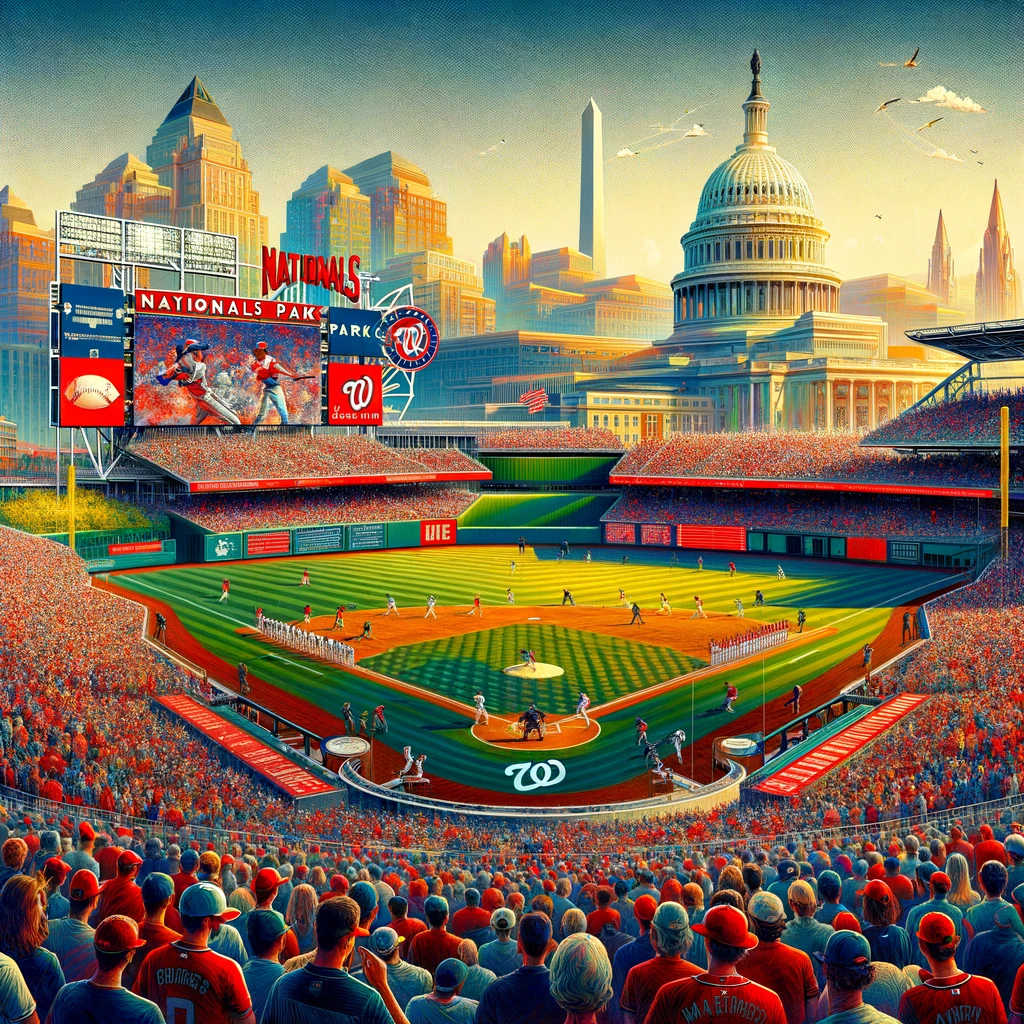
Nationals Park has transcended its role as merely a sports venue. Hosting not only baseball games but also concerts and political events, it has become a cultural hub for the city. The park boasts a seating capacity of over 41,000 and offers stunning views of the D.C. skyline and the Anacostia River.
The park is adorned with elements of Washington, D.C.’s history, such as limestone and brickwork, enhancing its appeal. It’s also the first LEED-certified green major professional sports stadium in the United States, underscoring its commitment to sustainability.
A Legacy of Baseball in Washington D.C.
The inception of Nationals Park is intertwined with Washington D.C.’s rich baseball history. The city’s affair with baseball dates back to the late 19th century, with the Washington Senators joining the National League in 1892. Playing at National Park and later at Griffith Stadium, the city witnessed memorable baseball moments, including hosting the Major League Baseball All-Star Game and World Series. However, the departure of the Senators in 1960 left a void, marking the beginning of a long hiatus of major league baseball in the city.
The Montreal Expos and the Birth of the Nationals
The revival of baseball in Washington D.C. can be traced back to the struggles of the Montreal Expos. The Expos faced declining fan support and stadium woes, leading Major League Baseball to consider relocation. Washington D.C. emerged as the favored destination due to its size and absence of a major league team for over three decades.
In September 2004, it was announced that the Expos would move to Washington D.C., marking the return of major league baseball to the capital. Renamed the Washington Nationals, the team initially played at RFK Stadium, an aging multipurpose stadium. The need for a modern, baseball-specific venue was clear, leading to the birth of Nationals Park.
The Impact of Nationals Park
Since its opening, Nationals Park has significantly impacted the local community and the broader baseball world. The stadium has been a catalyst for neighborhood revitalization, transforming the Capitol Riverfront area into a vibrant urban space.
The park has not only been a home for the Nationals but also a venue for significant cultural events, further embedding itself into the city’s social fabric. Nationals Park’s role in the 2019 World Series, where the Nationals secured their first championship, etched a permanent mark in the city’s sports history.
An Enduring Symbol of Baseball Passion
Nationals Park stands today as more than a mere sports venue. It is a modern-day coliseum that encapsulates the city’s long-standing relationship with baseball, its architectural identity, and its forward-thinking environmental stance.
The park’s blend of modern amenities with a respect for tradition has made it a favored destination for baseball fans and tourists alike. Nationals Park not only revived baseball passion in Washington D.C. but also redefined it for a new generation, making it an enduring symbol of the city’s love for the game.
Conclusion
Nationals Park is not just a place where baseball is played; it’s where history is made and cherished. It’s a testament to Washington D.C.’s resilience and commitment to rejuvenating its baseball heritage. The park stands as a beacon of hope, not just for sports fans but for anyone who appreciates the power of a community united by a common passion.
[End of article. References: Wikipedia (Wikipedia), MLB (MLB.com), MLB Stadiums (MLB Stadiums), Ballparks of Baseball (Ballparks of Baseball), BaseballParks (BaseballParks), Washington.org (Home | Washington DC)]