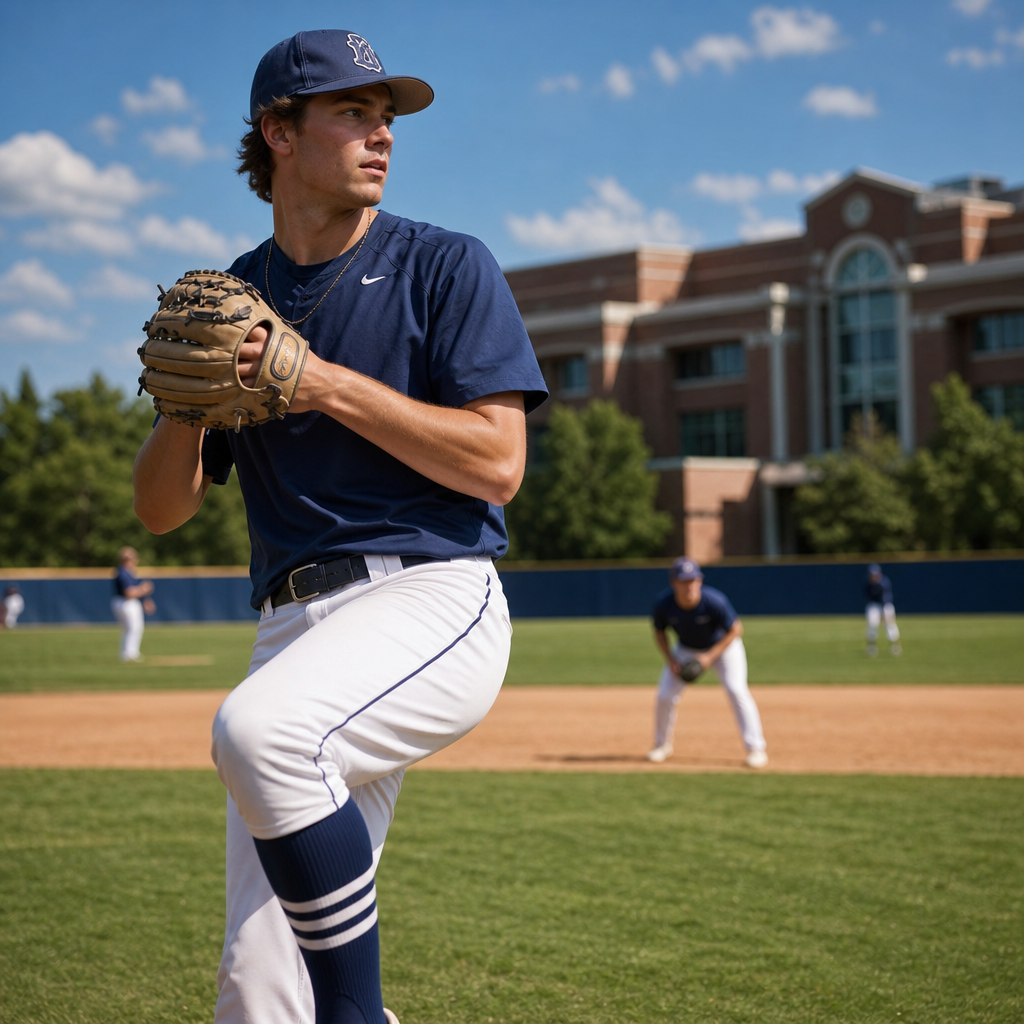
Preparing for the draft shapes nearly every serious college baseball career, because the process affects training, academics, visibility, signing leverage, and long-term development. In college baseball, the draft is not one event on one summer night; it is a multi-year evaluation cycle in which scouts, coaches, analysts, and front offices build opinions on a player’s tools, performance, health, and makeup. For players in Division I, Division II, Division III, junior college, and NAIA programs, the college baseball experience often becomes the bridge between amateur potential and professional opportunity. Understanding that bridge matters not only for athletes, but also for parents, coaches, trainers, and fans following the path from campus to the minor leagues.
When people say a player is “preparing for the draft,” they usually mean more than improving batting average or lowering ERA. Draft preparation includes strength and conditioning, swing or pitch design, defensive development, nutrition, injury prevention, video review, analytics, summer ball decisions, communication with advisors, and learning how professional organizations evaluate value. It also includes practical realities such as eligibility rules, transfer choices, scholarship limits, and whether signing now is better than returning to school. I have worked around this process long enough to see the same misunderstanding repeat every spring: players think the draft rewards a hot month, while clubs usually reward a long record of projectable ability supported by trustworthy information.
That is why this college baseball draft guide works best as a hub article. The draft conversation touches everything inside the broader minor leagues and college baseball landscape: recruiting, roster construction, player development, NIL, Cape Cod League exposure, TrackMan data, medical history, and post-draft assignment. A college shortstop trying to raise his stock is also managing class schedules, recovery sessions, travel fatigue, and pressure from expectations. A Friday-night starter with premium velocity may still slide if command, health, or workload history creates risk. A polished senior may hear less buzz than a toolsy sophomore, yet sign faster because his profile is easier to price. The system is layered, and each layer affects the college baseball experience in distinct ways.
Players also need accurate definitions. “Draft stock” refers to how the industry currently values a player relative to the class. “Projection” means what a body, skill set, or delivery could become, not merely what it is today. “Signability” reflects the likelihood a player will accept a bonus offer. “Makeup” covers competitiveness, work habits, coachability, emotional steadiness, and clubhouse fit. “Helicopter view” is the perspective area scouts and crosscheckers try to maintain when separating short-term performance spikes from real growth. If a hitter posts loud exit velocities but chases breaking balls off the plate, evaluators note both. If a pitcher adds velocity but loses strike efficiency, clubs weigh upside against role risk. The point is simple: the draft is a whole-player evaluation, and college baseball exposes that full profile in ways high school ball often cannot.
How Scouts Evaluate College Baseball Players
Professional scouting in college baseball blends old-school observation with modern data. The classic tools remain central: hit, power, run, field, and arm for position players; fastball, secondary pitches, command, control, delivery, and durability for pitchers. But almost every organization now layers objective information onto those observations. For hitters, clubs track bat speed, chase rate, swing decisions, zone contact, hard-hit percentage, launch characteristics, and performance against velocity and spin. For pitchers, they examine velocity bands, induced vertical break, horizontal movement, release height, extension, spin efficiency, strike rate, whiff rate, and quality of contact allowed. TrackMan, Hawk-Eye, Rapsodo, Blast Motion, and Edgertronic cameras are common reference points, especially at larger programs and summer showcases.
Context matters as much as raw numbers. A .330 average in a hitter-friendly conference is not automatically better than a .290 average in a league with premium Friday starters and pitcher-friendly parks. Scouts ask how the production happened. Did the hitter drive good fastballs and stay on spin, or did he feast on mistakes? Did the pitcher miss bats in the zone, or did college hitters expand because his conference lacked discipline? I have seen players with modest surface stats move up boards because the underlying traits were strong and the competition context supported future growth. I have also seen players with gaudy stat lines get downgraded because scouts did not believe the swing, body, or pitch shapes would translate to pro ball.
Defensive value can swing a draft outcome sharply. A college center fielder who truly stays in center and controls the strike zone has more paths to major league value than a corner-only player with similar offense. Likewise, a catcher who receives, blocks, throws accurately, and leads a staff can attract strong interest even if his offensive ceiling is modest. On the pitching side, starting potential remains prized, but many college relievers are drafted because their fastball-slider combination, strike-throwing ability, and competitive history fit a bullpen role quickly. Clubs are not just drafting a stat line; they are drafting likely professional roles.
Building Draft Value During the College Season
The college season is where reputation meets evidence. For most players, draft value rises when performance confirms offseason changes. A hitter who spent fall work improving swing decisions must show fewer empty swings on pitches above the hands and off the outer edge. A pitcher who trained for more power must hold velocity into the fifth and sixth innings, not just air out for one showcase inning. Consistency matters because scouts revisit players repeatedly. One good weekend can get attention; ten solid weeks build conviction.
Routine is the hidden skill that separates draftable college players from talented but unstable ones. The strongest programs build weekly rhythms around lifting, throwing progression, cage work, scouting reports, sleep, hydration, and recovery. Position players usually benefit from specific plans: machine work against velocity, breaking-ball recognition, opposite-field damage practice, and defensive reps tied to game speed. Pitchers need individualized workloads, between-start bullpens, arm care, mobility, and objective feedback on command. When players treat these habits as nonnegotiable, scouts notice the cleaner actions, steadier bodies, and more repeatable performance.
Summer baseball adds another layer. The Cape Cod League remains the highest-profile proving ground because wood bats, elite pitching, and concentrated scouting create a strong translation test. Other summer leagues also matter, especially for players seeking reps, role changes, or health recovery. The key is choosing an environment that matches development goals. A player who needs at-bats against quality spin should prioritize exposure to advanced pitching. A pitcher returning from heavy spring usage may need controlled innings more than another showcase. Smart draft preparation is not constant visibility; it is targeted development with enough visibility to verify progress.
| Area | What Scouts Want to See | Common Mistake | Better Approach |
|---|---|---|---|
| Hitting | Zone control, impact contact, adjustment to spin | Chasing raw power numbers | Improve swing decisions and contact quality |
| Pitching | Velocity with strikes, usable secondaries, starter traits | Max effort every outing | Build sustainable stuff and command |
| Defense | Reliable actions at a premium position | Ignoring footwork details | Train position-specific movement daily |
| Body and health | Strength, mobility, availability | Overtraining through fatigue | Use monitored recovery and workload planning |
| Exposure | Verified performance against strong competition | Attending every event possible | Choose strategic showcases and summer leagues |
The Role of Analytics, Technology, and Player Development
College baseball has changed dramatically because information is now immediate and actionable. Ten years ago, many players heard broad coaching phrases like “stay through the ball” or “get on top of it” without hard evidence. Today, a hitter can compare blast metrics, contact point, attack angle, and exit velocity distribution after one cage session. A pitcher can see how a grip change altered seam orientation or horizontal break the same day. Used correctly, this technology accelerates development. Used poorly, it overwhelms players with disconnected numbers.
The best programs translate data into clear priorities. For example, if a right-handed hitter handles velocity but struggles against sweepers, the answer is not “increase bat speed” just because bat speed sounds impressive. The answer might be improving swing decisions, adjusting starting posture, or refining how the barrel enters the zone. If a pitcher’s four-seam fastball has modest ride but strong arm-side movement, forcing a generic high-fastball plan may be less effective than pairing that pitch with a well-shaped cutter or changeup. Development works when the player’s physical traits, pitch characteristics, and competitive role align.
Analytics also shape communication with pro clubs. Scouts and analysts appreciate players who understand their own profiles without sounding rehearsed. A pitcher should be able to explain how he attacks lefties, why his slider works, and what he is doing to improve strike efficiency. A hitter should know his chase tendencies, his damage zones, and the adjustments he made against certain pitch types. This is not about speaking in jargon. It is about showing ownership of development. Organizations trust players more when they can connect process to results in plain language.
Mental Preparation, Academics, and Off-Field Decisions
The college baseball experience is demanding because the draft conversation runs alongside school, social pressure, travel, and uncertainty. Mental preparation is not a motivational slogan; it is the ability to regulate performance under repeated evaluation. Scouts are in the stands, social media is active, and bonus speculation can spread through a clubhouse quickly. Players who handle this well usually control the controllables: daily routine, response after failure, and communication with coaches and support staff. They do not turn every at-bat into a referendum on their future.
Academic stability matters more than many families expect. Eligibility problems, poor class habits, and weak time management can signal broader maturity concerns. For underclassmen, returning to school may be the best leverage play, and that option depends on staying academically sound. I have seen players improve their draft position simply by creating better structure around sleep, study blocks, nutrition, and travel recovery. Professional baseball values discipline, and college is often the first place where that discipline becomes visible every day.
Off-field choices include advisors, NIL opportunities, transfer decisions, and medical transparency. Players should understand who is allowed to advise, what information can be shared, and how bonus expectations affect negotiations. NIL can help some athletes financially, but it rarely replaces the value calculation of beginning a pro career at the right moment. The transfer portal can offer opportunity, yet moving schools for exposure alone is risky if the fit, role, or development resources are weaker. Honest medical disclosure is essential. Clubs will find injury history during the process, and credibility drops fast when information was hidden.
What Happens on Draft Day and After the Selection
Draft day is the public moment, but for players it is mostly the release of months or years of uncertainty. Selections reflect scouting reports, analytics models, medical reviews, bonus pool strategy, organizational need, and signability calculations. That is why players with similar talent can come off the board far apart. One club may love a pitcher’s characteristics but fear the medical file. Another may value a hitter highly yet doubt he will sign away from school. The board is not a pure ranking of talent.
After selection, the key questions are straightforward: sign or return, bonus or development opportunity, immediate role, and long-term fit. Once a player signs, the college baseball experience gives way to professional structure fast. There are intake physicals, strength assessments, baseline testing, skill plans, and likely assignment to a complex league, Low-A, or another development setting depending on the organization and player readiness. Many draftees are surprised by how specific pro plans become. A club may ask a hitter to change swing decisions before swing shape, or ask a pitcher to improve strike quality before adding velocity. The transition rewards players who already learned how to process feedback in college.
Families should remember one final point: being drafted is not the finish line. It is entry into a tougher environment where everyone was a standout. The players who move best from college baseball to the minor leagues are usually the ones who embraced development before they had pro resources, understood their profile honestly, and built habits that survive pressure. If you are preparing for the draft, use this hub as a starting point, then dig deeper into scouting, player development, summer leagues, eligibility, and minor league transition topics across this sub-pillar. Better information leads to better decisions, and better decisions give talent its best chance to become a career.
Frequently Asked Questions
How does the MLB draft process affect a college baseball player long before draft day?
For most serious college players, the draft is not a single moment at the end of a season. It is an ongoing evaluation process that can begin well before a player becomes draft-eligible. Scouts and decision-makers track athletic tools, game performance, physical development, medical history, consistency, and makeup over multiple years. That means a player’s daily habits in the weight room, classroom, bullpen, cage, and dugout all contribute to how he is viewed over time. A strong spring season matters, but so do previous summers, fall development, injury recovery, and the ability to adjust when opponents make changes.
The process also influences how players structure their college experience. Many become more intentional about strength and conditioning, nutrition, sleep, recovery, and skill development because they know pro organizations value durability and long-term projection as much as raw talent. Academic progress matters too, especially because eligibility, transfer decisions, and future options can all affect leverage and stability. A player who understands that the draft is a multi-year cycle is usually better prepared mentally, because he learns to focus on controllable factors instead of chasing one hot streak or one showcase result. In practical terms, preparing for the draft often means building a complete profile over time: productive performance, dependable habits, healthy development, and the maturity to handle pressure and feedback.
What do scouts and MLB teams look for in college baseball players across different levels like Division I, Division II, Division III, junior college, and NAIA?
Professional clubs look for talent everywhere, but they evaluate context carefully. In Division I baseball, players often face high-end competition more regularly, so scouts may have larger sample sizes against premium velocity, advanced breaking balls, and strong defensive teams. At the Division II, Division III, NAIA, and junior college levels, evaluators still care deeply about performance, but they spend more time determining how a player’s tools and production translate against stronger professional competition. That does not mean players from non-Division I programs are overlooked. It means teams work harder to compare the player’s raw ability, athleticism, body control, bat speed, arm strength, pitch characteristics, and strike-zone decisions against the overall level of competition he has faced.
For hitters, scouts often study bat-to-ball skill, approach, contact quality, power potential, swing decisions, performance with two strikes, ability to handle velocity, and adjustment against spin. For pitchers, teams evaluate velocity, command, pitch shapes, movement profiles, strike-throwing ability, deception, durability, mechanics, and whether the arsenal projects to start or relieve in pro ball. Defensively, they look at range, hands, footwork, arm accuracy, actions, and overall athleticism. Beyond physical tools, organizations care about makeup: coachability, competitiveness, resilience, work ethic, accountability, and how a player responds when things go badly. At every college level, the players who help themselves most are the ones who pair measurable tools with consistent improvement and a strong reputation for professionalism.
How should college players balance draft preparation with academics, team responsibilities, and long-term development?
This is one of the most important challenges in the college baseball experience. Players who become too focused on the draft can lose sight of the very things that improve their draft stock in the first place: playing well for their team, staying academically eligible, and continuing to develop physically and mentally. The best approach is to treat draft preparation as part of a disciplined college routine rather than as a separate obsession. That means showing up for team responsibilities, keeping class schedules in order, communicating with coaches and academic support staff, and building training plans that support performance instead of creating burnout.
Long-term development should stay at the center of every decision. A player may be tempted to chase radar-gun readings, showcase metrics, or social media attention, but professional clubs are generally more interested in sustainable progress than quick fixes. For hitters, that may mean improving swing decisions, strength, and consistency against quality pitching rather than selling out for isolated power. For pitchers, it may mean developing a more complete arsenal, sharpening command, and protecting arm health instead of trying to max out every outing. Academics also remain highly relevant. Strong academic standing protects future options if injuries, underperformance, or changes in draft position occur. In many cases, the players who navigate the process best are the ones who remember that college baseball is still a developmental environment. The draft matters, but so do education, team contribution, and the habits that support a longer career.
What role do exposure, summer ball, showcases, and performance data play in improving draft opportunities?
Exposure matters, but it is most valuable when it is backed by real ability and consistent performance. Summer leagues, showcases, prospect events, and analytics-driven evaluations can all help a player become more visible to scouts and cross-checkers. Summer ball is especially important because it often places players in competitive environments outside their regular college schedule, giving teams another chance to compare them against strong peers. For players from smaller programs or less visible conferences, these settings can be critical in proving that their tools and production hold up against broader competition.
At the same time, exposure alone does not carry a player very far. Scouts are looking for evidence that performance is repeatable and that the underlying traits support future growth. That is where modern data plays a major role. Hitters may be evaluated through exit velocity, contact rates, swing decisions, chase rates, and batted-ball quality. Pitchers are often assessed through velocity trends, spin characteristics, movement profiles, strike efficiency, release traits, and miss-inducing qualities. Still, data is rarely viewed in isolation. Teams want to know whether the numbers show up in games, whether the player competes under pressure, and whether his body and routines support durability. Players should think of exposure and data as tools that help tell their story, not as substitutes for development. The strongest draft cases come from players who pair visibility with production, strong evaluations, and a track record of making adjustments.
How does signing leverage work for college players, and why is it such a major part of draft preparation?
Signing leverage is a major factor because the draft is not just about where a player is selected. It is also about whether the player signs, for how much, and whether turning professional at that point is the best long-term decision. A college player’s leverage depends on several variables, including eligibility remaining, age, performance history, injury status, projected future development, and the quality of alternative options. For example, a junior college player may have flexibility because he can sign or continue his amateur path at a four-year school. A player at a four-year college may have different leverage depending on whether he can return for another season, transfer, or improve his stock with more development.
This is why smart draft preparation includes honest conversations with coaches, family, advisors, and trusted mentors about value, fit, and timing. A player needs to understand not only how teams view him, but also what he stands to gain by signing now versus returning to school. In some cases, signing quickly makes sense because the opportunity, bonus, and developmental environment align well. In others, going back to school may offer a better path to physical growth, role expansion, academic progress, and improved future leverage. Teams also evaluate how signable a player appears, because that affects strategy on draft day. Ultimately, leverage is about options. The better developed, better informed, and better supported a college player is, the more clearly he can navigate the business side of the process without losing sight of what matters most for his career trajectory.