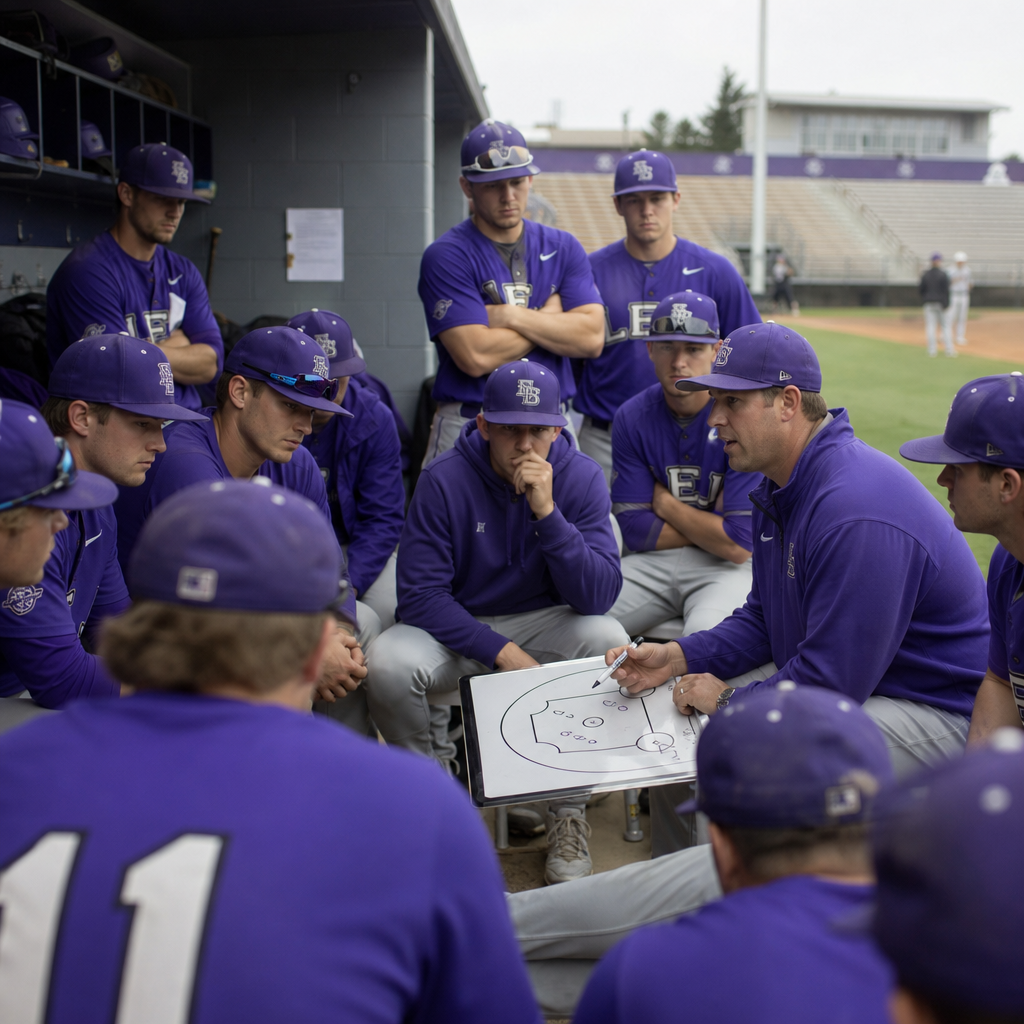
College baseball coaching has changed dramatically over the past decade, and the programs that win consistently are no longer relying on tradition alone. They are blending player development, sports science, recruiting intelligence, culture building, and in-game strategy into one coordinated system. In practical terms, game-changing strategies in college baseball coaching are the methods that measurably improve performance, retention, and long-term program stability. As someone who has spent time around college programs, watched staff meetings, and evaluated how coaches structure fall ball, recruiting calendars, bullpen plans, and classroom expectations, I have seen one clear pattern: the best coaches operate like organizational leaders, not just lineup makers.
This matters because college baseball sits at a unique intersection. Players are still developing physically and mentally, yet the competitive pressure resembles professional baseball in many ways. Coaches must teach fundamentals, manage scholarship limitations, recruit against larger brands, maintain academic eligibility, support player health, and still win weekend series. The challenge is bigger than drawing up bunt defenses or calling hit-and-runs. It involves creating a repeatable program model that can survive graduation cycles, transfer movement, injury setbacks, and changing NCAA rules.
For readers exploring the broader Minor Leagues and College Baseball landscape, this hub covers the miscellaneous side of coaching that ties everything together. It connects on-field tactics with off-field systems, from roster construction to communication habits. In that sense, college baseball coaching is not a single skill. It is a combination of leadership, instruction, evaluation, planning, and adaptation. Programs that understand that combination gain an edge that shows up in player growth, tighter defenses, lower walk rates, better at-bats, and stronger postseason resilience.
At its core, effective college baseball coaching means designing an environment where players improve faster than opponents expect. That requires clear standards, evidence-based training, honest feedback, and role clarity. It also requires acknowledging tradeoffs. A power-heavy roster may strike out more. Aggressive base running can create extra runs but also extra outs. High-intensity throwing plans can sharpen velocity but raise workload concerns if they are poorly monitored. Good coaches do not chase every trend. They choose systems that fit their roster, conference, budget, and institutional identity.
Building a program identity that players can execute
The first game-changing strategy is establishing a program identity that is specific enough to coach every day. “Play hard” is not an identity. “Control the strike zone, defend the middle, pressure opponents with smart baserunning, and win the recovery window between appearances” is an identity because it can be measured. The strongest staffs define what winning baseball looks like in their environment and then align practice design, recruiting profiles, and game management with that standard.
For example, a cold-weather program with limited outdoor reps may prioritize defense, pitching depth, and older transfer bats because those traits stabilize early-season performance. A warm-weather program with year-round outdoor access may build around athleticism and volume repetition. Neither model is automatically better. The key is consistency. When assistants, strength coaches, analytics staff, and athletic trainers are all reinforcing the same priorities, players develop faster and confusion drops.
I have seen successful coaches put identity into simple operational rules: hitters own swing decisions in damage counts, pitchers attack with their best strike pitch early, infielders rehearse internal clock situations daily, and catchers lead the communication chain. Those details turn culture into behavior. Recruits then understand exactly what they are joining, which improves fit and retention.
Modern player development: data, biomechanics, and individualized plans
Player development is where many coaching staffs separate themselves. The old one-size-fits-all model is gone. Today, college baseball coaching must account for movement quality, bat speed, pitch characteristics, recovery markers, and learning style. Tools such as TrackMan, Rapsodo, Blast Motion, force plates, and high-speed video have become common because they answer practical questions. Why does one fastball miss barrels at 92 while another gets squared up at 94? Why does a hitter produce strong exit velocity in batting practice but not in games? Why does a reliever lose command after back-to-back appearances?
The answer is rarely one variable. Fastball shape, induced vertical break, release height, seam orientation, timing patterns, and fatigue all matter. Good coaches use technology to identify constraints, then communicate solutions in plain language. A pitcher does not need a physics lecture during a bullpen. He needs to know whether his slider is backing up because of wrist position, posture, or release timing, and he needs a drill that transfers to competition.
Individual development plans are especially powerful. A freshman corner infielder may need body composition work, swing-decision training, and opposite-field contact goals. A veteran starter may need workload management and a better chase pitch against left-handed hitters. The most effective staffs review these plans regularly, using objective markers alongside coach observation. Data supports coaching judgment; it does not replace it.
Recruiting smarter in the era of the transfer portal
Recruiting strategy has become one of the most consequential parts of college baseball coaching. The transfer portal changed roster management by compressing timelines and increasing competition for experienced players. Coaches now build classes with a mix of high school recruits, junior college contributors, four-year transfers, and returning players whose development paths can still jump. That means recruiting is no longer just talent acquisition. It is risk management and roster architecture.
Smart staffs evaluate more than batting average, home-to-first time, or radar-gun readings. They assess age relative to competition, command under pressure, defensive versatility, makeup, academic reliability, and projected role. A player with moderate raw tools but strong decision-making and adaptability may outperform a louder recruit who needs constant maintenance. In college baseball, availability, coachability, and role acceptance often determine whether talent actually impacts wins.
The best recruiters also understand market inefficiencies. Some target pitchers with unusual movement profiles rather than pure velocity. Others look for catchers who frame, receive, and control the running game even if offensive numbers are still maturing. Many successful mid-major programs identify hitters with swing-decision discipline and underlying power traits before larger schools fully commit. That approach mirrors how strong minor league development departments identify upside before the broader market catches up.
| Recruiting Focus | What Coaches Evaluate | Why It Changes Outcomes |
|---|---|---|
| High school position players | Bat-to-ball skill, frame projection, defensive actions, academic fit | Creates multi-year development value and roster continuity |
| Junior college transfers | Immediate readiness, physical maturity, role versatility | Fills urgent needs with players closer to game speed |
| Portal pitchers | Pitch traits, strike percentage, injury history, workload profile | Adds experienced innings while reducing projection risk |
| Undervalued defenders | Range, hands, arm accuracy, game awareness | Improves run prevention beyond visible box-score metrics |
Retention deserves equal attention. Recruiting a player is expensive in time and resources. Keeping the right players requires role transparency, development proof, and honest communication. Programs that promise everything to everyone usually lose trust quickly.
Practice design that transfers to game performance
Many coaches talk about intensity, but the real issue is transfer. Does practice build skills that show up in conference play? Effective college baseball coaching uses constraints, competition, and context. Instead of endless isolated reps, strong practices include game-speed decision points: infielders fielding under time pressure, hitters training count-specific approaches, pitchers executing with runners on base, and outfielders rehearsing communication with varying wind and ball flight.
Small-sided competition is especially effective. A seven-minute segment where pitchers earn points for first-pitch strikes and hitters earn points for quality takes creates accountability quickly. Live at-bats with explicit goals often reveal more than mechanical drills alone. Defensive segments should also include consequence. One staff I observed charted routine-play conversion every week and posted trend lines publicly within the team room. Execution improved because players could see whether practice quality was actually rising.
The best practices are also efficient. College athletes balance classes, lifting, treatment, study hall, and travel. Overlong sessions can create dead reps and elevated fatigue without improving performance. Well-run staffs prioritize the highest-value work, sequence throwing and hitting loads carefully, and coordinate with performance personnel. In-season quality almost always beats sheer volume.
Game management, matchups, and bullpen strategy
In-game decision-making still matters, especially in a sport decided by sequencing and leverage. Game-changing coaches prepare for leverage before the first pitch. They know which reliever can neutralize the heart of the order, which bench bat matches up against velocity, which defenders improve late-game run prevention, and how weather conditions affect ball carry and pitch usage. That preparation prevents emotional decisions.
Bullpen management is a major separator. College coaches often face compressed schedules and variable starter length, so reliever roles must be defined but flexible. Some programs use traditional closer models. Others deploy their best arm against the highest-leverage pocket regardless of inning. The latter approach often aligns better with win probability, especially in tournament settings. Still, flexibility requires communication. Relievers need to know how they may be used so warm-up routines and recovery plans remain consistent.
Offensively, matchup strategy goes beyond left-right splits. It includes contact quality against specific pitch shapes, bunt defense tendencies, catcher pop times, and how opposing starters handle second and third trips through the lineup. The best staffs build scouting reports that are brief enough to remember but detailed enough to matter. Players perform better with three actionable points than with a binder full of disconnected notes.
Culture, accountability, and leadership development
Culture is often described vaguely, but in effective programs it is highly operational. It shows up in punctuality, cage behavior, dugout communication, class attendance, treatment compliance, and response to failure. Coaches shape culture by defining standards early, enforcing them consistently, and empowering player leadership. Captains matter, but leadership groups can be even more useful because they spread responsibility across classes and positions.
One overlooked strategy is teaching players how to communicate under stress. College baseball includes slumps, role changes, and public mistakes. A shortstop who boots a routine ball on Friday may carry that into Saturday unless the coaching staff addresses it directly. The best coaches create feedback systems that are candid without becoming chaotic. They correct behavior fast, separate performance from identity, and keep standards stable after wins and losses.
Leadership development also supports succession. Every year, experienced players graduate. Programs with strong internal leadership avoid starting over because routines, language, and expectations are passed down. That continuity is one reason certain schools outperform their recruiting rankings year after year.
Health, recovery, and academic balance as competitive advantages
Health management is no longer a support function. It is central to winning. Arm care protocols, sleep routines, hydration, force-production monitoring, nutrition education, and return-to-throw progressions all influence availability. A talented roster that cannot stay on the field will not survive conference play. Smart college baseball coaching integrates athletic training, strength and conditioning, and medical oversight into daily planning rather than treating injuries as isolated events.
Workload management is especially important for pitchers. Acute spikes in volume, poor recovery habits, and hidden throwing outside structured plans can raise injury risk. Programs that track bullpen intensity, game pitches, long toss, and readiness markers make better decisions. The same logic applies to position players dealing with hand, hamstring, or shoulder issues that erode performance before they force missed games.
Academic balance matters too. Players under academic stress recover poorly, focus less effectively, and often make worse decisions with time management. Strong staffs coordinate travel expectations, study support, and communication with campus resources. That may sound separate from baseball, but it directly affects consistency. A stable player learns and performs better.
Game-changing college baseball coaching is ultimately about building a system, not chasing a miracle tactic. The best programs know who they are, recruit to that identity, develop players with precision, practice for transfer, manage games with preparation, and treat health and academics as real performance variables. Those strategies work because they are connected. When one area improves in isolation, gains are limited. When all areas reinforce each other, programs create sustainable competitive advantage.
For anyone using this Miscellaneous hub within Minor Leagues and College Baseball, the key takeaway is simple: great coaching is comprehensive. It blends instruction, evaluation, communication, and care into a repeatable model players trust. If you are studying programs, covering the sport, or building your own coaching framework, start by auditing the systems behind the lineup card. That is where lasting progress begins, and that is the standard worth pursuing next season.
Frequently Asked Questions
What are the most game-changing strategies in college baseball coaching today?
The most game-changing strategies in college baseball coaching today are the ones that connect every part of the program instead of treating development, recruiting, culture, and game management as separate tasks. Successful coaches are building systems where player development is driven by data, sports science supports daily decision-making, recruiting is focused on fit as much as talent, and team culture is intentionally taught rather than assumed. In other words, the biggest shift is not one new drill or one new technology. It is the move toward a fully integrated coaching model.
On the player development side, coaches are using video analysis, force plates, ball-tracking technology, strength metrics, and individualized training plans to help players improve faster and more efficiently. Hitters are no longer receiving generic batting practice alone. They are learning swing decisions, pitch recognition, attack angle, contact quality, and how their mechanics hold up under game-speed stress. Pitchers are being developed with a better understanding of velocity, movement profiles, recovery protocols, workload management, and pitch design. That level of detail allows coaches to create development plans based on the athlete in front of them, not based on tradition.
Another major strategy is smarter roster construction. Winning programs are no longer just collecting the most talented players they can find. They are evaluating competitiveness, adaptability, work habits, academic reliability, and how each player fits the identity of the team. This matters because talent alone does not sustain a college program over multiple years. The best coaches recruit players who can handle the demands of development, buy into accountability, and contribute to a stable clubhouse environment.
Culture building has also become a competitive advantage. Strong college baseball coaches define standards early, communicate roles clearly, and create an environment where players understand how to earn trust. That improves retention, effort, and resilience during a long season. Add in more intentional in-game strategy, including matchup management, defensive positioning, bullpen planning, and better use of performance information, and you get the modern blueprint. The programs that consistently win are not guessing. They are operating with purpose across every layer of coaching.
How has sports science changed the way college baseball programs develop players?
Sports science has changed college baseball by giving coaches better information about how players respond to training, stress, recovery, and competition. In the past, many decisions were based primarily on observation and experience. Those still matter, but now coaches can combine those instincts with measurable data to make smarter calls about workload, conditioning, skill development, and injury prevention. That has led to more efficient training and, in many cases, better long-term performance.
For pitchers, sports science has had an especially dramatic impact. Coaches now monitor throwing volume, intensity, recovery markers, mobility, strength output, and mechanical efficiency much more closely than they did a decade ago. This helps them avoid the common mistake of pushing athletes too hard at the wrong times. Instead of assuming more throwing automatically equals improvement, programs can manage bullpens, flat grounds, live sessions, and rest days with a more precise understanding of what the athlete needs. The result is often better durability, more consistent stuff, and healthier arms over the course of the season.
Position players benefit as well. Speed training, rotational power work, vision training, and fatigue monitoring all play a larger role in helping hitters and defenders perform at a high level. Coaches can identify when a player is progressing, when he is overtrained, and when adjustments are needed. Rather than running the same conditioning plan for every athlete, strong programs individualize based on body type, injury history, positional demands, and performance goals. That kind of precision matters because college rosters include athletes at very different stages of physical maturity and development.
Just as important, sports science helps coaches align the weight room, the practice field, and the competitive schedule. When the strength staff, athletic trainers, analysts, and baseball coaches are on the same page, players avoid mixed messages and unnecessary wear. Recovery becomes part of development instead of an afterthought. The best programs are not using sports science to replace coaching. They are using it to sharpen coaching decisions, protect athletes, and create a more repeatable process for improvement.
Why is culture building considered a competitive advantage in college baseball coaching?
Culture building is considered a competitive advantage because it affects everything that shows up in performance but does not always appear in a box score right away. A strong culture improves buy-in, communication, discipline, accountability, and player retention. It helps teams handle adversity better, keeps standards from slipping during difficult stretches, and creates a more consistent day-to-day environment. In a sport as mentally demanding and failure-heavy as baseball, that stability matters a great deal.
When coaches are intentional about culture, they are not just giving motivational speeches or choosing catchy slogans. They are defining exactly how the program operates. They establish expectations for effort, preparation, punctuality, communication, academic responsibility, body language, and how teammates treat one another. They also reinforce those standards every day, not only when the team is winning. Players quickly learn whether the program truly stands for something or whether the values disappear the moment pressure rises.
A strong culture also improves development because players are more willing to accept hard coaching in an environment built on trust. If athletes believe the staff is consistent, honest, and invested in their growth, they are more likely to embrace feedback and stay committed through frustration. That matters because the best development rarely happens in a straight line. Players need room to struggle, adjust, and keep working. Programs with healthy culture create that room without lowering expectations.
From a roster management perspective, culture helps reduce avoidable turnover and protects the team from chemistry problems that can derail a season. It also gives recruiting an edge. Prospects and families pay attention to how players are treated, how alumni speak about the program, and whether the environment feels organized and purposeful. In that sense, culture is not soft. It is structural. It influences who joins the program, who stays, who improves, and how the team responds when games become tight and pressure increases.
How do successful coaches balance analytics with traditional baseball instincts?
Successful coaches balance analytics with traditional baseball instincts by treating data as a decision-making tool, not as a substitute for experience. The best staffs understand that numbers can reveal patterns, tendencies, strengths, and weaknesses that are easy to miss in real time. At the same time, they know baseball is still played by human beings in dynamic situations. Emotion, confidence, fatigue, weather, momentum, and matchup context all matter. Elite coaching happens when those two worlds work together.
For example, analytics can help a coach understand which pitch combinations are most effective, where a hitter is vulnerable, how a defender should be positioned, or when a reliever tends to lose efficiency. That information can directly improve game planning. But a good coach also reads body language, notices when a pitcher is competing with conviction, sees when an at-bat is speeding up on a hitter, and senses whether the moment is too big or just right for a certain player. Those observations still carry value, especially in a college setting where players are developing emotionally as well as physically.
The key is knowing which decisions should be heavily data-driven and which require more feel. Long-term development plans, workload monitoring, opponent scouting, and tactical trend analysis are ideal areas for analytics to play a major role. In-game adjustments, leadership decisions, and managing confidence often require stronger human judgment. When coaches lean too far in either direction, they create problems. A purely instinctive approach can miss clear evidence. A purely analytical approach can ignore the human side of performance.
The most effective programs also make analytics usable. They do not overwhelm players with complicated reports or endless numbers. Instead, they translate the information into clear coaching points players can apply. A hitter might be told to hunt a specific zone against a certain pitcher. A defender might adjust starting depth based on contact trends. A pitcher might focus on one sequence that consistently creates weak contact. When analytics are communicated well and paired with practical baseball experience, they become a real advantage instead of background noise.
What should coaches focus on if they want to build a college baseball program that wins consistently over time?
Coaches who want to build a college baseball program that wins consistently over time should focus on sustainability, not just short-term results. That means creating repeatable systems for recruiting, developing players, setting standards, managing staff collaboration, and adapting year to year. Programs that rise quickly but do not have structure often struggle to maintain success. The teams that stay competitive understand that consistency comes from process, clarity, and alignment across the entire operation.
First, coaches need a clear program identity. They should be able to explain what type of players they recruit, how they develop them, what standards define the clubhouse, and how the team is expected to play. That identity helps with everything from recruiting conversations to practice design to roster decisions. Without it, programs drift. With it, decisions become more consistent and the team develops a recognizable edge.
Second, long-term winners invest heavily in player development infrastructure. That includes not only facilities and technology, but also the daily systems used to help athletes improve. Individual development plans, honest evaluations, efficient practices, strength and recovery coordination, and regular communication all matter. Players should know where they stand, what they need to improve, and what support exists to help them get there. When