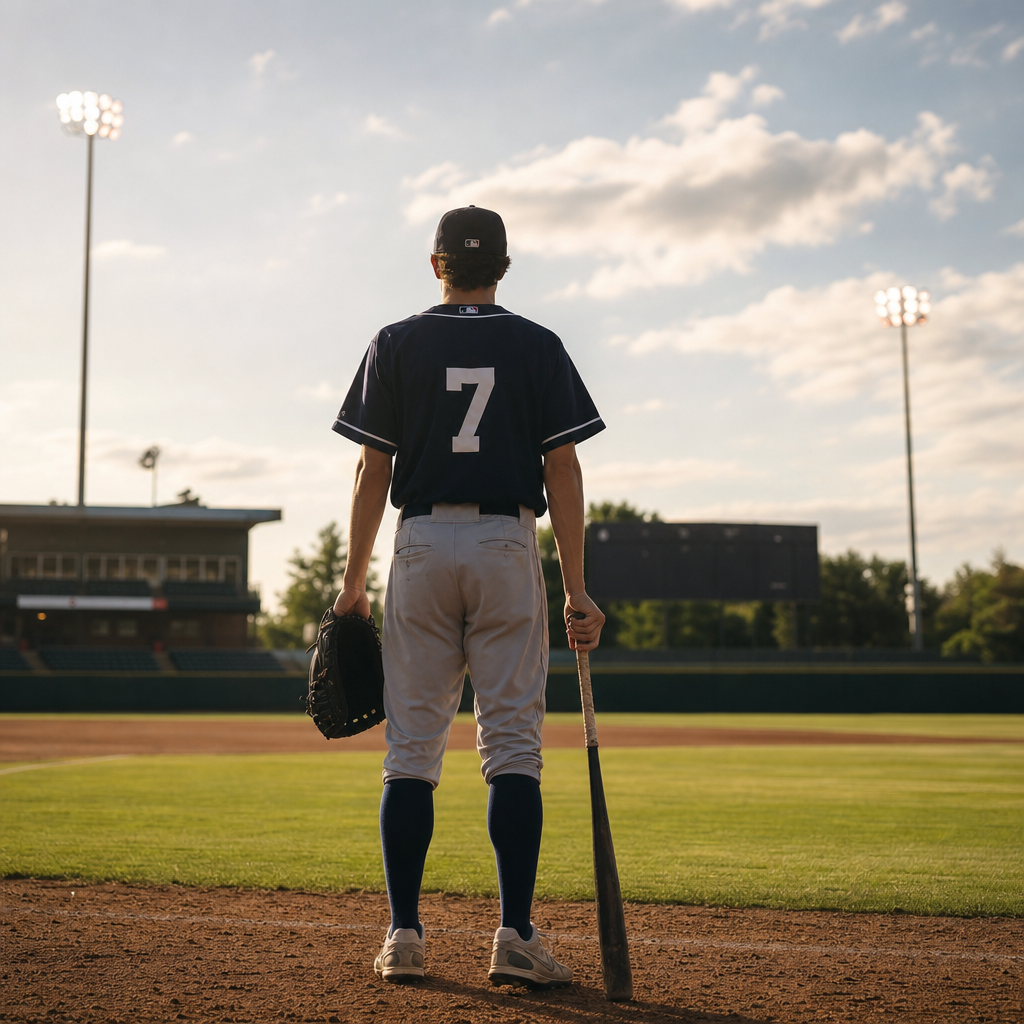
From local diamonds and empty backfields to buses, billets, and breakthrough nights, the path of a minor leaguer is a long apprenticeship built on repetition, resilience, and constant evaluation. In baseball, a minor leaguer is a professional player competing below the major league level, usually within an organization’s farm system, while college baseball remains an important feeder path that develops draft prospects, late bloomers, and undrafted players seeking another route into pro ball. I have spent years around player development environments, and one truth stands out: talent opens the door, but adaptation keeps a player moving. This subject matters because the journey is widely romanticized and poorly understood. Fans often see only draft headlines or big league debuts, not the thousands of swings in the cage, biomechanical assessments, nutrition plans, travel fatigue, roster churn, and mental strain that define daily life. For readers exploring the broader world of minor leagues and college baseball, this hub explains the full landscape, from entry points and development systems to money, technology, lifestyle, and the odds of reaching The Show. It also connects the miscellaneous realities that shape a career but rarely fit neatly into one narrow category. Understanding that complete picture helps players set realistic expectations, helps families make informed decisions, and helps fans appreciate how much development occurs far from national television.
How players enter the pipeline
The route to professional baseball is no longer one lane. Players may be drafted out of high school, selected after college baseball, signed internationally as amateurs, or added later as undrafted free agents. In the United States, the MLB Draft was shortened to 20 rounds in 2021, which increased competition for roster spots and made post-draft recruiting more important. College baseball now plays a larger role in readiness because many organizations prefer players with more game experience, physical maturity, and performance data. NCAA programs, junior colleges, and NAIA schools all feed the system, and junior college baseball in particular remains a valuable option for players who need innings, at-bats, or academic flexibility before re-entering the draft.
Scouting departments weigh tools and performance together, but the balance varies by player. A shortstop with elite bat speed, arm strength, and range may be drafted high despite uneven college production because organizations believe player development can refine the hit tool. A college reliever sitting 95 to 97 mph with a carry fastball and sharp slider may move quickly because his role is clearer. I have seen front offices split evaluations into present ability, future projection, and risk. That framework matters because minor league assignments are investments. Every player enters the pipeline with a development plan, whether explicit or implied, and that plan usually begins with identifying one carrying tool and one urgent weakness.
What the minor league system is designed to do
The farm system exists to prepare players for major league competition, not simply to reward them for statistics. Levels generally progress from complex leagues and Low-A through High-A, Double-A, and Triple-A, though exact assignments depend on age, polish, health, and organizational need. Double-A is often considered the biggest proving ground because pitchers command secondary stuff better and hitters punish mistakes consistently. Triple-A, by contrast, can be a mix of prospects, depth pieces, injury rehabs, and former big leaguers. A strong season at one level does not guarantee promotion if the organization wants a player refining specific skills such as swing decisions, pitch shaping, or defensive versatility.
Player development departments now operate with far more structure than they did a decade ago. Most clubs integrate hitting coordinators, pitching coordinators, strength coaches, dietitians, mental skills staff, analysts, and medical personnel. Tools such as TrackMan, Rapsodo, Hawk-Eye, force plates, and bat sensors provide objective feedback on exit velocity, spin rate, vertical break, attack angle, jump metrics, and workload trends. The best organizations translate that data into plain language. Telling a hitter to improve “swing decisions” is vague; showing him his chase rate against sweepers below the zone and creating a machine-training plan is actionable. Development works when information leads to repeatable habits.
Daily life: training, travel, and routine
A minor leaguer’s calendar is less glamorous than many fans expect. During the season, days often begin with treatment, mobility work, weight room sessions, defensive prep, batting practice, advance meetings, and long stretches waiting for first pitch. On the road, sleep can be compromised by overnight bus travel, late postgame meals, and inconsistent recovery windows. The 2022 collective bargaining improvements raised housing standards for many players, but living conditions still vary, especially for lower-level players sharing apartments or temporary arrangements. Routine becomes a survival skill. Players who can protect sleep, hydration, and nutrition usually perform more consistently over six months.
The physical load is only part of the challenge. Position players may need to maintain bat speed through fatigue while making split-second swing decisions. Pitchers must recover between outings while preserving velocity and feel. Catchers absorb foul tips, squat volume, and game-planning demands that are difficult to quantify. I have watched players with obvious ability stall because they treated each game as an isolated event instead of managing the season like a marathon. The minor leagues reward preparation, not emotion. Players who create steady work habits tend to survive the inevitable slumps better than players fueled only by confidence.
Tools, skills, and evaluation standards
Baseball people still talk about five tools for position players: hitting, power, running, fielding, and throwing. That language remains useful, but modern evaluation goes deeper. For hitters, clubs track contact quality, swing decisions, zone coverage, bat-to-ball skill, and batted-ball shape. For pitchers, they assess velocity, movement profile, extension, release consistency, command, and how pitches play together. A four-seam fastball with induced vertical break may miss bats at the top of the zone, but only if the pitcher can locate it and pair it with a breaking ball that tunnels effectively. Raw stuff without execution gets exposed quickly.
Defense has also become more nuanced. Infielders are graded not only on hands and arm strength but on first-step efficiency, exchange time, internal clock, and ability to complete plays from different slots. Outfielders are assessed on route efficiency, reads, and throwing accuracy, not just speed. Catchers are evaluated on receiving, blocking, throw mechanics, game-calling, and pitcher relationships. This is why one player’s box score can mislead. A hitter can go 0-for-4 and still improve by laying off chase pitches and driving two balls hard. A pitcher can post a clean line while showing poor command that better hitters will punish later.
| Area | What clubs measure | Why it matters |
|---|---|---|
| Hitting | Exit velocity, chase rate, contact rate, launch angle | Shows bat speed, swing decisions, and power efficiency |
| Pitching | Velocity, spin efficiency, vertical break, strike percentage | Indicates pitch quality, shape, and command foundation |
| Defense | Pop time, route efficiency, exchange speed, arm accuracy | Separates playable defenders from true run savers |
| Athleticism | Sprint speed, jump tests, force output, recovery markers | Supports durability, explosiveness, and development ceiling |
Money, contracts, and the business reality
For many families, the first practical question is simple: how much do minor leaguers make? The answer depends on level, bonus size, and whether a player is on a 40-man roster. In recent years, pay has improved from historically low levels, but minor league salaries still do not resemble major league earnings. Signing bonuses create vastly different starting points. A first-round pick may have financial breathing room; a senior sign or undrafted player often does not. That gap affects offseason training, housing choices, equipment access, and stress. Baseball remains a meritocracy on the field and an uneven marketplace off it.
Roster status shapes opportunity. Players on the 40-man roster receive better pay and are protected from the Rule 5 Draft, while others must continue proving their value without the same security. Options, outright assignments, rehab placements, and service-time considerations all influence movement. Organizations also make difficult cuts every year. When affiliates were reduced in the 2021 restructuring, the margin for error became smaller across the industry. The business side can feel cold, but understanding it is essential. A player is not only competing against opponents; he is competing against age curves, positional depth, injury risk, and the front office’s changing priorities.
The role of college baseball in the journey
College baseball is not merely a pre-draft holding area. It is a major development stage that can transform a player’s trajectory. Strength programs, high-speed video, better coaching continuity, and intense conference competition help many athletes sharpen skills that scouts once had to project blindly. The Southeastern Conference, Atlantic Coast Conference, Big 12, and other strong leagues regularly produce pro-ready players, but smaller programs and junior colleges matter too. Plenty of pros emerge from less publicized schools because they gained reps, confidence, and clearer identities there. A player who was lightly recruited at 18 can become a premium prospect by 21.
The college route also carries tradeoffs. Players have less control over individualized pro-style development, must manage academics, and face eligibility rules. Wooden-bat summer leagues such as the Cape Cod Baseball League remain important because they let scouts evaluate hitters and pitchers in a closer approximation of professional baseball. Performance in those environments can materially change draft position. I have seen organizations trust college hitters sooner because they have handled velocity, advanced scouting, and pressure in meaningful games. That does not mean college baseball guarantees readiness, but it often reduces developmental volatility.
Mindset, adversity, and staying in the fight
The hardest part of the path is often mental. Failure is constant in baseball, and the minor leagues add uncertainty about role, promotion, injury, and job security. A hitter who succeeds three times in ten is considered productive. A pitcher can execute quality pitches and still give up bloop hits. Over a long season, confidence must be built on process rather than outcomes. Mental skills coaches increasingly teach breathing routines, visualization, attentional control, and postgame review structures because emotional swings can sabotage performance as surely as mechanical flaws.
Adversity also arrives in forms statistics cannot capture. Players are traded, released, converted to new positions, or asked to reshape their bodies and arsenals. A starter may become a reliever to accelerate a major league path. An infielder may learn the outfield because defensive versatility increases roster value. Some changes revive careers; others expose limits. The players who last are usually the ones who separate identity from role. They accept feedback, ask better questions, and keep adjusting. Perseverance is not blind optimism. It is disciplined response to information, especially when the information is uncomfortable.
What separates prospects who reach the majors
Most minor leaguers do not become long-term major leaguers, and that reality deserves honesty. Reaching the majors usually requires a combination of health, one standout carrying trait, enough secondary skills to avoid exploitation, and timely opportunity. Durability is underrated. A pitcher cannot refine command from the injured list, and a hitter cannot build game adaptability without regular at-bats. The players who move fastest often show what coaches call adjustability: they make changes between series, not only between seasons. If opponents attack a weakness, they respond before the weakness defines them.
Major league organizations also prize clarity. They want to know how a player helps win games. Is he an on-base machine with defensive versatility? A left-handed reliever who neutralizes specific matchups? A catcher who handles a staff and adds enough offense? A bench bat with elite raw power? Projection matters early, but role definition matters later. The path from local fields to major dreams is therefore not a straight ladder. It is a narrowing funnel that rewards self-awareness, skill growth, and consistency under pressure. For anyone exploring the broader minor leagues and college baseball world, that is the central lesson: development is cumulative, opportunity is fragile, and every small improvement can move a career forward. Keep learning, follow the connected topics in this hub, and watch the journey with sharper eyes.
Frequently Asked Questions
What does it really mean to be a minor leaguer in professional baseball?
A minor leaguer is a professional baseball player who competes below the major league level, usually as part of a Major League Baseball organization’s farm system. These players are signed, drafted, or otherwise acquired by a club and assigned to affiliate teams at different levels of development, where they work on specific skills while trying to move closer to the big leagues. The term covers a wide range of experiences. Some players are high draft picks with strong signing bonuses and clear organizational investment, while others are late-round selections, undrafted free agents, or former college players trying to prove they belong. What unites them is that their careers are built around development, performance, and constant evaluation.
Life in the minors is often far less glamorous than fans imagine. The public sees the uniforms, stadium lights, and prospect rankings, but the day-to-day reality is usually defined by bus rides, shared apartments, strict routines, early workouts, and intense competition for limited opportunities. A player is not simply trying to win games; he is also trying to improve measurable parts of his game, follow organizational instruction, and show decision-makers that he can handle the next level. Every at-bat, bullpen session, defensive rep, and recovery day matters because advancement is tied not just to talent, but to consistency, adaptability, and professionalism over time.
Minor league baseball is best understood as an apprenticeship. It is where raw tools are refined, habits are tested, and a player learns how to handle failure without losing confidence. For some, the journey is short. For many others, it takes years of adjustments before a breakthrough happens, if it happens at all. That is why the path of a minor leaguer is so compelling: it sits at the intersection of ambition and uncertainty, where local standouts become professionals and then discover that reaching the majors requires far more than simply being talented in their hometown.
How do players go from local fields or college baseball into the minor leagues?
There is no single road into professional baseball, which is part of what makes the minor league system so fascinating. Many players begin as standout youth athletes on local fields, progress through high school competition, and then enter pro ball either through the MLB Draft or by signing after going undrafted. Others spend important developmental years in college baseball, which remains one of the most significant feeder systems in the sport. College programs help players mature physically, improve their game against stronger competition, and gain exposure to scouts. For some, college turns raw potential into draftable talent. For others, it provides a second chance to be noticed after being overlooked earlier.
College baseball is especially important because it serves several categories of future professionals. It develops premium prospects who are drafted highly, but it also creates room for late bloomers who grow into their abilities over time. Some players arrive on campus undersized, under-recruited, or uncertain about their long-term future, only to emerge as serious professional candidates after a few seasons of coaching, strength training, and live-game reps. It also gives undrafted players another route into the professional game. Independent work, summer leagues, strong college performance, and persistence can all open doors, even when a player is not initially viewed as a top prospect.
Once a player enters an organization, the transition becomes immediate and demanding. The game speeds up, the talent pool deepens, and every player around him was likely a star somewhere else too. That is where the local-diamond dream becomes a professional test. A player is no longer judged only by what he was; he is judged by what he can become. Scouts, coaches, coordinators, and front-office staff are looking at mechanics, approach, mental toughness, body maintenance, and coachability. The move from amateur baseball to the minors is less like crossing a finish line and more like stepping onto the first rung of a very long ladder.
What is daily life like for a minor leaguer during the season?
Daily life in the minors is structured, repetitive, and physically demanding. Most players operate on a schedule built around training, preparation, competition, travel, and recovery. A typical day may begin with early reporting times for treatment, lifting, mobility work, defensive drills, batting practice, meetings, and individualized instruction before the game even starts. For pitchers, routines often revolve around side sessions, conditioning, scouting reports, and arm care. For position players, there is a constant rhythm of cage work, fielding reps, baserunning, and game preparation. The routine can look simple from the outside, but it is designed to sharpen habits and keep players ready for a season that can feel endless.
Then there is the travel. One of the defining images of minor league life is the bus. Players often spend long hours traveling overnight between cities, arriving early in the morning, sleeping irregularly, and then having to perform later that same day. At lower levels, housing can be temporary, crowded, or dependent on host families, also known as billets in some sports contexts. Meals are not always ideal, privacy can be limited, and recovery can be difficult when a player is managing fatigue, soreness, and the emotional pressure of trying to stand out. These conditions are part of why people describe the minor leagues as a grind. It is not just baseball skill being tested; it is discipline and endurance.
At the same time, the minor league lifestyle creates a strong sense of shared purpose. Clubhouses are full of players who are all chasing the same difficult goal, and that creates bonds formed through repetition, setbacks, and occasional breakthrough nights that make everything feel worth it. A big outing, a game-winning hit, a promotion, or a call from a coordinator can shift the mood of an entire week. That emotional swing is part of the experience. The daily life of a minor leaguer is not glamorous, but it is intensely focused. It is a world built on routine, and within that routine, players are trying to carve out progress one day at a time.
Why is resilience such a big part of the minor league journey?
Resilience is essential because failure is built into baseball, and the minor leagues magnify that truth. Even elite hitters make outs regularly, pitchers have rough stretches, and injuries or roster moves can disrupt momentum without warning. A player can have a great week and still be told to change his swing path, adjust his pitch mix, move positions, or repeat a level. Promotions are never guaranteed, and talent alone is rarely enough. What organizations want to see is how a player responds when things stop going smoothly. Can he make an adjustment? Can he handle a slump without spiraling? Can he accept criticism, keep working, and remain confident?
This is one reason the minor leagues are often described as a test of character as much as skill. The environment is full of uncertainty. Players compete with teammates for opportunities while also trying to support each other. They deal with long seasons, uneven pay histories, limited comfort, and the knowledge that roster spots are finite. A hot streak can build momentum, but a small injury or prolonged slump can change a player’s standing quickly. The athletes who endure are usually the ones who learn how to separate identity from short-term results. They understand that development is not linear and that improvement often comes in uneven stages.
Resilience also matters because breakthrough moments usually come after long periods of ordinary, uncelebrated work. Fans may notice the night a player hits two home runs or throws six dominant innings, but those moments are often the product of weeks or months of adjustments made in empty backfields, batting cages, bullpen sessions, video rooms, and weight rooms. The ability to keep showing up with intent, especially when recognition is limited and progress feels slow, is what makes the minor league path so demanding. It is a long apprenticeship, and resilience is what allows a player to stay in the fight long enough for growth to show.
How do organizations evaluate whether a minor leaguer is ready to move up or reach the majors?
Organizations evaluate players through a combination of performance, tools, consistency, health, and projection. Traditional statistics still matter, but teams now look much deeper than batting average, home runs, or earned run average alone. They assess how a player is producing, whether his process is sustainable, and how his skills translate to higher levels. For hitters, that might include plate discipline, contact quality, swing decisions, performance against certain pitch types, and defensive reliability. For pitchers, teams study velocity, command, movement profiles, strike-throwing ability, recovery patterns, and how well a player can execute a game plan under pressure. The question is not simply whether a player is succeeding, but why he is succeeding and whether that success can hold against better competition.
Readiness is also tied to context. A player may be performing well at one level, but an organization may want him to improve a specific defensive skill, refine his approach in two-strike counts, build strength over a full season, or demonstrate that he can handle failure and make counter-adjustments once opponents have a scouting report on him. Development is rarely one-size-fits-all. Some prospects move quickly because their polish, athleticism, and baseball instincts allow them to adapt fast. Others require more time because they are rebuilding mechanics, learning new positions, recovering from injury, or unlocking tools that have not yet translated into consistent production.
Reaching