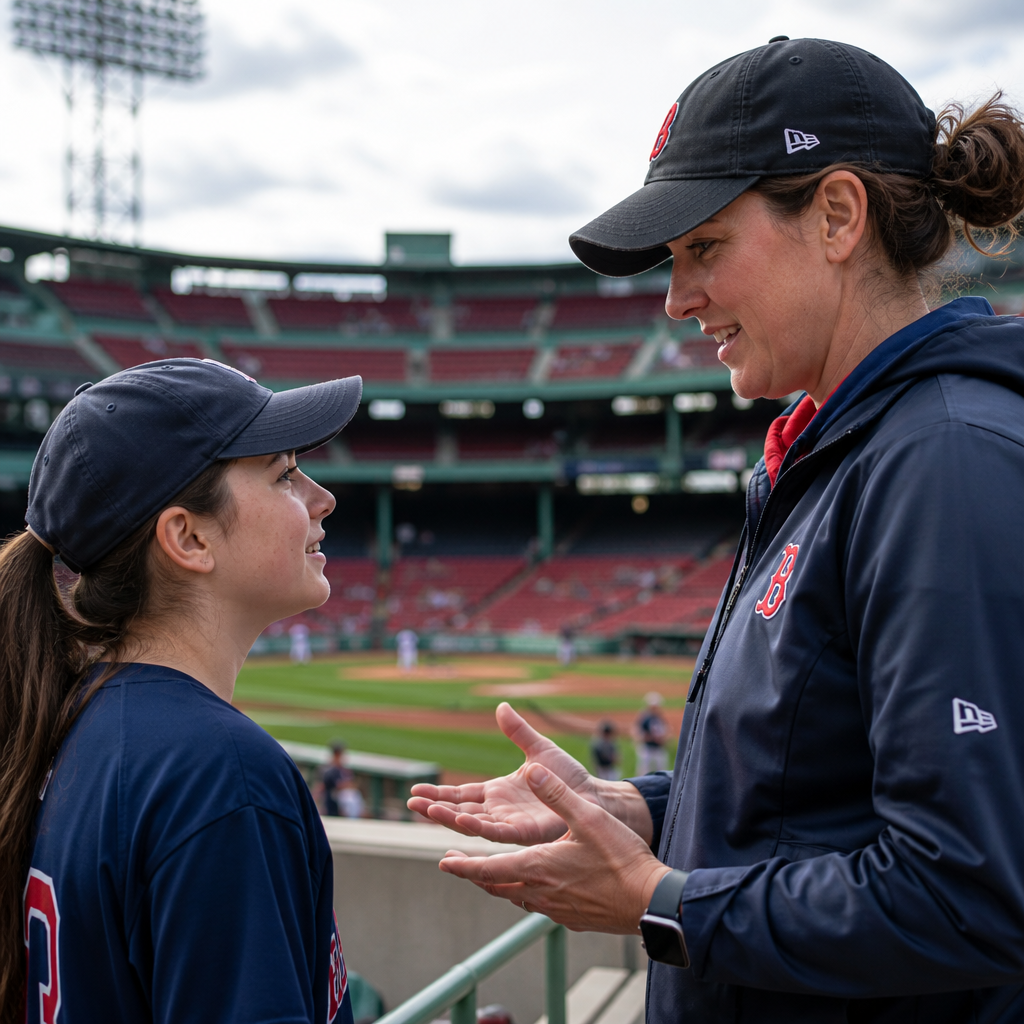
Women have shaped baseball far beyond the narrow stories that usually dominate the sport’s history, and understanding that influence is essential to understanding baseball’s growth itself. In the context of women in baseball, “growth” means more than higher attendance or new leagues. It includes expansion of participation, wider media coverage, stronger youth pipelines, better governance, richer fan culture, and a broader definition of who belongs on a diamond. As a hub article for the miscellaneous side of women in baseball, this piece connects the overlooked threads: players, executives, scouts, owners, journalists, umpires, coaches, community organizers, and fans whose work changed the sport at every level.
Baseball has long marketed itself as tradition, but tradition can hide labor that was always present. I have worked on baseball content and historical research projects where the same pattern appears repeatedly: women are described as exceptions even when they were helping build infrastructure, preserve local teams, teach fundamentals, run front offices, and draw new audiences. That framing misses the larger truth. Women have not merely participated in baseball history; they have repeatedly rescued, modernized, and expanded the game when institutions were slow to adapt.
This matters because baseball’s future depends on participation and relevance. Youth sports compete for time, money, and attention. Professional leagues compete for viewers across streaming platforms and social media. Communities expect sports organizations to reflect the people they serve. When girls and women are visible in baseball, the sport gains talent, stories, credibility, and commercial opportunity. When they are excluded, baseball shrinks its own pipeline. That is not a symbolic issue. It is an operating reality for Little League programs, college athletics, independent teams, Major League Baseball clubs, and international federations.
To cover miscellaneous topics well, it helps to define the key categories. Participation refers to playing at youth, amateur, collegiate, international, and professional levels. Representation includes coaching, front-office leadership, ownership, broadcasting, journalism, officiating, and content creation. Access means fields, funding, equipment, travel support, and fair rules. Recognition covers awards, Hall of Fame discussions, statistical recordkeeping, and media treatment. These categories overlap, and the strongest growth happens when several improve at once.
Historical foundations: women were present from baseball’s early development
Women have been connected to baseball since the nineteenth century, when the sport was still organizing its rules, clubs, and public image. Bloomer Girls teams toured across the United States in the late 1800s and early 1900s, often playing men’s teams and drawing paying crowds. These clubs mixed entertainment with serious competition, and they demonstrated an early market for women’s baseball. They also exposed a recurring contradiction: baseball institutions welcomed women when they sold tickets but resisted granting them equal legitimacy.
The best-known example remains the All-American Girls Professional Baseball League, founded in 1943 during World War II. Popular memory often reduces the league to wartime novelty, but its baseball quality, geographic footprint, and business significance were substantial. At its peak, the league operated multiple teams across Midwestern cities and attracted hundreds of thousands of fans in a season. Players such as Dottie Kamenshek, Sophie Kurys, and Connie Wisniewski built elite reputations through defense, baserunning, and pitching. Their success proved that women’s baseball could function as organized professional sport, not as exhibition theater.
After the league folded in 1954, women’s baseball did not disappear. It fragmented. Players continued in local circuits, softball expanded rapidly, and many girls were steered away from baseball entirely by school and community norms. Title IX, enacted in 1972, transformed opportunities for girls in sports broadly, though baseball benefited unevenly because many institutions directed girls toward softball instead. That distinction matters. Softball created vital opportunities, but it also became a gatekeeping mechanism that limited girls who specifically wanted to play baseball.
Internationally, women’s baseball gained formal structure through the International Baseball Federation and later the World Baseball Softball Confederation. Events such as the Women’s Baseball World Cup established a competitive global stage. Countries including Japan, Canada, the United States, Australia, and Chinese Taipei invested in national programs. Japan in particular became a model, combining player development, school competition, and strong technical instruction. The historical record is clear: whenever women receive structured support, baseball quality rises quickly.
How women expand baseball’s talent pipeline
Baseball grows when more people can enter the sport early, stay in it through adolescence, and see realistic pathways into adulthood. Women influence every step of that pipeline. Girls who watch women coach, train, announce games, or work in front offices are more likely to view baseball as a place where they belong. That sense of belonging affects retention as much as raw ability does.
At the youth level, organizations such as Baseball For All have been especially important. Founded by Justine Siegal, the group created tournaments, clinics, and advocacy specifically for girls who wanted baseball rather than being automatically redirected to softball. Its practical impact is easy to see: once girls have regular competition against peers, the argument that there is “not enough demand” weakens immediately. Demand often exists before institutions choose to count it.
Coaching is another major lever. Siegal became the first woman to coach for a Major League organization when she worked with the Oakland Athletics in instructional settings, and women such as Alyssa Nakken with the San Francisco Giants pushed visibility further at the highest level. These milestones matter not because one appointment solves inequity, but because baseball is apprenticeship-driven. Players absorb technique, language, and confidence from whoever is allowed into the teaching chain. Adding women to that chain improves the system for everyone.
Scouting, analytics, strength training, and player development have also widened. Front offices increasingly value communication, biomechanics literacy, and data interpretation alongside traditional evaluation skills. Women have entered these areas with credibility built through kinesiology, sports science, video analysis, and high-performance operations. When a club hires a female analyst or coordinator, the effect is larger than a single job title. It changes who applies next year, who gets mentored, and who is visible to ownership when senior roles open.
| Area of influence | How women contribute | Growth effect on baseball |
|---|---|---|
| Youth participation | Girls’ baseball clinics, travel teams, school advocacy | More players enter and stay in the sport |
| Coaching and instruction | Skill development, mentorship, visible leadership | Better player retention and stronger fundamentals |
| Front-office operations | Analytics, scouting, administration, player development | Broader hiring pool and smarter decision-making |
| Media and storytelling | Broadcasting, journalism, digital content | New audiences and stronger fan engagement |
| Community leadership | Nonprofits, local programs, inclusive events | Deeper neighborhood support and brand trust |
Leadership beyond the field: executives, owners, and decision-makers
One of the most important miscellaneous truths in women in baseball is that influence is often strongest away from the batter’s box. Ila Borders challenged assumptions as a pitcher, but baseball’s modern structure is also being shaped by women in ownership groups, league offices, business operations, and club strategy departments. Kim Ng’s appointment as general manager of the Miami Marlins in 2020 was historic because it ended a visible barrier at the top of baseball operations. More importantly, it validated decades of work in labor relations, player personnel, and league administration. Ng was not symbolic. She was deeply qualified, and her rise clarified how much baseball had delayed opening top roles.
Ownership and senior business leadership also matter because they determine budgets, staffing, and institutional priorities. When women serve on executive teams, clubs are more likely to invest in family-friendly facilities, broaden community partnerships, and modernize marketing. That is not automatic, but it is common because diverse leadership tends to question stale assumptions about fans and revenue. Baseball has historically under-targeted women as consumers despite extensive evidence that women influence household spending, youth sports decisions, and media habits.
In practical terms, leadership inclusion changes the daily mechanics of baseball organizations. It affects who runs internships, who is promoted from coordinator to director, who is heard in player acquisition meetings, and which development programs receive funding. I have seen this in sports organizations generally: representation at the top is what turns isolated firsts into stable pathways. Without that, every new hire is treated as an exception and institutional memory never changes.
Media, culture, and fan engagement
Women have expanded baseball not only by playing or managing it, but by interpreting it for the public. Reporters, broadcasters, podcasters, documentary producers, photographers, and historians shape what fans believe matters. Pioneers such as Claire Smith, the first woman to win the BBWAA Career Excellence Award, changed sports journalism by insisting on equal access and serious coverage. Her career is a reminder that media access is not cosmetic. If women cannot report fully, fans receive an incomplete version of the sport.
On broadcasts, analysts and play-by-play voices help normalize authority. When fans hear women explain sequencing, pitch tunneling, defensive positioning, roster construction, or CBA implications with precision, old assumptions lose ground. Jessica Mendoza’s national television work, for example, put technical baseball language in front of millions of viewers. The significance was not simply visibility. It was expertise delivered under the same pressure, scrutiny, and speed expected of any top broadcaster.
Digital media has accelerated this change. Team social channels, independent newsletters, YouTube breakdowns, and baseball podcasts now influence fan behavior as strongly as traditional columns once did. Women creators often excel in these spaces because they combine analysis with accessibility, making baseball less intimidating to new fans while still satisfying dedicated followers. That blend matters for growth. A sport with dense rules and a long season needs interpreters who can welcome beginners without boring experts.
Fan culture shifts when women are treated as central rather than peripheral. Merchandise design improves, stadium experiences become more thoughtful, and community nights become more authentic instead of tokenistic. Clubs that understand this do not market “for women” as though women are one niche demographic. They build better baseball experiences overall, from safer transit planning and cleaner facilities to broader storytelling and more responsive customer service.
Barriers that still limit progress
Despite meaningful gains, women in baseball still face structural barriers. The first is pipeline distortion. Many girls are pushed into softball regardless of preference, which reduces baseball participation before skill can compound. The second is scarcity of competition. In many regions, girls who want baseball struggle to find enough teams, tournaments, or school support. The third is credibility bias. Women in coaching, scouting, or media often have to demonstrate expertise repeatedly in situations where men are presumed competent at the outset.
Facilities and funding remain uneven. Youth baseball can be expensive because of travel, private instruction, showcase fees, bats, gloves, and tournament costs. Families deciding where to invest may choose the sport with the clearest local pathway, which is often softball for girls. That creates a self-reinforcing cycle: lower baseball participation leads to fewer teams, which then gets cited as proof that girls’ baseball lacks demand.
There is also a records problem. Women’s baseball history has been poorly archived compared with men’s professional history. Incomplete statistics, scattered photographs, and underfunded local preservation efforts make it harder to tell full stories. When history is thinly documented, present-day progress appears more novel than it really is. That weakens advocacy because institutions can pretend there is no precedent. Accurate archives are not decorative; they are tools for policy, recognition, and investment.
What sustainable growth looks like next
The next stage of growth for women in baseball will come from coordination, not isolated milestones. Youth organizations need dedicated girls’ baseball divisions, regular schedules, and coach education. High schools and colleges need clearer participation pathways and sanctions where feasible. Professional clubs should continue opening baseball operations, performance, and coaching roles to the widest qualified candidate pool. National governing bodies need stronger event calendars so talented players can compete consistently rather than assembling only for occasional showcases or international tournaments.
Baseball also needs better storytelling infrastructure. That means preserving archives, funding documentaries, commissioning oral histories, and integrating women’s baseball into mainstream museum and Hall of Fame interpretation. The Negro Leagues taught baseball an important lesson about historical recovery: once institutions take neglected history seriously, public understanding changes quickly. Women’s baseball deserves the same rigor.
For readers exploring this women in baseball hub, the main takeaway is simple. Women have influenced baseball’s growth in every direction: by playing, teaching, managing, governing, documenting, and reimagining the sport for new generations. Their impact is not a side note to baseball history. It is one of the clearest explanations for how the game adapts and survives. If you want to understand where baseball is going, follow the women building it, support programs that widen access, and keep reading deeper into this topic.
Frequently Asked Questions
How have women influenced baseball’s growth beyond simply playing the game?
Women have influenced baseball’s growth in ways that reach far beyond participation on the field. Players are an important part of the story, but women have also helped expand the sport as organizers, owners, executives, scouts, coaches, journalists, broadcasters, advocates, educators, and fans. When people talk about baseball’s growth, they often focus on attendance, television ratings, or expansion teams. In reality, the game grows when more people see themselves in it, when institutions become more inclusive, and when the pathways into the sport become stronger and more sustainable. Women have been central to that process.
Historically, women have kept baseball visible and culturally relevant in communities where official recognition lagged behind actual participation. They have built local programs, supported amateur and school baseball, pushed for resources, and created spaces where girls and women could develop as athletes and leaders. In media and storytelling, women have expanded how baseball is understood by challenging narrow narratives about who belongs in the sport and whose contributions deserve attention. In front offices and governance, women have influenced hiring practices, player development systems, marketing strategies, and organizational culture. That matters because healthy growth depends on more than game-day excitement; it depends on stronger institutions and broader access.
Women have also played a major role in fan culture. They have shaped baseball as a family tradition, a community identity, and a multigenerational experience. That kind of cultural investment sustains the sport between headline moments. So when discussing the influence of women on baseball’s growth, the most accurate view is a wide-angle one: women have helped baseball become more inclusive, more resilient, more visible, and more representative of the communities that love it.
Why is it important to include women’s history when talking about baseball’s development?
It is important because leaving women out creates an incomplete and distorted account of how baseball actually developed. Baseball did not grow through a single, straightforward path dominated only by men’s professional leagues. It evolved through schools, local clubs, wartime shifts, youth participation, media coverage, community support, labor changes, and cultural storytelling. Women were active across all of those areas, which means their history is not a side note. It is part of the foundation.
Including women’s history also changes the questions we ask about the sport. Instead of asking only who won championships or who broke records, we begin to ask who had access, who was excluded, who created opportunity, and how the game expanded socially and institutionally. That broader lens gives readers a much more accurate understanding of growth. For example, if girls and women are consistently shut out of coaching, development, or leadership roles, the sport loses talent and perspective. If they are welcomed and supported, baseball gains new players, stronger fan communities, and more innovative decision-making. Women’s history helps reveal those cause-and-effect relationships.
There is also an important cultural reason to include it. Baseball is often described as a mirror of society, and that means its history should reflect the full range of people who shaped it. When women’s contributions are overlooked, the sport’s public memory becomes narrower than the game itself. Restoring that history does not rewrite baseball; it clarifies it. It shows that the growth of baseball has always involved contesting barriers, expanding opportunity, and redefining belonging. That is a richer and more truthful story.
What role have women played in building baseball’s youth pipeline?
Women have been essential to building and sustaining baseball’s youth pipeline, which is one of the clearest ways they have influenced the game’s long-term growth. A youth pipeline is not just about elite prospects reaching higher levels. It begins with early exposure, encouragement, coaching, access to fields, family support, transportation, funding, mentorship, and opportunities to keep playing as competition becomes more advanced. Women have shaped every part of that process.
As parents, teachers, coaches, league volunteers, and community leaders, women have often been the people who introduce young players to baseball and keep them engaged. They help organize teams, manage logistics, advocate for better facilities, and make sure programs are welcoming rather than exclusionary. For girls in particular, women can be especially important as visible examples that baseball is a space where they belong. Representation matters at the developmental level because young athletes are more likely to stay involved when they can see realistic pathways for themselves.
Women have also pushed institutions to widen those pathways. That includes advocating for girls’ access to baseball rather than automatically redirecting them elsewhere, supporting school and travel opportunities, and demanding that development systems take female athletes seriously. In many cases, the biggest challenge is not interest but structure. Girls may love baseball, but without consistent competition, skilled coaching, and administrative support, they are more likely to be filtered out. Women working inside and outside the sport have helped challenge that pattern.
From an organizational perspective, a stronger youth pipeline benefits baseball as a whole. It expands the talent pool, deepens community ties, creates lifelong fans, and strengthens the sport’s future workforce in areas such as coaching, analytics, scouting, medicine, operations, and media. That is why women’s role in youth baseball should be viewed as central to growth rather than peripheral. They are not just supporting the next generation; they are helping define what the next generation of baseball looks like.
How have women influenced baseball through media, leadership, and decision-making?
Women have influenced baseball significantly by shaping how the sport is presented, governed, and understood. In media, women journalists, broadcasters, editors, filmmakers, and digital creators have broadened baseball coverage by bringing in new voices, new questions, and new audiences. They have helped move coverage beyond familiar stereotypes and toward deeper conversations about player development, labor, culture, access, identity, and the business of the game. Better coverage does more than inform fans; it expands the sport’s reach and relevance.
In leadership and decision-making roles, women have contributed at multiple levels of the baseball ecosystem. That includes front office positions, player development departments, analytics, operations, ownership groups, communications, legal affairs, community relations, and league administration. These roles matter because growth depends on choices: who gets hired, where resources go, how organizations connect with fans, what values are rewarded, and how talent is identified and developed. When women are included in those decisions, baseball benefits from a wider range of expertise and perspective.
Women in leadership have also helped challenge outdated assumptions that can limit the sport’s progress. Organizations that become more inclusive are often better positioned to innovate, attract talent, and connect with modern audiences. That does not mean women bring one single viewpoint; it means the sport becomes stronger when it no longer restricts influence to a narrow demographic. In practical terms, that can lead to better communication, more thoughtful policies, stronger workplace culture, and more creative engagement strategies.
Just as importantly, visibility in leadership creates a feedback effect. When fans, aspiring professionals, and young athletes see women making decisions in baseball, the boundaries of possibility widen. That helps normalize women’s authority within the sport and encourages more people to pursue careers in it. Over time, that is a growth engine in itself: stronger representation leads to stronger participation, stronger institutions, and a more dynamic baseball culture.
What does the future of women’s influence in baseball look like?
The future of women’s influence in baseball looks expansive, but its full potential will depend on whether the sport continues moving from symbolic inclusion to structural commitment. There is growing recognition that women belong in every part of baseball, from the batter’s box to the broadcast booth to the executive suite. That is a promising shift, but lasting growth requires more than visibility. It requires systems that consistently create opportunity, support advancement, and remove barriers that have historically limited participation and leadership.
One major area of future growth is broader participation. As more girls gain access to baseball-specific development, coaching, competition, and mentorship, the sport can build a stronger and more sustainable pipeline. Another area is professional influence off the field. Women are increasingly contributing in analytics, training, scouting, communications, and operations, and that trend is likely to continue as clubs recognize the competitive and cultural value of diverse expertise. Media will also remain important, especially as digital platforms allow more women to shape baseball conversations directly and build communities around the sport.
The future also involves governance and accountability. If leagues, teams, and governing bodies want baseball to grow, they will need to invest in inclusive hiring, equitable development pathways, safer and more supportive workplace cultures, and better visibility for women’s achievements. These are not side issues; they directly affect how many people can enter the sport, thrive in it, and stay connected to it over time. In that sense, women’s influence will continue to shape baseball not only by adding to its story, but by reshaping the structures that determine who gets to be part of that story.
Ultimately, the future of baseball will be stronger if it fully embraces the idea that women are not guests in the game’s history or future. They are builders of both. The more baseball recognizes that truth in practice as well as in rhetoric, the more the sport can grow in participation, leadership, audience, and cultural meaning.