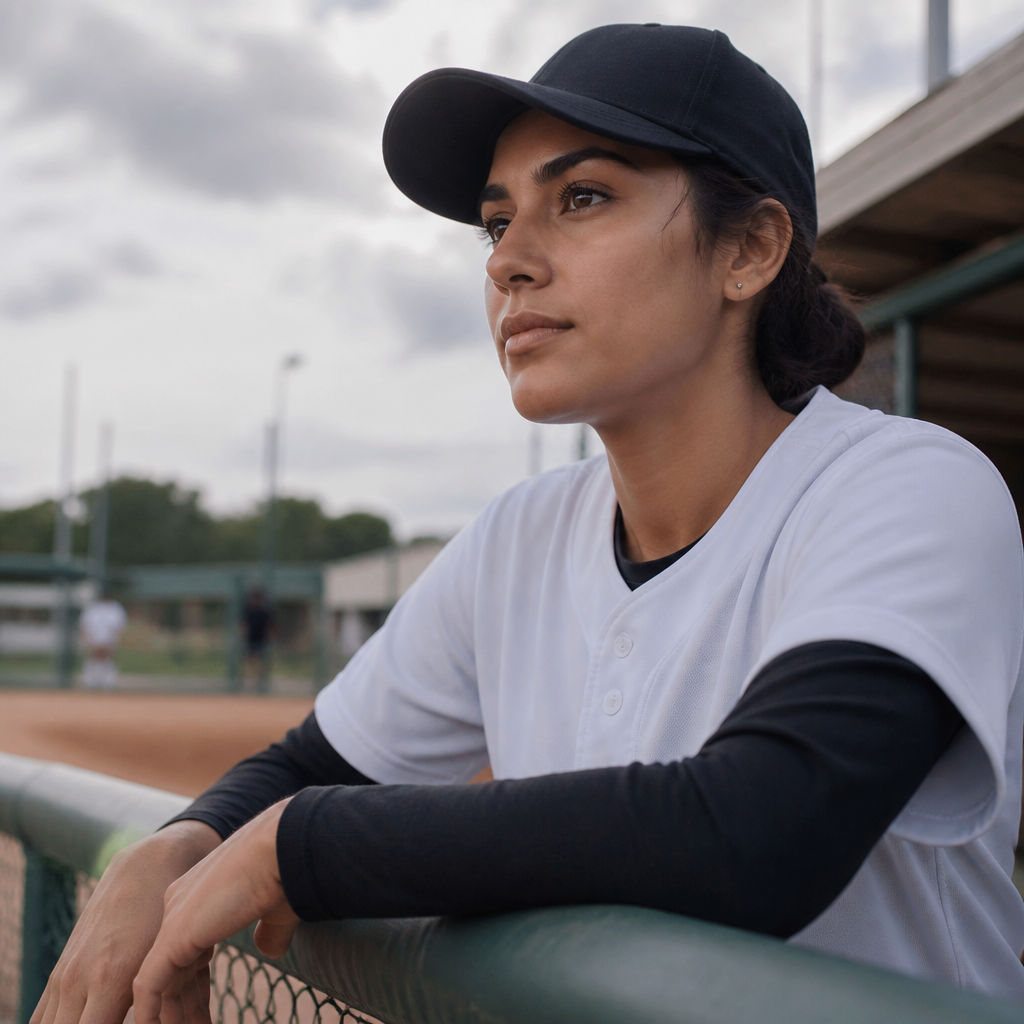
Baseball history is often told as a parade of famous men, iconic stadiums, and championship moments, yet women have been present on the diamond from the game’s earliest public forms. “Women in baseball” includes players, barnstormers, executives, owners, scouts, umpires, broadcasters, coaches, and innovators whose work shaped the sport even when official records ignored them. This hub on Diamond Queens: The Untold Stories of Women in Baseball explores the overlooked corners of that history and explains why the “miscellaneous” category is not marginal at all. It is where many of the most revealing stories live, from local semipro teams to front office breakthroughs and from industrial leagues to international tournaments.
In my own research and archival work on baseball history, the biggest pattern I have seen is not absence but fragmentation. Women’s baseball stories exist in newspaper clippings, oral histories, scorebooks, museum exhibits, family scrapbooks, and league documents that were rarely gathered into one coherent narrative. That fragmentation matters because readers searching for women in baseball often encounter only one familiar reference point: the wartime professional league dramatized in popular culture. Important as that league was, it represented only one chapter. A complete understanding of women’s baseball must account for Black women’s teams, teenage girls’ development programs, women in ownership, trailblazing umpires, and the modern players rebuilding competitive pathways around the world.
Why does this subject matter now? First, history shapes opportunity. When girls and women can see a lineage in baseball, participation no longer feels like an exception. Second, institutions respond to visibility. Media coverage, museum programming, sponsorship, and youth development all improve when stakeholders can point to a deep record of achievement. Third, baseball itself becomes easier to understand when its hidden labor is acknowledged. The sport was never built only by major league stars. It was built by communities, organizers, traveling clubs, and determined individuals who forced open closed doors.
This article serves as a hub for the miscellaneous side of women in baseball: the stories that do not fit neatly into one league, era, or job title but are essential to the full picture. You will find the major themes, recurring barriers, key names, and practical entry points for deeper reading across this subtopic. If you want a grounded overview of the women who played, led, financed, promoted, and modernized baseball outside the standard canon, this is the place to start.
Women played baseball long before institutions welcomed them
Women were playing organized baseball in the nineteenth century, even as public commentary often treated their participation as novelty. The Bloomer Girls clubs of the 1890s and early 1900s are a prime example. These traveling teams mixed serious competition with theatrical promotion, barnstorming across the United States and challenging men’s teams. Newspapers emphasized uniforms and spectacle, but beneath that framing stood capable players who endured grueling travel, uneven pay, and skepticism from both fans and civic leaders. The Bloomer Girls helped normalize the image of women fielding ground balls, turning double plays, and drawing paying crowds.
Early women’s baseball also flourished in schools, company leagues, and local recreation circuits. Industrial teams sponsored by factories or community organizations gave women regular competition and public visibility. Because recordkeeping was inconsistent, many athletes remain unidentified outside hometown references. That missing documentation is one reason this part of the women in baseball history remains underdeveloped. Historians often depend on city directories, census records, and local sports pages to reconstruct who played and where. Even so, the evidence is strong: women’s baseball was not a gimmick that briefly appeared during wartime. It was a recurring feature of American sporting life, constrained more by policy and prejudice than by lack of talent or interest.
The same pattern appeared internationally. In countries such as Canada, Cuba, Japan, Venezuela, and Australia, women found ways into baseball through schools, amateur clubs, and national federations. Softball frequently absorbed female participation because administrators viewed it as more socially acceptable, but that redirection should not be mistaken for preference in every case. Many girls wanted baseball specifically and continued to pursue it whenever a team, coach, or federation gave them a chance.
The overlooked ecosystems that kept women in baseball visible
When people ask how women stayed connected to baseball despite formal barriers, the answer is through ecosystems rather than a single pipeline. Barnstorming teams, church leagues, military recreation programs, school competition, industrial clubs, and international events each carried part of the load. The All-American Girls Professional Baseball League, founded in 1943, remains the best-known example because it created a national structure, salary system, and public profile. Yet the league was only one node in a wider network. Before it, women had already been playing. After it, women continued in amateur leagues, national teams, and independent initiatives.
Black women’s baseball deserves particular attention. The broader segregation of American baseball limited opportunity and distorted memory. Toni Stone, Mamie “Peanut” Johnson, and Connie Morgan are rightly celebrated for playing in the Negro Leagues, but they should also be understood within a larger context of Black women participating in baseball culture as players, organizers, and community symbols. Their careers showed that skill could break through multiple layers of exclusion, though never without cost. Stone faced hostility from some teammates and relentless media exoticism, yet she proved she belonged through performance, not sentiment.
Modern women’s baseball has also grown through new institutions. Baseball for All, founded by Justine Siegal, created tournaments, camps, and visibility for girls who wanted baseball rather than a forced switch to softball. USA Baseball’s women’s national team and similar programs in countries such as Japan, Canada, Hong Kong, and Cuba have built elite pathways that did not exist a generation ago. The Women’s Baseball World Cup, organized by the World Baseball Softball Confederation, gave international legitimacy and measurable standards for development.
| Area | Key examples | Why it matters |
|---|---|---|
| Early teams | Bloomer Girls, local semipro clubs | Proves women’s baseball predates wartime leagues |
| Professional structure | All-American Girls Professional Baseball League | Created salaries, schedules, and national media attention |
| Black baseball | Toni Stone, Mamie Johnson, Connie Morgan | Shows women succeeding despite race and gender barriers |
| Development programs | Baseball for All, national team pipelines | Provides modern entry points for girls in baseball |
| Global competition | Women’s Baseball World Cup | Establishes international standards and visibility |
Beyond players: owners, executives, scouts, umpires, and broadcasters
Any serious hub on women in baseball must move beyond players alone. Women influenced the sport from offices, dugouts, press boxes, and ownership suites, often in roles hidden behind male figureheads. Effa Manley is the clearest starting point. As co-owner and business manager of the Newark Eagles, she was one of the most effective executives in Negro Leagues history. She handled contracts, marketing, civic engagement, and player advocacy with a sophistication equal to any baseball operator of her era. Her Hall of Fame induction was not symbolic correction; it was recognition of actual executive excellence.
Ownership at the major league level also includes Helene Hathaway Britton, who became principal owner of the St. Louis Cardinals in 1911, and Joan Whitney Payson, founding owner of the New York Mets. Both women influenced organizational direction during periods when ownership was overwhelmingly male. Their examples complicate the old assumption that women entered baseball power only recently.
In contemporary front offices, Kim Ng stands out as a watershed figure. After decades in senior roles with the Chicago White Sox, New York Yankees, Major League Baseball, and Los Angeles Dodgers, she became general manager of the Miami Marlins in 2020, the first woman to hold that title in MLB. Her appointment mattered not because women had lacked competence before, but because gatekeepers had lagged behind evidence. The same logic applies to women in scouting, analytics, player development, and coaching. Rachel Balkovec’s rise through strength and conditioning, hitting development, and then managerial work in the Yankees system showed how expertise can travel across disciplines when organizations allow it.
Umpiring and broadcasting tell a similar story. Bernice Gera became the first woman to umpire professional baseball in 1972 after fighting a legal battle for the right to work. Pam Postema later reached Triple-A and was long discussed as a major league candidate, highlighting both progress and institutional hesitation. In broadcasting, women such as Suzyn Waldman, Jessica Mendoza, Melanie Newman, and others have expanded the accepted range of baseball authority on air. The significance is practical: when audiences routinely hear women explain sequencing, roster construction, labor issues, and defensive alignments, expertise stops being coded as male.
The barriers were structural, cultural, and sometimes disguised as tradition
Women did not struggle to enter baseball because interest was low. They struggled because barriers were embedded in rules, funding, media framing, and everyday assumptions. One major obstacle was the channeling of girls into softball. Softball created real opportunities and has its own rich history, but it also functioned as a sorting mechanism. Schools, parks departments, and governing bodies often treated softball as the acceptable option and baseball as unnecessary duplication. That decision affected coaching quality, field access, scholarship pathways, and elite competition.
Another barrier was the persistent trivialization of women’s skill. Coverage often focused on appearance, marriage prospects, or novelty rather than arm strength, plate discipline, or defensive reads. I have reviewed countless articles in which reporters described women’s teams with comic language that would never have been used for men’s semipro clubs. That tone influences memory. If the archive treats athletes as curiosities, later historians must work twice as hard to prove what should have been obvious from box scores and eyewitness accounts.
Economic structure mattered too. Women’s teams frequently lacked stable financing, permanent venues, medical support, and long seasons. Without those basics, player development suffers and public legitimacy remains fragile. Modern progress has not erased these constraints. Even today, girls who want baseball often depend on travel budgets, parental advocacy, and rare coaches willing to challenge convention. At the elite adult level, national teams may offer prestige but not year-round professional income. The result is a stop-and-start talent pathway unlike the mature systems available to men.
Still, tradition is not fixed. Baseball has repeatedly revised itself through integration, expansion, labor reform, analytics, and internationalization. Opening more doors for women is not a break from the game’s essence; it is consistent with the sport’s long pattern of adaptation under pressure.
What modern women’s baseball looks like and where the story is going
Today, women’s baseball exists across youth tournaments, collegiate club programs, independent initiatives, national teams, and global championships. Japan has been especially influential, winning multiple Women’s Baseball World Cup titles and demonstrating what consistent federation support can achieve. Its success reflects coaching continuity, regular competition, and a culture that takes women’s baseball seriously as baseball, not as a novelty offshoot. Other countries have used that model to strengthen domestic systems, though resources vary sharply.
In the United States, the picture is mixed but improving. Girls now have more visibility through documentary work, museum exhibits, MLB and USA Baseball initiatives, and organizations focused on access. Programs such as Trailblazer Series, supported by MLB, USA Baseball, and Baseball for All, expose young athletes to high-level instruction and a community of peers. Representation also matters in coaching and player development. When a girl sees a woman running batting practice, calling pitches, or managing a dugout, the sport’s possibilities become concrete.
The next frontier is infrastructure. Women’s baseball needs more than symbolic firsts. It needs consistent competition calendars, coaching education, injury support, data collection, media coverage that respects performance, and a larger ecosystem of local clubs. It also needs better historical preservation. Oral history projects, digitized newspapers, and community archives can recover players who would otherwise disappear from the record. That recovery is not nostalgic housekeeping. It gives current athletes a lineage, and lineage strengthens participation.
This hub exists for that reason. Miscellaneous women in baseball stories are often the connective tissue linking famous milestones to lived reality. Follow those stories closely and the sport looks different: broader, older, more inventive, and more honest about who built it.
Women have always belonged in baseball, not as temporary exceptions but as participants, experts, workers, and leaders across every era of the game. The untold stories gathered under this women in baseball hub show a continuous history stretching from nineteenth-century barnstormers to modern national teams, from Black women breaking into the Negro Leagues to executives reshaping front offices, and from courtroom fights over umpiring jobs to global tournaments that now define elite competition. Once these stories are placed side by side, the old myth that women are newcomers to baseball becomes impossible to defend.
The main lesson is clear. Progress in women’s baseball has never depended on lack of ability being solved; it has depended on access, structure, and recognition catching up to ability that was already present. That is why the miscellaneous category matters so much. It captures the people and institutions that standard summaries miss: local teams, overlooked owners, development programs, broadcasters, archivists, and international organizers. Together, they explain how women stayed in the sport even when the sport did not fully make room for them.
If you are building your understanding of women in baseball, use this page as your launch point. Explore the individual biographies, leagues, jobs, and eras connected to this hub, and support the organizations preserving and expanding the game for the next generation. The fuller this history becomes, the stronger baseball’s future will be.
Frequently Asked Questions
Who are the “Diamond Queens” in baseball history?
The phrase “Diamond Queens” refers broadly to the women who helped build, play, promote, and transform baseball across different eras, often without receiving the recognition granted to their male counterparts. That includes not only players, but also team owners, executives, scouts, coaches, umpires, broadcasters, writers, and innovators who influenced how the game was organized and experienced. Some women appeared in highly visible roles, such as barnstorming stars or members of women’s professional leagues, while others worked behind the scenes in front offices, on scouting networks, or in local communities where baseball culture took root.
What makes their stories so important is that they reveal baseball as a much wider and more inclusive history than the standard version many fans grow up hearing. Instead of a story centered only on famous major leaguers and championship dynasties, the history of women in baseball shows a game shaped by persistence, creativity, and access battles. These women often succeeded despite legal barriers, cultural resistance, media dismissal, and incomplete recordkeeping. Calling them “Diamond Queens” is a way of restoring their place in the sport’s story and recognizing that baseball’s development was never the work of men alone.
Did women really play baseball in the early days of the sport?
Yes, women were involved in baseball far earlier than many people realize. From the game’s earliest public forms in the nineteenth century, women participated as players, spectators, promoters, and public symbols in baseball culture. Women’s baseball clubs existed in the 1800s, and exhibition games featuring female players drew public interest well before modern conversations about gender in sports began. In some cases, these teams were treated as novelties by newspapers and promoters, but that framing should not obscure the fact that women were genuinely playing the game, developing skills, and building teams in a period when organized sports opportunities for women were extremely limited.
As baseball became more formalized and professionalized, women continued to find pathways into the sport, though often outside official power structures. They appeared on traveling teams, in barnstorming circuits, and in community baseball settings that rarely received the archival attention given to men’s leagues. The historical challenge is not that women were absent, but that their presence was frequently minimized, poorly documented, or interpreted through stereotypes. Looking closely at early baseball history makes one thing clear: women did not arrive late to baseball. They were there from the beginning, even if the record books did not always treat them that way.
Why have women’s contributions to baseball been overlooked for so long?
There are several reasons, and they all point to how sports history gets written. First, official institutions have traditionally prioritized men’s leagues, men’s statistics, and men’s leadership roles, which means archives, media coverage, and public memory were built around a narrower version of the game. When women participated, their involvement was often labeled as temporary, promotional, or secondary, even when their work had lasting impact. That bias affected who was photographed, who was interviewed, whose contracts were preserved, and whose accomplishments were treated as historically significant.
Second, many women in baseball worked in spaces that were harder to document, such as regional circuits, independent clubs, community teams, and support roles within larger baseball organizations. A scout, organizer, business operator, or local baseball advocate can shape the game profoundly without appearing in standard highlight reels. Add in gender discrimination, unequal media treatment, and the tendency to frame women athletes as curiosities rather than competitors, and it becomes easier to see why so many stories faded from mainstream view. Recovering these contributions requires more than listing a few famous names; it means reexamining how baseball history has been collected, interpreted, and passed down.
Were women only involved as players, or did they shape baseball in other ways too?
Women shaped baseball in virtually every part of the sport, not just on the field. While players often receive the most attention, women also served as owners, executives, administrators, scouts, coaches, broadcasters, journalists, marketers, and cultural ambassadors for the game. In some cases, they kept teams financially stable, expanded baseball into new communities, or influenced public understanding of the sport through writing and media. In others, they broke into roles that had long been treated as male-only territory, proving that baseball knowledge, leadership, and authority were never limited by gender.
This broader view matters because it changes the entire narrative of baseball history. Instead of asking whether women were “allowed” into the game, it shows that women continuously found ways to contribute, lead, and innovate even when institutions tried to keep them at the margins. A broadcaster can shape how generations of fans hear the game. A scout can influence who gets signed and developed. An owner or executive can affect hiring, investment, and competitive direction. A coach can change technique and clubhouse culture. When you look at women’s baseball history through this wider lens, their influence is not occasional or symbolic. It is structural, sustained, and woven into the sport’s evolution.
Why does it matter today to revisit the untold stories of women in baseball?
It matters because history shapes opportunity. When the public story of baseball excludes women, it sends the message that their presence in the sport is unusual, recent, or peripheral. In reality, women have long been part of baseball’s fabric, and recovering those stories helps correct the record while expanding who gets to feel they belong in the game. For young athletes, aspiring executives, broadcasters, coaches, and fans, representation is not just inspirational; it is historical evidence that there has always been more than one way to participate in baseball.
Revisiting these untold stories also deepens our understanding of the sport itself. Baseball is not only a sequence of championships and Hall of Fame careers. It is a cultural institution shaped by communities, labor, access, exclusion, reinvention, and memory. Women’s experiences reveal how the game changed across eras, how social norms influenced participation, and how overlooked figures helped move baseball forward even without formal credit. Telling those stories does not revise baseball history unfairly; it completes it. That is why the subject remains so relevant today, both for historical accuracy and for the future of the sport.