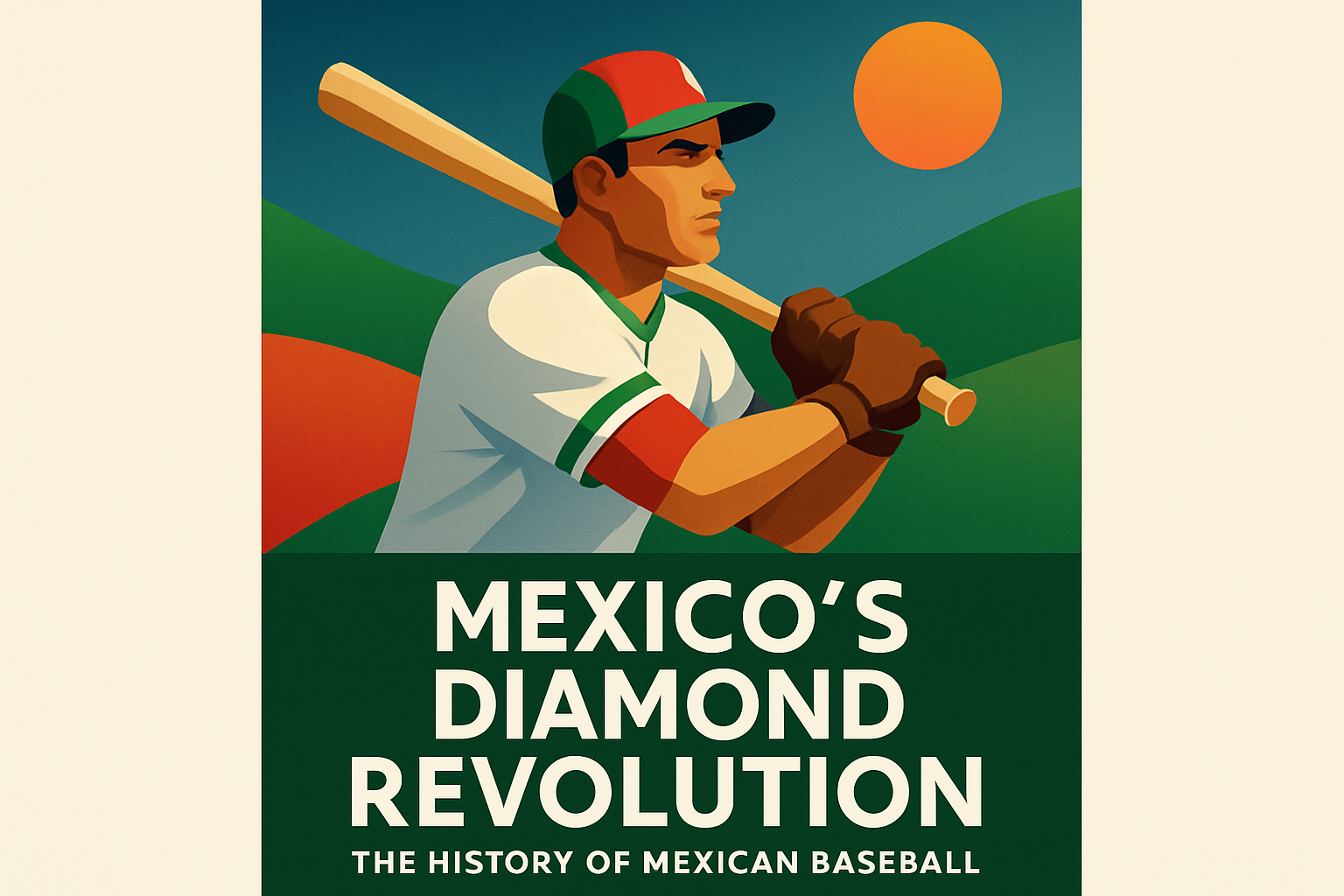
Introduction to Mexican Baseball
Baseball is a sport steeped in tradition, and while it’s often associated with the United States, its reach extends far beyond American shores. One nation where baseball has made a significant impact is Mexico. Known as “béisbol,” this vibrant sport has become a cultural touchstone south of the border. With a rich history spanning over a century, Mexican baseball has developed its unique character and played a crucial role in shaping the country’s sporting landscape. Understanding the history of baseball in Mexico is essential not only for appreciating the sport’s global appeal but also for recognizing how it has fostered unity and pride among the Mexican people.
The term “diamond revolution” is apt when discussing baseball in Mexico, referring to the transformative effect the sport has had on both a cultural and societal level. From its beginnings in the 19th century, baseball has evolved into more than just a game in Mexico. It has become a conduit for national identity and a source of international recognition through events such as the Caribbean Series. However, this subject goes beyond mere statistics and games played; it delves into how baseball fields have become grounds for social interaction and historical change.
The history of Mexican baseball matters because it provides insights into how sports can influence a nation’s culture, politics, and social structure. Moreover, understanding the development of baseball in Mexico enriches your knowledge of how international influences mingle to create something uniquely local. For enthusiasts and casual observers alike, digging into the evolution of Mexican baseball provides both lessons from the past and inspiration for the future.
Early Beginnings and American Influence
The origins of baseball in Mexico date back to the late 19th century. American expatriates and returning Mexican nationals first introduced the concept of “play ball” to the country. This sport initially gained traction in the northern regions near the US-Mexico border, where railroad workers—primarily American immigrants—would engage in informal games. These early interactions laid the groundwork for what would soon become a national pastime.
A real-world example of American influence is seen in the Mexican city of Nuevo Laredo, where baseball clubs emerged as early as the 1880s. These teams primarily consisted of American and Mexican players, who competed against each other, bridging cultural gaps through friendly competition. Over time, these clubs formed structured leagues, laying down the formal roots of organized baseball in Mexico.
The spread of baseball marked a significant cultural exchange that was not confined solely to sports. It showed how leisure activities could facilitate a blend of traditions, languages, and customs. This merger was an essential precursor to the broader acceptance and adaptation of the sport throughout Mexico, setting the stage for its nationwide popularity.
The Rise of Professional Leagues
With the onset of the 20th century, baseball in Mexico began to take on a more organized form. The formation of professional leagues was a logical progression as the sport gained popularity. In 1925, the first official professional league, known as the Mexican League (Liga Mexicana de Béisbol or LMB), was established. This league remains a cornerstone of Mexican baseball to this day.
In its early years, the Mexican League attracted a diverse pool of talents, including ex-major leaguers from the United States and aspiring local players. Teams like Diablos Rojos del México and Tigres de Quintana Roo became popular fixtures, drawing large crowds and fostering community spirit. An intriguing example of the Mexican League’s reach was its role in providing opportunities for Negro League players from the United States, who found limited options during segregation.
In those days, teams would often play in stadiums that were as diverse as their rosters, from large city arenas to modest rural fields. This adaptability exemplified baseball’s ability to meet local cultural appetites. The creation of these professional leagues was crucial in cementing baseball’s status as a key sport in Mexico, offering not only entertainment but also career opportunities for athletes.
Impact of International Competitions
Mexican baseball began earning international recognition through its participation in global competitions. Events like the Caribbean Series, which started in 1949, provided a platform for Mexican teams to showcase their prowess on an international stage. Winning the Caribbean Series became a badge of honor and a point of national pride.
One of the most monumental moments in Mexican baseball’s history took place in 1976 when the Mexican team Águilas de Mexicali clinched the Caribbean Series title. This triumph was more than just a win; it was a statement that Mexican baseball had achieved world-class status. The victory sparked massive celebrations across the country and intensified the spotlight on the sport.
These international triumphs played a vital role in motivating youth to pursue baseball, sparking dreams of international careers. They also highlighted how sports could act as a cultural ambassador, elevating Mexico’s profile on the world stage.
| Year | Event | Mexican Team Performance |
|---|---|---|
| 1949 | Inaugural Caribbean Series | Fourth Place |
| 1976 | Caribbean Series | Champion (Águilas de Mexicali) |
| 1997 | Caribbean Series | Champion (Tomateros de Culiacán) |
| 2016 | Caribbean Series | Champion (Venados de Mazatlán) |
The Golden Age and Cultural Influence
The period from the 1940s to the 1960s is often referred to as the “Golden Age” of Mexican baseball. This era was characterized by the participation of prominent players and the increasing quality of the sport’s infrastructure. Baseball stadiums were erected in major cities, and new leagues were formed to accommodate the growing number of enthusiasts.
An exemplary player from this era is Héctor Espino, known as “The Mexican Babe Ruth.” Espino’s career spanned from 1962 to 1984, and his remarkable batting skills earned him a legendary status in Mexican sports history. His influence extended beyond the field; Espino became an icon of perseverance and dedication, inspiring countless young players to take up the sport.
During this time, baseball began permeating other facets of Mexican culture. Baseball references started appearing in local music, films, and television, reflecting its embedment in everyday life. Various phrases from baseball jargon entered the common lexicon, illustrating the depth of the sport’s cultural penetration.
Modern Developments and Challenges
In the modern era, Mexican baseball faces both opportunities and challenges. While the sport remains popular, it competes with soccer, which has a larger following. The Mexican Baseball League continues to be a central institution, but globalization has brought new dynamics, with Mexican players increasingly moving to Major League Baseball (MLB) in the United States.
One current success story is that of Roberto Osuna, a pitcher who went from playing in the Mexican League to achieving success in MLB. Osuna’s transition exemplifies the fluidity between leagues and showcases the talent emerging from Mexico. While such moves bring international acclaim, they also pose challenges in retaining top-tail talent locally.
Efforts are underway to improve infrastructure and invest in youth training programs to keep baseball thriving in Mexico. The establishment of baseball academies and partnerships with MLB teams are part of ongoing strategies to bolster the sport at home. However, balancing tradition with modern demands remains a crucial task for stakeholders.
Conclusion: Embracing the Future of Mexican Baseball
The history of Mexican baseball is a rich tapestry woven with threads of tradition, international influence, and local innovation. From its humble beginnings, baseball has grown to become a defining element of Mexican culture, touching the lives of millions. The sport’s ability to adapt and thrive even amidst challenges demonstrates its enduring appeal.
Key takeaways from the journey of Mexican baseball include understanding the significance of cultural exchange and the role of international competitions in elevating national pride. Moreover, recognizing the potential of sports to unite and inspire communities is a lesson applicable beyond the realm of baseball.
As we look to the future, the ongoing efforts to nurture young talent and enhance local leagues will be crucial in preserving baseball’s legacy in Mexico. For both die-hard fans and newcomers, diving into the essence of Mexican baseball offers valuable insights and a profound appreciation for this cherished sport. Embrace this opportunity to explore and support the future of Mexican baseball, whether as a player, fan, or advocate.
By understanding and honoring its past, we can ensure that Mexican baseball continues to thrive and inspire generations to come.
Frequently Asked Questions
1. How did baseball first arrive in Mexico?
Baseball found its roots in Mexico in the late 19th century, primarily through the influx of American expatriates and workers who traveled to the country. The historical narrative pinpoints the arrival of the sport to around the 1880s when American railroad workers brought baseball equipment into northern Mexico. They introduced the game to locals, which began to pique interest across the region. The sport began catching on particularly around the border states, due to their proximity to the United States. It’s fascinating how the construction of railways didn’t just connect remote locations but also became conduits for cultural exchange, introducing Mexico to a game that would become a national passion. The strategic establishment of amateur leagues during these years meant that the groundwork for baseball as an organized sport was being laid early in its Mexican history.
2. Who were some of the key figures in the history of Mexican baseball?
Mexican baseball history is rich with influential figures who have propelled the sport into new heights. One of the most significant figures is Mel Almada, the first Mexican-born player to make it to Major League Baseball (MLB) in the United States. Almada was a trailblazer in the 1930s, showing that Mexican players could compete at the highest level. Then there’s Héctor Espino, also known as “The Babe Ruth of Mexico,” a legend in the Mexican Baseball League (LMB) who captivated fans with his tremendous hitting prowess. Espino shunned the bright lights of the MLB, preferring to play in his home country, which significantly raised the profile of the domestic league. Additionally, figures like Fernando Valenzuela, who took MLB by storm in the 1980s with his charismatic play and had a phenomenon named after him, “Fernandomania,” bridged the fandom gap between Mexican and American baseball communities. These icons have not only left indelible marks on the field but have also inspired generations of aspiring Mexican baseball players.
3. How has baseball influenced Mexican culture and society?
The impact of baseball on Mexican culture has been profound. As the sport grew in popularity, it became more than just a game; it morphed into a cultural identity and a sense of pride. Baseball parks across Mexico turned into hubs where communities gathered, transcending social barriers and uniting individuals from diverse backgrounds in their love for the sport. The rise of baseball paralleled significant social changes, such as the country’s urbanization, as people flocked to cities where teams were based. Baseball influenced not only sports culture but also language and daily life, with terms from the sport becoming embedded in the vernacular and influencing music and art. Furthermore, it provided an avenue for national and regional rivalries to play out in a constructive manner, which was particularly significant during politically tense periods. In essence, baseball in Mexico became a reflection of national identity, offering a sense of belonging to citizens as they cheered for their teams with unmatched passion.
4. What are some major developments in the Mexican Baseball League?
The Mexican Baseball League (LMB), founded in 1925, marks a cornerstone in the professionalization of baseball in Mexico. Over the decades, the LMB has undergone numerous transformative changes, enhancing the sport’s prestige and marketability. One major development has been the expansion of teams across the country, bringing baseball to wider audiences and promoting regional talent. Also significant are the improvements in infrastructure, with stadiums being upgraded to suit international standards and offer a better spectator experience. Broadcasting partnerships have been another key development, allowing games to reach millions of households, thus bolstering the league’s visibility. Furthermore, in recent years, efforts have been made to integrate modern technologies such as advanced analytics and data-driven techniques to better understand players’ performances and strategies. Collaborations with Major League Baseball have also taken root, allowing the free flow of players between leagues, which cultivated an exchange of techniques and competitive flair between the two nations. Ultimately, these developments underscore a commitment to growing the sport and enhancing its competitive landscape.
5. How is baseball in Mexico different from baseball in the United States?
While baseball in Mexico shares many similarities with the sport as played in the United States, several distinctions make it uniquely Mexican. The first notable difference is the atmosphere during games, which is more akin to a lively festival than a reserved sporting event. Mexican baseball games are characterized by nonstop music, chanting, and colorful fan engagement, contributing to an electrifying ambiance that sets it apart from its American counterpart. Additionally, the style of play in Mexico often emphasizes agility and strategic base running, influenced by the Latin American flair, as opposed to focusing solely on power hitting as seen frequently in the United States’ leagues. Moreover, the cultural narratives surrounding the sport differ as well, with Mexican baseball being tightly interwoven with issues of regional identity and nationalist pride, which sometimes take precedence over the commercial aspects that dominate American Major League Baseball. Another distinct feature is the season schedule; the LMB season starts in April and runs through August, contrasting with the MLB’s spring to fall timeline. These variances highlight not just different approaches to the game, but also the diverse cultural ethos that baseball embodies in each country.