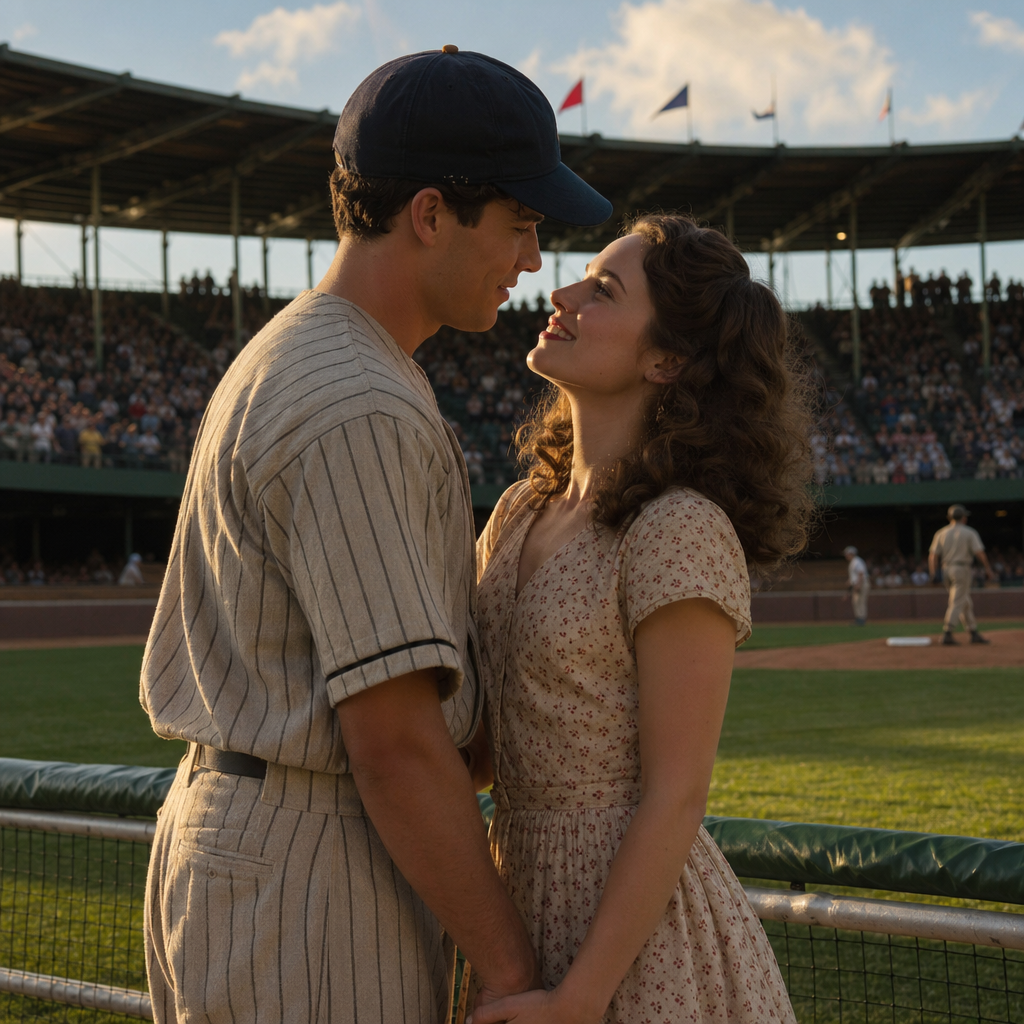
Baseball films have always done more than stage pennant races, ninth-inning comebacks, and dugout speeches; they use the sport’s rhythms to explore love, longing, memory, and commitment. In cinema, baseball is not simply a game but a dramatic language built from ritual, waiting, distance, and return, which makes it unusually well suited to romance. A long throw across the diamond, a glance from the stands, or a couple listening to a game on the radio can carry emotional weight because baseball already trades in anticipation. For viewers, that means romantic themes in baseball films often feel more believable and more layered than they do in faster, more violent sports stories.
When discussing love and baseball, it helps to define romance broadly. In this subtopic, romance includes courtship, marriage, desire, sacrifice, reconciliation, devotion to family, and even love directed toward a place, a team, or an idealized past. Baseball cinema regularly blends these forms. A film may present a central love story while also showing a father’s tenderness toward a daughter, an athlete’s attachment to his hometown, or a widower’s yearning for lost time. That overlap is why this miscellaneous hub matters within the wider field of baseball in literature and film: many important works resist neat categories. They are sports movies, yes, but also melodramas, comedies, fantasies, and memory pieces.
I have found, both in close viewing and in cataloging baseball film themes across studio eras, that romance surfaces most powerfully when the sport’s structure shapes the relationship itself. Baseball seasons are long, careers are unstable, travel is constant, and failure is statistically normal. Those realities create natural dramatic tension. A ballplayer misses anniversaries, a spouse lives with uncertainty, a fan falls in love with someone tied to a rival club, or a character discovers that loyalty to baseball has cost him intimacy elsewhere. The best baseball films do not treat these tensions as decorative side plots. They make them central to the meaning of the game.
This hub surveys how romantic themes operate across baseball films, why they resonate with audiences, and which recurring story patterns define the category. It also points readers toward the broader “Baseball in Literature and Film” conversation by treating miscellaneous titles, crossover works, and hard-to-classify examples as essential rather than secondary. If you want to understand why baseball repeatedly becomes a stage for love stories, the answer lies in the sport’s pace, symbolism, and emotional inheritance.
Why Baseball Naturally Supports Romance on Screen
Baseball is a romantic sport in formal terms because it unfolds through pauses. Unlike basketball or hockey, it does not force constant motion, so filmmakers have space for eye contact, conversation, hesitation, and private reflection. Directors can cut from the field to the stands, from a batter in the box to someone waiting at home, without breaking the sport’s logic. That makes romance easier to integrate into the action. The game’s stop-start structure also mirrors emotional uncertainty: people advance, retreat, take risks, and sometimes get stranded.
The field itself contributes symbolism that filmmakers have used for decades. Home plate is an obvious metaphor, but first base, second chances, long-distance separation between positions, and the return built into every run all lend themselves to stories about connection. Baseball is also governed by repetition. Players come back every day, fans return every season, and couples in baseball films often test whether love can survive routine, disappointment, and time. The sport’s statistical culture deepens this effect. Because failure is normal even for great hitters, baseball stories can treat vulnerability as ordinary. That gives romantic plots emotional credibility.
Historically, Hollywood recognized this early. From classical studio pictures through contemporary independent films, baseball has been used to soften masculinity, humanize athletes, and tie public performance to private feeling. Even films that are not marketed as romances often rely on romantic stakes to give baseball consequence. A game matters because someone is watching, waiting, forgiving, or leaving.
Classic Romantic Patterns in Baseball Films
Several recurring patterns appear across the subgenre. The first is the “love versus the game” conflict, where ambition strains intimacy. This pattern appears whenever a player’s schedule, ego, injury, or stalled career threatens a relationship. The second is the “baseball as courtship language” pattern, in which characters bond through fandom, radio broadcasts, scorekeeping, or attendance at games. The third is “nostalgia romance,” where a character’s love for another person is inseparable from memory, grief, or a longing for a vanished era.
A fourth pattern is “partnership under pressure.” Baseball spouses, girlfriends, and companions in these films are not passive spectators. They manage instability, media attention, minor league movement, and financial uncertainty. In well-made films, romance becomes a negotiation about labor and identity, not just attraction. A fifth pattern is “healing through shared baseball experience.” Here, the sport creates a setting in which widowed, divorced, estranged, or emotionally guarded characters can reconnect.
These patterns matter because they help readers map a broad miscellaneous field. Not every baseball film belongs only to sports drama, comedy, family fantasy, or period piece. Many occupy two or three categories at once, and romance is often the thread that links them.
Key Films and How They Use Romantic Themes
Bull Durham remains the clearest example of baseball and romance working as equal partners. The film frames baseball knowledge itself as seductive. Annie Savoy’s attraction to language, ritual, and experience turns the usual sports-movie dynamic inside out: maturity and emotional fluency matter as much as physical talent. Crash Davis and Annie connect through intellect, wit, and realism, while Nuke LaLoosh embodies the tension between raw promise and emotional unreadiness. The movie understands that baseball desire and sexual desire can overlap without becoming crude. Its dialogue and pacing make romance feel native to the game.
A League of Their Own broadens the conversation by showing how love in baseball films includes marriage, sisterhood, friendship, and self-respect. Dottie and Bob’s marriage is shaped by wartime separation and by her athletic identity, while the central relationship between Dottie and Kit carries the emotional intensity usually reserved for romance plots. The film also depicts how women athletes balance public performance with expectations about femininity and domestic life. That complexity is one reason it remains foundational in baseball film studies.
For Love of the Game places romance directly in the title and structures the story around memory. Billy Chapel’s perfect game is intercut with recollections of a relationship that has reached a breaking point. The device works because baseball’s isolation fits introspection: a pitcher can review a life between pitches. The film’s strongest idea is that athletic mastery cannot compensate for emotional neglect. Chapel’s professional control contrasts with his uncertainty in love, and the game becomes a vessel for reckoning rather than triumph alone.
Field of Dreams, though usually discussed as a father-son film, also uses marriage and domestic trust as essential romantic material. Annie Kinsella is not merely supportive; she validates Ray’s vision without being reduced to fantasy herself. Their relationship grounds the supernatural premise. Without that emotional credibility, the film’s famous sense of wonder would collapse. The movie also links love to faith in impossible futures, a theme common in baseball fantasy.
Other films expand the field in different directions. The Natural frames desire, temptation, and redemption through contrasting female figures and a mythic view of talent. Fever Pitch, adapted for an American baseball setting, examines what happens when fandom competes with adult partnership. 42 includes the marriage of Jackie and Rachel Robinson, showing how love functions as strategic support under public pressure. Even The Sandlot, primarily a coming-of-age film, uses adolescent crushes and idealized memory to connect baseball with awakening desire.
How Baseball Romance Reflects Gender, Work, and Culture
Baseball romance films reveal cultural assumptions about who gets to pursue ambition and who is expected to absorb its costs. Older films often cast women as stabilizing figures who rescue men from vanity or loneliness. Newer interpretations are more likely to ask what women surrender when baseball dominates family life. That shift is significant. It turns romance from reward into negotiation.
The minor leagues are especially useful for this theme because they expose baseball as labor rather than glamour. In my experience analyzing sports narratives, stories set below the major league spotlight often handle romance more honestly. Long bus rides, uncertain promotions, low pay, and temporary housing create real strain. Love in that environment is not abstract devotion; it is planning around scarcity. Bull Durham captures this better than most films, and many smaller baseball dramas borrow its emotional template.
Race and class also shape romantic storytelling. In films about segregation or social mobility, intimacy carries public consequences. Rachel Robinson in 42 is not written as an accessory to Jackie’s greatness. She is a witness, advisor, and emotional equal navigating racist scrutiny. Similarly, period films set in small towns often use romance to explore class aspiration, local identity, and the distance between private longing and public image. Baseball, because it is tied to community institutions, makes those pressures visible.
| Film | Primary Romantic Theme | Baseball Function | Why It Matters |
|---|---|---|---|
| Bull Durham | Adult desire and emotional maturity | Minor league routine creates intimacy and tension | Shows baseball knowledge as part of attraction |
| A League of Their Own | Marriage, sisterhood, self-definition | Wartime league reshapes gender roles | Expands romance beyond heterosexual courtship |
| For Love of the Game | Memory, regret, reconciliation | Perfect game frames emotional self-assessment | Ties athletic focus to romantic introspection |
| Field of Dreams | Marital trust and shared faith | Magic baseball field tests commitment | Grounds fantasy in believable devotion |
| 42 | Partnership under pressure | Historic career unfolds amid public hostility | Shows love as resilience and strategy |
Why These Films Endure and How This Hub Connects the Subtopic
Romantic baseball films endure because they understand a basic truth: the sport is about waiting for meaning. Every at-bat suspends time, and cinema can fill that suspension with memory, attraction, fear, or hope. When a film uses baseball merely as decoration, the romance usually feels generic. When it lets the game shape the emotional architecture, the story lasts. That is why the strongest entries in this miscellaneous hub remain rewatchable across generations. They are not only about whether a team wins. They ask what winning costs, whom a player comes home to, whether devotion becomes obsession, and how love survives disappointment.
As a hub within “Baseball in Literature and Film,” this page should guide readers toward multiple adjacent conversations: baseball and masculinity, women in baseball narratives, nostalgia and national identity, sports labor, adaptation, and fantasy. Romantic themes touch all of them. A marriage plot may open onto labor history; a flirtation in the bleachers may reveal class dynamics; a reunion story may expose how baseball functions as secular memory. That breadth is precisely why a miscellaneous page is useful. It catches the films that cut across tidy labels and shows their shared logic.
The key takeaway is simple. Baseball films return to romance because the game offers ready-made metaphors for distance, timing, risk, and return, while also giving characters concrete pressures that test affection in believable ways. If you are building a deeper understanding of baseball on screen, do not treat love stories as side material. They are central to how the medium explains the sport’s hold on American imagination. Use this hub as your starting point, then explore individual films, directors, and eras with an eye for how baseball turns private feeling into public drama.
Frequently Asked Questions
Why does baseball work so well as a backdrop for romance in films?
Baseball works exceptionally well as a backdrop for romance because its structure naturally mirrors the emotional rhythms of a love story. Unlike faster, more continuous sports, baseball is built on pauses, anticipation, ritual, and return. Those quiet spaces between pitches, innings, and seasons give filmmakers room to explore glances, conversations, longing, separation, and reconciliation. In romantic storytelling, timing matters, and baseball is a game obsessed with timing. That parallel allows directors and screenwriters to use the sport not just as scenery, but as emotional vocabulary.
There is also something inherently cinematic about the way baseball organizes space and feeling. The distance between pitcher and catcher, the journey around the bases, the long throw from the outfield, and the expectation of coming home all carry symbolic meaning. In baseball films with romantic themes, these visual and narrative patterns often reflect the stages of a relationship: attraction, pursuit, conflict, waiting, and reunion. A simple scene of two characters listening to a game on the radio or sitting together in the stands can communicate intimacy, nostalgia, or emotional vulnerability without needing heavy dialogue.
Just as important, baseball is tied deeply to memory, tradition, and generational identity. Romance in baseball films is often connected to the past—first loves, missed chances, enduring marriages, or relationships shaped by family and place. Because the sport already evokes nostalgia and continuity, it gives love stories a richer emotional texture. That is why baseball films so often make romance feel larger than a subplot; the game’s rituals and symbolism help transform personal relationships into stories about commitment, patience, and the hope of return.
How do baseball films use nostalgia and memory to deepen romantic themes?
Nostalgia and memory are central to the emotional power of many baseball films, and they often strengthen romantic themes by linking love to time, place, and personal history. Baseball is one of the most memory-rich sports in popular culture. It is associated with childhood summers, local ballparks, family traditions, radio broadcasts, and a sense of American pastness. When filmmakers place a romance within that atmosphere, the relationship often feels connected to something enduring rather than temporary. Love becomes not just a present emotion, but part of a larger pattern of remembrance and meaning.
In practical storytelling terms, memory allows baseball films to portray romance as something shaped by longing and reflection. A character may associate a ballpark, a specific game, or even the sound of a broadcast with a meaningful relationship. That emotional layering is powerful because it turns ordinary details into symbols. A couple sharing a game may not just be enjoying an outing; they may be creating a memory that later represents innocence, devotion, loss, or unfinished feeling. Baseball’s slow pace and recurring rituals make these moments feel especially durable, as though they are preserved in time.
Many baseball films also blur the line between personal memory and collective memory. The characters are not only remembering each other; they are remembering where they were, who they used to be, and what the game meant in that season of life. This creates a particularly resonant form of romance, one where love is tied to identity and emotional continuity. Even when a relationship faces disappointment or distance, memory can keep it alive within the narrative. That is one reason baseball romances often feel bittersweet in a satisfying way: they acknowledge that love, like the game itself, is experienced in the moment but understood fully only in retrospect.
Are romantic relationships in baseball films usually central to the plot or more symbolic?
Romantic relationships in baseball films can function in both ways, and that flexibility is part of what makes the genre so interesting. In some films, romance is clearly central to the story, driving character choices, emotional stakes, and the overall arc. In others, the romantic element is less about plot mechanics and more about what the game reveals regarding vulnerability, commitment, sacrifice, and emotional growth. Even when a love story is not the main storyline, it often gives the baseball narrative its deepest emotional resonance.
When romance is central, baseball often becomes the setting through which characters meet, clash, support each other, or test the limits of their relationship. The demands of the sport—travel, pressure, ambition, superstition, public scrutiny, and the long grind of a season—create natural dramatic obstacles. These factors can make the love story feel grounded and credible. The relationship is shaped by the realities of baseball life, and the sport becomes inseparable from the romance.
When romance is more symbolic, it usually operates as part of the film’s larger meditation on connection and longing. A relationship might represent the possibility of home, the cost of chasing dreams, or the emotional life that exists beyond competition. In these cases, the romance may not dominate the screen time, but it still matters profoundly because it humanizes the characters and clarifies what is truly at stake. A player is not simply trying to win; he may be trying to become worthy of someone’s trust, hold onto a fading bond, or recover a sense of emotional wholeness.
So the answer is that baseball film romance is often both narrative and symbolic at once. It can propel the plot while also expressing larger ideas about time, loyalty, and the tension between public ambition and private devotion. That dual function is one reason romantic themes in baseball movies tend to linger with viewers long after the final inning.
What romantic themes appear most often in baseball films?
Several romantic themes appear repeatedly in baseball films, and they tend to reflect the qualities that make the sport so emotionally expressive. One of the most common is patience. Baseball is a game of waiting, and many baseball love stories emphasize the ability to endure uncertainty, distance, or emotional silence. Characters wait for a letter, for a season to end, for a reunion, or for someone to finally speak honestly about what they feel. That patience often becomes a measure of devotion.
Another frequent theme is the idea of home, both literally and emotionally. In baseball, “coming home” is the culmination of effort, risk, and movement. In romantic terms, that symbolism is hard to miss. Baseball films often treat love as a form of homecoming—a return to safety, authenticity, or belonging. This can be shown through marriage, reconciliation, or simply the realization that success means little without someone to share it with. The image of home plate carries emotional weight because it suggests completion and connection.
Longing and missed timing are also especially common. Because baseball unfolds over time and is deeply associated with seasons, it lends itself to stories about chances almost taken, relationships interrupted, or emotions recognized too late. A romance in a baseball film may be defined as much by what was delayed as by what was fulfilled. That creates the bittersweet tone seen in many memorable sports dramas and period pieces.
Other recurring themes include loyalty, sacrifice, second chances, and the contrast between public performance and private tenderness. Players may appear confident on the field while struggling emotionally off it. Partners may be asked to support dreams that take a toll on intimacy. A love interest may challenge a character to grow beyond ego or mythology. Together, these themes make baseball romances feel emotionally layered. They are not just about attraction; they are about endurance, identity, memory, and the ongoing effort required to sustain a meaningful bond.
How do filmmakers visually and emotionally connect baseball imagery with love and relationships?
Filmmakers connect baseball imagery with love and relationships by using the sport’s physical language as a series of emotional metaphors. Baseball is full of images that naturally translate into romantic meaning: the distance between two people across a field, the act of reaching home, the suspense of waiting for the right pitch, and the vulnerability of stepping up to the plate. These are not abstract ideas imposed on the game; they are already embedded in how baseball looks and feels on screen. Skilled filmmakers draw out those associations through framing, pacing, sound, and repetition.
Visually, directors often emphasize solitude and connection in the same frame. A player standing alone at the plate can suggest emotional exposure, while a figure in the stands watching intently can convey affection, concern, or unresolved feeling. Wide shots of the field can highlight emotional distance, while close-ups during quiet moments—hands touching, eyes meeting, a smile after a difficult game—bring intimacy into focus. Baseball diamonds, dugouts, bleachers, and empty fields can all become romantic spaces depending on how they are filmed.
Sound design also plays a major role. The crack of the bat, the murmur of a crowd, the static of a radio broadcast, and the hush before a pitch can all create an atmosphere where personal emotion feels heightened. A scene of two people listening to a game together may become romantic not because of overt declarations, but because the shared attention and quiet ritual establish trust and closeness. That understated quality is especially effective in baseball films, where restraint often carries more emotional force than melodrama.
Emotionally, filmmakers often link the uncertainties of baseball to the risks of love. Both require resilience, trust, and the willingness to fail publicly or privately. A missed catch, a long season, or a comeback attempt can parallel the tensions within a relationship. By weaving those parallels into character arcs, baseball imagery becomes more than decorative. It helps viewers feel that love and the game are operating according to similar emotional laws: both demand patience, both are shaped by timing, and both