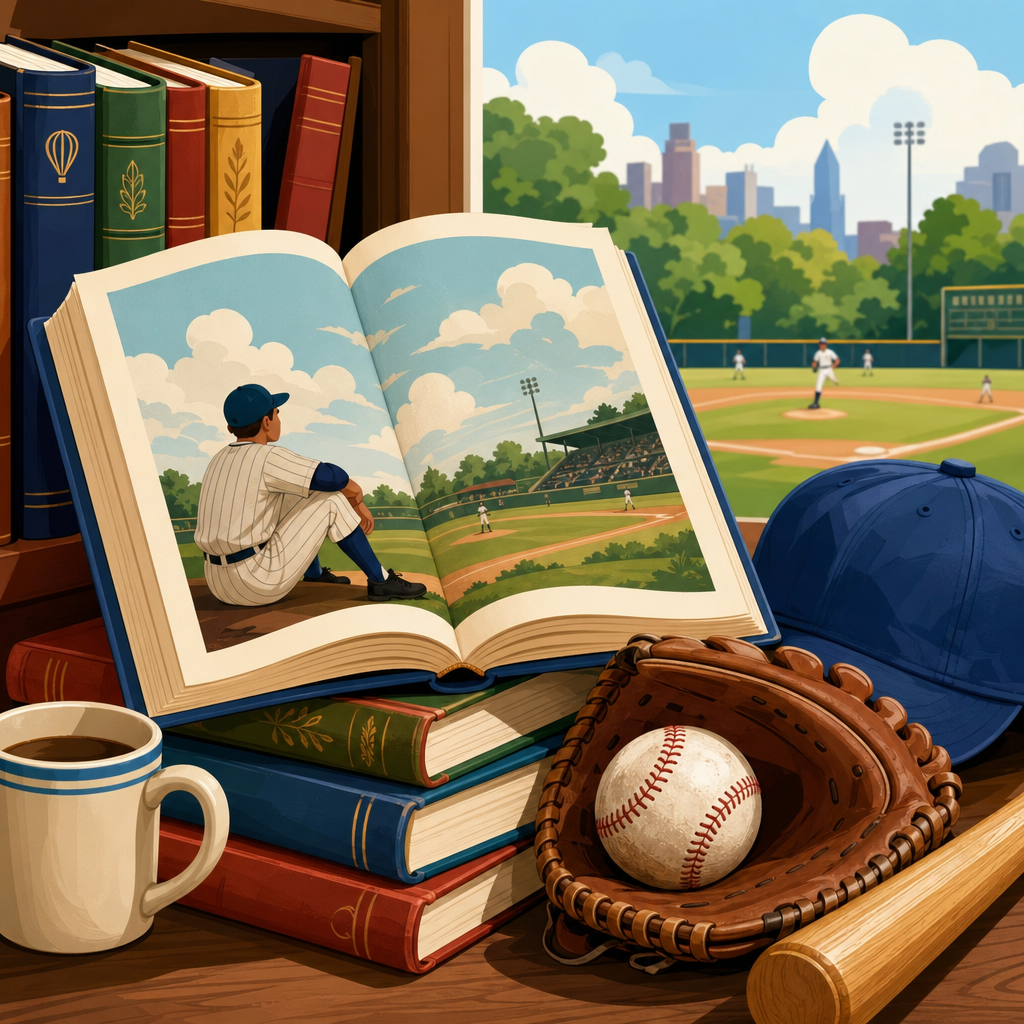
Baseball has long supplied novelists, essayists, poets, and memoirists with a vocabulary for hope, failure, ritual, memory, and national identity, which is why literary homage to baseball appears so often in popular books far beyond the sports shelf. In this sub-pillar hub on baseball in literature and film, “miscellaneous” does not mean minor; it means the broad field of books that use the game as symbol, setting, structure, or shared cultural shorthand. A baseball reference in fiction can be a direct allusion to Babe Ruth, a scene at Ebbets Field, a character measuring life in innings, or a metaphor built from the strike zone, the bullpen, or the long season. I have worked through these texts as both a close reader and a researcher of sports culture, and the pattern is consistent: writers return to baseball because readers immediately understand what the game carries. It suggests fathers and sons, small towns and crowded cities, race and labor, immigration, luck, superstition, statistics, and the tension between individual action and team fate. Understanding references to baseball in popular books helps readers catch layers that might otherwise pass unnoticed. It also creates useful pathways into related topics, from baseball novels and poetry to film adaptations, sports memoir, and American cultural criticism, making this hub a practical starting point for exploring the wider literature.
Why Baseball Becomes Literary Language
Writers choose baseball references because the sport offers a ready-made narrative grammar. Every at-bat contains suspense, every season promises renewal, and every box score reduces chaos into legible numbers. That combination of story and structure is rare. Football often conveys force, boxing personal struggle, and basketball speed, but baseball uniquely balances stillness and action. In books, that makes it ideal for scenes of reflection. A character waiting on a pitch can stand for hesitation before a marriage, a confession, or a moral choice. A pennant race can mirror ambition. A slump can represent grief or depression without bluntly naming it.
The game also works because its terminology has escaped the ballpark. Phrases like “step up to the plate,” “out of left field,” “heavy hitter,” and “touch base” circulate through business writing, politics, romance fiction, and young adult novels. When authors use these phrases literally or ironically, they tap into a language readers already know. That broad recognition explains why baseball homage appears in crime novels, literary fiction, children’s books, historical sagas, and even fantasy. The allusion may be brief, but the cultural signal is strong.
Another reason is chronology. Baseball developed alongside mass publishing, urban newspapers, radio, and later film, so it entered the literary imagination early and stayed there. By the time postwar novelists began treating Americana as archive and argument, baseball was already loaded with memory. That is why a single mention of Joe DiMaggio, the Brooklyn Dodgers, or a dusty sandlot can do heavy symbolic work. The best authors use that shorthand precisely, not lazily, letting baseball reference class, region, ethnicity, or generation as much as sport.
Baseball in Literary Fiction and the American Imagination
Many of the most influential baseball references in popular books appear in literary fiction that is not, strictly speaking, about baseball. Bernard Malamud’s The Natural is an obvious foundational text, but its deeper importance lies in how later writers borrow its mythic treatment of talent, corruption, and redemption. Philip Roth’s The Great American Novel turns the game into satire and national allegory, while Don DeLillo’s Underworld opens with the 1951 Giants-Dodgers playoff, using a famous home run to launch a vast meditation on Cold War America, waste, art, and memory. In classroom discussions, I have seen students recognize that the baseball event is not background decoration; it is the novel’s entry point into shared public memory.
Baseball also appears in quieter literary works as emotional infrastructure. W. P. Kinsella’s Shoeless Joe, adapted into the film Field of Dreams, uses the game to ask whether imagination can repair family loss. Chad Harbach’s The Art of Fielding links athletic error to intellectual ambition and sexual identity within a campus novel. Michael Chabon, in The Amazing Adventures of Kavalier & Clay, invokes baseball culture as part of immigrant New York’s texture, where fandom and comic-book imagination share a common language of heroes and impossible feats. These examples matter because they show how baseball references can frame serious literary themes without shrinking into nostalgia.
Poetry and essays deepen that tradition. Marianne Moore’s “Baseball and Writing” treats the sport as a model for artistic discipline, while Donald Hall’s essays on Fenway Park show how place, repetition, and memory fuse around the game. Roger Angell, though primarily an essayist, shaped modern baseball prose by showing that observation, cadence, and exact detail could elevate game writing into literature. Popular books continue to borrow from that style, especially when they want baseball to signify more than entertainment.
Children’s Books, Young Adult Fiction, and Coming-of-Age Stories
Baseball references are especially effective in children’s literature and young adult fiction because the sport naturally supports stories about rules, practice, fairness, fear, and belonging. A child learning to catch a fly ball is also learning patience under pressure. A team roster can dramatize inclusion and exclusion with immediate clarity. In books for younger readers, baseball often marks the first arena where talent, effort, and social identity collide in public. That is why so many school and library favorites return to it.
Mike Lupica’s sports novels, Matt Christopher’s long-running series, and John H. Ritter’s The Boy Who Saved Baseball use the game to anchor moral choices and community stakes in plain language. Sharon Robinson’s work for middle-grade readers often connects baseball to civil rights history, helping young audiences understand Jackie Robinson not as a frozen icon but as a person whose achievements changed the conditions of daily life. In young adult fiction, baseball can become a setting for masculinity, friendship, body image, and grief. The game’s statistics and rituals give adolescent characters concrete tasks to manage while larger emotions remain difficult to name.
What makes these books enduring is not simply action on the field. It is the way baseball creates understandable consequences. A dropped ball, a lineup decision, or a coach’s favoritism can expose questions of character faster than abstract dialogue can. For readers moving into the broader “Baseball in Literature and Film” topic, children’s and YA books are often the first gateway, because they teach how baseball imagery operates before readers encounter more layered literary homage later.
Memoir, History, and Cultural Criticism
Some of the richest references to baseball in popular books come from memoir and nonfiction, where the sport serves as evidence rather than symbol alone. Doris Kearns Goodwin’s Wait Till Next Year uses the Brooklyn Dodgers to reconstruct postwar family life and neighborhood identity. Roger Kahn’s The Boys of Summer combines reporting and memoir to show how the Dodgers lived in public memory after their athletic prime. David Halberstam’s Summer of ’49 treats a pennant race as a window into postwar America, managerial leadership, media culture, and the psychology of stars under pressure.
Baseball also anchors major books about race, labor, and mythmaking. Jules Tygiel’s Baseball’s Great Experiment remains essential for understanding integration beyond celebratory shorthand. Robert Peterson’s Only the Ball Was White documents the Negro leagues with necessary historical weight. These works matter in a hub article because they show that literary homage to baseball is not only sentimental. It can be corrective. It can challenge what mainstream memory leaves out.
In more recent criticism, baseball references often appear when authors want to discuss data, meritocracy, and institutional change. Michael Lewis’s Moneyball is partly about baseball operations, but its larger afterlife comes from how often other books cite it as a model for rethinking expertise. Once readers understand on-base percentage, market inefficiency, and roster construction, baseball becomes a way to discuss decision-making in business, government, and education. That cross-domain influence explains why baseball books travel so widely through contemporary nonfiction.
Common Types of Baseball References in Popular Books
Across genres, most baseball homage falls into a few recognizable patterns. Identifying them helps readers interpret why an author chose the reference and what work it performs in the text. In editorial work, I often sort baseball allusions this way before analyzing tone or theme, because category clarifies function.
| Type of reference | How it appears in books | What it usually signals | Example |
|---|---|---|---|
| Historical allusion | Named players, famous games, real ballparks | Shared memory, period detail, cultural authority | The 1951 playoff in Underworld |
| Metaphorical language | Innings, strikeouts, curveballs, benches | Risk, setback, timing, competition | Characters “stepping up to the plate” in general fiction |
| Plot framework | Season arcs, pennant races, game-by-game structure | Order, escalation, redemption | The Art of Fielding |
| Emotional anchor | Catch games, radio broadcasts, keepsakes | Family memory, nostalgia, loss | Shoeless Joe |
| Social commentary | Integration, labor disputes, statistics, fandom | Race, class, institutions, ideology | Only the Ball Was White |
These patterns overlap. A single scene can be historical, emotional, and critical at once. That layering is exactly why baseball remains so useful to writers. It compresses private feeling and public history into one familiar image.
How to Read Baseball References Closely
Readers get more from baseball homage when they ask four direct questions. First, is the reference literal, metaphorical, or both? Second, does it point to a specific era, team, or player? Third, who understands the reference inside the story, and who does not? Fourth, does the author treat baseball as comforting myth, contested history, or ironic contrast? These questions prevent superficial reading.
Consider a novel that mentions Jackie Robinson. The allusion may simply date a scene, but it may also invoke desegregation, courage under surveillance, media pressure, and the burden of representation. A line about Ted Williams can suggest hitting excellence, wartime service, difficult fame, or the tension between greatness and public affection. A reference to the Cubs can carry decades of frustrated loyalty; a reference to the Yankees can imply dynastic power, resentment, or professional polish. Specificity matters. Baseball references are rarely interchangeable, and strong authors count on readers to feel the difference.
It also helps to notice medium crossover. Many readers know baseball through film and television before they encounter it in books. When a novel references The Natural, A League of Their Own, or Field of Dreams, the allusion may operate through cinematic memory as much as literary memory. Because this article sits within a larger baseball in literature and film hub, that crossover is especially important. Books and screen stories have been reinforcing each other’s baseball imagery for decades.
Where This Hub Connects Next
This miscellaneous hub works best as a map. From here, readers can move into focused articles on classic baseball novels, poetry about baseball, children’s baseball books, memoirs and biographies, Negro leagues literature, baseball in film adaptations, and books that use baseball to explore race, masculinity, migration, or national myth. If you are building internal pathways across the topic, start with broad literary fiction, then pair it with memoir and youth literature, because that sequence shows how baseball references scale from private reading experience to public culture.
The main lesson is simple: references to baseball in popular books endure because the sport offers writers a compact system of symbols that readers instantly recognize yet never exhaust. Baseball can represent innocence, commerce, hierarchy, intimacy, superstition, mathematics, and regional pride, sometimes within the same chapter. The strongest books do not merely mention the game; they use its language and history to sharpen character, deepen setting, and test national stories against lived experience.
For anyone exploring baseball in literature and film, this is the practical takeaway: treat every baseball reference as intentional. Identify the specific player, phrase, era, or ritual being invoked, then ask what emotional or historical pressure it adds to the page. Do that consistently, and familiar books become richer, more exact, and more connected to the wider culture around them. Use this hub as your starting point, then follow the related subtopics to build a fuller picture of how baseball keeps shaping popular writing across genres and generations.
Frequently Asked Questions
Why do so many popular books reference baseball even when they are not really about sports?
Baseball appears so often in popular books because it carries a rich set of meanings that writers can use immediately and effectively without lengthy explanation. The game offers a ready-made vocabulary for time, patience, disappointment, luck, ritual, family inheritance, regional identity, and the idea of America itself. A novelist does not need to stop the story and explain what a ninth-inning comeback, a long drought, or a strikeout suggests on an emotional level; many readers already understand those associations. That shared cultural shorthand makes baseball especially useful in fiction, memoir, and essays that are concerned less with athletics than with memory, longing, ambition, failure, or renewal.
Another reason is structural. Baseball unfolds in sequences, pauses, and returns, which mirrors the way many narratives work. Characters wait, reflect, misread signals, get second chances, and live with outcomes that can feel both random and inevitable. Writers are drawn to that rhythm. A baseball reference can sharpen a scene, reveal class or generational background, or connect a private moment to a larger national mythology. In that sense, literary homage to baseball is not limited to books on the sports shelf. It shows up wherever authors want a symbol that can hold both intimacy and scale: a child playing catch with a parent, a city rallying around a team, or a character understanding that life, like the game, is built on repetition, hope, and imperfect outcomes.
What kinds of literary purposes do baseball references serve in fiction, memoir, and essays?
Baseball references serve many literary purposes, and their flexibility is one reason they endure. In fiction, the game can function as setting, symbol, plot device, or emotional counterpoint. A neighborhood ballfield may establish atmosphere and social class, while a mention of a legendary player can reveal what a character values, remembers, or misses. Baseball can also organize a story’s deeper themes: endurance over spectacle, tradition over speed, or the tension between individual heroics and team belonging. Because the game is statistical and mythic at the same time, it lets writers move between concrete detail and broader reflection with unusual ease.
In memoir and personal essays, baseball often becomes a language for recollection. Writers use it to anchor childhood scenes, family rituals, seasonal change, and relationships between parents and children. A box score, a radio broadcast, or the sound of a game playing in the background can do more than create nostalgia; it can signal how memory works, how identity is formed, and how public events become part of private life. Essays may also use baseball to discuss race, labor, masculinity, immigration, urban change, or national belonging. The reference may seem casual on the surface, but it often carries cultural weight.
In poetry and literary prose, baseball can even shape tone and form. Its pauses invite meditation, its measured pace encourages observation, and its long history gives writers access to layers of collective memory. That is why a baseball reference in literature may be comic, elegiac, ironic, or deeply symbolic depending on context. The same image, such as a missed catch or a home run clearing the fence, can stand for regret, transcendence, fantasy, or fleeting triumph. Skilled authors rely on that range to make the reference do more than decorate the page.
Is baseball in literature mainly nostalgic, or can it also be critical and complex?
It is often nostalgic, but it is not only nostalgic. Baseball in literature certainly lends itself to memory, sentiment, and idealized visions of childhood or community. Many books use the game to evoke summer, family tradition, neighborhood life, and older forms of public belonging. That emotional register is real and powerful, which is why so many readers respond to baseball imagery with immediate recognition. However, serious literary treatments of baseball are just as likely to be skeptical, revisionist, or openly critical.
Writers have long used baseball to examine exclusion as much as inclusion. References to the game can open discussions of segregation, inequality, commercialization, gender norms, labor disputes, civic mythmaking, and the gap between national ideals and lived experience. A ballpark may symbolize togetherness in one scene and reveal divisions of race, class, or power in another. Similarly, a celebrated player may represent heroism to one character and illusion to another. That complexity is exactly what makes baseball such a durable literary resource.
In many popular books, homage and critique exist side by side. An author may clearly love the game’s rituals while also exposing the myths built around it. The best baseball references often work on both levels at once: they honor the emotional truth of fandom and memory while refusing to pretend the sport exists outside history, politics, or economics. So when readers encounter baseball in literature, it is useful to ask not just what the reference celebrates, but also what it questions, revises, or complicates.
How can readers tell whether a baseball reference is symbolic, thematic, or simply atmospheric?
The key is to look at repetition, placement, and consequence. If a baseball reference appears once in passing, it may simply establish mood or setting. For example, mentioning a game on the radio can help place a scene in a specific time, region, or social environment. But if baseball imagery returns at crucial moments, especially around turning points in a character’s emotional life, then it is probably doing thematic work. Repetition usually signals intention. A writer who repeatedly invokes innings, errors, pennant races, scorekeeping, or playing catch is likely building a pattern rather than adding local color.
Placement matters too. References that appear in openings, endings, chapter titles, or major confrontations often carry symbolic value. Ask what the baseball detail is doing in that exact moment. Does it mirror the character’s situation? Does it provide contrast between public performance and private feeling? Does it suggest rules, chance, inheritance, rivalry, or redemption? A baseball metaphor can reveal how a character interprets the world, which means the reference may be as much about psychology as about sport.
Consequence is the final clue. If removing the baseball element would weaken the meaning of the scene, then it is likely central rather than decorative. In strong literary writing, baseball references are rarely random. They often shape how readers understand time, stakes, identity, and emotional residue. Even atmospheric references can still matter because atmosphere itself is meaningful; the ambiance of a city block near a ballpark or the memory of a father’s scorecard may tell us something essential about class, generation, or belonging. Readers do not need to over-interpret every mention, but they should notice when baseball becomes a recurring language through which the book thinks and feels.
Why does baseball remain such a powerful source of literary homage compared with other sports?
Baseball remains uniquely powerful in literature because of its pace, history, and symbolic openness. Unlike faster, more continuous sports, baseball is built around pauses. Those pauses create space for reflection, anticipation, narration, and memory, all of which suit literary expression. A writer can dwell on the stillness before a pitch, the tension of a full count, or the loneliness of a fielder waiting for a ball that may never come. That interior quality makes the game especially adaptable to novels, essays, and poems concerned with thought as much as action.
Its historical depth also matters. Baseball has been woven into generations of public and private life through radio, newspapers, family routines, city identities, and national mythologies. Because of that long cultural presence, even a brief baseball reference can resonate across decades of associations. It can gesture toward immigration stories, wartime memory, labor history, racial integration, suburban childhood, or the commercial transformation of leisure. Few sports offer such a layered archive of meanings that is at once local, national, intimate, and emblematic.
Most importantly, baseball holds contradictions that literature finds irresistible. It is individual and collective, statistical and romantic, orderly and unpredictable, timeless and time-bound. Failure is built into excellence, which gives writers a natural way to explore vulnerability and perseverance. Success arrives in moments, but meaning accumulates over seasons. That combination makes baseball more than a game in books; it becomes a model for how people remember, hope, endure, and tell stories about themselves. That is why literary homage to baseball keeps appearing in popular books far beyond sports writing: the game offers authors a durable, flexible language for human experience.