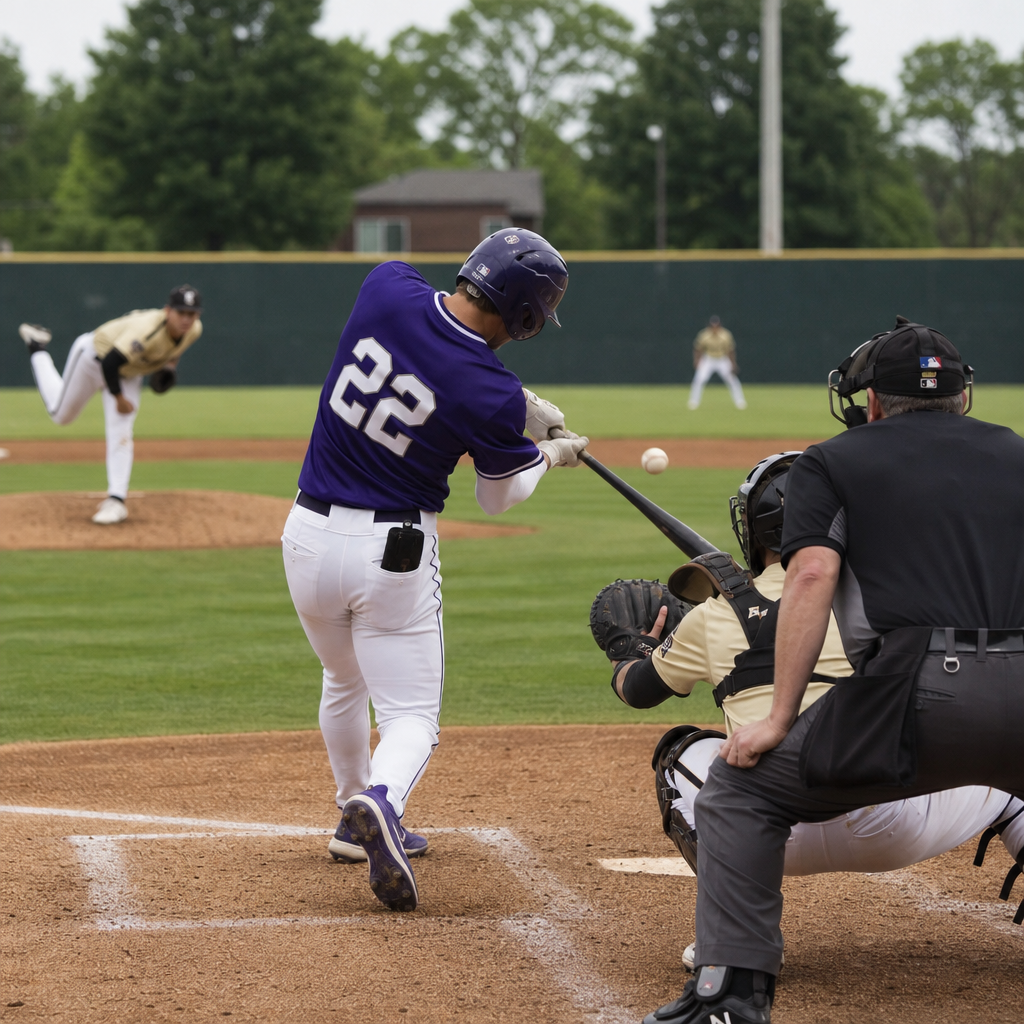
College baseball is evolving faster than many fans realize, and that shift is changing how players train, how coaches build rosters, how schools invest, and how the sport fits into the wider baseball ecosystem. Innovation on the diamond no longer refers only to a new bat model or a radar gun behind home plate. In the college game, innovation now includes biomechanics labs, transfer portal roster management, advanced defensive positioning, pitch design, video-based player development, scheduling strategy, facility upgrades, and new rules intended to improve pace and entertainment value. For anyone following minor leagues and college baseball, this matters because college programs have become a major testing ground for ideas that later influence professional player development and fan expectations.
When I talk with coaches and player development staff, the same point comes up repeatedly: college baseball is no longer a slower, simpler version of the professional game. It is its own high-performance environment. Scholarships remain limited, roster construction is tighter than in many other college sports, and the season demands quick adaptation. At the same time, elite prospects arrive on campus with TrackMan data, private hitting instruction, and clear expectations about how they will be developed. That pressure has pushed programs to modernize. Terms that once lived mostly in pro clubhouses, such as spin efficiency, vertical approach angle, bat speed, force production, and swing decisions, are now common in college settings from the SEC to mid-major conferences.
This transformation matters beyond top-ranked programs. Smaller schools are using smart technology purchases, targeted recruiting, and sharper analytics to compete with larger athletic departments. Fans also benefit. Games are more strategically rich, player stories are easier to follow, and development pathways are more transparent than they were a decade ago. As a hub for miscellaneous topics within minor leagues and college baseball, this article explains where change is happening, why it matters, and what trends are reshaping the sport right now.
Technology Is Reshaping Player Development
The biggest change in college baseball is the normalization of player development technology. A modern program may use TrackMan or Hawk-Eye to measure pitch movement and exit velocity, Rapsodo for bullpen work, Blast Motion for swing metrics, VALD force plates for strength testing, and Edgertronic cameras for slow-motion mechanical review. These tools are not gimmicks. They allow coaches to move from broad instruction to precise intervention. Instead of telling a pitcher to “get on top of the ball,” a coach can show that his induced vertical break improves when his wrist position changes and his release height stays consistent.
I have seen how quickly athletes buy in when information is tied directly to performance. A hitter who watches video of his attack angle and then sees a corresponding change in line-drive rate understands the value immediately. The same is true for pitchers. A college arm who learns that a four-seam fastball plays better at the top of the zone because of ride, or that a sweeper creates more lateral movement against same-side hitters, can make game-ready adjustments within weeks rather than months. Development becomes measurable, repeatable, and easier to communicate across coaching staff, strength staff, and sports medicine personnel.
Technology also helps injury prevention, though it is not a guarantee. Workload tracking, force asymmetry testing, and regular motion capture screening can flag issues before pain becomes a shutdown. Programs that coordinate biomechanics review with recovery protocols tend to make better decisions about throwing volume, especially during the compressed college schedule. The best use of data is practical, not overwhelming. Winning programs do not chase every number. They identify the metrics that connect most clearly to command, bat quality, durability, and game performance.
Roster Building Has Been Transformed by the Transfer Portal and Draft Dynamics
College baseball roster management has changed dramatically because of the transfer portal, Name, Image, and Likeness opportunities, and the ongoing relationship between campus development and the MLB draft. Coaches now recruit in multiple directions at once. They recruit high school players, junior college players, current college transfers, and in some cases retain their own roster the way a professional club protects internal talent. That makes program building more fluid and more demanding.
The transfer portal has created opportunities for players who need innings, at-bats, or a better developmental fit. It has also increased volatility. A mid-major breakout pitcher may move to a power conference school with stronger resources and greater visibility. At the same time, a player buried on a deep roster at a national contender may transfer to a smaller school and become an everyday contributor. The result is a more dynamic talent market. Coaches who adapt quickly can rebuild weak areas in one offseason, particularly at premium defensive positions or on the mound.
MLB draft decisions add another layer. Programs must anticipate which recruits are signable, which draft-eligible sophomores may leave, and how many roster spots might open unexpectedly in July. This uncertainty affects scholarship planning and summer recruiting. The strongest staffs treat roster building like year-round risk management rather than a once-a-year signing exercise.
| Roster Factor | How It Changes College Baseball | Practical Example |
|---|---|---|
| Transfer portal | Speeds up roster turnover and allows targeted needs-based additions | A team adds an experienced catcher to stabilize defense and staff management |
| MLB draft | Creates uncertainty around incoming recruits and draft-eligible stars | A power-hitting freshman signee is drafted high and never reaches campus |
| NIL opportunities | Improves retention at some schools and affects recruiting leverage | A proven weekend starter stays in school for another season |
| Junior college pipeline | Provides older, more game-ready players for immediate impact | A reliever with 95 mph velocity fills a late-inning bullpen role quickly |
This new environment rewards clarity. Players want to know how they will be used, how they will improve, and whether a staff has a track record of getting athletes to professional baseball. Schools that answer those questions well usually recruit better and retain talent more effectively.
Strategy on the Field Is More Sophisticated Than Ever
Innovation in college baseball is also visible in the actual style of play. Defensive alignments are more tailored to hitter tendencies. Pitch calling increasingly reflects data on swing decisions, chase rates, and damage zones. Coaches think in matchup terms, not just traditional roles. A reliever may be used in the fifth inning against the heart of the order because leverage matters more than the inning label. Offensively, teams are balancing old-school pressure tactics with modern run-value thinking. The bunt still exists, but it is more situational. The stolen base remains important, yet teams now evaluate jump quality, pitcher time to the plate, and catcher pop time with much more precision.
One of the clearest shifts is in pitch usage. College pitchers once relied heavily on a generic fastball-slider mix, often without understanding why one offering played better in certain locations. Now staffs actively shape arsenals. A pitcher with high spin and good extension may attack north-south with a riding fastball and a hard downer breaking ball. Another pitcher with lower slot characteristics may lean into sinkers and sweepers to create difficult angles. This is not trend-chasing for its own sake. It is role-specific optimization, and it helps schools turn overlooked recruits into professional prospects.
Hitting has evolved as well. Better programs teach zone control, contact quality, and game planning rather than simply preaching aggression. Hitters are shown where they do damage, which pitch types they track well, and how opposing pitchers sequence in different counts. The result is a more intentional offensive approach. Even when batting averages fluctuate, plate discipline and slugging efficiency often reveal real improvement.
Facilities, Staffing, and Sports Science Are Creating Separation
Facilities have become a major competitive advantage in college baseball. Indoor hitting spaces, dedicated pitching labs, recovery rooms, and strength complexes now shape recruiting conversations. A prospect touring campus notices whether the baseball building reflects serious investment. He also notices whether the space supports daily development. A basic weight room is no longer enough for programs trying to compete nationally. Players expect individualized lifting plans, mobility work, nutrition support, and recovery tools such as cold tubs, soft tissue therapy, and monitored return-to-throw programs.
Staffing has expanded alongside facilities. Many successful programs now include roles that would have been rare in college baseball a decade ago: director of player development, analytics coordinator, mental performance consultant, sports dietitian, or dedicated recruiting operations staffer. Not every school can fund all of these positions, but the trend is clear. Competitive baseball programs are becoming multidisciplinary operations. This matters because development is cumulative. A pitcher improves fastest when mechanics, strength, sleep, nutrition, and workload all point in the same direction.
Sports science is especially important in a season with frequent games and limited recovery windows. Monitoring readiness can help coaches avoid overtraining and keep key players available. The best systems are simple enough to use consistently. A daily wellness check, objective jump testing, and individualized recovery planning can produce better decisions than a complicated dashboard no one trusts. Innovation works when it supports coaching judgment instead of replacing it.
Rules, Exposure, and the Fan Experience Are Changing Too
Not all innovation is driven by technology or recruiting. Some of it comes from rule adjustments, media exposure, and the way the sport is packaged for fans. Pace-of-play rules, pitch clocks in some contexts, and greater attention to game flow reflect a larger effort to make baseball easier to watch without stripping away strategy. College baseball has also benefited from stronger television windows, better streaming access, and more social media storytelling around rivalry series, postseason races, and individual prospects. The College World Series remains the sport’s flagship event, but regular-season visibility has grown meaningfully.
This wider exposure helps players and programs. Fans can follow development arcs more easily, scouts can cross-check performances with less friction, and casual viewers can discover regional stars before they appear in professional baseball. It also raises expectations. Poor camera work, inconsistent broadcasts, and weak in-game presentation stand out more now because audiences have seen what a polished product looks like. Schools that invest in media operations and digital content are not just marketing the program. They are strengthening recruiting, alumni engagement, and sponsor value.
There are still limits. Not every conference receives equal coverage, and not every school has the resources to match the presentation standards of the richest programs. But the direction is unmistakable. College baseball is becoming more visible, more accessible, and more central to the broader conversation about baseball development in America.
What This Means for the Future of Minor Leagues and College Baseball
The most important takeaway is that college baseball now sits closer to professional baseball than at any point in its history, while still keeping its own identity. Development methods overlap. Evaluation language overlaps. Even roster churn increasingly resembles professional movement. For players, that means college can be a powerful launchpad, not merely a place to wait for the draft. For coaches, it means competitive advantage comes from integration: recruiting, development, health, strategy, and communication must work together. For fans, it means the college game offers sharper competition and better stories than ever before.
As the hub for miscellaneous topics within minor leagues and college baseball, this subject connects to everything else in the subtopic. Prospect development, coaching trends, conference power shifts, draft preparation, facilities arms races, and even fan culture all flow through these innovations. The programs that adapt responsibly will keep producing big leaguers and winning in June. The schools that resist change will fall behind, even if they have tradition on their side.
If you want to understand where baseball is going next, pay close attention to college baseball right now. Follow how teams recruit, how they use data, how they develop pitchers and hitters, and how they present the sport to fans. The diamond is changing, and the smartest programs are proving that innovation is no longer optional. It is the game.
Frequently Asked Questions
How is technology changing player development in college baseball?
Technology is transforming college baseball player development from a mostly observational process into a highly data-informed system. Programs now use high-speed cameras, motion capture tools, force plates, wearable sensors, ball-tracking systems, and bat-tracking devices to measure how athletes move and perform in real time. Instead of relying only on a coach’s eye, staffs can break down swing mechanics, pitching efficiency, release points, spin characteristics, jump metrics, and recovery patterns with much greater precision. That allows players to make smaller, smarter adjustments rather than broad changes that may not fit their physical profile.
One of the biggest changes is the rise of individualized development plans. A pitcher might work on reshaping a slider based on movement data and seam orientation, while a hitter might use bat-speed and contact-point metrics to improve performance against velocity at the top of the strike zone. Catchers can study receiving and pop-time data, and defenders can use video and movement analysis to refine first-step reactions and positioning. This creates a more professionalized environment, where players are trained with methods that resemble what many will encounter in minor league or Major League Baseball systems.
Just as important, technology is changing how coaches communicate. Video review is faster, clearer, and easier to integrate into daily practice. Players can see side-by-side comparisons, track progress over time, and understand why a change matters instead of simply being told to make one. In that sense, innovation is not replacing coaching. It is making coaching more targeted, more efficient, and more collaborative, which is a major reason the college game is evolving so quickly.
What role does the transfer portal play in modern college baseball roster building?
The transfer portal has become one of the most important forces in college baseball roster management. In the past, coaches often built programs primarily through high school recruiting and then developed players over several years. Now, the portal gives schools access to experienced athletes who can fill immediate needs, whether that means adding a weekend starter, a power bat, a late-inning reliever, or a middle infielder with proven defensive value. It has made roster construction more fluid, more competitive, and in many cases more urgent.
For coaches, that means recruiting never really stops. They still need to identify and sign high school talent, but they also have to evaluate transfer candidates, manage scholarship allocation carefully, and plan for possible departures from their own roster. The portal also changes timelines. A team that was thin in one area can address the issue much faster than in previous eras, and programs can accelerate rebuilds by bringing in players who are physically mature and game-tested. That can quickly shift conference races and postseason expectations.
At the same time, the portal creates new challenges. Staffs must balance short-term competitiveness with long-term player development, and they have to manage chemistry in a clubhouse where roster turnover may be higher than before. For players, the portal offers opportunity, but it also creates more competition for roster spots and playing time. Overall, the portal is not just a player movement tool. It is now a core part of the strategic architecture of college baseball, influencing recruiting philosophy, development timelines, and how coaches define program stability.
Why are biomechanics and pitch design becoming so important in the college game?
Biomechanics and pitch design are becoming central to college baseball because they give programs a clearer understanding of how performance is created and how it can be improved safely. Biomechanics focuses on how the body moves, helping coaches and performance staffs evaluate efficiency, sequencing, joint stress, force production, and mechanical consistency. For pitchers especially, this matters because even small changes in timing or posture can affect both velocity and injury risk. Instead of guessing why a player is losing command or dealing with recurring soreness, staffs can often identify measurable movement patterns that need attention.
Pitch design builds on that foundation by analyzing the shape and behavior of pitches. Using ball-tracking technology, coaches can study velocity, spin rate, spin efficiency, vertical break, horizontal movement, release height, and extension. That helps pitchers and coaches determine whether a pitch is truly effective and how it fits into an overall arsenal. A fastball might play better at the top of the zone because of its movement profile, while a breaking ball may need a grip adjustment to create sharper shape or better tunneling off another pitch. The goal is not simply to throw harder, but to create more deceptive, more competitive stuff.
What makes this especially significant at the college level is that players are often still developing physically and mechanically. That means there is substantial room for growth when the right information is applied well. Programs that can combine scientific analysis with skilled coaching often help pitchers improve faster and more sustainably. It also narrows the gap between college baseball and the professional game, where pitch modeling and movement-based development have already become standard. In today’s landscape, biomechanics and pitch design are no longer niche ideas. They are key drivers of competitive advantage.
How are analytics influencing strategy and decision-making during games?
Analytics are having a growing impact on in-game strategy across college baseball, shaping everything from defensive alignment to bullpen usage to lineup construction. Coaches now have access to deeper information on hitter tendencies, swing decisions, batted-ball profiles, platoon splits, and run expectancy in different situations. As a result, decisions that once depended mostly on instinct are increasingly informed by evidence. That does not eliminate feel for the game, but it does give coaches another layer of confidence when choosing how to defend an opponent, when to be aggressive on the bases, or which reliever is best suited for a particular matchup.
Defensive positioning is one clear example. Teams can shift infielders and outfielders based on where hitters are most likely to make contact, which can turn more hard-hit balls into outs. On the pitching side, staffs can build game plans around attack zones and pitch sequencing that align with a batter’s weaknesses. Lineups can also be arranged more intentionally, using data on on-base skills, contact quality, speed, and matchup potential rather than relying only on traditional batting averages. Even scheduling and workload management can be influenced by analytics, especially when teams are balancing conference play, travel, and postseason preparation.
The smartest programs understand that analytics are most useful when paired with context. College players are not robots, and emotional rhythm, confidence, fatigue, weather, and game flow still matter. The best staffs use data to sharpen decisions, not to remove human judgment. That balanced approach is one reason analytics are changing the college game so effectively. They are helping teams prepare more thoroughly, react more intelligently, and operate with a level of sophistication that would have been unusual in the college game just a few years ago.
How is innovation changing the broader future of college baseball?
Innovation is changing the future of college baseball by reshaping what the sport looks like, how it is funded, and where it fits in the development pipeline for elite players. As schools invest more in training facilities, performance science, video infrastructure, nutrition, recovery, and recruiting operations, the gap between top college programs and professional environments continues to narrow. That makes college baseball more attractive not only to players who want to develop at a high level, but also to fans who are seeing a more polished, more competitive, and more strategically advanced version of the game.
It is also changing institutional priorities. Programs are thinking more seriously about roster construction, player retention, scheduling models, and support systems that can help athletes succeed over a long season. Innovation is no longer limited to what happens between the lines. It includes how departments allocate resources, how coaches build staffs, how analysts and sports scientists are integrated into baseball operations, and how schools position themselves in a rapidly evolving recruiting and transfer market. In many ways, college baseball is becoming more interconnected, more specialized, and more professionally organized.
Looking ahead, this evolution could influence the entire baseball ecosystem. For some players, college is becoming a more powerful development route to professional baseball, especially as the amateur landscape changes. For the sport itself, innovation may help drive higher-quality play, stronger fan engagement, and greater national relevance. The challenge will be ensuring that progress remains sustainable and that programs balance performance gains with athlete well-being, educational priorities, and competitive fairness. Still, the direction is clear: college baseball is no longer slowly adapting to change. It is actively helping define what the modern game looks like.