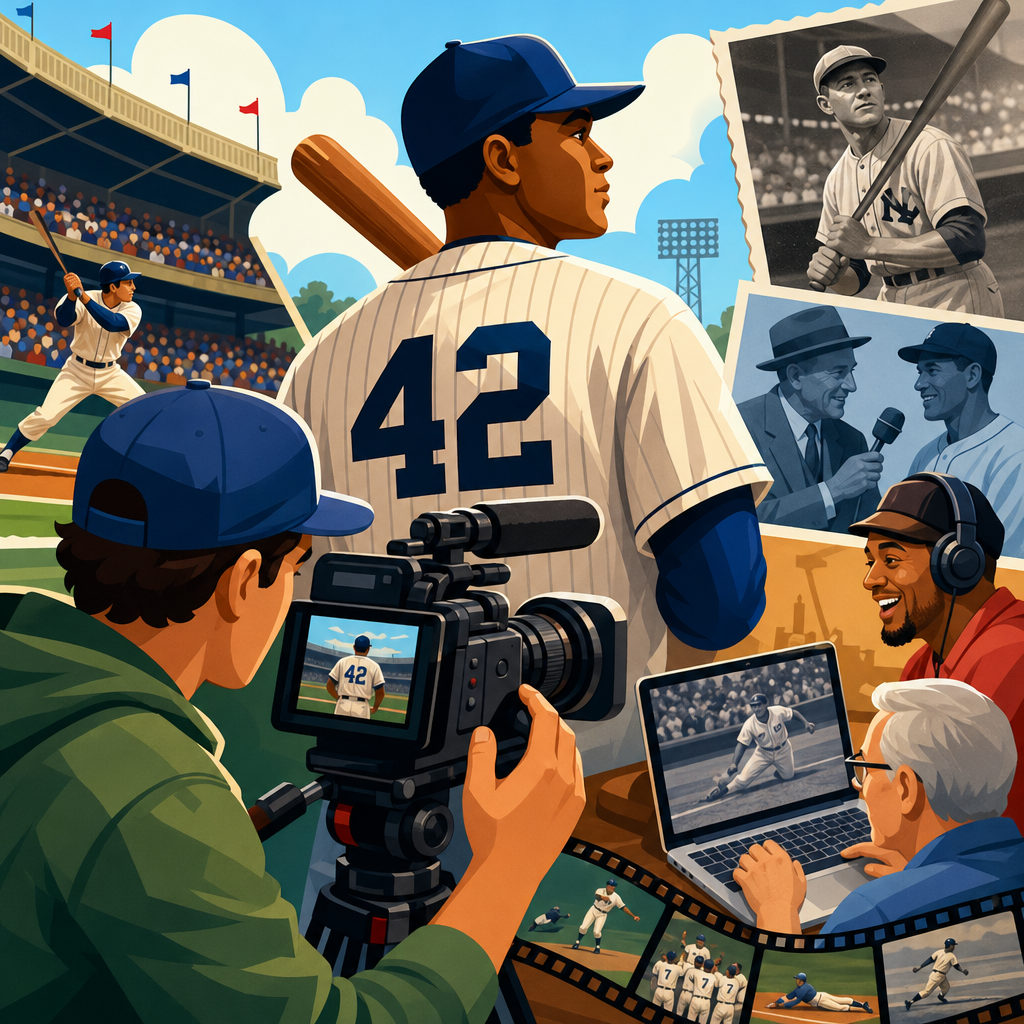
Baseball documentaries have become one of the richest ways to understand the sport because they capture not only games and stars, but also memory, labor, race, media, cities, and the stories fans tell long after the final out. In the broad landscape of baseball in literature and film, documentaries occupy a special place: they promise evidence, use archival footage and interviews, and turn scattered facts into narratives that explain why baseball matters beyond the box score. When I map this subtopic for readers, I treat baseball documentaries as a hub category that includes feature films, episodic series, television biographies, independent historical projects, and team-produced retrospectives. The rise of baseball documentaries matters because the form has expanded access to overlooked histories, corrected myths, and given audiences new ways to revisit iconic moments, from Jackie Robinson breaking the color line to the Boston Red Sox ending their championship drought. Unlike fictional baseball movies, documentaries are judged by sourcing, editorial judgment, and the ability to balance nostalgia with analysis. That makes them especially important for anyone studying sports culture, film history, American identity, or the evolving relationship between athletics and media.
The modern baseball documentary also reflects major shifts in how people watch and learn. Earlier generations relied on newsreels, local television specials, and occasional public-broadcasting events. Today, streaming platforms, league archives, digital restoration, and long-form sports journalism have created a deeper ecosystem. A baseball documentary can now function as entertainment, oral history, criticism, and primary-source education at the same time. This hub article covers that miscellaneous field comprehensively: how the genre developed, what kinds of baseball documentaries exist, which themes define the strongest entries, how filmmakers build authority, and what viewers should watch for when evaluating a title. It also points toward the broader network of baseball in literature and film, where documentaries connect naturally to biographies, memoir adaptation, historical cinema, and criticism. If you want a practical definition, a baseball documentary is a nonfiction screen work centered on baseball people, events, institutions, or cultural meanings, using real footage, documents, testimony, or verifiable reconstruction. The best ones do more than celebrate heroes. They document conflict, context, and consequence.
How baseball documentaries evolved from newsreels to streaming series
Baseball documentaries did not begin as prestige filmmaking. Their roots are in early actuality footage, theatrical newsreels, local station packages, and season-ending highlight films designed more to preserve spectacle than interrogate it. For decades, much of baseball on screen was fragmentary: a World Series clip, a player interview, or a commemorative short made for television. Those materials mattered because they established the archive. Without them, later directors would have far less visual evidence to work with. The growth of sports divisions at major broadcasters, the rise of public television, and the increasing sophistication of documentary editing turned those fragments into narrative history. By the late twentieth century, filmmakers could combine game footage, newspaper headlines, radio calls, still photography, and first-person interviews into full historical arguments rather than simple recaps.
A decisive shift came when documentaries began treating baseball as a lens on national life. Ken Burns’s Baseball, first broadcast in 1994, remains the clearest milestone. Its use of archival research, narration, oral testimony, and thematic structure proved that baseball history could sustain a long-form documentary with literary ambition. The series also demonstrated a commercial truth: audiences would invest hours, not just minutes, if the storytelling connected individual games to larger forces such as immigration, segregation, urban growth, labor disputes, and mass media. After that success, networks and studios approached baseball documentaries with greater confidence. ESPN’s 30 for 30 era strengthened the market for topic-specific sports films, while MLB Network and team media units expanded access to club histories, pennant races, and franchise anniversaries. Streaming then accelerated the trend by rewarding niche depth. A subject like the 1986 Mets, once too specialized for broad theatrical release, became ideal for serialized nonfiction.
Technology changed the genre as much as audience demand. Digital restoration allows producers to rescue degraded 16mm footage and sharpen still photographs once considered unusable. Database-driven research helps filmmakers locate regional newspapers, scorecards, legal records, and private collections quickly. Remote interviewing broadened participation, making it easier to include former players, front-office staff, historians, and relatives spread across the country. In practical production terms, this means newer baseball documentaries can be both more inclusive and more precise than earlier works. They can correct dates, verify quotations, and juxtapose contradictory memories with contemporaneous evidence. As a result, the best recent entries feel less like commemorative television and more like durable historical scholarship translated into accessible film language.
What kinds of baseball documentaries exist within this hub
Baseball documentaries are not one uniform category. For a reader exploring this sub-pillar, it helps to sort the field into distinct but overlapping formats. Historical survey documentaries cover broad eras or institutions, such as Negro Leagues history, the Deadball Era, or the integration of Major League Baseball. Biographical documentaries focus on individuals, including players, managers, owners, scouts, broadcasters, and sometimes writers. Event-centered films reconstruct a specific game, season, scandal, or turning point, like the Black Sox controversy, the 2004 Red Sox comeback, or the home run race of 1998. Team documentaries examine identity over time: how a franchise reflects a city’s economy, migration patterns, class structure, or civic mythology. Investigative documentaries revisit disputed narratives, including steroid use, labor conflict, gambling, sign stealing, or exclusion from the Hall of Fame. Finally, fan-culture and community documentaries explore youth baseball, minor league towns, sandlot traditions, stadium preservation, and baseball’s role in local memory.
These categories matter because they shape method. A biography of Roberto Clemente requires a different evidentiary balance than a documentary about the Brooklyn Dodgers’ move to Los Angeles. One must address personal testimony, family archive, and posthumous legacy; the other must navigate urban planning, ownership decisions, stadium finance, and public backlash. Good baseball documentaries know what question they are answering. Are they asking who a person was, what happened in a contested episode, or why a community still cares? When filmmakers blur categories successfully, the results are often strongest. A film about Satchel Paige, for example, can function at once as biography, racial history, media analysis, and myth critique. That layered approach is exactly why documentaries hold such a central place under baseball in literature and film: they can absorb the breadth that a single fictional narrative often cannot.
| Documentary type | Primary focus | Typical evidence | Representative subjects |
|---|---|---|---|
| Historical survey | Era, institution, or movement | Archival footage, scholars, timelines | Negro Leagues, integration, labor history |
| Biography | One individual life | Family interviews, letters, game film | Jackie Robinson, Clemente, Yogi Berra |
| Event-centered | Single season, game, or crisis | Broadcast clips, press coverage, testimony | Black Sox, 1986 Mets, 2004 Red Sox |
| Team history | Franchise and city identity | Local archives, fan voices, ownership records | Cubs, Dodgers, Yankees, minor league clubs |
| Investigative | Disputed narrative or controversy | Legal files, data analysis, adversarial interviews | Steroids, gambling, sign stealing |
As a hub, this miscellaneous section should direct readers to all of those forms because documentary coverage is inherently cross-disciplinary. A film about Wrigley Field can connect to architecture, memoir, urban studies, and broadcasting history. A series on the Negro Leagues can belong equally to African American history, film studies, and baseball biography. Organizing the category by type helps readers find the right entry point while still seeing how the pieces fit together.
The themes that define the strongest baseball documentaries
The most effective baseball documentaries return to a core set of themes, and understanding them helps viewers separate serious work from polished nostalgia. The first is memory. Baseball is unusually dependent on recollection because so much of its cultural value lies in retelling. A documentary must therefore test memory, not merely repeat it. When former players remember a clubhouse event differently, the film should place those accounts beside reporting from the time. The second theme is race. No honest baseball documentary can avoid segregation, the Negro Leagues, integration, tokenism, and the uneven recognition of Black and Latin American players in media and institutions. Films that center Jackie Robinson, Buck O’Neil, or Minnie Miñoso are not side topics; they are central to the sport’s history.
A third theme is labor and power. Baseball stories often seem pastoral, but the documentary record shows constant negotiation over salaries, free agency, reserve clauses, unionization, franchise relocation, and public financing. Any film on Curt Flood, Marvin Miller, or the 1994 strike reveals how deeply economics structures the game. Fourth is place. Baseball documentaries repeatedly show that ballparks are civic spaces tied to transit systems, neighborhood change, and local identity. A documentary on Ebbets Field or old Comiskey Park is never just about architecture. It is about displacement, memory, class, and what happens when a city loses a ritual site. Fifth is media itself. Baseball may be the most narrated major sport in America, and documentaries often examine how radio voices, newspaper columnists, highlight shows, and now social platforms shape collective understanding.
One recurring lesson from films I return to is that baseball documentaries are strongest when they resist easy hero worship. A compelling documentary can admire Derek Jeter or Nolan Ryan while still asking how fame is built, which images endure, and what gets omitted. It can celebrate a championship and still analyze who profited, who was excluded, and why one season became symbolic. This balance gives the genre credibility. It also makes documentaries valuable companions to books, oral histories, and feature films. Where a fictional baseball movie may compress conflict into archetype, a documentary can preserve ambiguity without losing momentum.
How filmmakers build credibility through archives, interviews, and structure
Baseball documentaries succeed when viewers trust the construction. That trust begins with sourcing. Archival footage is not decorative; it is evidence. The strongest films identify where images come from, distinguish between game broadcast and reenactment, and use still photography in date-accurate ways. Interviews matter just as much, but not every interview carries equal weight. A teammate who witnessed an event, a beat reporter who covered it, a historian who has examined league records, and a family member preserving private letters each offer different forms of authority. Good filmmakers know how to combine them. They also know when silence is meaningful. If no direct footage survives of a Negro Leagues star in his prime, the documentary should say so plainly and use that absence to explain the archival inequities created by racism and underfunding.
Structure is another mark of quality. The best baseball documentaries are not chronological dumps. They organize information around a question or tension: Why did this team matter to this city? How did one player alter the sport’s labor system? What myths grew around one famous game, and which survive scrutiny? Clear structure helps both casual viewers and serious researchers. It also improves historical accuracy because each section has to earn its place. In projects I have evaluated, weak documentaries usually overload famous clips and under-explain causation. Strong ones slow down at decisive moments. They identify what changed, who drove the change, and what evidence supports the interpretation.
Narration and music can elevate or distort. Baseball documentaries often rely on elegiac scores and reflective voice-over, partly because the sport invites contemplation. Used carefully, that tone helps connect still images, radio calls, and text documents. Used lazily, it can sentimentalize difficult subjects. A documentary about segregation, addiction, or exploitation should not flatten pain into warm nostalgia. Responsible filmmaking keeps emotional power tied to factual clarity. That is why the most respected baseball documentaries remain useful years later: they are watchable, but they also hold up under reexamination.
Why baseball documentaries matter within literature, film, and cultural history
As a hub under baseball in literature and film, documentaries matter because they sit at the intersection of narrative art and historical record. They frequently adapt or draw from books, memoirs, biographies, and journalism, then send viewers back to those texts with sharper questions. A documentary on Babe Ruth may rely on biographical scholarship; one on the Negro Leagues may extend arguments first developed by historians such as Jules Tygiel or Larry Lester. In that sense, the documentary form is not secondary to baseball literature. It is part of the same interpretive conversation. The screen version tests what can be shown, heard, and juxtaposed, while the written version often provides the footnotes and argumentative depth behind it.
These works also preserve voices that standard baseball history once marginalized. Oral history on film captures cadence, hesitation, and emotion in ways print alone cannot. When former players describe traveling conditions in segregated baseball, or when fans recall a neighborhood ballpark that no longer exists, documentary becomes an archive of feeling as well as fact. That is a major cultural benefit. It broadens who counts as a witness. It also makes baseball documentaries essential for teaching. In classrooms, museums, libraries, and community screenings, they provide entry points for discussions about civil rights, migration, urban redevelopment, gender, patriotism, celebrity, and the business of sports.
The rise of baseball documentaries ultimately reflects a larger truth: the sport generates stories, but the documentary form decides which stories endure with evidence attached. For readers exploring this miscellaneous hub, the key takeaway is simple. Baseball documentaries are not just supplements to the game; they are one of the main ways modern audiences understand its past and argue about its meaning. Seek out documentaries that show their sources, confront complexity, and connect the field to the world around it. From there, explore the linked biographies, historical studies, and film analyses across this subtopic, and use them to build a fuller picture of baseball on screen.
Frequently Asked Questions
Why have baseball documentaries become such an important way to understand the sport?
Baseball documentaries matter because they do something that highlights, statistics pages, and even traditional game coverage often cannot: they connect the action on the field to the larger worlds that shaped it. A great documentary is not just about who won, who lost, or who hit the most home runs. It is about memory, labor, migration, race, media, neighborhood identity, ownership, fandom, and the meanings people attach to the game over time. By combining archival footage, photographs, radio calls, newspaper headlines, home movies, interviews, and present-day reflection, documentaries show how baseball lives both as an event and as a story people keep retelling.
That is especially important in a sport so deeply tied to nostalgia and historical comparison. Baseball invites constant conversation between eras, and documentaries give those comparisons a visual and emotional form. They can place a famous pennant race alongside social conflict, show how a stadium anchored a city block, or explain how a player’s image was shaped by television and myth as much as by performance. In that sense, documentaries do not simply preserve baseball history; they interpret it. They help viewers understand why the sport continues to matter long after the final out, and why its meaning often extends far beyond the box score.
What makes baseball documentaries different from baseball feature films or written sports history?
Baseball documentaries occupy a unique middle ground between evidence and storytelling. A feature film can dramatize baseball beautifully, but it usually works through invention, compression, and emotional symbolism. A written history can provide depth, nuance, and scholarly context, but it asks readers to imagine scenes rather than witness them directly. A documentary, at its best, combines the strengths of both forms. It offers a narrative structure with characters, conflict, pacing, and thematic focus, while also grounding its claims in visible and audible materials such as game footage, interviews, broadcasts, public records, and archival images.
This gives documentaries a special authority, even when they are clearly shaped by directorial choices. Viewers see faces, hear voices, and encounter the textures of a particular era through uniforms, ballparks, crowd noise, advertising, and commentary. That sensory dimension can make baseball history feel immediate. At the same time, documentaries can move fluidly between the personal and the structural. They can tell the story of one player or one team while also addressing segregation, labor disputes, media expansion, urban change, or the economics of ownership. In the broader landscape of baseball in literature and film, documentaries stand out because they promise evidence while still embracing narrative. They do not just tell us what happened; they show how fragments of the past can be assembled into meaning.
How do baseball documentaries use archival footage and interviews to build compelling stories?
Archival footage and interviews are the backbone of the baseball documentary form because they allow filmmakers to transform scattered historical material into a coherent narrative. Archival footage does more than authenticate a story. It provides rhythm, atmosphere, and perspective. Grainy reels of a packed grandstand, silent shots of pregame routines, local television segments, radio broadcasts, newspaper clippings, and still photographs all help create a sense of time and place. These materials remind viewers that baseball history was lived in real environments shaped by technology, class, geography, and culture. A documentary about a team is also often a documentary about its city, its media ecosystem, and its moment in national life.
Interviews then give those images interpretation and emotional depth. Former players, managers, journalists, historians, family members, broadcasters, and fans can each describe the same event differently, which helps a documentary present baseball as contested memory rather than fixed legend. One person remembers greatness, another remembers exploitation, another remembers exclusion, and another remembers joy. That layering of perspectives is one reason the best baseball documentaries feel so rich. They understand that facts alone are not enough. The meaning of baseball emerges through testimony, disagreement, hindsight, and reflection. When archival evidence and lived memory are carefully edited together, the result can be a powerful account of not only what happened in baseball, but why those events still resonate.
What kinds of themes do the best baseball documentaries explore beyond the game itself?
The strongest baseball documentaries almost always expand beyond on-field performance. They recognize that baseball is never only about innings and standings. It is also about labor, particularly the physical and economic demands placed on players, minor leaguers, stadium workers, and others whose contributions are often overlooked. It is about race, from segregation and the Negro Leagues to the uneven politics of integration, representation, and memory. It is about media, including how radio, television, documentary filmmaking, and now digital culture have shaped which stories become legendary and which disappear from public view. It is also about cities and regions, because teams often function as symbols of local identity, civic pride, displacement, redevelopment, and generational belonging.
Another major theme is memory itself. Baseball is unusually dependent on recollection, mythmaking, and ritual. Fans inherit stories from parents and grandparents, revisit old games, and turn players into cultural icons whose significance often grows after retirement. Documentaries are especially well suited to examining that process. They can ask why one season becomes sacred, why one defeat lingers, or why one ballpark remains emotionally present long after demolition. They also explore the tension between myth and reality. A documentary may celebrate a beloved figure while also complicating the public legend with evidence about personality, politics, money, or historical context. That balance is what gives the genre its depth. The best works show that baseball matters not because it exists outside society, but because it reveals so much about society through the stories people attach to it.
Why do baseball documentaries have such lasting appeal for both devoted fans and new viewers?
Baseball documentaries endure because they reward different kinds of audiences at the same time. For lifelong fans, they offer rediscovery. They revisit familiar names, seasons, and rivalries, but place them in a broader frame that deepens understanding. A fan may know the box score of a famous game but not the economic pressures facing the players, the social tensions surrounding the city, or the media machinery that turned the event into legend. Documentaries turn knowledge into perspective. They make the known feel newly significant.
For new viewers, baseball documentaries often work as an accessible gateway into the sport because they foreground human stories rather than technical expertise. Someone does not need to understand every rule or strategic nuance to be drawn into a story about ambition, injustice, community, migration, loss, or redemption. The documentary form creates emotional entry points through interviews, historical stakes, and visual evidence. It teaches viewers how to see baseball as a cultural language as much as a game. That broad appeal explains why the genre has grown in importance. At a time when attention is fragmented and sports content is everywhere, baseball documentaries offer something more reflective and durable. They slow the game down, connect past and present, and remind audiences that baseball is not just watched in the moment. It is remembered, argued over, archived, and continually reinterpreted.