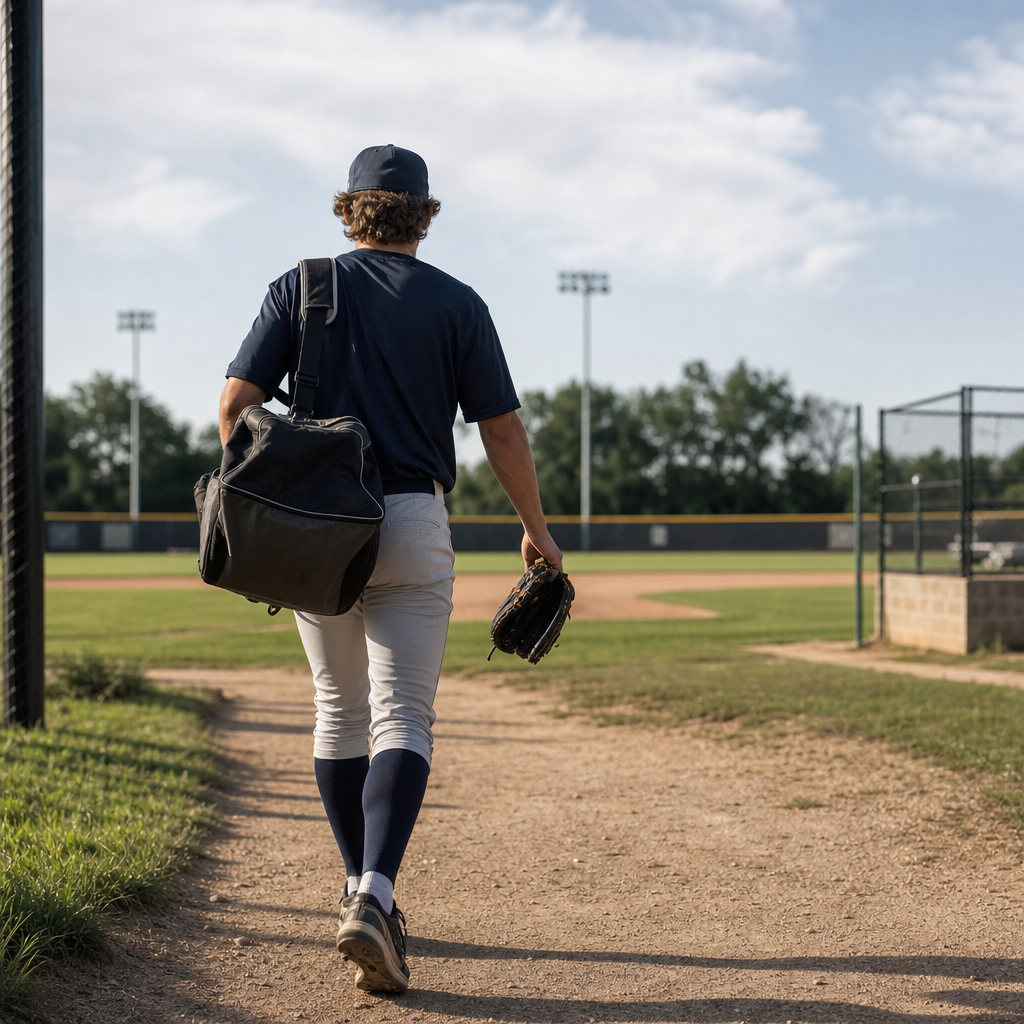
For most college players, the road to professional baseball is no longer a straight line from a Division I roster to the MLB Draft. Alternative routes from college to professional baseball now include junior college resets, summer leagues, MLB partner leagues, independent ball, the transfer portal, data-driven showcases, and international opportunities that did not matter as much a decade ago. I have worked with players, coaches, and scouts who used each of these paths, and the common lesson is simple: talent still matters most, but access, timing, health, and visibility shape who actually signs. Understanding those variables helps players build realistic plans instead of waiting for one traditional outcome that may never arrive.
In this context, “alternative routes” means any path that extends beyond the classic sequence of high school recruitment, NCAA play, draft selection, and affiliated minor league assignment. “College baseball” includes NCAA Division I, II, and III programs, NAIA schools, and junior colleges, all of which feed the professional game in different ways. “Professional baseball” also needs a broader definition than many families use. It includes affiliated minor leagues under Major League Baseball, MLB Partner Leagues such as the Atlantic League and American Association, independent leagues like the Frontier League, and select overseas circuits where former college players can begin or revive careers. The practical difference is important because each environment offers different pay, development resources, competition levels, and exposure to scouts.
This subject matters because roster spots are scarce and the modern baseball labor market is fragmented. MLB’s reduction of affiliated minor league teams compressed opportunities, while the transfer portal and an extra year of eligibility changed college roster management. At the same time, pitch design, bat-tracking technology, and public data have created new ways for overlooked players to prove value. A reliever throwing 94 mph with elite induced vertical break can move faster today than a more famous pitcher with softer stuff. A corner infielder with average traditional stats but excellent swing decisions and exit velocity may get signed after a model-based evaluation. Players who understand these realities can target the right leagues, showcases, and development settings rather than relying on reputation alone.
As a hub within the broader minor leagues and college baseball landscape, this article maps the main alternatives, explains when each route makes sense, and highlights the tradeoffs. The goal is not to romanticize the grind. Some paths are expensive, unstable, or physically demanding. Some offer excellent development but little security. Others provide immediate at-bats and innings that a crowded college roster cannot. The advantage of a hub page is clarity: once you see how the routes connect, you can make better choices about playing time, exposure, and long-term fit.
Junior college, transfers, and strategic re-entry points
Junior college remains one of the most effective reset buttons in baseball. I have seen players leave crowded four-year programs, play one season at a competitive JUCO, gain 150 plate appearances or 70 innings, and return to the market with real leverage. The appeal is straightforward. Junior colleges offer immediate playing time, lighter roster politics, and another chance to be evaluated for the draft or by four-year programs. Because JUCO athletes can be drafted earlier than many NCAA players, this route is especially useful for late bloomers whose bodies, velocity, or offensive profiles change after age nineteen.
The transfer portal has made movement more visible, but visibility is not the same as opportunity. Coaches now evaluate portal players with the same rigor they use for recruits: game performance, TrackMan or Rapsodo data, defensive versatility, and academic fit all matter. A backup catcher from a major conference may find a better development environment in a mid-major where he can start four games a week. A two-way player buried on one roster may need to choose one role elsewhere. The best transfer decisions are role-based, not logo-based. Players should ask exactly how they will be used, which coach owns their development plan, and whether the program can show measurable improvement in similar athletes.
Strategic re-entry also includes redshirting, summer rebuilding phases, and temporary moves down a level to move back up later. That sounds counterintuitive, but it is often smart. A pitcher returning from labrum trouble may need a lower-intensity competitive setting before facing SEC lineups. A hitter who lost a season to a hamate injury may benefit from regular reps at an NAIA or Division II program, then re-enter the portal with restored bat speed and confidence. The key is to treat each stop as part of a sequence, not a verdict on ceiling.
Summer leagues, showcases, and the visibility economy
For players outside national rankings, summer leagues can change careers. The Cape Cod League remains the most famous proving ground, but it is not the only meaningful one. The Northwoods League, Coastal Plain League, Alaska Baseball League, New England Collegiate Baseball League, and California Collegiate League have all produced professional players and offered evaluators useful samples against quality competition. Scouts trust these leagues because they compress strong opponents, wood-bat performance, and consistent scouting access into one period. For hitters, this environment tests whether power and contact quality carry without metal bats. For pitchers, it reveals whether fastball shape, command, and secondary pitches play against advanced lineups.
Showcases now matter most when they produce objective markers that support game performance. Radar-gun readings alone are not enough. Teams want context: strike percentage, vertical and horizontal movement, extension, spin efficiency, exit velocity, chase rate, and defensive running times all sharpen the picture. In my experience, the strongest showcase performers arrive with a defined identity. They know whether they are presenting as a sinker-slider reliever, a switch-hitting contact center fielder, or a corner bat with plus raw power. That clarity helps scouts compare them to existing player models.
| Route | Best For | Main Advantage | Main Risk |
|---|---|---|---|
| Junior college | Late bloomers, blocked players | Immediate playing time and draft flexibility | Academic and transfer complexity |
| Summer collegiate league | Players needing exposure | Wood-bat evaluation against strong competition | Small sample size can mislead |
| Partner or independent league | Undrafted seniors, older prospects | Professional innings and at-bats right away | Lower pay and less organizational support |
| Data showcase | Underrecruited toolsy players | Objective metrics can attract scouts quickly | Metrics without performance history raise questions |
The visibility economy is broader than live events. Synergy, TrackMan, Blast Motion, Yakkertech, and video platforms have made it easier to circulate verified performance evidence. A player from a cold-weather Division III school can now send a tightly organized profile that includes game video, batted-ball data, and medical history to clubs and agents. That does not replace in-person scouting, but it shortens the distance between obscurity and a serious conversation.
Independent ball and MLB Partner Leagues as professional launchpads
Independent baseball has become a genuine bridge, not merely a last resort. The Atlantic League, American Association, and Frontier League feature experienced managers, older competition, and enough scouting traffic to create real movement into affiliated baseball. MLB Partner Leagues are especially relevant because they often serve as testing grounds for rules and maintain direct visibility with clubs. I have watched undrafted college pitchers enter these leagues throwing ninety to ninety-two, add a sweeper or improve vertical attack angle, and earn contracts once their arsenal aligned with modern player-development priorities.
The biggest benefit of independent and partner leagues is volume against professionals. College players who were platooned or protected on campus often need uninterrupted reps. A catcher can receive every day, manage veteran pitchers, and show game-calling durability. A reliever can appear three times in a week and prove recovery capacity. A corner outfielder can see former Double-A arms and discover quickly whether his approach can survive against advanced spin. Those are useful answers, even when they are hard answers.
There are tradeoffs. Salaries are modest, housing can be unstable, and support staffs are thinner than in affiliated ball. Players must often self-manage nutrition, recovery, and offseason planning. The best organizations help, but not all clubs are equal. Before signing, players should ask about video access, strength resources, medical protocols, travel conditions, and whether the manager has a record of moving players onward. In practical terms, the right independent club can be better for development than sitting on a reserve list in a traditional system, but the wrong fit can stall a career.
Data-driven development and private training pipelines
One of the clearest changes in baseball is the rise of private development facilities as gateways to pro opportunities. Driveline Baseball is the best-known example, but many regional centers now offer force-plate testing, motion capture, high-speed video, bat sensors, and individualized throwing or hitting plans. These tools matter because they convert vague advice into measurable intervention. Instead of “get stronger” or “stay through the ball,” a player can work from specific targets such as pelvic rotation timing, attack angle range, seam-shifted wake effects, or fastball release traits.
For overlooked college players, this environment can create a second market. A pitcher who sits ninety may add two miles per hour through better intent, mobility, and plyometric progression. More importantly, he may learn which pitch shapes actually miss bats. A hitter with modest college numbers may discover his bat speed is already pro-caliber but his swing decisions are poor in hitter’s counts. Once that issue is identified through data and video, improvement can happen quickly. Clubs respond when the changes are credible, documented, and validated in games.
The caution is that technology does not erase scouting fundamentals. Every private facility has success stories, but not every athlete benefits equally, and not every gain holds under competition stress. Chasing metrics without preserving health or strike-zone control is a common mistake. The most effective programs connect laboratory work to innings, plate appearances, and recovery patterns. If a training center cannot explain how a new pitch design or swing change will transfer into competition, the data is decorative rather than useful.
International options, agents, and career management beyond the draft
Not every college player begins a professional career in the United States. Some sign in leagues in Canada, Mexico, Europe, Australia, or winter-ball environments that offer useful competition and a chance to keep developing. The Australian Baseball League has given American players offseason reps against a mixed talent pool. European leagues can provide everyday opportunities for hitters and pitchers who need volume. The Mexican League and affiliated structures present a higher competitive bar and can be meaningful for more advanced players. These options are not interchangeable, so players need to evaluate level, compensation, visa requirements, season length, and coaching quality before committing.
Representation matters more on alternative routes than many families expect. A capable advisor or agent does more than negotiate money. They help sequence decisions, compare offers, vet league quality, and protect players from poor contractual terms. In my experience, the most useful representatives are honest about timing. If a player is not ready for a partner league but could start and improve in a stronger independent setting or overseas circuit, good advice may save a season. Players should ask direct questions about placement history, fee structure, communication cadence, and medical disclosure practices.
Career management also includes academics and life planning. Because baseball careers are uncertain, preserving degree progress and transfer eligibility has real value. Name, image, and likeness opportunities can also affect timing; for some college stars, staying another year with strong NIL support and draft leverage may be wiser than signing immediately into a crowded professional depth chart. The central point is that alternative routes work best when treated as managed pathways with checkpoints, not emotional reactions to one disappointing season.
How players should choose the right path
The right route depends on role, age, health, and evidence. Start with an honest audit. What carries your profile right now: velocity, contact quality, defensive value, switchability, command, athleticism, durability, or projection? Then identify the missing proof. If clubs like your raw stuff but question command, you need innings. If they like your game performance but want better underlying data, a targeted training block and showcase may help. If your issue is simply being blocked on a roster, transfer or JUCO options may create the volume you need.
Players should also measure environment, not just level. A slightly lower league with daily reps, clear coaching, and modern feedback can outperform a famous destination where you sit. Ask for specifics, seek blunt evaluations, and make decisions on fit rather than prestige. Families should build a simple decision grid covering cost, exposure, competition, development resources, and probability of playing time. That process removes emotion and makes tradeoffs visible.
Alternative routes from college to professional baseball reward players who are adaptable, informed, and willing to treat development like a series of deliberate moves. The old model still exists, but it no longer defines the whole market. Junior college can restore opportunity, summer leagues can create visibility, independent and partner leagues can accelerate professional growth, private training can sharpen measurable tools, and international play can keep careers alive when domestic doors narrow. The best path is the one that gives a player the clearest chance to show major skills in meaningful games. If you are mapping your next step in minor leagues and college baseball, use this hub to evaluate each route carefully, compare the tradeoffs, and choose the setting where your evidence can become opportunity.
Frequently Asked Questions
What are the most realistic alternative routes from college to professional baseball today?
Today, the path from college baseball to the professional ranks is much more flexible than it used to be. For many players, the traditional formula of playing at a Division I program, putting up numbers, and getting selected in the MLB Draft is no longer the only legitimate option. Junior college can serve as a reset for players who need more innings, more at-bats, academic recovery, or simply a better developmental fit. The transfer portal has also changed the landscape by allowing players to move into programs where they can actually play, improve, and be evaluated instead of sitting buried on a roster.
Beyond school ball, summer collegiate leagues remain one of the best proving grounds because they put players in competitive environments against strong peer talent. MLB Partner Leagues and independent leagues have also become meaningful opportunities for older college players or recent graduates who still need pro-style exposure. Those leagues can provide game volume, advanced competition, and direct access to scouts looking for players who are improving late. Data-driven showcases are another major development. A player who may have been overlooked by traditional recruiting or scouting can now gain attention through verified metrics such as exit velocity, bat speed, spin rate, vertical break, and running times. In some cases, international opportunities are part of the conversation as well, especially for players willing to explore overseas professional environments or winter ball development settings.
The most realistic route depends on the player’s current profile. If someone needs development, junior college or the right transfer destination may be best. If a player has tools but lacks visibility, summer leagues and showcases can help. If he is physically mature and ready for pro competition but undrafted, independent ball or a partner league may make the most sense. The key lesson is that professional baseball now rewards players who are strategic, honest about where they stand, and willing to choose the path that gives them reps, development, and visibility rather than chasing the most familiar label.
How can junior college and the transfer portal help a player revive or accelerate a pro baseball career?
Junior college and the transfer portal have become two of the most powerful tools for players whose original college situation is not helping them progress. Junior college can be a smart move for players who need to rebuild momentum. That may include a pitcher coming off injury, a hitter who needs regular plate appearances, or an athlete whose grades or recruiting options limited his first stop. The junior college route often provides immediate playing time, meaningful responsibility, and a chance to refine skill sets in a competitive setting. For pro projection, that matters because development is driven by reps, not by sitting on a roster with a strong logo on the chest.
The transfer portal works differently but can be just as valuable. A player may enter the portal because he was miscast, blocked by older players, underdeveloped by the staff, or simply in the wrong competitive environment. In the right move, the portal gives him a second chance to find a coaching staff that better matches his needs and a roster situation that offers a clearer route to innings or everyday at-bats. It can also place him in a stronger conference, where performance against better competition carries more scouting weight.
That said, neither option is automatic. A reset only helps if the player uses it correctly. Scouts and coaches want to see improvement, not just movement. They want evidence that the player made changes in swing decisions, pitch quality, command, strength, durability, or overall baseball performance. The best outcomes usually come when a player uses junior college or the portal with a clear plan: improve a measurable weakness, get on the field consistently, and put together a body of work that supports the tools. In that sense, these routes are not fallback options. They are strategic opportunities to put development back at the center of the process.
Do summer leagues, showcases, and advanced baseball data really influence professional opportunities?
Yes, they absolutely do, especially for players who need visibility or objective proof that their tools play at a higher level than their current role suggests. Summer collegiate leagues have long mattered because they allow players to compete outside their college season against strong talent from different programs and conferences. A hitter who performs well with wood bats against quality pitching or a pitcher who handles advanced lineups over the summer can significantly improve how he is viewed. These leagues also help scouts compare players in a more neutral setting, which is valuable when college roles and conference strength can distort evaluation.
Showcases have evolved as well. In the past, they were often viewed as secondary exposure events. Now, many are built around verified performance data, and that can be incredibly important. A pitcher may not have eye-catching college stats because of limited usage, but if he shows a jump in velocity, high-level carry, quality breaking-ball shape, or improved command traits, clubs will notice. A hitter with modest traditional numbers can attract attention if the underlying data shows impact contact, improved swing efficiency, or elite athletic markers. The modern game is increasingly data-informed, and players who understand that can use it to their advantage.
However, the data only matters when it connects to real baseball performance. Scouts are still trying to answer practical questions: Can this pitcher get outs? Can this hitter make quality swing decisions against better stuff? Can this athlete hold up over a season? Metrics open the door, but game performance keeps it open. The strongest strategy is to use summer leagues and showcases together. Let the game environment show competitiveness and baseball instincts, and let the data confirm that the tools are real. When both line up, a player who was previously under the radar can move into legitimate professional conversations very quickly.
Can players from independent leagues or MLB Partner Leagues still reach affiliated professional baseball or even the major leagues?
Yes. While these routes are not easy, they are absolutely real, and they have become more relevant as the baseball ecosystem has expanded. Independent leagues and MLB Partner Leagues provide opportunities for players who were undrafted, under-recruited, late bloomers, or temporarily overlooked during college. These leagues can act as proving grounds for mature, motivated players who need professional-style competition and a chance to show growth outside the college structure.
For scouts, these leagues offer a valuable look at players in environments where performance tends to be more honest. The travel is demanding, the competition includes older and experienced players, and the margin for error is small. A pitcher who suddenly adds velocity, sharpens his command, or develops a reliable secondary pitch can get attention quickly. A hitter who demonstrates consistent bat speed, plate discipline, and the ability to handle quality velocity may force his way back into affiliated conversations. The same is true for defenders and catchers whose value becomes more obvious when evaluated over a larger professional sample.
The challenge is that players must be prepared to treat these leagues like full-time jobs. There is less margin for comfort, less built-in structure than at a college program, and often greater pressure to self-manage recovery, strength work, nutrition, and adjustments. But for the right player, that environment can accelerate growth. It rewards toughness, adaptability, and daily professionalism. Reaching affiliated baseball or higher from these leagues does happen, and when it does, it usually follows a simple pattern: a player keeps improving after others assumed his window had closed. That is one of the defining truths of alternative routes in baseball today.
What should a college player focus on when choosing the best nontraditional path to professional baseball?
The first priority is honesty. A player has to evaluate where he actually stands, not where he hoped he would be at this point. Does he need playing time more than exposure? Does he need better coaching, better competition, stronger academic footing, physical development, or updated technology and feedback? The best route is the one that solves the biggest current problem. Too many players choose based on status, branding, or what sounds impressive. Professional opportunities usually come instead from environments where a player can improve, perform, and be seen consistently.
Second, players should think in terms of fit and timeline. A younger player with raw ability may benefit from junior college or a carefully chosen transfer that creates room for development. A more polished player who simply lacks visibility may be better served by a strong summer league and targeted showcases. An older player who is physically ready and needs to face pro competition might gain more from independent ball or a partner league than another year in a limited college role. There is no universal blueprint, and that is exactly why strategic decision-making matters so much.
Finally, players should choose a path that provides both feedback and accountability. The right option should make it easy to answer clear questions: Are the tools improving? Is the performance improving? Are scouts or decision-makers seeing the progress? A good plan includes measurable development goals, exposure opportunities, and enough real game action to validate the work. In today’s baseball world, alternative routes are not signs that a player failed to follow the normal path. Very often, they are the smarter path. The players who succeed are usually the ones who stay adaptable, keep developing, and put themselves in places where growth and opportunity can meet.