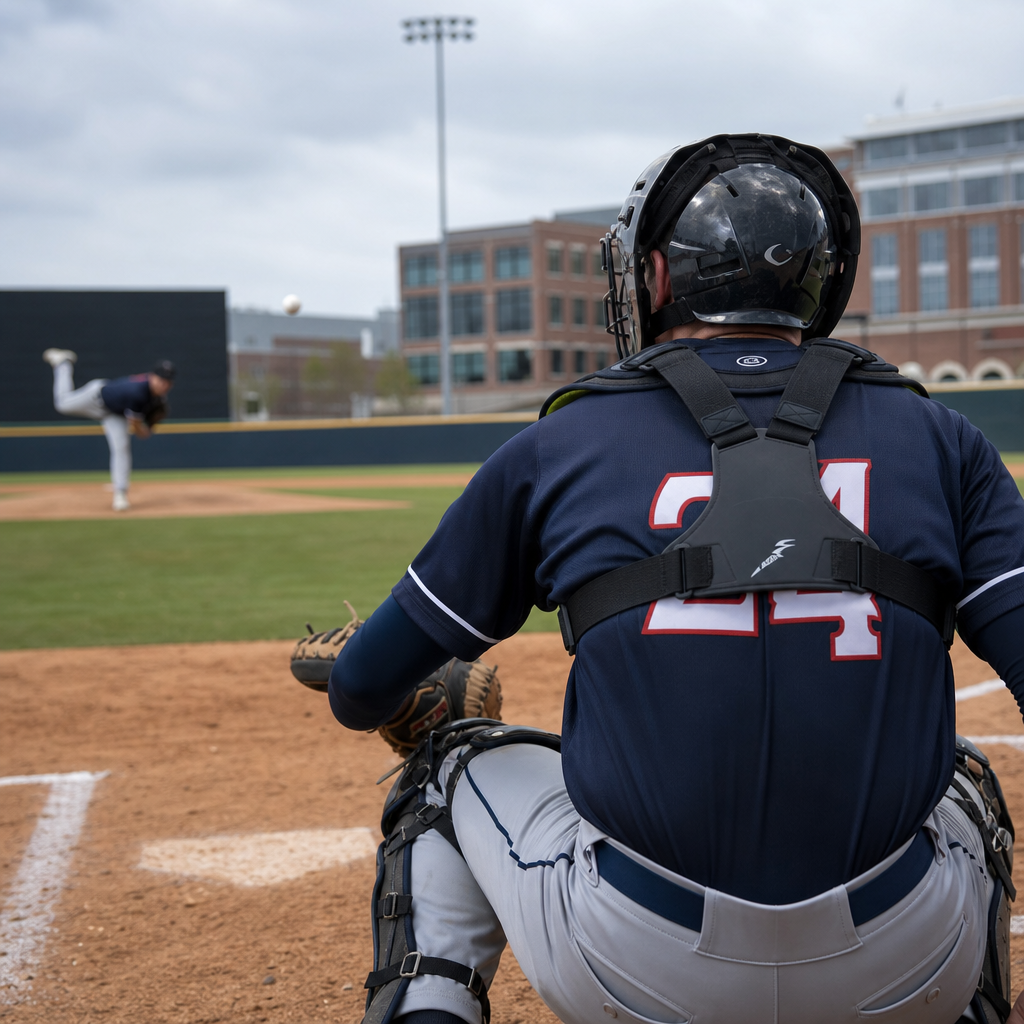
A minor league catcher lives at the busiest intersection on a baseball field, responsible for receiving every pitch, guiding the game plan, controlling the running game, and absorbing foul tips that test both body and focus. Catching dreams, in this context, means chasing a professional career while literally catching baseballs, innings, scouting reports, and the trust of an entire pitching staff. Within the broader world of minor leagues and college baseball, the catcher’s path matters because it reveals how player development really works: slowly, physically, and under constant evaluation. I have spent years around clubhouses, back fields, and long bus rides watching catchers do the unseen work, and their job is more demanding than most fans realize. They are part field general, part technician, part crisis manager. This hub article covers the miscellaneous side of that life comprehensively, connecting defense, offense, gear, travel, coaching, analytics, promotion pressure, and the transition from college baseball to affiliated or independent ball.
To understand the life of a minor league catcher, start with the role itself. A catcher handles pitchers, receives pitches cleanly, blocks balls in the dirt, throws to bases, calls or relays signs, and keeps defensive alignments organized. In player development departments, coaches often divide catching into measurable skills: pop time, exchange speed, receiving quality, target presentation, block technique, game calling, and pitcher relationship management. Baseball America, Major League Baseball development staffs, and college programs use similar language because the position blends athletic tools with decision making. That combination is why catchers are often described as extensions of the coaching staff on the field. For a sub-pillar hub on miscellaneous topics in minor leagues and college baseball, the catcher is ideal: one position touches nutrition, technology, biomechanics, leadership, mental skills, scheduling, and roster construction all at once.
Why Catching Is the Toughest Development Job in Baseball
The hardest truth about minor league catching is that progress is rarely linear. A catcher can improve his receiving metrics and still lose playing time because his bat stalls. He can hit well for a month and still be downgraded because pitchers do not trust his signs or setup. Organizations evaluate catchers on layered criteria, not one stat line. In my experience, a strong week for a catcher starts before first pitch: advance scouting notes reviewed, bullpen sessions logged, opposing runners timed, and pitcher preferences memorized. By game time, he is already managing variables that corner infielders and outfielders simply do not carry.
Physical demands explain part of that difficulty. According to sports medicine research and team training standards, the squat volume alone places repeated stress on hips, knees, ankles, and lower back. Add foul tips off the mask, collisions in older rule environments, and the explosive movements required for blocks and throws, and the wear becomes obvious by midseason. Minor league schedules intensify that strain. A catcher may play four or five games in six days, catch side sessions, and spend overnight hours on buses without ideal recovery resources. Big league clubs increasingly monitor workload with force plates, GPS wearables, and subjective wellness scores, but lower-level players still feel the grind in ways spreadsheets cannot fully capture.
The mental burden is just as heavy. A catcher must process pitch shapes, hitter tendencies, count leverage, umpire zones, weather conditions, and pitcher confidence in real time. If a young starter loses his release point, the catcher often becomes the first stabilizer on the mound. If a reliever enters with runners on, the catcher must reset tempo instantly. These moments rarely appear in box scores, yet they influence development outcomes. That is why coaches value “game management” as more than a cliché. It means reducing chaos so pitchers can execute.
Defense First: Receiving, Blocking, Throwing, and Game Calling
Defense remains the clearest path for a minor league catcher to stay on the field. Receiving is the foundation. Modern player development no longer treats receiving as simple “framing theater”; it emphasizes presenting pitches with quiet hands, stable posture, and efficient glove movement so strikes are not lost. Teams study this through video, strike probability models, and systems such as Hawk-Eye, which now tracks pitch location and movement in professional parks. A catcher with soft hands and stable hips can turn borderline takes into called strikes over the course of a season, directly helping pitchers and preserving innings.
Blocking is next. Good blocking is not dramatic; it is economical. The best catchers beat the ball to the spot, angle the chest forward, deaden rebounds, and recover quickly enough to prevent extra bases. In the minors, where breaking balls are less consistent and command can disappear inning to inning, blocking becomes survival. I have seen otherwise talented catchers lose trust because one wild pitch turned into a two-run inning. Coaches usually teach a progression: read depth out of hand, win the line to the ball, keep the five-hole sealed, and recover with eyes still on the baseball. That sounds technical because it is. Blocking can be drilled every day and still fail under fatigue.
Throwing is often reduced to pop time, but pop time alone can mislead. MLB’s benchmark measure captures the interval from pitch hitting the mitt to the throw reaching the fielder at second base. A strong major league pop time is often around 1.95 to 2.00 seconds; in the minors, anything near that gets attention. Yet transfer efficiency, footwork, pitch location, pitcher time to plate, and middle infielder tags all affect results. A catcher can post average caught-stealing numbers because slow deliveries expose him. Evaluators know this, which is why they separate arm strength from game control.
| Skill Area | What Coaches Measure | Why It Matters in the Minors |
|---|---|---|
| Receiving | Glove presentation, body stability, strike conversion | Young pitchers need extra strikes and confidence |
| Blocking | Reaction angle, chest control, rebound distance | Inconsistent breaking balls create frequent dirt reads |
| Throwing | Pop time, exchange, arm strength, accuracy | Controls running game and limits free bases |
| Game Calling | Sequencing, mound communication, hitter planning | Supports pitcher development, not just game results |
Game calling ties the whole package together. Some organizations give pitchers more autonomy through pregame plans and wristband systems, while others still expect catchers to lead sequencing. Either way, the catcher is the real-time operator. He notices whether a slider has depth, whether a hitter is cheating to velocity, whether the umpire is giving the low edge, and whether a pitcher needs a confidence fastball after a miss. College baseball prepares some players for this through scouting reports and advanced reports, but the pro game increases the volume of information dramatically. The catchers who rise are usually the ones who turn data into simple decisions under pressure.
Offense, Analytics, and the Pressure to Be More Than a Defender
No matter how polished the defense is, a minor league catcher cannot ignore the bat. Roster math makes that impossible. Teams can carry a defense-only backup at the major league level, but in the minors they want development upside. That means catchers are judged on swing decisions, contact quality, zone coverage, and ability to survive velocity after spending most of the game in a crouch. Hitting after nine innings of receiving is different from taking fresh cage rounds at noon. Lower-half fatigue changes timing, and hand soreness changes bat path. Catchers who learn to manage that fatigue gain a real competitive edge.
Today’s offensive evaluation is more precise than old batting average conversations. Clubs look at on-base percentage, isolated power, chase rate, swing-and-miss against fastballs in the zone, and damage against breaking balls. Tools such as TrackMan, Blast Motion, and high-speed video help identify why a catcher is underperforming. Maybe his posture leaks forward after long innings behind the plate. Maybe his bat speed holds, but his decision quality degrades late in games. Maybe his setup against high velocity leaves him vulnerable at the top rail. These are coachable problems when identified early.
The challenge is balancing development priorities. A catcher might need to improve receiving without adding unnecessary upper-body tension that hurts his swing. He might need to add strength without losing hip mobility. He might need more at-bats as a designated hitter or first baseman, but those reps can reduce catching development time. Organizations solve this with individualized plans. In one series, a catcher may catch two games, DH one, and do machine work on off days. In another, the staff may prioritize bullpen relationships and limit extra offensive workload. There is no universal template, only tradeoffs.
For players coming from college baseball, the offensive transition can be stark. Many college catchers were middle-of-the-order bats who controlled weekend pitching staffs. In pro ball, everyone was a standout somewhere, and metal bat success no longer matters. Wood bats, tighter travel, superior velocity, and daily competition expose holes quickly. The catchers who adjust usually simplify. They stop trying to prove they are power hitters every at-bat and start winning counts, using the middle of the field, and understanding what kind of hitter they actually are. That humility is often the difference between surviving and being released.
Daily Routine, Gear, Travel, and the Real Minor League Grind
The public sees game time; the catcher lives the full workday. A typical schedule begins with treatment, mobility, and activation aimed at preserving hips, thoracic spine rotation, forearms, and neck function. Then come pitcher meetings, early defensive drills, bullpen catches, batting practice, and pregame review of opposing lineups. During the game, the catcher squats, sprints, throws, absorbs contact, and manages communications every inning. Afterward, he may still need to lift, review video, pack gear, and board a bus at midnight. That cycle repeats for months.
Gear management is a serious part of the job. Masks, hockey-style helmets, chest protectors, leg guards, thumb protection, knee savers for some players, and multiple mitts all require maintenance. Catchers personalize equipment carefully because small comfort changes can affect durability and performance. A poorly fitted chest protector may restrict movement on blocks. A mitt with the wrong pocket shape can slow transfers. Hand protection is especially important because thumb and index-finger injuries can derail seasons. Teams provide equipment, but experienced catchers become experts in their own setup.
Travel remains one of the defining realities of the minor leagues. Even with recent improvements to pay and housing standards, long rides, inconsistent sleep, and quick turnarounds still test recovery. Nutrition is better than it was a decade ago, yet quality varies by affiliate and geography. College baseball players often travel hard too, but professional schedules are relentless because the season is longer and the repetition is daily. I have watched catchers step off a bus at dawn, sleep briefly, arrive at the park stiff, and still guide a young starter through five clean innings that night. That professionalism is common in the minors and deserves more recognition than it gets.
From College Baseball to Pro Ball: Pathways, Promotions, and Staying Employed
The pathway to becoming a minor league catcher usually starts in one of three places: a drafted college player, a drafted high school player, or an undrafted player entering independent or partner leagues. College catchers tend to arrive with more game-calling experience and physical maturity. High school catchers often bring louder raw tools and more developmental runway. Neither path is guaranteed. Organizations promote catchers when they show they can handle better pitching staffs and maintain defensive reliability, not simply when they hit .300 for a month.
Promotion pressure changes behavior. Players know every series can influence role, roster status, or release decisions, and catchers feel that pressure while also being asked to stabilize everyone else. This is where leadership becomes practical rather than motivational. A good minor league catcher learns each pitcher’s preferred feedback style, mound tempo, and put-away weapons. He knows which reliever needs calm breathing cues and which starter wants blunt mechanical reminders. Those details build trust, and trust keeps a catcher in lineups.
Staying employed also means adapting to organizational philosophy. Some teams emphasize one-knee receiving setups to maximize low-zone presentation; others adjust by pitcher profile, count, or baserunner threat. Some want aggressive throw attempts; others prioritize keeping the ball in front against teams unlikely to run. Catchers who resist all change rarely last. The successful ones listen, test, and refine. They understand that development is collaborative, even when the feedback is uncomfortable.
As a miscellaneous hub within minor leagues and college baseball, this topic points to every connected issue: recruiting, scouting, sports science, nutrition, mental performance, independent ball opportunities, and the economics of player development. The life of a minor league catcher shows how all those pieces meet in one position. If you want to understand baseball below the major league surface, follow the catcher. Watch his meetings, his setup, his gear bag, his postgame routine, and his conversations with pitchers. You will see the sport’s hidden labor up close. Explore the related articles in this hub to go deeper into the systems, decisions, and daily realities that shape the game.
Frequently Asked Questions
What makes the life of a minor league catcher different from other positions on the field?
A minor league catcher handles one of the most demanding jobs in baseball because the position combines physical punishment, strategic responsibility, and leadership on every pitch. While other players may focus primarily on their own defensive assignment and at-bats, the catcher is involved in nearly every moment of the game. He receives every pitch, studies hitters, works through scouting reports, helps pitchers stick to a plan, blocks balls in the dirt, and tries to shut down the running game with quick transfers and accurate throws. That means a catcher is not just reacting to the game; he is helping shape it in real time.
In the minor leagues, that responsibility can be even more intense because pitchers are still developing. A catcher often works with arms that have premium stuff but inconsistent command, limited experience, or evolving pitch mixes. He must learn how each pitcher thinks, what each one throws best in pressure situations, and how to settle them down when innings begin to unravel. In many ways, a catcher becomes part technician, part coach, and part teammate-confidant. That daily workload is layered on top of the physical toll of squatting for nine innings, taking foul tips off the mask and body, and recovering fast enough to do it again the next day. That combination is why the life of a minor league catcher is often described as one of the toughest and most important paths in baseball.
Why is game calling such a critical part of a catcher’s development?
Game calling is central to a catcher’s value because it shows whether he can manage the flow of a baseball game, not just survive behind the plate. Calling pitches requires preparation, instinct, and trust. Before the first inning, a catcher studies scouting reports, hitter tendencies, pitcher strengths, swing decisions, and situational probabilities. During the game, he has to apply that information while adjusting for count, score, inning, weather, umpire zone, and the confidence level of the pitcher on the mound. A good catcher is constantly processing information and turning it into a plan that gives his pitcher the best chance to succeed.
In the minor leagues, game calling also reflects how well a catcher can support player development. The goal is not always just to get outs in the cleanest possible way. Sometimes a pitcher needs to build trust in a secondary pitch, learn to throw inside, or execute a put-away breaking ball in a key count. A strong catcher understands when development goals and game situations overlap, and he helps the pitcher compete while still making progress. That is a major reason coaches and front offices pay close attention to catchers who can handle staffs well. A catcher who builds confidence, controls tempo, and earns trust can elevate an entire pitching group. That influence often matters as much as raw arm strength or offensive numbers.
How does a minor league catcher handle the physical and mental grind of the season?
The physical and mental grind of catching is relentless, especially in the minor leagues where travel, recovery resources, and scheduling can be challenging. Catchers spend game after game in a deep squat, exploding up to throw, shifting laterally to block balls, and absorbing repeated contact from foul tips and collisions with the dirt. Knees, hips, back, hands, and shoulders all take stress. Because of that, staying on the field requires serious attention to conditioning, mobility, hydration, nutrition, and postgame recovery. The best catchers develop routines that help them maintain lower-body strength while protecting flexibility and reducing wear over a long season.
The mental side can be just as taxing. Catchers are expected to remember scouting details, manage pitchers with different personalities, stay alert on every pitch, and rebound instantly from mistakes. A passed ball, a missed sign, or a poor sequence can shift momentum quickly, so the position demands short memory and strong composure. In the minor leagues, where players are fighting for advancement and consistency can be fragile, the catcher often becomes an emotional stabilizer. He has to project confidence, even when tired, bruised, and under pressure. That ability to stay engaged inning after inning is one of the clearest markers of a catcher who can keep moving up the professional ladder.
What skills do scouts and coaches look for in a catcher beyond hitting statistics?
Although offense always matters, scouts and coaches evaluate catchers through a much wider lens than batting average or home run totals. Defensive receiving is a major area of focus. That includes soft hands, quiet glove presentation, body control, and the ability to give pitchers a steady target. Blocking is another key skill, because preventing wild pitches and passed balls can save runs and protect pitchers from extra stress. Throwing ability also matters, but not just pure arm strength. Pop time, footwork, exchange speed, and the ability to make accurate throws under pressure are all important pieces of controlling the running game.
Just as important are the less visible traits: communication, leadership, preparation, and poise. Coaches want catchers who can learn game plans, retain information, handle meetings, and translate scouting reports into practical decisions on the field. They notice whether pitchers enjoy throwing to a catcher, whether mound visits calm the game down, and whether the catcher shows awareness in high-leverage moments. Durability and competitiveness also carry weight. A catcher who earns the trust of an entire staff can create real organizational value, even before his bat fully develops. That is why the position is often evaluated more holistically than almost any other in baseball. The catcher’s job is not simply to perform well individually, but to make everyone around him function better.
How does the catcher’s path in minor league and college baseball connect to the dream of reaching the majors?
The catcher’s journey is closely tied to the dream of reaching the major leagues because the position demands a rare blend of skills that cannot be rushed. In both college baseball and the minor leagues, catchers are asked to mature quickly as defenders, thinkers, and leaders. They must learn how to manage experienced pitchers, adapt to advanced hitters, and handle the speed of the game as competition improves. For many players, the dream is not just about making highlight throws or hitting in big moments. It is about proving they can be dependable every day in one of the sport’s most trusted roles.
That is what makes the phrase “catching dreams” so fitting. A minor league catcher is literally catching baseballs, innings, signs, and the trust of a pitching staff, while also chasing a professional future one game at a time. The role matters within the broader baseball world because catchers often become the backbone of a team’s daily identity. Their preparation influences pitchers, their toughness sets a tone, and their judgment can affect the outcome of entire series. Reaching the majors as a catcher usually requires more than talent; it requires resilience, adaptability, and the ability to handle responsibility that most positions never fully experience. For players on that path, every bullpen, every scouting meeting, and every bruising night behind the plate becomes part of building a career that is earned through detail, trust, and endurance.