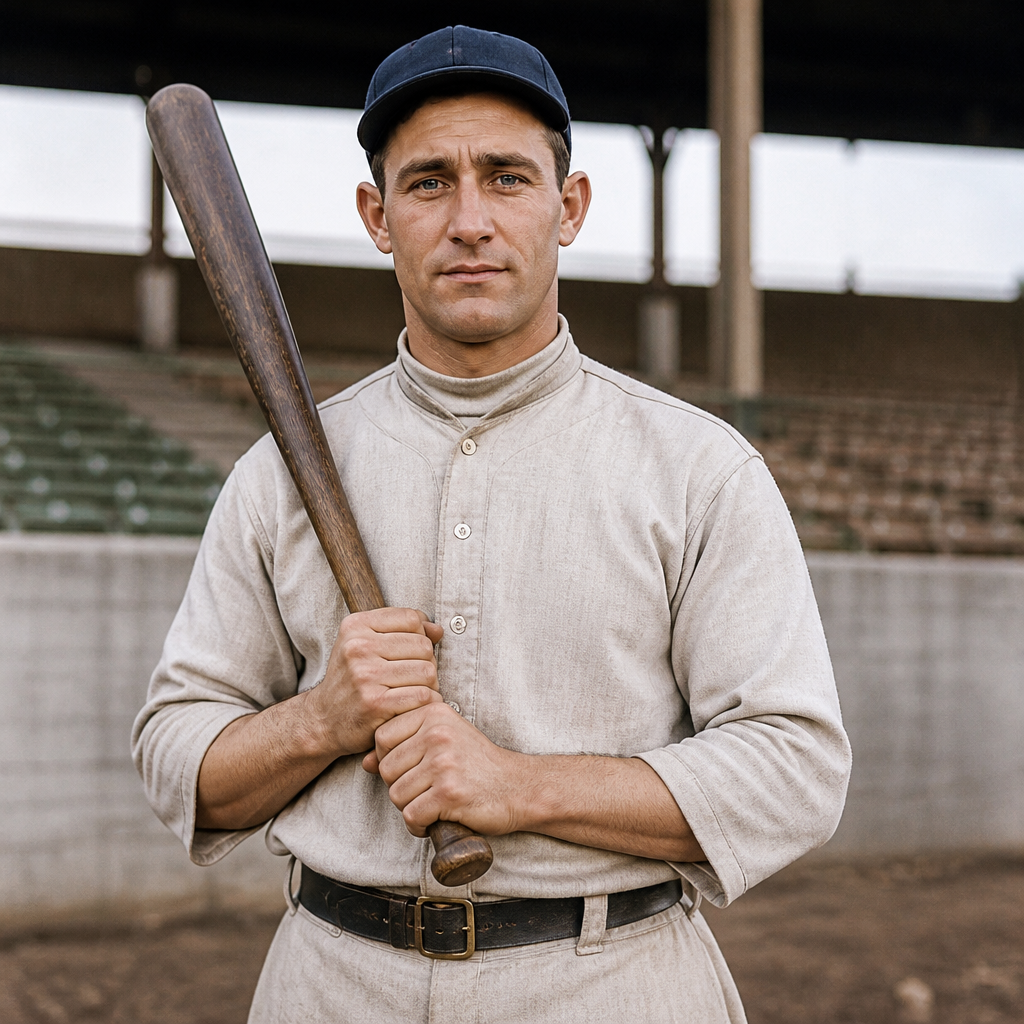
Lip Pike stands at the crossroads of baseball’s rough early decades, professional sport’s emergence, and the story of Jewish visibility in American public life. Any serious look at early baseball players and innovators has to place him near the center, because he was not only one of the game’s first feared sluggers but also one of its first openly recognized Jewish stars. In the 1860s and 1870s, when baseball was still defining professionalism, league structure, and statistical recordkeeping, Pike built a reputation for hard hitting, speed, and drawing crowds. He mattered on the field, but he also matters historically because his career helps explain how baseball evolved from local club competition into a commercial national game.
For readers exploring the early history of baseball, this article serves as a hub for the broader “Early Players and Innovators” landscape. That category includes foundational figures who changed technique, tactics, equipment, player pay, scheduling, and the very idea of a baseball celebrity. Pike belongs in that company because he embodied several transitions at once: amateur to professional play, regional fame to national coverage, and ethnic minority participation to mainstream sports stardom. When I have worked through nineteenth-century box scores, club histories, and newspaper accounts, Pike consistently appears as more than a colorful anecdote. He appears as evidence of where the sport was headed.
Understanding Pike requires a few clear definitions. A “slugger” in nineteenth-century baseball did not mean a home run specialist in the modern sense, because fields, rules, and bats produced a different offensive environment. It meant a batter known for exceptional power relative to his peers, for driving the ball deep and hard, and for changing defensive positioning. A “star” meant something different too. There was no radio, television, or players union, but there were sporting weeklies, traveling clubs, and paying spectators. Fame spread through newspapers, barnstorming tours, and gambling circles. Pike thrived in that environment, becoming one of the first players whose name itself could sell tickets.
His significance also reaches beyond biography. Pike helps connect several other key topics within early baseball: the rise of the Brooklyn and Philadelphia clubs, the first openly paid players, the National Association years, and the unsettled standards around contracts and league governance. He links naturally to companion articles on figures such as Jim Creighton, Candy Cummings, Harry Wright, Albert Spalding, Cap Anson, and Ross Barnes, as well as to broader pages on early professional leagues and nineteenth-century offensive strategy. If you want a hub article that explains how early players and innovators shaped baseball before the modern major leagues fully hardened, Pike is an ideal anchor because his career touched nearly every important development.
Lip Pike’s early life and why his background mattered
Lipman Emanuel Pike was born in 1845 in New York City and grew up in Brooklyn, where baseball was becoming a defining urban pastime. His family was Jewish, and that fact was regularly noted in period coverage. In modern writing, historians rightly handle identity with more care than many nineteenth-century sportswriters did, yet it remains essential to say plainly that Pike was one of baseball’s first prominent Jewish players and likely the first Jewish star widely recognized as such. That visibility mattered in an era when Jewish Americans were present in commerce and city life but often absent from the country’s most celebrated public myths. Baseball, increasingly sold as the national game, became one of those myths.
Brooklyn was a crucial setting for his development. Before the fully consolidated major leagues, New York and Brooklyn clubs formed the sport’s most competitive ecosystem. Players learned through club competition, informal instruction, and relentless local attention. Pike entered that world as a talented athlete with unusual speed and power. Contemporary reports frequently emphasized his baserunning as much as his batting, which is an important reminder that nineteenth-century offensive value was multidimensional. A player who hit with force, ran aggressively, and pressured fielders could dominate games even without the home run totals modern fans associate with power hitters.
Pike’s Jewish identity did not define his baseball ability, but it shaped his historical importance. He emerged at a time when ethnic and religious minorities often faced stereotyping in public life and in print. The fact that he became a star attraction anyway speaks to his performance level and to baseball’s gradual opening as a commercial entertainment business. Owners and organizers wanted winners and gate receipts. Outstanding play could force recognition, even in a society that remained exclusionary in many ways. Pike’s career therefore offers a useful lens on both integration and its limits in nineteenth-century baseball culture.
How Pike became one of baseball’s first paid stars
One of the biggest questions people ask about Lip Pike is simple: was he really among the first professional players? The answer is yes. Before formal professionalism was openly accepted, many clubs used jobs, expense payments, or under-the-table compensation to attract talent. Pike became famous in part because he received direct pay at a time when that practice was controversial but increasingly common. In 1866, reports connected him with compensation for playing in Philadelphia, making him one of the clearest early examples of a player valued as hired athletic labor rather than purely as an amateur club member.
That shift matters because baseball professionalism did not arrive all at once with a single rule change. It emerged through competitive pressure. Clubs wanted to win prominent matches, build prestige, and draw paying spectators. The best players became scarce assets. Pike’s speed and hitting gave him market value, and clubs acted accordingly. From a labor history perspective, this makes him part of the sport’s first wave of professionalization, alongside better-known institutional developments such as the Cincinnati Red Stockings’ openly salaried model in 1869. He illustrates how economic reality often outpaced official rhetoric.
His paid status also sheds light on the unstable baseball economy of the era. Clubs folded, reorganized, and shifted rosters with startling frequency. Contracts were often weakly enforced, schedules were fluid, and the line between sporting ambition and speculative business could be thin. I always tell readers that early baseball stars were not moving through a settled league machine. They were helping invent it while trying to earn a living. Pike’s career, with its movement among clubs and leagues, shows exactly how unsettled that professional marketplace remained through the 1870s.
What made Lip Pike such a dangerous hitter and complete player
Pike’s offensive reputation rested on a blend of bat speed, strength, and athleticism that stood out sharply in his own time. Newspaper accounts described astonishing long hits and game-changing drives, sometimes with the kind of flourish nineteenth-century sportswriting loved, but the consistency of the praise across multiple seasons is telling. He was not merely a local sensation sustained by hype. He produced across clubs and contexts. He led leagues in home runs during the National Association era, including a share of the lead in 1871 and outright leadership in 1872, confirming that his power translated when competition intensified.
To understand those numbers, context is essential. Nineteenth-century home run totals were low because fields were irregular, fences varied or did not exist, balls and bats were less standardized, and inside-the-park results were common. Leading a league with a handful of home runs could still signal elite power. Pike’s value extended beyond that category anyway. He was also a premier base runner and run scorer, capable of turning singles into doubles pressure and forcing rushed throws. Early baseball rewarded exactly that style. Defensive gloves were primitive, surfaces were uneven, and aggressive running could break open an inning.
He also played multiple defensive positions, most notably in the outfield and infield. Versatility was common then, but Pike’s ability to remain productive while moving around the diamond added to his usefulness. This is one reason he belongs in a hub on early players and innovators rather than only a biography page. He represents the flexible all-around star before specialization hardened. If modern fans want a comparison in role, not exact skill set, think of a player expected to hit in the middle of the order, run well, and shift positions as club needs changed. That breadth made Pike especially valuable in baseball’s formative decades.
| Aspect | Why It Mattered in Pike’s Era | Pike’s Advantage |
|---|---|---|
| Power hitting | Extra-base hits were rare and could transform low-scoring games | He was one of the period’s most feared long-ball threats |
| Speed | Aggressive baserunning exploited weak equipment and uneven defense | He regularly added value after reaching base |
| Versatility | Small rosters required players to handle multiple positions | He contributed in both outfield and infield roles |
| Star appeal | Gate revenue depended on recognizable attractions | His name helped clubs market games and tours |
Pike in the National Association and the early professional game
When the National Association of Professional Base Ball Players began in 1871, baseball entered a new phase. The league was imperfect, loosely governed, and financially unstable, but it marked a decisive step toward top-tier professional competition. Pike played in this environment for clubs such as the Troy Haymakers and the Baltimore Canaries, and he excelled enough to remain one of the era’s headline players. His performance in the Association is especially valuable to historians because it allows us to compare his reputation with surviving statistics. In Pike’s case, the numbers support the legend rather than dissolving it.
The National Association years also reveal the sport’s strategic style. Teams emphasized contact, placement, speed, and opportunistic scoring, yet standout power could still alter games dramatically. Pike’s home run leadership therefore carries more interpretive weight than a raw modern reader might assume. He was producing the era’s equivalent of game-breaking extra-base force. At the same time, the Association struggled with uneven competition, weak centralized authority, and franchise volatility. Clubs could collapse midstream or fail to complete schedules consistently. That instability is a central issue for any hub page on early players and innovators, because great players were operating without the institutional support later stars took for granted.
Pike’s career across these seasons helps map the transition from club-based prestige baseball to league-centered professional baseball. He was not just present for the transition; he was one of the assets teams chased during it. That distinction matters. Some early figures are historically important because they founded clubs or codified rules. Pike is important because market demand for players like him pushed baseball toward a professional structure. Talent concentration, salaries, and ticket sales all accelerated when clubs realized that a true star could change both the standings and the balance sheet.
Why Lip Pike belongs in any hub on early players and innovators
A sub-pillar page on early players and innovators should do more than list famous names. It should explain the types of influence that shaped baseball’s first generations. Pike belongs here because his career touches at least four major themes. First, he represents the rise of the paid player. Second, he demonstrates the emergence of the batting star as a commercial draw. Third, he shows how ethnic and religious identity entered the public story of baseball. Fourth, he illustrates the instability and experimentation of the sport before the National League era created firmer structures.
He also complements other foundational figures. Jim Creighton symbolizes early pitching dominance and the star system before professionalism fully matured. Harry Wright represents organization, leadership, and the professionally run club. Candy Cummings is tied to the evolution of pitching technique, especially the curveball tradition. Albert Spalding bridges elite play, league politics, and sporting goods empire building. Cap Anson represents batting excellence but also the darker history of segregation in baseball’s development. Pike fits among them as the early offensive celebrity whose paid mobility and public identity reveal what baseball was becoming.
For site architecture, Pike is an especially strong hub anchor because readers who arrive for his biography can logically continue to related topics: the first professional teams, nineteenth-century hitting, baseball in Brooklyn, Jewish athletes in American history, and the economics of early leagues. Internal linking works best when a subject naturally opens doors to adjacent questions. Pike does that better than many one-dimensional early stars. He invites readers to ask how baseball made money, how stars were covered, how communities saw themselves in players, and how professional norms were built from improvisation rather than design.
Legacy, limitations, and what modern readers should remember
Lip Pike’s legacy is substantial, but it benefits from precision. He was not the sole inventor of power hitting, nor was he the most institutionally influential executive or rulemaker of the nineteenth century. His importance lies elsewhere. He was one of the game’s earliest marketable offensive stars, one of its first conspicuously paid talents, and one of the first Jewish players to achieve broad recognition. Those are distinct achievements, and together they make him indispensable to baseball history. They also explain why his name appears repeatedly in serious histories of the sport’s formative period.
There are limitations in the record, and responsible history should acknowledge them. Nineteenth-century statistics are less complete than modern data, newspaper accounts could be partisan or exaggerated, and league conditions varied widely. Yet the broad outline is secure. Multiple independent sources confirm Pike’s fame, his compensation, his power, and his place in early professional competition. Historians such as Peter Morris and others who have studied baseball’s pre-National League era consistently treat players like Pike as central evidence for how quickly the amateur ideal gave way to commercial reality.
The main takeaway is straightforward: if you want to understand early baseball players and innovators, start with men whose careers reveal structural change, not just memorable anecdotes. Pike does exactly that. He shows how talent became labor, how offense became spectacle, and how baseball began reflecting the diversity of urban America, however imperfectly. From there, continue exploring the connected stories around him: pioneering pitchers, club organizers, rule shapers, and the first professional leagues. Use Pike as your entry point into the early history of baseball, and the entire era becomes clearer, richer, and far more human.
Frequently Asked Questions
Who was Lip Pike, and why is he considered such an important figure in early baseball history?
Lip Pike was one of the most dynamic and recognizable ballplayers of baseball’s formative professional era, emerging in the 1860s and remaining a major presence into the 1870s. He mattered for several reasons at once. First, he was a genuine star at a time when the sport was still evolving from loosely organized club competition into a professional enterprise with schedules, league structures, and a growing public audience. Second, he developed a reputation as one of the game’s earliest feared power hitters, helping define what offensive greatness looked like before the modern home run era. Third, and just as importantly, he became one of the first openly identified Jewish stars in American team sports, giving him a place not only in baseball history but also in the broader story of Jewish visibility in public life in the United States.
Pike’s career sits at a crossroads that historians find especially revealing. He played when baseball was rougher, less standardized, and more fluid than it would later become. Rules changed, leagues formed and collapsed, and the line between amateurism and professionalism was constantly contested. In that unstable environment, Pike’s talent stood out. He could hit, run, and draw crowds, which made him a valuable player and an early example of baseball as commercial entertainment. Because so much of early baseball can feel half-legendary to modern readers, figures like Pike help anchor the period. He was not just present during the game’s transition into professionalism; he was one of the players who made that transition real.
Why was Lip Pike known as a slugger, and what made his style of play stand out in the 19th century?
Lip Pike earned his reputation as a slugger because he was known for hitting the ball with unusual force and for producing offense in a period when the game looked very different from modern baseball. In the 19th century, baseball strategy often emphasized speed, placement, and aggressive baserunning more than the over-the-fence power fans associate with sluggers today. Ballparks, rules, equipment, and recordkeeping were all less standardized, so offensive dominance could take forms that do not map neatly onto modern statistics. Even so, Pike stood out among his peers as a feared hitter whose batting ability could change games and attract attention.
What made that especially notable was timing. Pike played before baseball had fully settled into the statistical culture that later defined greatness through clearly preserved totals and comparisons. As a result, his reputation was built not only on numbers but also on contemporary accounts, opposing respect, and his visible impact on the field. He was often described as a player who could combine strength with speed, making him more than just a one-dimensional power threat. That blend helped him become one of the era’s headline attractions. In practical terms, Pike represented an early version of the star offensive player: someone fans came to watch because he could do damage with the bat and alter the rhythm of a game whenever he stepped in.
How did Lip Pike help shape the rise of professional baseball in the 1860s and 1870s?
Pike helped shape professional baseball by embodying the new reality that elite players had market value and that clubs were willing to pay for talent. In baseball’s early decades, the sport publicly clung to ideals of amateurism even as competitive clubs quietly sought advantages through compensation, side payments, and inducements. Pike became one of the best-known examples of a player whose abilities made him commercially important. His movement among clubs and his visibility as a paid star reflected a transforming sport in which winning, gate receipts, and public prestige were increasingly tied together.
That matters because the professionalization of baseball was not just a formal administrative shift; it was a cultural and economic one. Teams needed players who could draw spectators, improve performance, and justify investment. Pike did all three. His presence signaled that baseball was becoming an industry, not merely a pastime. He played during the years when clubs, leagues, and fans were all negotiating what professionalism should look like, and his career illustrates that process vividly. Historians often focus on founders, rule-makers, and league executives, but players like Pike were just as central. They turned baseball into a spectacle people would pay to see, and in doing so, they helped create the foundation for the modern major-league model.
Why is Lip Pike significant in the history of Jewish athletes in America?
Lip Pike is significant in the history of Jewish athletes because he was one of the first prominent American sports figures to be publicly recognized as Jewish while performing at the highest level of a popular team sport. That distinction gives him importance far beyond box scores and pennant races. In the 19th century, when immigration, identity, and public belonging were central questions in American life, Pike’s success made Jewish presence visible in an arena associated with masculinity, competition, and national culture. Baseball was increasingly being described as the American game, so a Jewish star excelling in that space carried symbolic weight.
His significance also lies in timing. Pike appeared long before later Jewish baseball icons such as Hank Greenberg or Sandy Koufax, and before mass media made athletes into national celebrities in the modern sense. That means his career represents an earlier and often overlooked chapter in the story of Jewish participation in American public life. He showed that Jewish identity and athletic fame were not incompatible in an era when stereotypes and social barriers often suggested otherwise. While the language used about ethnicity and religion in 19th-century newspapers could be inconsistent or prejudiced, the fact that Pike’s Jewish identity was openly recognized makes him a pioneering figure. He stands as an early example of how sports could become a stage for minority visibility, achievement, and inclusion, even within a society still defining the limits of both.
Why does Lip Pike deserve more attention today from baseball fans and historians?
Lip Pike deserves more attention because he occupies a rare intersection of baseball innovation, early stardom, and American social history. Many fans know the names of later legends, but the players who helped invent the role of the baseball star often remain underappreciated. Pike was not a marginal figure from an obscure side story. He was a major talent during a foundational era, one of the game’s first dangerous hitters, and a player whose career reveals how unsettled and experimental baseball still was in its early professional decades. Studying him gives readers a clearer view of how the sport evolved before the modern major leagues fully took shape.
He also deserves renewed attention because his story expands the way baseball history is told. Too often, early baseball is reduced to a few mythic names, broad generalizations, or simplified milestones. Pike complicates that picture in useful ways. He reminds us that the game’s rise involved ethnic diversity, commercial ambition, shifting rules, and players whose fame mattered both on and off the field. For historians of Jewish America, he offers an important example of early public visibility in a national pastime. For baseball fans, he offers a chance to rediscover a player who helped define offense and professionalism before the sport had settled into its familiar modern form. In short, remembering Lip Pike is not just about filling in a forgotten name; it is about understanding how baseball, celebrity, and American identity developed together.