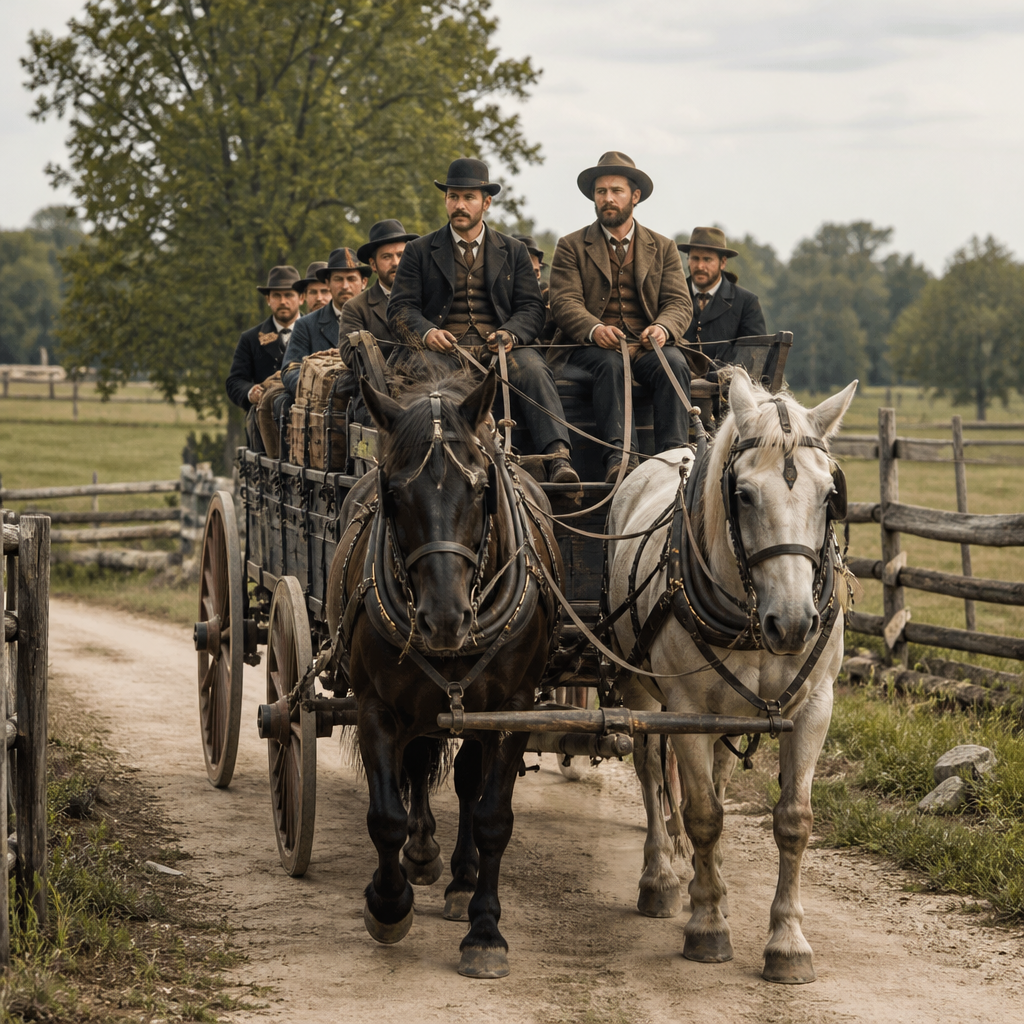
Baseball road trips in the 1860s helped transform a local pastime into a regional business, and they did it through rails, riverboats, newspaper planning, gate receipts, and a new culture of organized competition. In this decade, clubs moved beyond neighborhood matches and began arranging ambitious journeys that linked New York, Philadelphia, Washington, Boston, Cincinnati, and smaller cities eager to host elite nines. A baseball road trip meant more than travel to a game. It involved negotiating dates, securing grounds, coordinating lodging, publicizing arrivals, splitting or collecting receipts, and managing player availability across long distances. Those practical demands pushed clubs toward more formal administration and, ultimately, toward professionalization.
Understanding baseball travel in the 1860s matters because the decade sits at the hinge between amateur club culture and the commercial game that followed. Before the Civil War, many leading clubs were gentlemanly associations whose contests remained relatively local. After the war, improved rail networks, urban growth, rising newspaper circulation, and stronger intercity rivalries made extended tours feasible and desirable. Clubs discovered that travel built reputation, created new revenue, attracted stronger opponents, and standardized expectations about scheduling. In my work with nineteenth-century baseball sources, especially club reports and sporting weeklies, road trips consistently appear as the operational backbone of the sport’s expansion. They reveal how baseball became a business before many clubs openly admitted it.
This article serves as a hub for the professionalization and business side of early baseball. It explains how teams traveled, who paid, how schedules were built, why tours mattered to publicity, and how these patterns encouraged salaried play and national competition. It also shows the limits of the era: fragile timetables, uneven grounds, weather delays, and constant disputes over eligibility and expenses. By the late 1860s, the clubs that handled travel best were usually the clubs best positioned to dominate the emerging baseball economy.
How Teams Traveled and What Travel Cost
In the 1860s, baseball clubs traveled mainly by railroad, supplemented in some corridors by steamship or ferry connections. Rail travel compressed distances that had previously discouraged intercity competition. A trip from New York to Philadelphia, while still requiring planning, became routine enough for top clubs. Longer journeys, such as eastern clubs visiting Washington or western clubs making eastern tours, demanded several days, multiple rail segments, and careful coordination with hotels and local hosts. Teams usually traveled in a group, often with substitutes, club officers, scorers, and occasionally supporters or journalists.
Cost was central. Fare prices varied by route and class, but even modest per-person charges multiplied quickly when a club sent twelve to fifteen people. Add meals, hotel rooms, carriage hire from depots to grounds, laundry, equipment transport, and lost work time for amateur players, and a road game became a serious financial undertaking. Wealthier clubs could absorb these expenses more easily, while ambitious clubs sought guarantees from hosts or relied on return hospitality. This is one reason stronger urban clubs gained structural advantages. Travel was not just movement; it was capital deployed in search of prestige and receipts.
The rise of enclosed grounds also changed the economics of travel. When host clubs could charge admission reliably, they had a mechanism to underwrite visiting teams. In some cities, large crowds gathered specifically because a famous out-of-town nine had arrived. That visiting attraction justified better promotion and often better financial terms. A road trip therefore became an investment in brand value, even before baseball regularly used that language.
Scheduling: Challenge Culture to Coordinated Itineraries
Baseball scheduling in the 1860s emerged from correspondence, custom, and opportunism rather than from a centralized league office. Clubs issued challenges, accepted invitations, and negotiated dates around rail availability, civic events, and the playing condition of grounds. Secretaries played a critical role. They wrote letters, confirmed lineups, arranged postponement terms, and maintained relationships with clubs in other cities. A well-run secretary was as important to a club’s success as a strong pitcher.
Early in the decade, many matches were isolated affairs. As travel improved, clubs began bundling games into short tours. Instead of taking one difficult trip, a club might play several opponents over successive days in a single city or region. This reduced average travel cost per match and maximized publicity. It also introduced a more modern understanding of scheduling efficiency. Clubs thought in sequences, not just single contests.
Scheduling still faced constant disruption. Rain turned grounds unplayable because drainage was poor and field maintenance inconsistent. Rail delays could strand players or force late starts. Business obligations kept nominal amateurs from leaving town when they had expected to travel. Clubs also argued over the status of players who had recently changed residence or were suspected of receiving hidden compensation. Every disputed roster could threaten a date. Yet these obstacles pushed baseball toward clearer administrative norms. A sport that wanted dependable road trips needed dependable rules and dependable commitments.
Road Trips as Engines of Publicity and Market Growth
Road trips expanded baseball by creating news. Newspapers announced departures, printed expected lineups, reviewed travel conditions, described receptions at depots, and published lengthy game accounts afterward. Editors understood that intercity matches generated drama beyond ordinary club contests. A traveling club represented not just itself but its city’s baseball prestige. That framing turned games into civic events and gave readers a narrative reason to follow results across distance.
The most effective touring clubs built anticipation weeks in advance. Notices would mention prior victories, star players, and the reputation of the home side. If a celebrated club such as the Atlantic of Brooklyn or later the Cincinnati Red Stockings appeared on a schedule, local interest rose immediately. Hotels, saloons, and other nearby businesses benefited from the crowds. Baseball tourism in a small but real sense began here: visitors traveled to see notable clubs, and host communities marketed the match as a public attraction.
Road trips also helped standardize baseball culture. Clubs carried styles of play, pregame routines, and interpretations of rules from one city to another. Spectators who saw a leading visiting nine often copied its methods. Local clubs imitated uniforms, practice habits, and field positioning. In that way, travel spread both the game and a model of excellence. The business effect was profound. Standardized expectations make markets larger, and baseball’s market widened every time a respected club toured successfully.
Money, Guarantees, and the Business Logic of Touring
Behind every celebrated tour sat a practical financial question: who bore the risk? In the early 1860s, many clubs still described themselves as amateur associations, but money circulated around matches in unmistakable ways. Host clubs might pay travel costs, offer a guarantee, provide lodging, or keep all gate revenue while extending hospitality in return. In other cases, clubs divided receipts after expenses. No single system prevailed everywhere, which is exactly why the decade is so important. Baseball was testing business models in real time.
I have found that clubs with strong officers tended to negotiate more favorable terms because they understood demand. A famous visiting club knew it could draw a crowd and pressed that advantage. Lesser clubs accepted thinner terms for the chance to improve status by facing elite opposition. This dynamic resembles later guarantee games in college sports, though on a smaller and less formal scale. Reputation directly affected bargaining power.
| Business factor | How it worked in the 1860s | Why it mattered |
|---|---|---|
| Rail and lodging expenses | Usually paid by the traveling club, host club, or shared by prior agreement | Determined whether a long trip was financially possible |
| Gate receipts | Collected at enclosed grounds, sometimes retained by hosts, sometimes split | Turned marquee visitors into revenue-producing assets |
| Tour bundling | Several games scheduled in one journey | Lowered cost per game and increased press coverage |
| Player compensation | Sometimes hidden as jobs, travel allowances, or expense payments | Blurred amateur ideals and accelerated professionalism |
| Club administration | Secretaries and officers handled correspondence, contracts, and disputes | Created the management layer needed for a business sport |
Once clubs recognized that tours could earn more than they cost, incentives changed rapidly. Better players became worth retaining. Better grounds became worth improving. Better publicity became worth cultivating. The road trip was not a side activity to baseball’s business story. It was one of the main mechanisms that taught clubs to think like enterprises.
Hidden Professionalism and the Transition to Openly Paid Play
The 1860s are often remembered as a transitional decade because clubs publicly praised amateurism while privately competing for talent. Travel sharpened this contradiction. To sustain demanding itineraries, a club needed players who could leave work, remain in condition, and perform repeatedly against top opposition. That was difficult without compensation. As a result, clubs increasingly offered inducements: no-show jobs, direct expense coverage, side payments, or employment arranged through supporters.
Road trips made these arrangements more visible. A player who could repeatedly join intercity tours was plainly operating under different constraints than an ordinary wage earner. Rival clubs noticed. Newspapers hinted. Accusations followed. Yet the same public that criticized professionalism often flocked to see the strongest nines, rewarding exactly the behavior it condemned. In practical terms, demand for elite baseball undercut the amateur code.
The Cincinnati Red Stockings, who became fully professional in 1869, are the clearest culmination of trends that had been developing throughout the decade. Their famous tour succeeded because earlier clubs had already established routes, publicity habits, and financial expectations for traveling teams. Cincinnati’s innovation was not inventing baseball travel from nothing. It was building a comprehensively salaried, systematically touring organization on top of foundations laid during the 1860s.
Clubs, Cities, and the Creation of a National Game
Road trips helped baseball escape its New York origins and become a national sport. The National Association of Base Ball Players, founded in 1857, provided a framework for interclub relations, but travel gave that framework real substance. When clubs from different cities met regularly, they created comparative standards. Which city played the cleanest defense? Which club fielded the best pitcher and catcher battery as styles evolved? Which organization drew the largest crowd and staged the most orderly event? These questions mattered because repeated travel turned abstract reputation into measurable competition.
Cities also used baseball success for civic promotion. A strong local club suggested urban sophistication, discipline, and modern leisure culture. Hosting renowned visitors signaled that a city belonged in the expanding sporting map of the United States. This mattered especially after the Civil War, when commercial networks and civic boosterism intensified. Baseball fit neatly into both. It was a public entertainment, a newspaper product, and a way to advertise local ambition.
For readers exploring the broader early history of baseball, this is the key business lesson: transportation, scheduling, and publicity did not merely support the sport’s growth. They defined its growth pattern. The clubs that mastered intercity travel became the clubs that shaped rules, markets, and expectations. If you are building out this subtopic, the next logical areas to examine are gate receipts and enclosed grounds, player payment systems, club administration, newspaper coverage, and the path from the amateur association model to professional leagues.
Operational Limits and Why They Still Matter
It is important not to romanticize 1860s baseball travel. Conditions were demanding and often unstable. Players rode in cramped rail cars, slept in inconsistent accommodations, and played on rough grounds with minimal maintenance. Injuries were harder to manage, equipment protection was limited, and communication failures could ruin schedules. Clubs could overextend financially after an ambitious tour, especially if weather damaged attendance or a host failed to honor terms. Even celebrated trips carried real risk.
These constraints are historically valuable because they show professionalization as a response to operational pressure, not simply a hunger for profit. Clubs needed better bookkeeping because travel was expensive. They needed firmer roster rules because disputes disrupted tours. They needed enclosed grounds because receipts had to be predictable. They needed compensated players because availability determined whether a scheduled journey could proceed. In other words, business organization entered baseball because baseball travel exposed every weakness in informal club culture.
The same pattern appears across sports history. Once teams travel regularly, administration hardens. Schedules become assets. Brands become mobile. Talent becomes something to secure, not merely admire. Baseball in the 1860s offers one of the clearest early American examples of that transformation.
Baseball road trips in the 1860s were not colorful side stories; they were the machinery that carried the game from local recreation toward organized commercial sport. Travel expanded markets, scheduling created continuity, and publicity turned contests into civic events worth paying to see. As clubs learned to manage fares, hotels, receipts, correspondence, and player availability, they also learned the habits of modern sports business. The decade’s tours explain why stronger administration, enclosed grounds, paid talent, and regional competition appeared when they did.
For anyone studying the early history of baseball, this subtopic deserves close attention because it connects nearly every major change of the era. Professionalization was not a sudden break in 1869. It was the cumulative result of repeated practical decisions made during 1860s road trips: who travels, who pays, who profits, and who controls the schedule. Follow those questions and the sport’s business history becomes much clearer.
Use this hub as a starting point for deeper reading on club finance, player compensation, league formation, sporting journalism, and ballpark economics. The story of early baseball becomes far more intelligible once you see the road trip as the engine behind the game’s growth.
Frequently Asked Questions
How did baseball road trips in the 1860s change the sport from a local pastime into a regional attraction?
Baseball road trips in the 1860s were one of the biggest reasons the game expanded beyond neighborhood recreation and became a recognizable regional enterprise. Before clubs regularly traveled, most matches were local affairs built around familiar opponents and nearby spectators. Once leading clubs began arranging trips to other cities, baseball developed a wider public identity. A strong club from New York could travel to Philadelphia, Washington, Boston, or Cincinnati and carry its reputation with it, while host clubs could measure themselves against teams they had previously only read about in newspapers.
That exchange mattered because it created a shared competitive culture. Newspapers reported results, printed challenge notices, previewed upcoming matches, and discussed the relative strength of clubs from different cities. Fans began to follow not just their own local nine, but the larger question of which clubs were truly elite. Road trips helped standardize expectations around scheduling, hospitality, grounds preparation, and match promotion. They also introduced a broader market logic to the sport. If a visiting club could draw a crowd and increase gate receipts, hosting a major match became financially attractive. In that way, travel, publicity, and revenue all reinforced one another, helping baseball grow from scattered local play into a connected regional spectacle.
What kinds of transportation did teams use for baseball road trips in the 1860s?
Teams in the 1860s relied primarily on railroads, riverboats, ferries, carriages, and local urban transit to complete their journeys. Rail travel was the backbone of long-distance baseball scheduling because it linked major eastern cities and expanding western centers with enough speed and predictability to make planned contests possible. A club could leave one city, reach another on a timetable that was reasonably dependable by the standards of the day, and fit multiple matches into a single trip. Riverboats were also important, especially for travel to and from inland and river-connected destinations, where waterways remained practical commercial routes.
But travel was rarely simple. Teams had to move not just players, but also baggage, equipment, uniforms, and sometimes club officials or supporters. Connections could be missed, weather could delay travel, and accommodations varied from city to city. Even when the railroad made long-distance play possible, the final leg of a trip might still involve ferries, horse-drawn vehicles, or urban street transport to reach hotels and ball grounds. The physical strain of travel was real. Players often arrived tired, dusty, and off their routine, which could affect performance. Even so, improvements in transportation made these trips feasible often enough to support a new style of organized competition, and that reliability was crucial to baseball’s growth during the decade.
How were baseball road trips scheduled and organized before modern leagues and centralized calendars?
Scheduling in the 1860s required negotiation, correspondence, and constant attention to logistics. There was no modern league office producing a master schedule, so clubs had to arrange matches directly with one another. That meant exchanging letters, agreeing on dates, confirming travel plans, settling on grounds, and coordinating local details well in advance. Newspapers played a major role in this process. They were not just reporting results after the fact; they were also part of the communication network that promoted upcoming games, clarified plans, and helped build public anticipation.
Organizing a road trip involved far more than naming an opponent. Clubs had to consider railroad timetables, the availability of hotels, the sequence of cities that made practical sense, and the financial value of each stop. A single journey might be built around several matches in different places to justify the expense. Teams also had to account for rainouts, delays, and the possibility that a date might shift because of travel trouble or local conditions. In many cases, successful scheduling depended on personal relationships between club officers as much as on formal structures. Secretaries, managers, and other club leaders became essential figures because they handled the correspondence and planning that made intercity baseball possible. This improvised but increasingly disciplined system helped create the habits of organized scheduling that later leagues would formalize.
Why were gate receipts and local hosting arrangements so important to baseball road trips in the 1860s?
Gate receipts were central because road trips cost money, and clubs needed a way to justify the expense of transportation, lodging, meals, and time away from home. Hosting a prominent visiting club could attract a much larger crowd than an ordinary local match, which made admission income a major incentive. As baseball became more organized, the economics of travel and attendance began shaping the sport in visible ways. A club was no longer traveling only for prestige or sociability; it was also participating in an event that had commercial potential.
Local hosting arrangements mattered just as much. The visiting team needed a suitable ground, advance publicity, transportation from the station, and often some understanding regarding hospitality. A well-run host city could turn a match into a civic occasion, drawing attention from newspapers, local dignitaries, and the broader public. Smaller cities especially saw value in bringing in elite clubs because such games connected them to the expanding baseball world and elevated local interest in the sport. In practical terms, good hosting increased the chances of a successful crowd, smooth operations, and a positive reputation for future events. This combination of gate revenue and organized hospitality helped push baseball toward a more businesslike model, where planning and profit became intertwined with competition.
What broader impact did 1860s baseball road trips have on the culture and development of the game?
The broader impact was enormous. Road trips helped create a more unified baseball culture by linking distant clubs through regular competition, shared reporting, and growing public discussion. They gave players and spectators a clearer sense that baseball was not just a set of isolated local customs, but a common game with recognized standards, notable clubs, and meaningful intercity rivalries. As teams traveled more often, styles of play, organizational practices, and ideas about fair competition spread more quickly across regions.
These trips also strengthened the social authority of baseball institutions. Club officers gained influence, newspapers became essential interpreters of the sport, and successful teams built brands that extended beyond their home communities. A road match could be a sporting event, a business venture, a publicity opportunity, and a statement of civic pride all at once. In that sense, the road trip became one of the mechanisms through which baseball modernized. It encouraged regularized planning, public promotion, revenue awareness, and a more ambitious scale of competition. By connecting cities like New York, Philadelphia, Washington, Boston, Cincinnati, and smaller aspiring centers, 1860s travel helped lay the groundwork for the broader professional and regional baseball systems that would emerge later in the century.