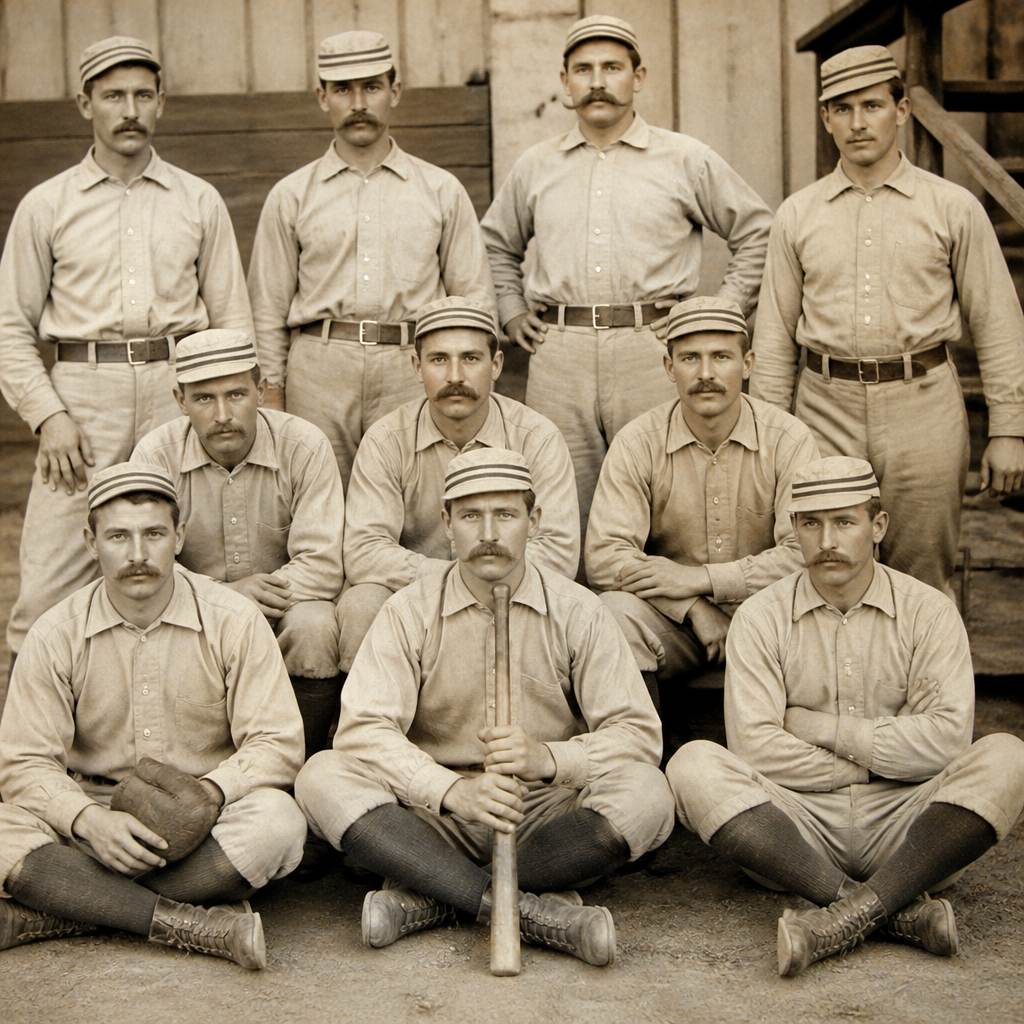
Baseball salaries in the 1870s reveal exactly when a popular pastime became a commercial industry, because pay turned local clubs into employers, players into workers, and winning into an investment decision. In this decade, owners and club secretaries moved beyond passing the hat and reimbursing travel. They negotiated contracts, hid payments when rules prohibited professionalism, poached stars from rivals, and learned that gate receipts rose when recognizable talent took the field. When historians discuss the early history of baseball, the financial side often receives less attention than rule changes or legendary games, yet salary practices explain why professional leagues formed, failed, and reorganized so quickly. “Salary” in the 1870s did not always mean a clean annual figure written in a modern contract. Compensation could include weekly wages, seasonal retainers, no-show jobs, boarding, travel money, and postseason bonuses. Understanding those arrangements matters because they shaped roster building, competitive balance, labor disputes, and the geography of the sport. The first professionals were not wealthy by modern standards, but they were central to a decisive shift: baseball became a business with payroll obligations, revenue pressures, and market competition.
In my work with nineteenth-century baseball records, city directories, newspaper ledgers, and club reports, the same pattern appears again and again. The dollar amounts vary by source, but the business logic is consistent. A club with strong attendance could afford a deeper payroll, recruit from outside its city, and survive a rough patch. A weak club could promise pay, fall behind, and lose players midseason. That tension makes the 1870s the key decade for understanding professionalization and business. It links the all-professional Cincinnati Red Stockings of 1869, the National Association years beginning in 1871, and the more centralized National League founded in 1876. It also explains why owners sought control mechanisms such as standardized schedules, stricter contracts, and eventually the reserve principle. This hub article covers the core economics of the era: what players were paid, how clubs financed salaries, why stars commanded premiums, what risks players faced, and how compensation practices pushed baseball toward a more stable business model.
How professionalism changed baseball’s pay structure
Before openly professional clubs appeared, many leading players already received indirect compensation. Clubs offered “soft” jobs, cash gifts, meals, or travel support while publicly defending amateur ideals. That changed when the Cincinnati Red Stockings assembled a fully salaried team for 1869 under Harry Wright. Their payroll demonstrated that paying players outright could produce both victories and publicity. By the early 1870s, especially after the creation of the National Association of Professional Base Ball Players in 1871, open professionalism accelerated. Clubs now expected to spend money to compete, and newspapers increasingly discussed player movement in business terms. The key difference was not merely that athletes earned cash. It was that clubs accepted payroll as a recurring operating expense tied to ticket revenue.
Salary structures in the 1870s remained uneven. Some players signed for a season; others were paid by the month or week. A star shortstop might receive several thousand dollars for a season, while a lesser-known reserve earned a fraction of that amount. Teams also covered train travel and lodging, which mattered because the season could require long road trips across the Northeast and Midwest. For many players, those in-kind benefits effectively raised total compensation. Still, there was no universal payroll system, no salary cap, and limited enforceable labor protection. Contracts were often short, and clubs sometimes folded before paying what they owed. Professionalization increased opportunity, but it also exposed players to business risk that amateur clubs had disguised.
What baseball players in the 1870s were actually paid
The most important fact about baseball salaries in the 1870s is that they were substantial relative to ordinary annual wages, though highly unequal and often unstable. Skilled industrial workers in the United States might earn roughly $500 to $900 a year depending on trade and region, while many laborers earned less. Top baseball professionals could exceed those figures by a wide margin. Contemporary reports and later historical compilations regularly place star players in the range of about $2,000 to $4,000 per season during the stronger years of the decade, with a few elite names sometimes reported above that when side payments are included. Midlevel regulars could fall around $1,200 to $2,000, while fringe players earned less and faced more uncertainty.
| Player tier in the 1870s | Typical reported compensation | What it often included | Business implication for clubs |
|---|---|---|---|
| Top stars | About $2,500 to $4,000+ per season | Cash salary, travel, lodging, side payments, occasional offseason job arrangements | Used to drive attendance, prestige, and pennant chances |
| Established regulars | About $1,200 to $2,500 per season | Cash salary plus expenses and housing support | Formed the payroll core of competitive clubs |
| Marginal or replacement players | Several hundred dollars to around $1,200 | Short-term pay, game fees, partial expenses | Cheap depth, but difficult to retain |
These figures require caution. Records from the 1870s are incomplete, and clubs had reasons to understate or conceal payments. Some salaries became public only through newspaper leaks, disputes, or retrospective interviews. Even so, broad patterns are clear. Albert Spalding, Ross Barnes, Cal McVey, Jim O’Rourke, and other prominent players earned enough to make baseball a real profession, not a side hobby. A star could command a premium because his reputation sold tickets in multiple cities. Clubs were not paying only for runs and fielding chances; they were buying drawing power. That is a modern sports business principle in early form.
How clubs funded payroll and managed financial risk
Baseball clubs in the 1870s depended primarily on gate receipts. Ticket sales were the lifeblood of payroll, and that dependency created constant pressure to field a winning club. Unlike modern franchises with national media rights and diversified sponsorship portfolios, nineteenth-century teams operated on narrow and volatile income streams. Rainouts, weak schedules, poor local economies, or a losing streak could immediately threaten payroll. Exhibition games helped supplement revenue, especially when clubs toured regions outside league circuits. Some organizations also benefited from wealthy backers or civic boosters who viewed baseball as a source of city prestige.
Because revenues were unstable, payroll management was crude and reactive. Clubs often spent aggressively before proving they could sustain attendance. That pattern helps explain why the National Association was exciting but financially disorderly. Teams entered and exited quickly, scheduling was inconsistent, and weak governance made it difficult to enforce obligations. In practical terms, a player’s salary was only as secure as the treasurer’s cash flow. I have seen multiple cases in period reporting where teams delayed wages, renegotiated midseason, or released players simply to cut costs. This instability was not incidental. It was a defining feature of baseball’s first labor market.
The clubs that survived longest usually combined three advantages: reliable attendance, better administration, and access to capital. Boston under Harry Wright is a strong example. Well-run clubs understood that payroll discipline mattered as much as talent acquisition. They booked attractive opponents, maintained orderly travel, and cultivated public trust. A reputation for paying on time could itself become a competitive edge in recruiting players from rival cities. In that sense, financial credibility was an early baseball asset long before accountants, collective bargaining, or luxury tax models existed.
Star players, bidding wars, and the first baseball labor market
Once professionalism became accepted, player movement created the sport’s first recognizable labor market. Clubs bid for talent openly or through intermediaries, and players learned to use competing offers as leverage. This did not produce free agency in the modern legal sense, but it did create market pricing. A short list of stars could materially alter a pennant race, so clubs stretched budgets to sign them. Boston, Philadelphia, Chicago, and other ambitious organizations regularly pursued elite players from outside their home regions. Newspapers covered these pursuits almost like political campaigns, with rumors, denials, and last-minute reversals.
Ross Barnes illustrates how a star’s value worked. During the early 1870s, Barnes was one of the game’s premier hitters and a player whose presence could change a club’s fortunes immediately. When a player of that caliber moved, the news resonated because fans understood the connection between celebrity and wins. Albert Spalding’s contracts also show the premium placed on a pitcher who could dominate while serving as a public attraction. In an era with fewer teams and less roster depth, one star influenced results dramatically. That increased bargaining power at the top of the market.
Yet this labor market had sharp limitations. Contracts were not always standardized, and enforcement mechanisms were weak before stronger league structures emerged. Players could jump clubs, but clubs could also blacklist, pressure, or replace players with little recourse. Salary competition raised costs and frightened owners, especially when clubs chased stars beyond sustainable revenue levels. Those anxieties directly fed later efforts to control labor through league rules and reservation systems. Put simply, the bidding wars of the early 1870s convinced owners that open competition for players threatened profits.
The National Association, the National League, and tighter business control
The National Association, operating from 1871 through 1875, was the first major league of openly professional clubs, and it proved both the potential and the volatility of paid baseball. It featured outstanding players and meaningful public interest, but governance was weak. Clubs had broad autonomy, schedules were loose, and financially shaky teams could distort competition by folding or refusing trips. Salary promises became part of that instability. A club might sign expensive talent for prestige, then struggle to complete the season. For players, the Association offered opportunity but not dependable structure.
The founding of the National League in 1876 was therefore a business reform as much as a sporting development. Led by William Hulbert of Chicago, the new league aimed to centralize authority, protect club territories, standardize scheduling, and improve financial discipline. Salaries did not disappear as a problem, but the league’s architecture was designed to make payroll more manageable by reducing chaos. Stable schedules made revenues more predictable. Stronger membership standards discouraged undercapitalized clubs. League governance increased confidence that agreements would be honored, though players still lacked real power.
This shift matters for understanding baseball salaries in the 1870s because compensation cannot be separated from institutional design. Under loose organization, salaries rose quickly but were precarious. Under tighter organization, clubs could budget more effectively and assert greater control over labor. The long-term consequence was clear: baseball would continue as a professional business, but not as an unrestricted marketplace for players. The seeds of later labor conflict were planted in this decade.
What a 1870s baseball salary meant in everyday life
A salary of $2,000 or $3,000 in the 1870s did not make a player a tycoon, but it could place him well above many workers in annual earnings, especially during a short playing season. That distinction is crucial. A player might earn in months what many laborers earned in a year, but he also faced limited career length, injury risk, offseason unemployment, and uncertain contract enforcement. Baseball income was attractive precisely because it was concentrated and unusual, not because it guaranteed lifelong security.
Living costs varied by city, yet housing, food, and travel still consumed a meaningful share of income. Some players supported extended families or relied on offseason work in saloons, sporting goods, clerical positions, or trades. Others invested in businesses tied to baseball’s growth. Spalding is the obvious example, turning playing fame into a sporting goods empire. Most players, however, had less durable financial trajectories. Their earnings reflected a transitional occupation: better paid than ordinary labor, but lacking pensions, health protection, or long contracts.
It is also important not to romanticize every salary report. Newspapers sometimes inflated numbers to dramatize negotiations or attack professionalism. At other times, clubs minimized pay to calm critics who believed money corrupted the game. Historians therefore compare multiple sources: sporting weeklies, local dailies, club minutes, correspondence, and census or directory records. When those sources align, a reliable picture emerges. The first professionals were paid enough to justify choosing baseball as work, and that choice transformed the sport permanently.
Why 1870s salaries are the hub for baseball’s business history
Baseball salaries in the 1870s connect every major business question in early professional baseball. They explain why clubs recruited nationally instead of locally, why leagues sought stricter governance, why owners worried about player mobility, and why fans increasingly saw teams as commercial entertainment rather than gentlemanly associations. Compensation also links to related topics across the broader early history of baseball: ticket pricing, ballpark development, touring exhibitions, gambling concerns, club financing, and the rise of league hierarchy. If you are building out this subtopic, salary history is the organizing thread because it turns scattered events into one coherent story about incentives.
The key takeaway is straightforward. The first professionals were paid enough to make baseball a real occupation, but the system around those salaries was unstable. Clubs funded payroll mainly through attendance, stars captured premiums because they drove revenue, and weak governance produced missed payments, bidding wars, and league turnover. The response was tighter business control, culminating in a more structured league environment by the middle of the decade. That pattern still feels familiar today: revenue shapes payroll, payroll shapes competition, and competition drives institutional change.
Use this article as the starting point for the professionalization and business branch of early baseball history. From here, the next useful steps are to explore the National Association’s finances, the founding economics of the National League, player contract practices, early ticket and ballpark revenue models, and the origins of labor control in professional baseball. Those topics all begin with one simple question: what were players worth, and who could afford to pay them?
Frequently Asked Questions
Were baseball players in the 1870s actually paid, or were they still considered amateurs?
Yes, many baseball players in the 1870s were absolutely being paid, even though the line between amateur and professional status was still contested and often deliberately blurred. This was the decade when baseball moved beyond informal club culture and into something much closer to a real labor market. In earlier years, clubs might cover travel costs, provide meals, arrange jobs for players, or quietly hand over cash while publicly maintaining the fiction of amateurism. By the 1870s, however, direct pay had become a central part of competitive baseball in many cities.
The important point is that professionalism did not appear overnight in a neat, fully legalized form. Instead, clubs, players, and league officials operated in a murky environment where payments could be open, hidden, or disguised depending on local rules and public expectations. Some clubs openly signed players to contracts, while others used under-the-table arrangements to avoid criticism or sanctions. This makes the decade especially important for historians: it shows baseball at the exact moment when a pastime rooted in civic pride and recreation began behaving like a commercial entertainment business. Once clubs realized skilled players attracted spectators and spectators generated gate revenue, paying for talent stopped being an exception and became a strategic necessity.
How much did the first professional baseball players earn in the 1870s?
Salaries in the 1870s varied widely based on a player’s reputation, position, bargaining power, and the financial ambition of his club. There was no single standardized pay scale across the sport, and surviving records can be inconsistent because some payments were concealed or only partially documented. Still, historians generally agree that top players could earn amounts that were meaningful by the standards of the day, especially compared with ordinary wage labor. Star players often received salaries large enough to show that baseball had become more than a hobby, while lesser-known players might earn much less and still need offseason work.
It is also important to understand what “salary” meant in that period. A player’s compensation might include a formal contract amount, but it could also be supplemented with travel reimbursement, living expenses, bonuses, side payments, no-show jobs, or promises of local business opportunities. Clubs competed for talent in creative ways, and the final package was not always visible in official records. In practical terms, the best players of the era were already being treated as valuable assets whose presence could improve winning, increase attendance, and strengthen a club’s prestige. That economic logic is what made salary levels rise, even if exact figures differed from team to team and season to season.
Why did baseball clubs start paying players in the first place?
Clubs started paying players because winning had financial value. As baseball became more popular in the 1870s, spectators were increasingly willing to pay admission to watch strong teams and recognizable stars. That changed the incentives completely. A club that could recruit better players had a better chance to win, and a winning team was more likely to draw larger crowds. In other words, player pay was not simply generosity or civic enthusiasm; it was an investment in revenue.
There was also intense competition between clubs and cities. Baseball was becoming a public spectacle tied to local pride, and club officials understood that a talented roster could boost both attention and income. Once one ambitious club began compensating players, rivals faced pressure to do the same or risk falling behind. This created an early salary market, with players moving between teams, negotiating terms, and using their talent as leverage. The process helped redefine the sport. Clubs became employers, players became wage earners, and roster building became a business calculation rather than just a social activity among local enthusiasts. That shift is one of the clearest signs that baseball in the 1870s was becoming a commercial industry.
Did all players benefit equally from early baseball salaries?
No, not at all. The earliest salary system rewarded star power far more than it created broad financial security for everyone in uniform. Well-known players with strong reputations could command higher pay and more favorable treatment because clubs believed those men could directly influence victories and attendance. Elite pitchers, leading hitters, and established names in major baseball centers had the most leverage. By contrast, lesser players often earned modest sums, faced uncertain contract terms, and had little protection if they were released or replaced.
Baseball employment in the 1870s was also unstable. Contracts could be short, enforcement could be inconsistent, and clubs themselves were not always financially secure. Some teams overspent in pursuit of success, while others folded or struggled to meet obligations. Players had few of the protections that later professionals would seek through more formal league governance or labor organization. So while the decade marks the birth of baseball as paid work, it does not represent a golden age of player security. Instead, it reveals an early and uneven labor market in which a handful of stars could do quite well, but many others lived with uncertainty, seasonal income, and dependence on club officials who held much of the power.
Why do historians care so much about baseball salaries in the 1870s?
Historians care about 1870s baseball salaries because they provide a remarkably clear window into the transformation of American sport from recreation into business. Pay records, contract disputes, hidden compensation, and player movement all show that baseball was no longer just a community pastime. It was becoming a structured entertainment industry shaped by labor relations, competition for talent, and the pursuit of profit. Salaries help historians pinpoint when that change became unmistakable.
They also reveal broader themes in American economic and social history. The rise of paid baseball reflects urban growth, expanding leisure culture, the commercialization of popular entertainment, and new ideas about celebrity and market value. When club secretaries negotiated contracts or secretly compensated players, they were participating in the same larger story of professionalization happening in other parts of society. Studying who got paid, how much, and under what terms helps historians understand not just baseball, but the development of modern sports economics. In that sense, salaries from the 1870s are more than trivia about old ballplayers. They are evidence of the moment when competition, money, and public spectacle fused to create professional baseball as a lasting American industry.