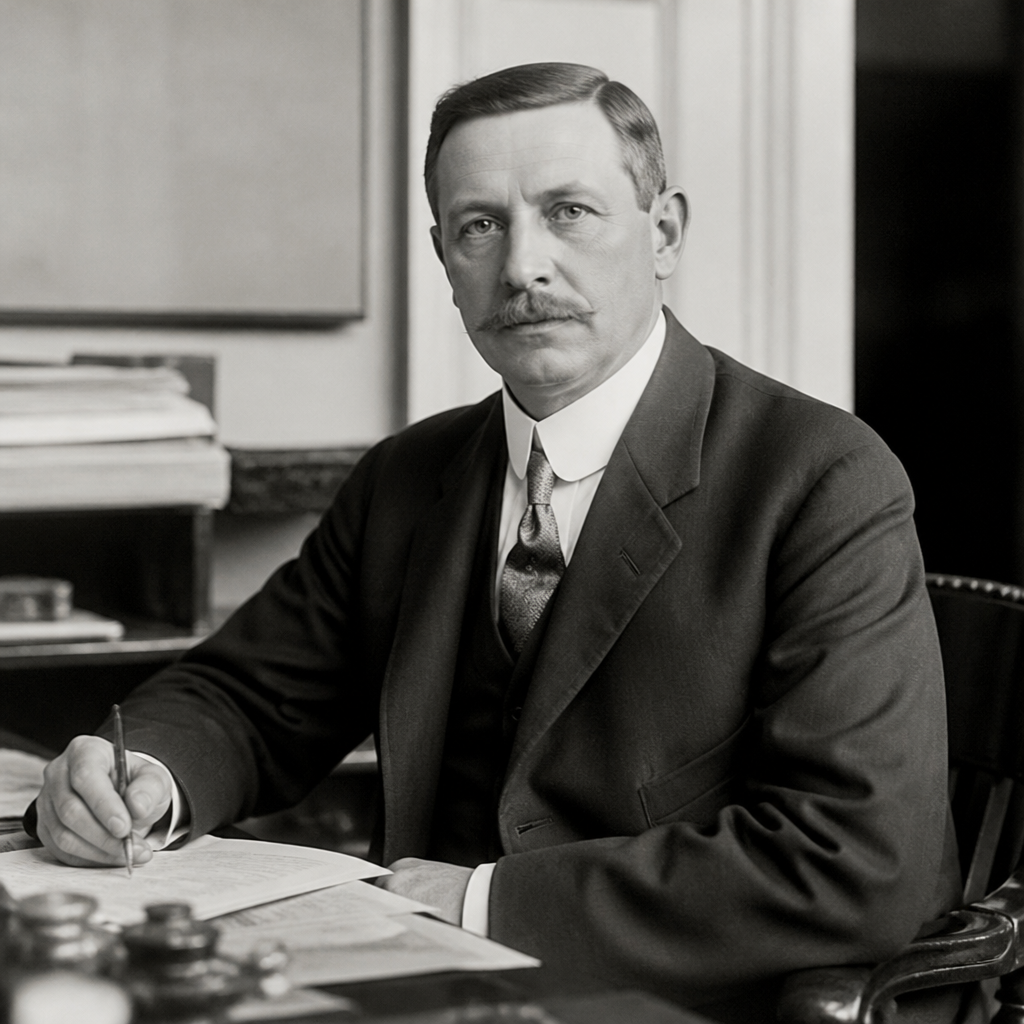
William Hulbert stands near the center of baseball’s formative years because he transformed a loose collection of ambitious clubs into the National League, the durable framework that gave professional baseball stability, credibility, and national reach. In the early history of baseball, “early players and innovators” refers not only to stars on the field but also to the executives, rulemakers, organizers, and entrepreneurs who turned a popular pastime into a governed sport. Hulbert was not a famous batter or pitcher, yet his decisions shaped how teams were financed, how schedules were honored, how player contracts were enforced, and how league authority operated. Those changes matter because modern Major League Baseball still rests on principles he helped establish in the 1870s.
When I study nineteenth-century baseball records, club correspondence, and league disputes, one fact becomes obvious: the game did not become organized simply because talented players appeared. It became organized because people like Hulbert imposed structure on chaos. Before the National League, the National Association of Professional Base Ball Players struggled with weak central enforcement, unstable franchises, gambling concerns, and clubs that skipped road trips when gate receipts looked poor. Hulbert recognized that baseball needed a disciplined business model as much as it needed athletic excellence. This hub article uses his career as the anchor for a broader look at the early players and innovators who defined baseball’s first professional era.
As a sub-pillar page within early baseball history, this article explains who William Hulbert was, what specific problems he solved, how he built the National League in 1876, and why his work connects directly to the rise of pioneering players, managers, owners, and rule innovators. It also points readers toward the larger ecosystem around him: Albert Spalding’s promotional force, Harry Wright’s managerial standards, Cap Anson’s star power, Henry Chadwick’s baseball writing and statistics, and the many club operators who either accepted league discipline or fought against it. Understanding Hulbert is the fastest way to understand why baseball survived its volatile beginnings.
Who William Hulbert Was and Why He Took Control
William Ambrose Hulbert was a Chicago businessman best known in baseball as the executive force behind the Chicago White Stockings and the founder of the National League. Born in 1832, he made his name in commerce before becoming deeply involved in baseball administration. That business background mattered. Hulbert approached baseball less like a hobbyist and more like an operator concerned with contracts, cash flow, scheduling, and organizational leverage. In an era when many clubs were run with local pride but limited professionalism, that perspective gave him unusual influence.
His rise came through Chicago, one of the most important baseball cities of the 1870s. The White Stockings were ambitious, well financed, and determined to compete for national prominence. Hulbert invested aggressively in talent, most famously helping bring stars such as Cap Anson and Albert Spalding to Chicago. That move was controversial because player movement in the period often involved murky commitments and weak enforcement. Hulbert learned from those conflicts that the sport’s existing governance system could not reliably control contracts or competitive balance. For him, reform was not abstract. It was a practical necessity born from direct experience.
The National Association, baseball’s first fully professional league, had launched in 1871 and deserves credit for legitimizing paid play. Yet by the middle of the decade, its weaknesses were impossible to ignore. Clubs entered and exited too easily. Strong teams complained that weaker clubs folded midseason. Some teams refused trips or exhibition commitments when expected revenue did not justify travel costs. There was no robust central office with enough authority to impose lasting discipline. Hulbert saw that a league could not survive if membership behaved like a temporary alliance instead of a binding institution.
The Problems With Early Professional Baseball
To understand Hulbert’s achievement, it helps to define the exact problems facing early professional baseball. First, there was franchise instability. Teams could disappear after a poor season or financial shortfall, wrecking the schedule and undermining fan trust. Second, gambling and game integrity worries followed the sport. Baseball was popular enough to attract betting, but not yet regulated enough to reassure the public. Third, player contracts were vulnerable. Clubs poached talent, players shifted commitments, and enforcement depended more on local influence than league power. Fourth, the championship structure itself lacked consistency because not every club met the same standards for travel, competition, or operations.
These defects were not minor irritations. They threatened baseball’s commercial future. Fans buy tickets when they believe the schedule matters, the standings are legitimate, and the product will continue next month and next year. Newspaper editors devote space when results feel nationally meaningful rather than improvised. Investors support clubs when there is a realistic chance of orderly administration. Hulbert understood all three audiences. His reforms aimed to protect spectators, publishers, and owners at the same time.
Another key issue was geography. Early baseball had strong local identities, but a truly national competition required dependable rail travel, financial planning, and clubs in major urban markets. Hulbert grasped that big-city franchises could create stronger gates and a more durable league footprint. That is why the National League’s original membership included clubs in Chicago, Boston, New York, Philadelphia, St. Louis, Louisville, Hartford, and Cincinnati. The selection was not random. It reflected a deliberate attempt to anchor professional baseball in cities with population, transportation links, and economic potential.
How Hulbert Built the National League in 1876
The National League was formed in 1876 after Hulbert and allied club leaders broke from the National Association and created a new governing model. Hulbert’s core insight was simple: membership had to be selective, and league rules had to be enforceable. Instead of allowing clubs broad autonomy with weak oversight, the new league functioned as a compact among owners who accepted centralized authority. That shift marks one of the decisive turning points in sports business history.
In practical terms, Hulbert built the league around standards. Clubs had to complete their schedules. Ownership groups needed credibility. Admission was limited rather than open ended. Expulsion was a real threat for noncompliance. The new organization also reduced the influence of teams viewed as unreliable or financially weak. This was not democratic in the modern sense, but it was effective. Baseball stopped behaving like a loose circuit and started behaving like a managed enterprise.
Hulbert also understood the value of symbolism. Launching a “National League of Professional Base Ball Clubs” signaled greater permanence than the older association structure. The wording emphasized clubs as institutions, not just collections of players. In my view, that distinction explains much of the league’s long-term success. Hulbert was building continuity, not merely arranging games. He wanted baseball to be reputable enough for business leaders, city newspapers, and middle-class families to embrace.
| Issue in the 1870s | Hulbert’s Response | Long-Term Effect |
|---|---|---|
| Unstable clubs folding midseason | Selective league membership | More reliable schedules and standings |
| Weak contract enforcement | Stronger centralized league authority | Greater owner confidence in roster planning |
| Poor travel compliance | Mandatory schedule obligations | National competition became practical |
| Damaged public trust | Higher operational standards | Baseball gained legitimacy with fans and press |
William Hulbert’s Executive Style and Leadership Methods
Hulbert was not a consensus-seeking ceremonial president. He was forceful, strategic, and sometimes ruthless. Contemporary accounts and later baseball histories consistently describe him as a determined political operator who used persuasion, alliances, and pressure to achieve structural change. In modern business terms, he was a founder-executive who recognized a broken market and reorganized it before competitors could respond effectively.
One of his strengths was talent alignment. Hulbert did not build alone. He worked with powerful baseball figures, especially Albert Spalding, whose star status, promotional instincts, and later sporting-goods empire amplified the league’s influence. Hulbert also understood that winning teams drove legitimacy. By helping assemble a strong Chicago club, he linked league reform with on-field excellence. That combination matters in every sports league: governance alone does not attract audiences; governance plus compelling competition does.
His limitations should also be stated plainly. Hulbert’s model favored owners and club control more than player freedom. The reserve system emerged more firmly in the years after the National League’s founding, restricting player movement in ways that benefited management. Hulbert did not invent every later labor practice, but the institutional environment he created strengthened owner authority. That tradeoff is essential to any balanced assessment. He brought order, but that order was not equally favorable to everyone in the sport.
The Early Players and Innovators Around Hulbert
A proper hub on early players and innovators must show that Hulbert’s story connects to a wider cast. Cap Anson, Chicago’s first great superstar, gave the new league a marquee attraction and helped prove that disciplined clubs could draw sustained attention. Albert Spalding was both an elite pitcher and a visionary promoter who understood branding, tours, equipment sales, and publicity. Harry Wright, best known for leading the Cincinnati Red Stockings and later managing Boston, established professional methods in training, tactics, and club organization. Henry Chadwick, though not a league executive, shaped how the public understood baseball through reporting, scoring conventions, and early statistical language.
These figures illuminate an important truth: baseball’s early development was collaborative even when personalities clashed. Players created demand. Managers standardized preparation. Writers explained the game to the public. Owners financed operations. Executives like Hulbert built systems that could contain all of that energy. Remove any one group, and the sport grows more slowly or less securely.
Other innovators deserve attention on any deeper reading path from this hub. Candy Cummings is associated with the early curveball tradition, showing how pitching innovation changed strategy. Jim Devlin and the Louisville Grays scandal of 1877 remind readers that integrity crises were real and that league governance needed teeth. John Montgomery Ward later became crucial as both star player and labor advocate, demonstrating that baseball’s institutional history was also a contest over rights and power. Hulbert’s league made these later debates possible because it created the stable stage on which they unfolded.
Lasting Impact on Baseball’s Structure
Hulbert died in 1882, only six years after the National League began, but by then the central architecture was in place. The league had established the idea that a baseball season required binding schedules, recognized membership standards, and a governing body with power beyond any single club. Every later major-league development, from rival league wars to modern commissioner authority, traces in part to that foundation.
His influence is visible in several enduring principles. First, league membership is a privilege, not an automatic right. Second, central enforcement is necessary when clubs share a competitive product. Third, the national appeal of baseball depends on reliable intercity competition. Fourth, administrative credibility affects public trust just as much as athletic talent. These principles may sound obvious now, but they were learned through conflict in the 1870s.
For readers exploring the early history of baseball, Hulbert should be treated as a gateway figure. Study him, and the broader subtopic opens up naturally: the professionalization of players, the rise of star systems, the emergence of modern standings, the business logic of franchise cities, the press’s role in mythmaking, and the constant tension between competitive fairness and owner control. That is why this page works as a hub for early players and innovators. Hulbert connects them all.
How to Use This Hub for Further Research
If you are building a deeper understanding of early baseball, follow the topic in layers. Start with Hulbert and the founding of the National League. Then move to player-centered biographies such as Cap Anson, Albert Spalding, and John Montgomery Ward. After that, study innovators in media and rules, especially Henry Chadwick and Harry Wright. Finally, examine crisis moments such as gambling scandals, contract disputes, and league rivalries. This sequence mirrors the way the sport actually matured: institution first, stars next, then public narrative and structural conflict.
Reliable research works best when primary and secondary sources are combined. League proceedings, period newspapers, box scores, and club records reveal what participants said at the time. Scholarly baseball histories and archives at the National Baseball Hall of Fame help interpret those materials. Tools like Retrosheet are stronger for later statistical reconstruction, while nineteenth-century collections often require cross-checking names, dates, and club affiliations because recordkeeping was less standardized. In my experience, the safest approach is to verify every dramatic anecdote twice before repeating it.
William Hulbert’s greatest achievement was not creating baseball from nothing. It was recognizing that talent without governance would keep collapsing under its own disorder. He built the National League to solve that problem, and the solution endured. If you are exploring the early history of baseball, use this hub as your starting point, then continue into the linked lives of the players, managers, writers, and owners who turned a regional game into a permanent national institution. Read outward from Hulbert, and early baseball becomes far easier to understand.
Frequently Asked Questions
Who was William Hulbert, and why is he so important to baseball history?
William Hulbert was one of the most influential executives in the early history of professional baseball, even though he was not a famous player or field manager. Best known as a businessman and organizer, Hulbert played the central role in creating the National League in 1876, a move that helped transform baseball from a loosely organized pastime into a stable and credible professional sport. His importance lies less in any single public performance and more in the institutional structure he helped build. At a time when clubs often acted independently, schedules were unreliable, gambling concerns damaged public confidence, and league authority was weak, Hulbert pushed for a new model based on stronger governance and long-term organizational discipline.
What makes Hulbert historically significant is that he understood baseball needed more than talent on the field. It needed dependable leadership, enforceable rules, financially responsible clubs, and a league that could survive beyond one season or one group of owners. In that sense, he belongs among baseball’s early innovators because he helped define what modern professional sports administration would look like. The National League became the durable foundation of top-level professional baseball in the United States, and Hulbert’s vision was a major reason it succeeded where earlier arrangements had struggled. His legacy is tied to the idea that sports institutions matter just as much as star athletes when it comes to shaping history.
What problems in early professional baseball was Hulbert trying to solve?
Hulbert was responding to a sport that had become popular quickly but lacked the structure needed for lasting stability. In the years before the National League was formed, professional baseball was plagued by weak central authority, inconsistent scheduling, clubs folding midseason, disputes over player movement, and persistent concerns about corruption and gambling. Fans could not always count on games being played as advertised, and club owners could not always trust that rival teams would honor financial or competitive commitments. These problems made it difficult for baseball to maintain public respectability and grow into a truly national enterprise.
One of the biggest issues was that existing league arrangements did not provide enough control over member clubs. Teams could ignore obligations, shift plans for short-term advantage, or create instability that harmed the entire sport. Hulbert recognized that if baseball was going to thrive, it needed a firmer framework with clear standards for membership and conduct. He also understood that financial discipline mattered. Clubs that were poorly managed or unreliable did not just hurt themselves; they damaged the league’s reputation and business prospects. By seeking a more selective and tightly governed organization, Hulbert aimed to protect both the game’s integrity and its economic future.
In practical terms, he was trying to make professional baseball more predictable, more respectable, and more sustainable. That may sound administrative rather than dramatic, but it was exactly what the sport needed. His efforts helped shift baseball away from an unstable collection of local enterprises and toward a coordinated league system that could attract fans, maintain order, and endure over time.
How did William Hulbert help create the National League?
Hulbert was the driving force behind the creation of the National League, using his influence as an executive and club leader to gather support for a new kind of professional organization. Associated most closely with the Chicago club, he had firsthand experience with the frustrations caused by weak league control and unreliable competitors. Rather than simply complain about those conditions, he moved strategically to replace the old structure with one he believed would work better. His approach reflected both business instinct and political skill: he built alliances, identified like-minded club leaders, and promoted the idea of a league made up of stronger, more responsible franchises.
The National League, formed in 1876, differed from earlier professional arrangements because it aimed to be more selective and more disciplined. Hulbert favored limiting membership to clubs that could meet higher standards and would accept central authority. This was a critical shift. Instead of treating the league as a loose association of teams with varying levels of commitment, the new model expected clubs to honor schedules, uphold league decisions, and operate in a way that served the broader interests of the organization. Hulbert’s leadership helped turn that concept into reality.
His contribution was not merely ceremonial. He was one of the key architects of the league’s identity and operating philosophy. He helped establish the principle that the league itself should have meaningful authority over its members, and that baseball’s success depended on collective order as much as individual club ambition. That idea became one of the defining characteristics of the National League and one of the reasons it proved durable. Hulbert did not just help launch a league; he helped shape the governing logic that allowed it to survive and become a cornerstone of professional baseball.
Why is Hulbert considered an innovator if he was not a player?
In baseball history, innovation is not limited to what happens between the foul lines. The game was shaped not only by athletes but also by organizers, executives, rulemakers, and entrepreneurs who created the systems that made competition possible on a large scale. Hulbert fits squarely into that category. He is considered an innovator because he reimagined how professional baseball should be organized and governed. His work addressed structural problems that threatened the sport’s future, and his solutions had lasting consequences far beyond his own era.
What Hulbert innovated was the framework of league professionalism. He recognized that talent and fan interest alone were not enough to secure baseball’s long-term success. The sport needed institutional credibility. That meant regular schedules, accountable ownership, enforceable rules, and a governing body with enough authority to keep clubs aligned. These ideas may seem obvious now because they are basic features of modern sports leagues, but in the 1870s they represented a more advanced and disciplined vision of what professional baseball could become.
Hulbert’s importance also comes from the fact that his innovations were durable. Many early baseball experiments were temporary or localized, but the model he helped build endured. The National League became a central pillar of the sport, and the executive principles behind it influenced how baseball developed nationally. So while he never gained fame as a star on the field, Hulbert changed the conditions under which the game was played, promoted, and preserved. That is exactly the kind of innovation that deserves recognition in any serious discussion of baseball’s formative years.
What is William Hulbert’s lasting legacy in the development of Major League Baseball?
Hulbert’s lasting legacy is that he helped create the durable institutional backbone of top-level professional baseball. Long before Major League Baseball existed in its modern form, Hulbert advanced the idea that the sport required strong league governance, responsible club membership, and a coordinated national structure. Those principles became foundational to the way elite professional baseball operated. By helping establish the National League, he did more than solve short-term problems; he set in motion a model of organization that influenced the future of the entire sport.
His legacy can be seen in the expectation that professional leagues must do more than stage games. They must enforce standards, protect competitive integrity, manage relationships among clubs, and maintain public trust. Hulbert helped embed those expectations into baseball’s culture at an early and vulnerable stage. Without that kind of leadership, the sport might have remained fragmented, locally popular but nationally unstable. Instead, baseball gained a framework capable of expansion, continuity, and legitimacy.
That is why Hulbert remains an essential figure in discussions of baseball’s origins. He may not be the most publicly celebrated name from the nineteenth century, but his impact reaches into every era that followed. Whenever historians trace how baseball became a major professional sport with enduring institutions, William Hulbert stands near the center of the story. His legacy is not a single rule, team, or season, but the creation of a stronger system—one that helped baseball move from a chaotic early profession into a lasting national game.