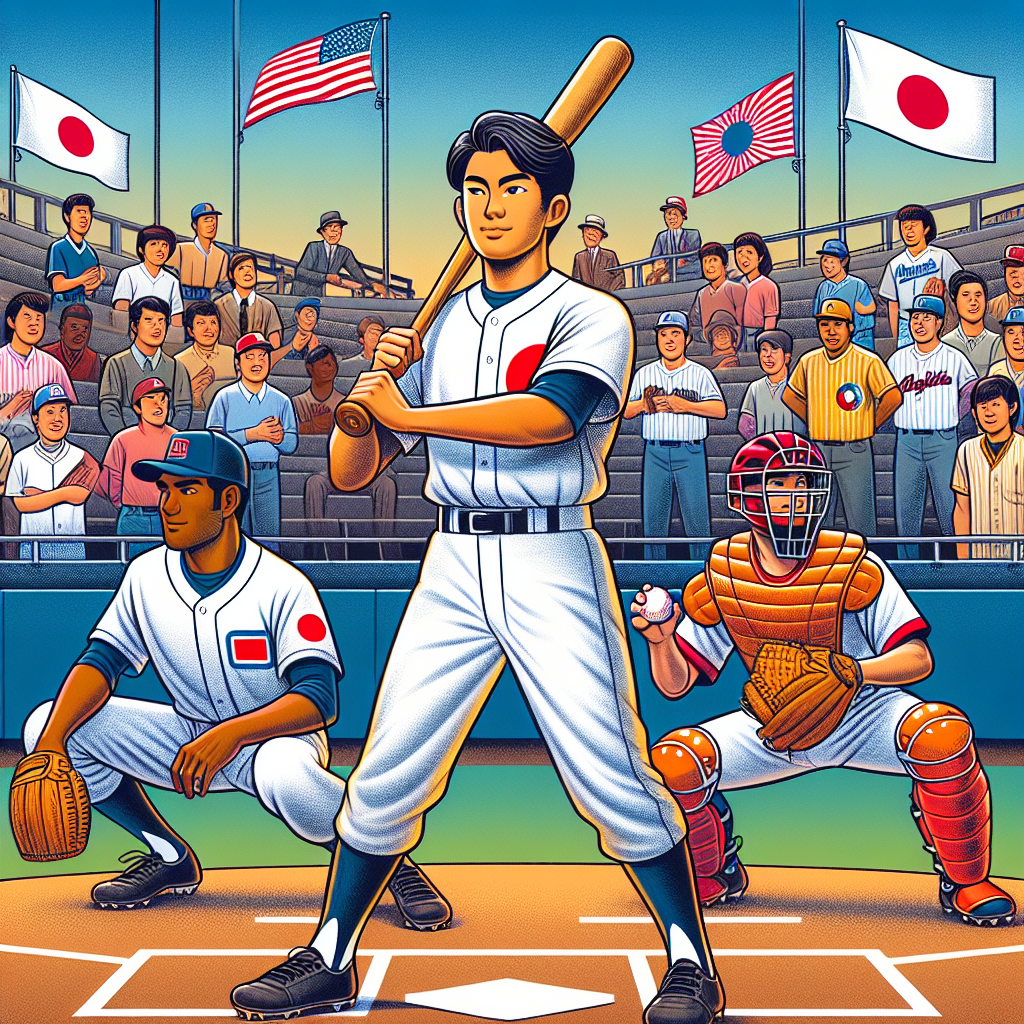
Baseball’s influence transcends geographical boundaries, and over the decades, it has promoted cultural exchange and mutual respect among nations. The integration of Japanese players into Major League Baseball (MLB) exemplifies this phenomenon, revealing how a sport can not only foster international understanding but also enhance the game itself. The journey of Japanese players into MLB is steeped in history, drama, and persistence. It reflects a broader narrative of resilience and ambition, capturing the hearts of fans worldwide. However, this integration was not without its challenges. Japanese players faced cultural, linguistic, and professional barriers that had to be overcome to carve out a niche in this fiercely competitive arena. Their story is not just one of sportsmanship but of cultural adaptation and seamless blending into a league historically dominated by American and Latin American players.
In the past, baseball served as a diplomatic bridge between Japan and the United States. The sport was introduced to Japan in the 1870s and quickly grew in popularity, ultimately developing into a cultural phenomenon. When Japanese players began entering MLB, it marked a significant turning point, both in baseball and cultural relations. This narrative delves into the impactful stories of various pivotal figures in this journey, the obstacles they overcame, and how their presence reshaped MLB. Furthermore, it explores the broader implications of this integration, shedding light on how baseball has served as a platform for promoting cross-cultural exchanges.
The Pioneers
The trailblazing journey of Japanese players in MLB began with Masanori Murakami in the 1960s. As the first Japanese player to appear in MLB, Murakami’s debut as a pitcher for the San Francisco Giants in 1964 marked the inception of a new era. Although his stay was short, Murakami set a profound example and illustrated the potential of Japanese talent in MLB. His presence in the league began breaking down long-standing cultural barriers and served as a symbolic gesture towards openness and inclusiveness. Fast forward to the 1990s, and the landscape of Japanese integration into MLB began to transform significantly. Players like Hideo Nomo, often regarded as the modern pioneer for Japanese MLB talent, made way for an influx of players from Japan. Nomo’s success in MLB during the mid-90s not only proved the ability of Japanese players to succeed but also motivated a whole generation of Japanese players to pursue professional baseball in the United States. Nomo, with his unique wind-up and remarkable skills, had set a precedent that reverberated throughout the baseball world. These early pioneers not only opened doors but also laid a strong foundation for future generations of players, inspiring numerous youngsters back in Japan while reshaping the American perspective on international talents in baseball.
Cultural Challenges
Despite the promise of cross-cultural exchange, Japanese players faced significant cultural challenges upon joining MLB, stemming primarily from language barriers, differences in game philosophy, and lifestyle adjustments. The transition was not merely about adapting to a different style of play but also entailed acclimating to the American culture, both within and beyond the baseball diamond. Language was one of the foremost barriers. Communicating with coaches, teammates, and media required overcoming hurdles that could sometimes lead to misunderstandings or the feeling of isolation. Additionally, the intense media scrutiny and immense expectations often followed these players, given their hero status in Japan, making the adjustment pressure-laden. Differences in baseball philosophy also posed challenges. Japanese baseball emphasizes fundamentals, discipline, and a methodical approach, while MLB places a higher premium on individuality and home-run hit prowess. Bridging these divergent baseball cultures required Japanese players to adapt their mindset and skills. Yet, those who succeeded found a balance, often blending the discipline of Japanese baseball with the dynamic style of MLB, which in turn enriched both their own game and that of the league. This adaptation also required a shift in lifestyle, from food preferences to living arrangements and embracing a different ethos of sports life balance, alongside the constant travel demands of an MLB season.
The Influential Figures
Several key figures emerged who went beyond successful integration, achieving iconic status within MLB and influencing the sport as a whole. Ichiro Suzuki, whose entry into MLB in 2001 with the Seattle Mariners, stands out as perhaps the most celebrated story of Japanese integration. Ichiro’s achievements, including winning the American League MVP and Rookie of the Year awards in his debut season, paved the way for Japanese players to be viewed as invaluable assets rather than mere novelty acts. Ichiro’s career was characterized by consistency, durability, and setting multiple records, stamping his legacy as one of MLB’s greatest hitters. His influence extended beyond statistics; he was a cultural bridge and an international icon who inspired countless fans and players on both sides of the Pacific. Another pivotal figure was Yu Darvish, a pitcher whose balance of technique and power marked him as a standout player in MLB. Darvish’s transition was emblematic of a second wave of Japanese players who were already more accustomed to the international scene, thanks to the groundwork laid by earlier players like Nomo and Ichiro. Such players didn’t just change the perception of Japanese athletes in MLB, they also subtly transformed the league’s playing style, introducing a blend of technique and strategy that added new dimensions to the game.
Impact on MLB
The influx of Japanese talent has undeniably impacted MLB in numerous ways, both on and off the field. Japanese players introduced a more diverse style of play, one that many MLB teams have come to appreciate and incorporate into their strategies. Their emphasis on speed, precision, and finesse added new layers to the league’s traditionally power-centric focus. Off the field, the presence of Japanese players in MLB catalyzed a significant change in the global perception of the league. MLB’s appeal expanded enormously, drawing attention and viewership from Japanese fans who closely followed their homegrown talents. As a result, MLB games gained international broadcast opportunities, and merchandise demand grew exponentially, driving up revenues for the league and its teams. Moreover, the success of Japanese players encouraged MLB franchises to actively scout and recruit talent from Japan, paving the way for international scouting systems that now extend to numerous countries. This global perspective not only enhances the league’s talent pool but also fosters an inclusive environment where abilities are recognized regardless of origin, further promoting cultural exchange and camaraderie through the universal language of baseball.
Future Prospects
Looking forward, the integration of Japanese players into MLB holds continued promise and potential. As both countries expand their dialogue within the realm of baseball, prospects for further cultural and professional exchanges remain bright. The existence of MLB academies and baseball clinics in Japan illustrates the strengthening relationship between international training practices and talent development. These initiatives aim to cultivate young athletes with aspirations of joining MLB, fostering a sense of international collaboration right from the grassroots level. Technological advances and increased accessibility to cross-cultural coaching are further streamlining the transition process for Japanese players. These resources help mitigate cultural obstacles and enhance players’ adaptability to different playing styles and societal norms. Moreover, an increasing number of Japanese players are choosing to transition to MLB, demonstrating a cycle of mutual enrichment and opportunity. As influence continues to expand, it is also evident that the exchange works both ways, with MLB looking to integrate Eastern nuances into its own game mechanics. This fertile exchange offers potential for further development in training methodologies and collaborative strategies that can benefit both leagues. Thus, the trajectory of Japanese integration into MLB suggests not only an enduring journey of transformation but also an evolving partnership that will likely shape the future landscape of professional baseball on a global scale.
Conclusion
The integration of Japanese players into Major League Baseball stands as a significant chapter in the annals of sports history, exemplifying a blend of cultural curiosity and mutual respect bound together by the love of baseball. The journey from Masanori Murakami’s debut in the 1960s to the remarkable careers of athletes like Ichiro Suzuki and Yu Darvish illustrates both the challenges and triumphs of integrating into a complex and demanding sport system. It paints a picture of determination, adaptability, and a yearning for excellence that transcends borders. Japanese players have indelibly transformed MLB, not only in enhancing the quality and style of play but also by enriching the league with a diversity of perspectives and talents. Their stories of integration reflect wider themes of globalization within sports, showcasing how cultural exchange can foster mutual appreciation and growth. The future holds exciting prospects for deeper collaborations and exchanges between Japanese leagues and MLB, promising opportunities for new generations of players inspired by their predecessors’ journey. As fans of baseball, observers of cultural dynamics, and participants in a growing global audience, we can look forward to how this ongoing narrative will develop, further bridging gaps and promoting a sport that unites us through shared passion and competitive spirit.