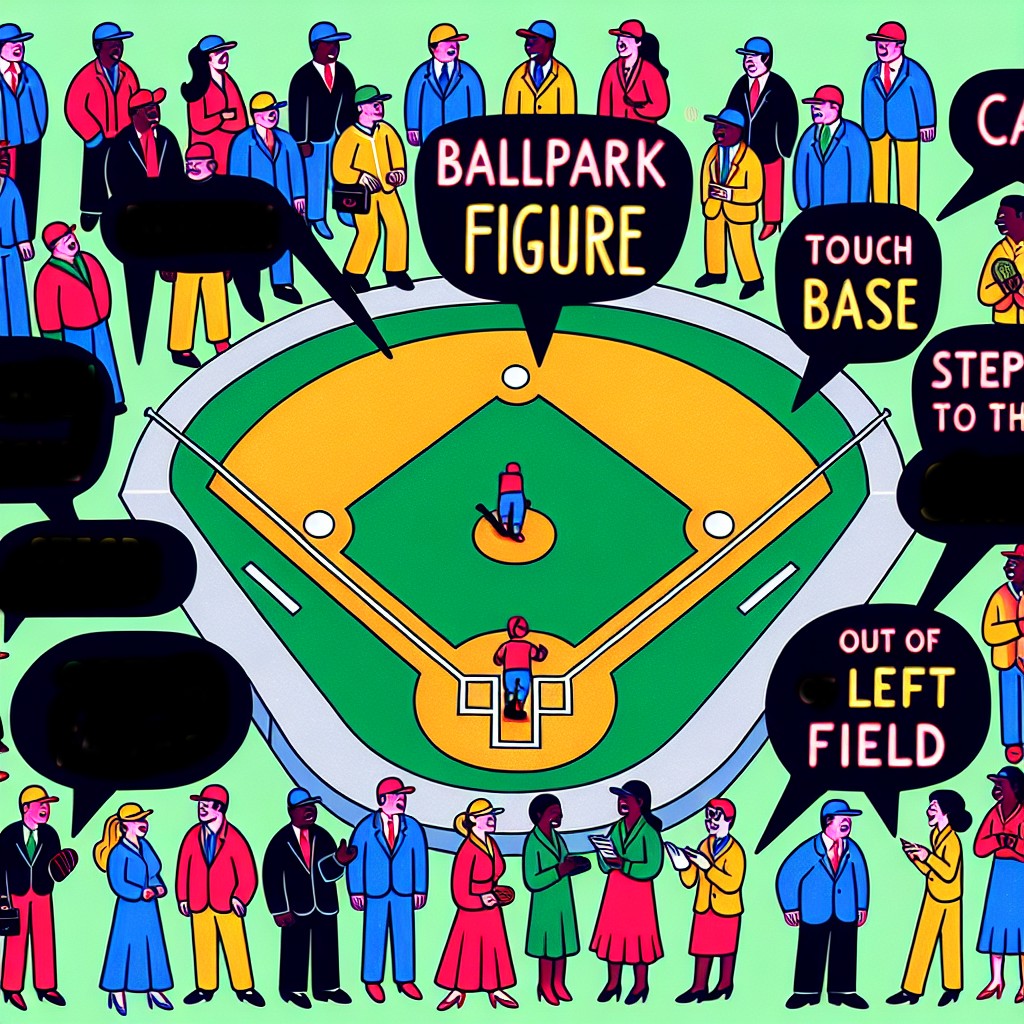
Baseball is more than just a sport in the United States; it is often referred to as America’s pastime, deeply embedded in the cultural and social fabric of the nation. Beyond the roaring crowds and the iconic seventh-inning stretches, baseball has played a significant role in shaping the English language in the United States. It has contributed a rich mosaic of idioms and phrases that extend far beyond the boundaries of the diamond and into the everyday vernacular. Understanding the influence of baseball on the American lexicon provides insight into how sports and society intersect, evolve, and influence one another.
The journey of baseball to becoming an integral part of American society began in the mid-19th century. As the sport grew in popularity, so did its impact on the culture, capturing the hearts and imaginations of people across the country. By the turn of the 20th century, baseball had taken hold as the national pastime—an athletic pursuit that offered a shared experience among a diverse populace. This shared experience extended beyond stadiums, manifesting itself in the language. Everyday speech, idiomatic expressions, and even business jargon began to take on a distinct baseball flavor.
Despite being an intricate game with complex dynamics, the fundamental elements of baseball—hits, runs, outs, and innings—are straightforward enough for even casual fans to grasp. This accessibility made it easy for baseball-related expressions to become popular metaphors for life experiences. Phrases like “hitting a home run,” “in the ballpark,” and “three strikes and you’re out” have all transcended their literal meanings, becoming metaphors for success, approximation, and final chances, respectively. Over time, baseball’s influence has woven itself into the very structure of how Americans communicate, often without realizing the origin of the expressions they use.
Beyond establishing a presence in everyday language, baseball also plays a role in social cohesion and cultural identity. The idioms and phrases derived from baseball reflect not only a love for the sport but a shared cultural experience that brings people together. Understanding the language of baseball and its idioms provides a window into the cultural narrative of America, where sports, language, and society intersect to create an enduring legacy.
The Origins of Baseball-Related Idioms
The idioms associated with baseball have fascinating origins, many of which date back to the sport’s early days. These phrases were initially used by players and commentators to add color to the discussion of the game, eventually crossing over into mainstream language as metaphors for various life situations. Let’s explore how some of these well-known idioms came to be and gained traction in everyday conversation.
Take, for example, the phrase “out in left field.” In baseball, being positioned in left field requires a great degree of readiness to respond to unexpected plays. Over time, the phrase evolved to imply that someone is off the mark or acting unexpectedly. Its origins are rooted in the complexities of fielding positions and the sometimes unpredictable nature of ballgames.
The expression “ballpark figure” is another example. It refers to an approximation or rough estimate and stems from businesses trying to gauge potential financial outcomes by referencing the attendance figures at baseball stadiums. These stadiums, or “ballparks,” offer a tangible sense of scale, making the term a natural metaphor for an estimate within a certain range.
Moreover, “strike out” has become synonymous with failure or missing an opportunity. In baseball, a strikeout is when a batter experiences three failures (strikes) and is forced to give up their turn at bat. In broader usage, the drama of that third strike—representing a final chance—captures the essence of missing out or failing in any endeavor, whether personal or professional.
These phrases remind us of baseball’s intrinsic connection to American culture. They speak to a broader narrative where sports terminology steps confidently into everyday lexicon, reinforced with a shared understanding of their original context. As such, baseball inuences not only speech but thought, offering familiar frames of reference in other areas of life.
Baseball Language in Business and Politics
Beyond everyday conversation, baseball idioms have permeated areas such as business and politics, offering vivid metaphors that succinctly convey complex ideas. This crossover is evidence of the sport’s deep roots in American life, where baseball-based language can illuminate even the most intricate of discussions.
In business settings, negotiation and performance often borrow from baseball terminology. “Touch base,” for instance, signifies checking in or making contact, a term that comes directly from the requirements of running the bases in baseball. It encapsulates the notion of re-establishing a connection or ensuring all relevant parties are aligned, much like ensuring a player’s foot touches each base on their way to scoring.
The term “home run” is frequently used to signify a major success. In business, when a deal or a project exceeds expectations or achieves phenomenal outcomes, it is referred to as a “home run.” This phrase embodies triumph and achievement, imbuing corporate goals with an aspirational spirit linked to the joy of scoring in baseball.
In politics, the phrase “bush league” is often employed to describe something as amateurish or lacking sophistication. Originally, it pertained to the minor leagues of baseball, indicative of a lower level of play as compared to the major leagues. Its application in politics suggests a deviation from professional standards or behaviors expected at higher levels of governance.
By applying these idioms to various sectors, baseball provides a canvas on which Americans paint their strategic and operational landscapes. These expressions serve as powerful linguistic tools to articulate goals, achievements, and setbacks, translating the thrill and challenge of the sport into professional and political arenas.

Baseball’s Influence on Media and Entertainment
As a sport deeply ingrained in the American psyche, baseball has made significant contributions to media and entertainment, shaping the language of storytelling and character development in numerous ways. Since the inception of broadcast media, baseball has been at the forefront, with radio, television, and now the internet enhancing its reach and influence.
Phraseology from baseball often finds its way into movie dialogues, television scripts, and books, offering a relatable point of reference for audiences. Consider the phrase “hit it out of the park” used in the context of a particularly successful performance. Its origin in baseball seamlessly transitions into the lexicon of entertainment as shorthand for excellence.
Many films and TV shows devoted to baseball itself exemplify the sport’s impact, both visually and linguistically. Movies like “Field of Dreams,” “The Natural,” and “A League of Their Own” focus not just on the sport but also convey themes of hope, ambition, and camaraderie, with baseball language accentuating the emotional and narrative arcs.
The familiar vocabulary of baseball lends authenticity and resonance to these stories, helping audiences connect with the characters and themes on a deeper emotional level. The metaphors extend beyond the storylines, offering life lessons and reflections on the human experience, much like the idiomatic language that springs from the game’s culture.
Thus, baseball’s influence on language within media and entertainment showcases its wider cultural impact, reinforcing how sports can guide dialogue and enrich narratives that extend beyond the playing field into the hearts of storytellers and their audiences.
The Educational Implications of Baseball Idioms
Baseball idioms have an intriguing role in education, serving as an entry point for students to both understand cultural history and enhance language skills. Educators can leverage these expressions to engage students more effectively, offering them linguistic tools enriched with historical and societal context.
The appeal of baseball as a culturally significant topic makes it a powerful educational instrument. Teachers introduce idioms like “step up to the plate,” “take a rain check,” or “throw a curveball” as ways to inspire interest in language arts and social studies. These expressions not only enrich students’ vocabulary but also provide unique insights into American history and culture.
In lessons about idioms and metaphors, baseball-related language prompts discussions about the origins and meanings of expressions within various social contexts. By analyzing the cultural significance behind these terms, students gain a deeper understanding of how language reflects and shapes societal values and experiences.
Furthermore, the sports-centric approach can promote inclusivity, particularly in classrooms where students have diverse interests. By tapping into the universal appeal of baseball as a jumping-off point, educators can draw connections across different subjects, enhancing student engagement and interdisciplinary learning.
Ultimately, the use of baseball idioms in educational settings exemplifies the interplay between culture, language, and learning, providing students with a well-rounded understanding of how sports can influence and inform other aspects of life, including education itself.
Baseball Idioms as a Reflection of American Values
Baseball idioms not only enrich language but also reflect fundamental American values, such as fairness, perseverance, and opportunity. These expressions encapsulate concepts that resonate deeply with the national ethos and offer insights into the character of a nation.
Consider the idiom “level playing field,” which speaks to the ideal of equal opportunity and fairness—a core American value. Originating from the notion of unbiased competition, this phrase has become a powerful metaphor deployed in discussions about equality and justice.
The phrase “play hardball” is similarly poignant, suggesting the importance of resilience and determination. While the term originally referred to playing baseball seriously and with no holds barred, it now suggests taking an assertive and tough stance in any situation.
“On deck,” indicating readiness to act, can symbolize preparedness and seizing opportunity, ideas central to the American Dream narrative. By using such idioms, speakers evoke values of vigilance and proactivity, emphasizing the potential to achieve one’s goals through hard work and dedication.
The continued use of these idioms demonstrates how sports can become a potent vehicle for expressing national ideals. These expressions not only reflect societal values but reinforce them, becoming shorthand for discussing broader themes within the American social landscape.
Conclusion: The Enduring Cultural Impact of Baseball Language
Baseball has undeniably left an indelible mark on American language, with a lexicon that echoes through the corridors of everyday conversation, business meetings, political rhetoric, media scripts, and educational discourse. Baseball idioms enrich the American vernacular, providing lively, vivid metaphors that enhance communication by drawing on familiar cultural references.
The sport has risen from a pastime to a powerful cultural force, shaping language and, in doing so, influencing how Americans think about competition, strategy, resilience, and achievement. These idioms offer a window into American history, values, and identity, reminding us of the sport’s pervasive impact on societal norms and collective consciousness.
As society continues to evolve, the language of baseball will likely continue to adapt, reflecting new dimensions of the sport and its relationships with cultural dynamics. New idioms may develop, even as traditional ones maintain their relevance. In an ever-changing world, baseball—and the language it inspires—remains a constant, echoing the timeless aspects of competition and community.
By embracing these phrases, Americans celebrate their shared heritage and express timeless truths about life, capturing the essence of both the game and the society it mirrors. The persistent presence of baseball in language underscores its role as not just a pastime but a powerful symbol and an enduring fixture of American life.