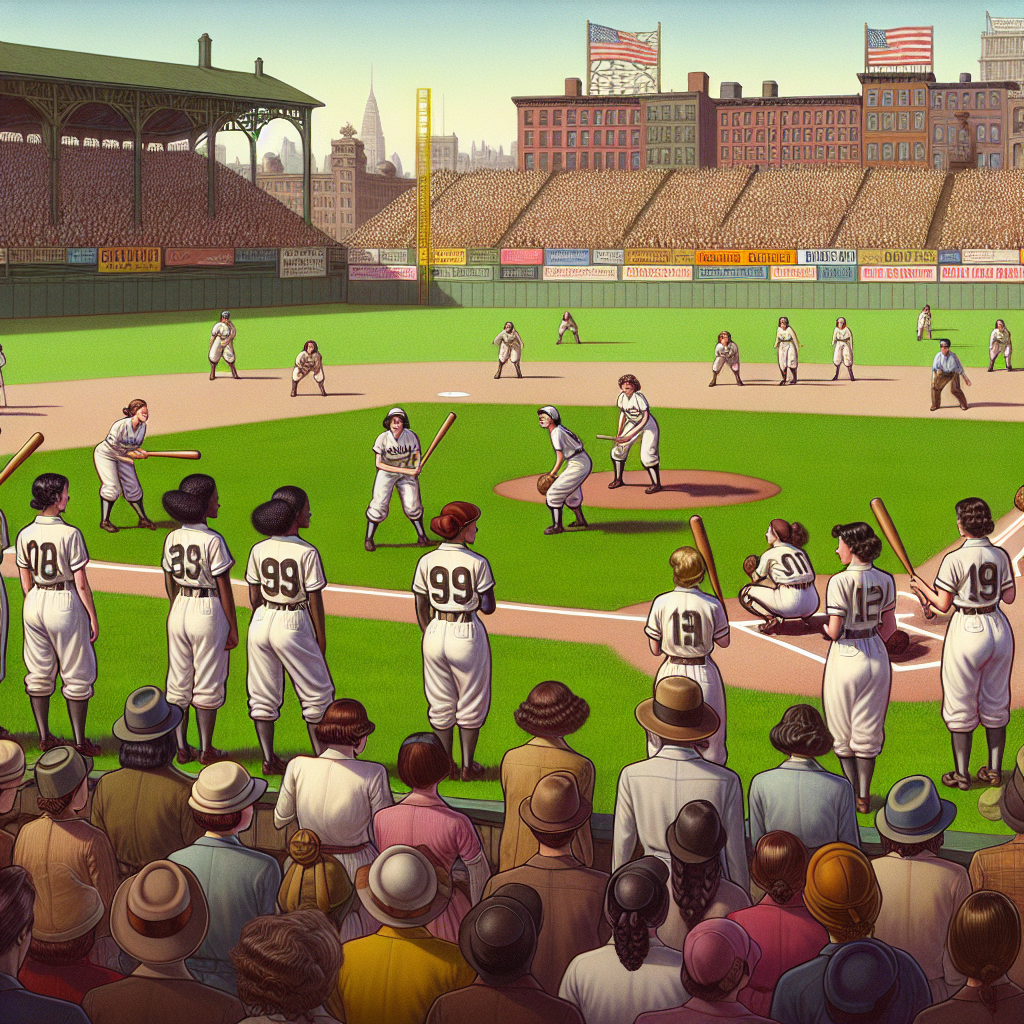
The history of baseball is often celebrated for its iconic male players and legendary moments. However, another critical chapter of this sport’s storied past often goes unnoticed: the formation and success of the All-American Girls Professional Baseball League (AAGPBL). The league came into existence during a period of great turmoil, World War II, which led to many Major League Baseball (MLB) players serving overseas. This shortage of male players opened up an unprecedented opportunity for women to showcase their talents in a professional setting. The AAGPBL not only became a successful league but also left an indelible mark on the sport of baseball.
Founded by Philip K. Wrigley, the chewing gum mogul and owner of the Chicago Cubs, the league began as a hopeful experiment. In its initial phases, the league faced skepticism and significant societal barriers. The establishment of professional women’s baseball was more than just sports—it became a platform for challenging gender norms and stereotypes prevalent in mid-20th century America. Through the AAGPBL, women were given the rare opportunity to demonstrate their athletic prowess, paving the way for future generations.
This article dives deep into the early history of the AAGPBL, exploring its formation, growth, challenges, and ultimate legacy. By examining this unique part of baseball history, we gain a fuller understanding of the sport’s evolution and the crucial role women played in shaping it. So, let’s journey back to the 1940s and rediscover a pivotal yet often overlooked segment of America’s favorite pastime—the era when women took the baseball diamond by storm.
The Founding of the AAGPBL
The inception of the All-American Girls Professional Baseball League is inherently tied to the global events of the early 1940s. With World War II in full swing, many able-bodied men, including professional baseball players, were enlisted into the military. This led to concerns about the future of Major League Baseball, particularly whether the league would be able to sustain its operations during the war years. As a result, there were genuine fears among team owners and fans that baseball, considered a vital American pastime, might come to a halt.
Against this backdrop, Philip K. Wrigley, the owner of the Chicago Cubs, came up with a groundbreaking idea. Wrigley envisioned creating a professional league for female ballplayers to fill the void left by men who had gone to war. Partnering with Branch Rickey, who would later become famous for breaking baseball’s color barrier with Jackie Robinson, Wrigley began laying the groundwork for what would become the AAGPBL.
The league was initially structured to resemble softball more than traditional baseball. The first tryouts were held in Chicago, with over 200 women participating. From this talented pool of players, 60 women were selected to form the first four teams: the Kenosha Comets, Racine Belles, Rockford Peaches, and South Bend Blue Sox. In May 1943, the league officially launched, complete with a hybrid set of rules that blended aspects of softball and baseball to accommodate the female athletes.
Wrigley’s vision was not just to replicate men’s baseball with women players but to create a league that had its own identity. The uniforms were a novel concept—they featured dresses instead of the traditional pants and jerseys. The attire was designed to appeal to contemporary standards of femininity, which Wrigley believed would help attract a broader audience. Despite these initial peculiarities, the women quickly proved that they possessed the skill, determination, and passion needed to compete at a professional level.
Challenges and Triumphs
The AAGPBL faced a series of challenges right from its inception. One of the most immediate hurdles was public perception. In the 1940s, the idea of women playing professional sports, especially one as traditionally masculine as baseball, was met with significant skepticism. To many, the notion seemed more like a novelty act than a legitimate sporting endeavor. However, the league’s founders and players were determined to prove otherwise.
Players were not only expected to compete at a high level but also adhere to strict codes of conduct and femininity. They underwent rigorous training programs that included both athletic drills and lessons in etiquette. The league hired chaperones to ensure that the players maintained a ladylike demeanor, both on and off the field. While these rules may seem outdated by today’s standards, at the time, they were deemed essential to gaining public and media acceptance.
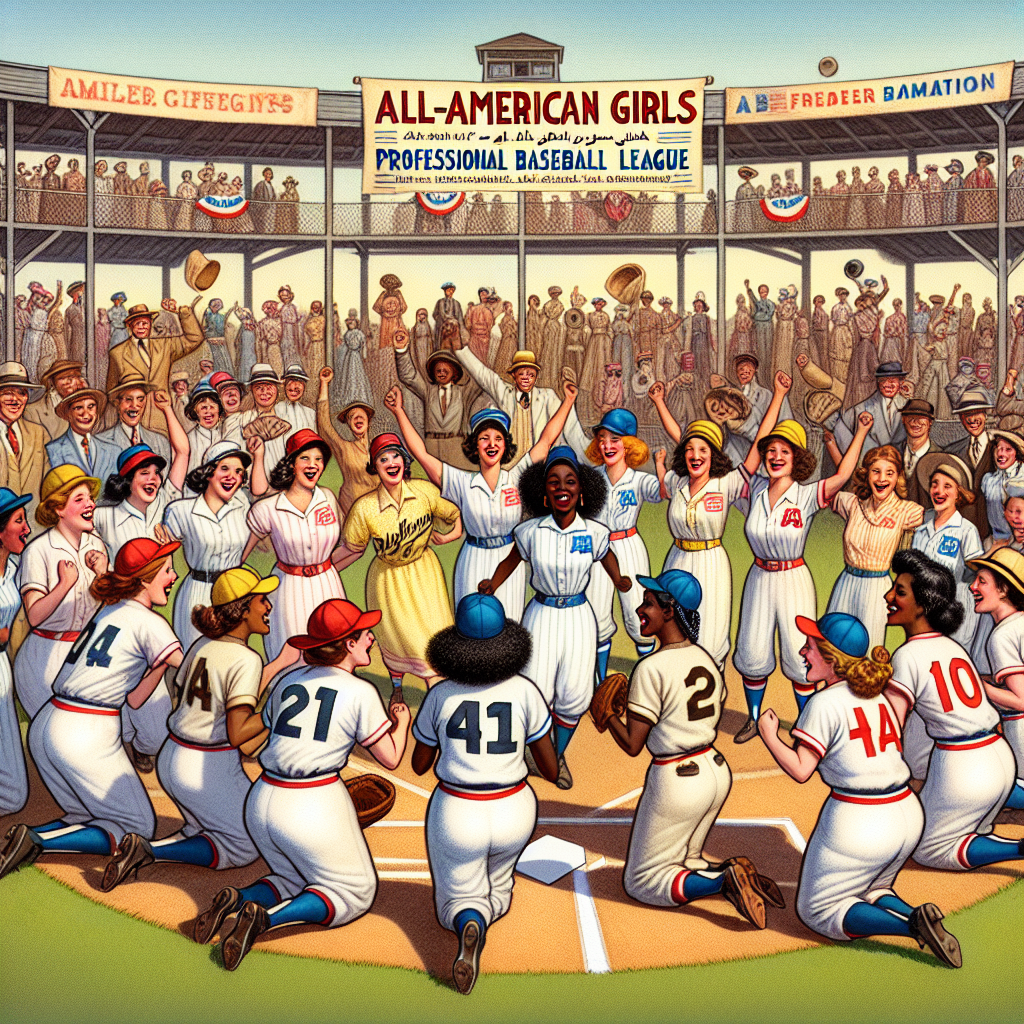
Despite these early obstacles, the AAGPBL began to gain traction. The quality of play improved dramatically as the teams gelled and players honed their skills. Games began drawing larger crowds, and local media started giving the league more coverage. Standout players like Dorothy Kamenshek, who played first base for the Rockford Peaches, and pitcher Jean Faut quickly became fan favorites and household names.
Moreover, the league expanded its geographic reach, adding more teams and increasing the level of competition. By 1948, the AAGPBL had grown to include ten teams. This expansion was accompanied by further adjustments to the playing rules, bringing them closer to traditional baseball standards. The slow pitch of early games evolved into a more competitive fast-pitch style, and the physical dimensions of the playing fields were modified to better suit the players’ increasing capabilities.
Expansion and Popularity
The league saw its peak in popularity during the late 1940s and early 1950s. By this time, the AAGPBL featured multiple teams spread across various states, and the skill level had risen to be comparable to many male minor league teams. Tournaments and playoff games drew significant crowds, and the league started to attract more sophisticated media coverage, including regular newspaper features and even some radio broadcasts.
One key factor contributing to the league’s success was its ability to adapt and innovate. Unlike many other female sports ventures of the time, the AAGPBL invested in quality coaching, training, and playing facilities. They drew from the extensive pool of talent available, often holding tryouts in multiple cities to ensure that the best female athletes were scouted and signed. As the war ended and men began returning to Major League Baseball, the AAGPBL didn’t fade into obscurity; instead, it built on its wartime success and continued to thrive.
Television also started to play a role, albeit minor, in promoting the league. While TV broadcasts were limited, they helped bring the excitement of women’s baseball into American living rooms, further broadening the league’s fan base. Promotions and marketing strategies became more sophisticated, often emphasizing the unique aspects of the AAGPBL compared to men’s baseball, such as its fast-paced gameplay and the distinctive personalities of its star players.
Community support was another significant factor in the league’s success. Many of the teams became local heroes in their respective towns, enjoying robust support from enthusiastic fan bases. This community investment ensured that games were well-attended and that the league enjoyed a steady stream of ticket and merchandise revenue. Schools and community groups often organized outings to see the games, fostering a generational appreciation for women’s baseball.
The Decline and Dissolution
Despite its success and popularity, the AAGPBL began to face insurmountable challenges in the mid-1950s. The biggest issue was the changing entertainment landscape. With the advent of television, American families found a new source of entertainment that often kept them at home instead of ballparks. This shift had a significant impact on attendance figures, which began to decline.
Furthermore, as Major League Baseball continued to grow in popularity and media coverage, the AAGPBL struggled to maintain its niche. The return of male players from the war, combined with the explosive popularity of male stars such as Mickey Mantle and Willie Mays, overshadowed the achievements of the women in the AAGPBL. Financial troubles started to mount, and many teams found it difficult to remain solvent.
Another factor contributing to the league’s decline was internal management issues. While Philip Wrigley had been a passionate advocate and supporter of the league, subsequent leadership under Arthur Meyerhoff struggled to maintain the same level of commitment and vision. Disagreements over how the league should be run, combined with dwindling financial resources, led to organizational instability.
Despite attempts to innovate and revitalize interest, including changes to scheduling and further modifications to the rules of play, the league could not recapture its former glory. By 1954, after 11 seasons, the AAGPBL played its final game. The dissolution marked the end of a significant chapter in baseball history, but the legacy of the league and its players lived on.
Legacy of the AAGPBL
Though the AAGPBL officially disbanded in 1954, its impact on the world of sports and society at large cannot be underestimated. The league was groundbreaking in many ways, offering a platform for female athletes at a time when such opportunities were exceedingly rare. It challenged and began to change societal norms around women’s capabilities and roles, particularly in sports.
The influence of the AAGPBL extended far beyond the baseball diamond. Many former players went on to become coaches, educators, and advocates for women’s sports, helping to pave the way for future generations. The league’s history has been preserved and celebrated in various forms, most notably through the 1992 film “A League of Their Own,” which brought renewed attention and appreciation for this pioneering league. The National Baseball Hall of Fame also recognizes the contributions of the AAGPBL with a dedicated exhibit.
In recent years, there has been a resurgence of interest in women’s baseball, partly fueled by the foundational work of leagues like the AAGPBL. Modern initiatives and professional leagues continue to advocate for and celebrate women in sports, building on the legacy of the league. These efforts have not only kept the spirit of the AAGPBL alive but have also inspired a new generation of female athletes to pursue their dreams in baseball and beyond.
Organizations and former players continue to educate the public about the AAGPBL’s history through museums, exhibitions, and public speaking. This ongoing dialogue ensures that the achievements and struggles of these pioneering women are not forgotten, allowing their contributions to be rightly honored in the annals of sports history.
Conclusion
The formation and history of the All-American Girls Professional Baseball League remain an essential yet often overlooked chapter in the history of baseball. Established during the turbulent years of World War II, the league offered women an unprecedented opportunity to play professional baseball, a sport long dominated by men. Under the vision and leadership of Philip K. Wrigley, the AAGPBL not only filled the void left by male players at war but also created a legacy that would resonate for decades.
Despite facing significant societal and internal challenges, the league managed to captivate fans, demonstrate the athletic prowess of its players, and pave the way for future opportunities for women in sports. Its peak in the late 1940s and early 1950s showcased the potential for women’s sports to thrive in a professional setting, challenging longstanding gender norms and inspiring future generations.
Though the league eventually dissolved in 1954, its impact on the sports world and society at large remains profound. By providing a platform for female athletes, the AAGPBL not only showcased their talents but also contributed to broader conversations about gender equality and the role of women in society. The league’s legacy lives on through the stories of its players, media portrayals, and continued advocacy for women’s sports.
As we reflect on the history of baseball, it is imperative to include and celebrate the contributions of the All-American Girls Professional Baseball League. Their courage, skill, and perseverance helped to shape the sport as we know it today and continue to inspire us to strive for a more inclusive and equitable sporting world.
Frequently Asked Questions
1. What led to the creation of the All-American Girls Professional Baseball League (AAGPBL)?
The All-American Girls Professional Baseball League (AAGPBL) was formed during a unique period in history—World War II. The war significantly impacted many aspects of life, including America’s favorite pastime: baseball. As the war effort drafted many male baseball players into military service overseas, the major and minor leagues found themselves struggling to field teams. The absence of men created a void that Philip K. Wrigley, the heir to the Wrigley chewing gum company and the owner of the Chicago Cubs, viewed as an opportunity rather than a crisis. In 1943, Wrigley devised a plan to keep the sport alive and maintain public interest by forming a professional league for women. His vision was to create a league that combined elements of baseball with softball, offering something familiar yet distinctly different.
The league not only aimed to provide entertainment during a tumultuous time but also broke significant cultural barriers. It showcased women’s abilities in sports at a time when their roles were predominantly restricted to domestic spheres or war-centric industries. Bringing women into the professional baseball arena was revolutionary and required challenging existing norms and expectations about gender. As such, the AAGPBL was a significant milestone not only for sports but for women’s rights and representation in public life during an era where female empowerment was beginning to take root in new ways.
Moreover, the league gave women an unprecedented opportunity to play baseball professionally, providing them with resources and recognition they had never had before. It marked a significant step forward in the fight for gender equality, demonstrating that athletic talent and competitive spirit transcended gender.
2. How was the AAGPBL structured and operated?
The AAGPBL was structured much like the men’s Major League Baseball, with teams, players, and a full schedule of games. Initially, there were four teams: the Kenosha Comets, Racine Belles, Rockford Peaches, and South Bend Blue Sox. Each team represented a city in the Midwest, regions that were accessible and had supportive local fanbases. The league expanded over time, eventually including teams from other states. Its operation was a blend of traditional baseball and softball rules, adjusted to suit the expectations of female athletes and the evolving perspectives on women’s capabilities in sports.
To maintain femininity, the players had to adhere to strict dress codes which included wearing skirts as part of their uniform, despite the practical challenges of playing a physically demanding sport in such attire. The operation of the league underscored the dual expectations placed upon the women, as they were expected to exhibit both athletic prowess and traditional femininity.
In addition to skills in playing, the athletes were also trained in behaviors and appearances befitting of a ‘lady’, including etiquette and how they presented themselves to the public. This was intended to appeal to societal norms of the time and to comfort those who were skeptical about women stepping into a traditionally male role. Despite these conditions, the AAGPBL strove to maintain a serious sports atmosphere and offered its players rigorous training, high-quality uniforms, and competent management, allowing them to focus on improving their games and cultivating competitive, spirited matches.
3. How did World War II impact the formation and operations of the AAGPBL?
World War II was a critical factor in the formation of the AAGPBL. With so many MLB players drafted into military service, the league faced the threat of disappearing completely during the war years. Baseball, considered an integral part of American culture, needed to preserve its presence in the hearts of fans. Thus, the creation of the AAGPBL was both a solution to keep the sport alive and a war-time entertainment effort to boost the morale of citizens. During the war, entertainment was seen as a crucial component of maintaining public spirit and normalcy, and the AAGPBL helped fulfill that need.
Operating during wartime wasn’t without its difficulties, however. Travel was limited by rationing of gas and rubber, presenting logistical challenges for scheduling games and transporting teams. Yet, these challenges also generated a unique camaraderie and sense of duty among the female players, who saw themselves contributing to the war effort through their performances on the field. They were more than just entertainers; they embodied resilience and adaptability, reflecting the broader societal shifts regarding gender roles catalyzed by the exigencies of war.
The league’s formation also reflected broader changes in women’s roles across America, with many working in factories, farms, and roles traditionally held by men due to the war. The AAGPBL, therefore, heralded a new era where women could publicly engage in professional sports as they had in various other sectors, becoming an unexpected source of female empowerment during a time of national crisis.
4. What was the lasting impact of the AAGPBL on baseball and women’s sports?
The lasting impact of the AAGPBL is a testament to its groundbreaking role in sports history and women’s cultural evolution. It laid the initial groundwork for future female athletes in baseball and other sports, demonstrating that women could play at competitive levels. The league provided a platform for female players to showcase their talents, leading to a growing acceptance of women in sports roles traditionally filled by men.
Although the league disbanded in 1954 due to declining interest, when men’s baseball saw the return of its players and television started providing broader entertainment options, its legacy persisted. The AAGPBL inspired future generations of female athletes and contributed to the burgeoning women’s rights movements over the subsequent decades. In 1988, this legacy was cemented with the induction of the AAGPBL into the Baseball Hall of Fame in Cooperstown, New York, ensuring that the achievements of these pioneering women would not be forgotten.
The league also had social implications beyond sports. It challenged and gradually altered perceptions of women’s capabilities, contributing to ongoing conversations about gender equality. As society progressed, the stories of the league continued to inspire media productions and cultural depictions, including the popular movie “A League of Their Own”, which helped introduce new audiences to this remarkable chapter of history.
5. Who were some notable players in the AAGPBL, and what were their contributions?
Several players in the AAGPBL made significant contributions to the league’s success and to the sport of baseball itself. These trailblazers included players like Dottie Kamenshek, who was considered one of the best players of the league. She excelled in batting and fielding, and her skill set was often compared to the standard expected in men’s baseball, drawing attention from major league teams like the Chicago Cubs, though she never accepted their scouting requests due to her commitment to her team in the AAGPBL.
Another standout was Sophie Kurys, known for her exceptional base-stealing ability. During the 1946 season, she stole an astonishing 201 bases, a record still unmatched. Her prowess exemplified the high level of competitive spirit and athletic skill within the league. Then there was Betty Carveth Dunn, who threw a no-hitter during her time in the league, illustrating the remarkable accomplishments these women achieved in their careers as professional athletes.
These athletes, along with many others, helped establish a precedent for female excellence in sports. They broke stereotypes and served as role models for young girls and women who aspired to compete in sports. Their dedication, skills, and pioneering spirit not only enriched the league’s history but also forged a permanent legacy that encouraged and supported the expansion of opportunities for women in sports.